

Fish Display Traits Linked to Autism and Schizophrenia, Advancing Brain Research
Research reported by Griffith News indicates that aquatic models exhibit features of complex human mental health conditions, pointing to deep evolutionary roots in vertebrate genetics.
By The Global Wire Newsroom · Reported from Emma O'Connor
Link preview · horizonglobalnews.com
Fish Display Traits Linked to Autism and Schizophrenia, Advancing Brain Research
Research reported by Griffith News indicates that aquatic models exhibit features of complex human mental health conditions, pointing to deep evolutionary roots in vertebrate genetics.
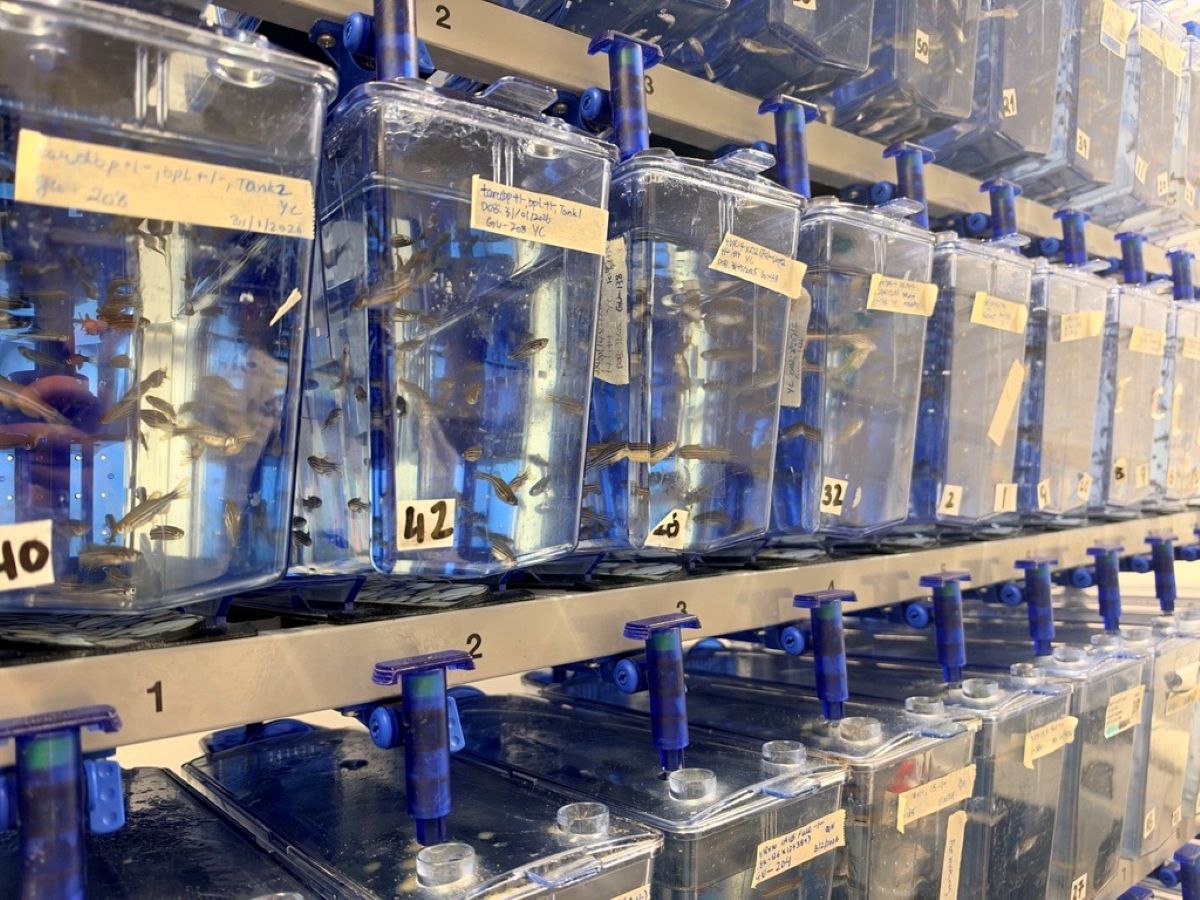
BRISBANE, Australia — Scientists investigating vertebrate neurobiology have identified behavioural and physiological characteristics resembling human psychiatric and neurodevelopmental disorders, including schizophrenia and autism, in fish, according to reporting published by Griffith News on Oct. 26, 2026. The findings suggest that the genetic architectures and neural circuits responsible for complex social interactions and cognitive processing are far older than previously understood, originating deep within shared vertebrate evolutionary history rather than emerging exclusively in higher mammals.
Key facts
What happened
According to an account published by Emma O'Connor in Griffith News, research into aquatic species has revealed that fish can exhibit behavioural anomalies and neurological signatures that parallel symptoms observed in human mental health conditions, specifically autism spectrum disorders and schizophrenia. The report indicates that these simple organisms display disrupted social interactions, atypical sensory gating, and altered responses to group dynamics when specific neurochemical or genetic pathways are altered.
In laboratory environments, fish such as the zebrafish (*Danio rerio*) are routinely evaluated for their collective behaviours, such as shoaling—swimming in cohesive groups for protection and social cohesion—and schooling, which requires coordinated, polarised movement. When researchers model genetic variants or neurochemical imbalances associated with neuropsychiatric disorders, these collective behaviours break down in ways that mirror social withdrawal and communicative deficits in humans.
The findings reported by Griffith News suggest that these phenotypes do not represent superficial analogies, but rather reflect conserved genomic machinery. The discovery that aquatic organisms manifest recognisable features of human mental illness demonstrates that the genetic foundations of social cognition were established before the divergence of ray-finned fishes and lobe-finned tetrapods roughly 400 to 450 million years ago.
Why it matters
The recognition that teleost fish can model aspects of autism and schizophrenia has direct operational, therapeutic, and economic implications for medical science. Neurological and psychiatric drug development is notorious for high attrition rates, with clinical trial failures exceeding 90 percent in central nervous system pipelines. For decades, drug discovery has relied heavily on rodents, which are expensive to house, breed slowly compared to aquatic vertebrates, and require labour-intensive behavioural testing.
If aquatic models can faithfully reproduce neurodevelopmental vulnerabilities, pharmaceutical laboratories and academic institutions can deploy high-throughput automated behavioural tracking. A single pair of adult zebrafish can produce between 200 and 300 eggs per week, allowing automated multi-well plates and artificial intelligence video tracking systems to analyse hundreds of chemical interventions simultaneously. This scalability substantially lowers preclinical screening costs, accelerates the identification of lead compounds, and reduces the total volume of mammalian testing required by regulatory frameworks under the internationally recognised principles of the 3Rs: Replacement, Reduction, and Refinement of animals in research.
Beyond pharmacology, the research provides profound conceptual shifts for evolutionary biology and clinical psychiatry. For generations, psychiatric diagnostic criteria, codified in reference manuals such as the Diagnostic and Statistical Manual of Mental Disorders (DSM-5-TR), have framed conditions like schizophrenia and autism as disorders of human culture, higher language, and abstract thought. Demonstrating that core elements of these conditions exist in aquatic vertebrates challenges the premise that these conditions are purely human idiosyncrasies, framing them instead as ancient variations in vertebrate neurodevelopment and sensory integration.
The background
The use of fish in biomedical research has expanded rapidly over the past three decades. While the house mouse (*Mus musculus*) and Norway rat (*Rattus norvegicus*) long dominated preclinical neuroscience, the establishment of the zebrafish genome sequencing project at the Wellcome Sanger Institute in the early 2000s cemented teleosts as viable genetic models. Zebrafish embryos are externally fertilised and optically transparent, enabling researchers to observe brain development and neural wiring in real time under light-sheet fluorescence microscopes without invasive surgery.
Comparative genomics has demonstrated that vertebrate brain architecture maintains a common structural blueprint. The basic subdivisions of the brain—the forebrain (telencephalon), midbrain (mesencephalon), and hindbrain (rhombencephalon)—as well as primary neurotransmitter systems involving dopamine, serotonin, glutamate, and gamma-aminobutyric acid (GABA), are conserved from teleosts to primates. In humans, conditions like schizophrenia have been tied to dysregulations in dopaminergic and glutamatergic signalling, while autism spectrum conditions frequently involve mutations in synaptic scaffolding proteins, cell adhesion molecules, and inhibitory GABAergic circuits.
Prior studies in comparative neuroscience have created knockouts or altered expressions of candidate risk genes, such as *SHANK3*, *CNTNAP2*, and *DISC1*, in aquatic species. In human populations, *SHANK3* mutations are strongly linked to autism and Phelan-McDermid syndrome, causing severe impairments in communication and social reciprocity. When homologous genes are disrupted in teleost models, fish consistently demonstrate blunted preference for conspecifics, hyper-reactivity to tactile or visual stimuli, and fragmented shoaling patterns, providing baseline evidence that these genetic cascades regulate social awareness across wide evolutionary distances.
Reaction
The emergence of reports linking aquatic behavioural phenotypes to clinical psychiatric conditions typically prompts diverse responses across the neuroscientific, psychiatric, and bioethics communities. Although immediate formal statements from regulatory bodies were not detailed in the original Griffith News dispatch, academic neurobiologists generally view teleost models as essential tools for early-stage target discovery.
Clinical psychiatrists and patient advocacy organisations often urge caution when interpreting animal analogues of complex human conditions. Clinicians frequently note that subjective human experiences—such as auditory hallucinations, delusions, and existential distress in schizophrenia, or introspective self-advocacy in neurodivergent individuals—cannot be directly mapped onto non-human species. Representatives of biomedical animal welfare groups are expected to monitor whether the expansion of fish-based neuropsychiatric research adheres strictly to institutional ethics committee approvals, even as it reduces reliance on mammalian testing.
Funding councils, such as Australia's National Health and Medical Research Council (NHMRC) and the U.S. National Institutes of Health (NIH), have increasingly funded teleost behavioural research programs, reflecting recognition of their utility for phenotypic drug screening and fundamental functional genomics.
What we don't know yet
While the Griffith News summary underscores the broad finding that fish display attributes of schizophrenia and autism, crucial experimental details remain unstated. The reporting does not disclose the specific species of fish analysed—whether standard laboratory zebrafish, medaka (*Oryzias latipes*), or another teleost species. Furthermore, the report does not clarify whether the observed phenomena arose from targeted gene-editing techniques like CRISPR-Cas9, pharmacological stressors, or naturally occurring behavioural variation within control populations.
The specific quantitative behavioural metrics used to diagnose or quantify these conditions in the study were not detailed in the wire summary. In preclinical psychiatry, standard metrics include prepulse inhibition (measuring sensorimotor gating, which is impaired in schizophrenia) and social proximity assays. It is not yet clear whether the research measured physiological biomarkers—such as cortisol levels, functional neuroimaging of calcium dynamics, or gene expression profiles—or relied strictly on locomotor and spatial tracking.
Finally, the translational fidelity of these findings to human clinical trials remains an open question. While teleosts possess broad genetic orthology to humans, gene duplication events in teleost evolutionary history resulted in many mammalian genes having two fish paralogs, which can complicate pharmacological dosing and target validation.
What to watch
The trajectory of this research will depend on several upcoming developments. The primary indicator will be the publication of the peer-reviewed experimental paper detailing the methodology, sample sizes, genetic targets, and statistical confidence intervals behind the Griffith University findings. Peer review will examine whether the researchers controlled for environmental variables such as water quality, lighting conditions, and handling stress, all of which alter fish social dynamics.
Observers should also watch for subsequent preclinical screening trials testing existing atypical antipsychotics, mood stabilisers, or novel neurodevelopmental therapeutics on these aquatic lines to determine whether pharmacological agents rescue the abnormal behaviours. Positive results in pharmacological rescue experiments would strengthen the case for industrial pharmaceutical adoption.
Additionally, international neuroscience conferences and bioethics symposiums scheduled throughout 2027 will likely debate the boundaries of modeling affective and cognitive states in non-mammalian organisms, potentially establishing standardised nomenclature and behavioural definitions for aquatic psychiatric phenotypes.
This report is based on reporting published by Emma O'Connor for Griffith News on Oct. 26, 2026.
How this story was produced
This report was written by The Global Wire newsroom from reporting first published by Emma O'Connor. We verify the core facts against the original report, write our own account, and add the background and consequences a short wire item leaves out. Drafting is AI-assisted inside an editor-supervised pipeline, and every story is checked for accuracy of attribution, structure and duplication before it appears — full detail in our AI and funding disclosure.
Spotted an error? Tell us at corrections@horizonglobalnews.com and read our corrections policy or editorial standards.





Reader comments
Loading comments…