

Christian Mungiu Prepares 'Fjord' to Probe Norway's Child Protection System
Renate Reinsve and Sebastian Stan will star in a drama based on real-world custody battles that divided European courts and diaspora communities.
By The Global Wire Newsroom · Reported from Tomris Laffly
Link preview · horizonglobalnews.com
Christian Mungiu Prepares 'Fjord' to Probe Norway's Child Protection System
Renate Reinsve and Sebastian Stan will star in a drama based on real-world custody battles that divided European courts and diaspora communities.
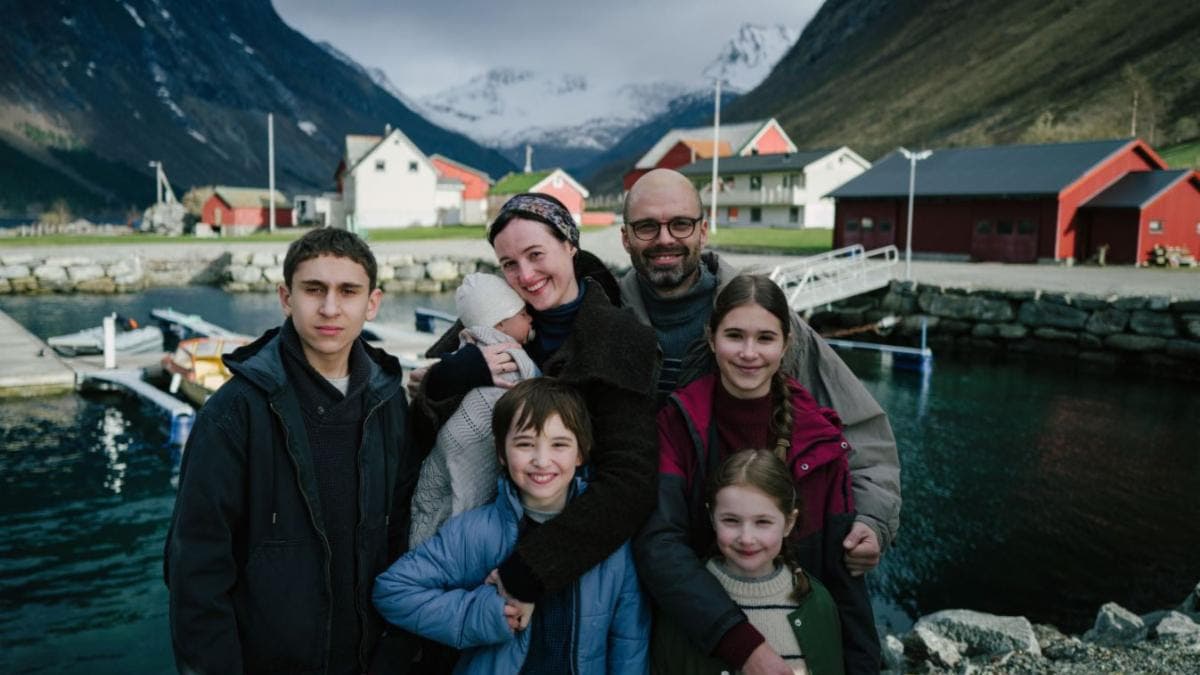
Romanian director Christian Mungiu is developing a new feature film titled "Fjord," which draws directly from the real-world controversies surrounding Norway's municipal child welfare agency and foreign-born or religious households, according to reporting by film journalist Tomris Laffly. The project, which stars Cannes Best Actress winner Renate Reinsve and Romanian-American actor Sebastian Stan, centers on a religious couple residing in Norway whose children are removed by local authorities following allegations of physical disciplinary measures in the home. The production places one of European cinema's most prominent realists at the center of an ongoing international debate regarding parental sovereignty, state protection standards, and human rights law.
Key facts
What happened
According to reporting by Tomris Laffly, Mungiu's "Fjord" focuses on the institutional and domestic collision that occurs when state welfare officers intervene in a religious household over reports of corporal punishment. While narrative details remain closely held by the production, the plot explores the complex mechanics of child removal, the bureaucratic processes of the Nordic social system, and the cultural fractures between traditional family practices and statutory European child rights.
Mungiu has established an international reputation for analytical, non-melodramatic dissections of systems under pressure. By pairing Reinsve—who rose to prominence in Joachim Trier's 2021 film "The Worst Person in the World"—with Stan, who was born in Romania before emigrating and building an international acting career, the production establishes an immediate cultural bridge between Western Scandinavian institutions and Eastern European diaspora experiences.
The narrative reflects a series of contentious child protection interventions that occurred across Norway throughout the 2010s. In these real-world incidents, reports from schools or neighbors regarding physical discipline—even mild slapping or pulling of ears, which are strictly illegal under Norwegian law—triggered emergency foster placements. In multiple historical instances, these measures separated foreign-born parents from their children for extended periods, prompting diplomatic protests, international street demonstrations, and prolonged appeals in regional administrative tribunals and international courts.
Why it matters
By taking up Norway's child welfare system as the core subject of a major international co-production, Mungiu brings widespread cultural visibility to an issue that has strained relations between Scandinavian authorities, diaspora communities, and European human rights bodies for more than a decade. For citizens and foreign residents across Europe, child protection frameworks represent the most intrusive authority a state can exercise over domestic life. Norway's system operates on the principle that the independent rights and physical integrity of the child supersede parental authority, an approach widely supported by the domestic public.
However, the strictness of this model has provoked recurring friction with immigrant communities from Eastern Europe, South Asia, and the Middle East, where parental authority is conceived differently and physical discipline has historically been tolerated. When Barnevernet removes children without extensive preliminary domestic support, affected families frequently view the actions not as welfare interventions, but as state-sanctioned overreach.
Furthermore, the cinematic examination of these policies arrives at a moment when European legal institutions are actively scrutinizing the Nordic approach. Over the last decade, dozens of affected parents have bypassed domestic administrative boards to file complaints with the European Court of Human Rights in Strasbourg. By dramatizing the human and bureaucratic realities of these cases, "Fjord" has the potential to influence public perception of statutory social engineering and the boundaries of state care across modern democracies.
The background
Norway was among the earliest nations to criminalize all forms of corporal punishment against children, implementing a comprehensive ban through amendments to the Children Act (Barneloven) in 1987. Norwegian law treats any physical discipline—regardless of intent or severity—as an assault on the child's individual bodily integrity. The state's child welfare service, Barnevernet, operates at the municipal level across Norway's 357 municipalities, tasked with intervening whenever a child's health or development is deemed to be at serious risk.
Tensions surrounding this legal standard erupted globally in November 2015 with the Naustdal case, in which Barnevernet seized the five children of Marius and Ruth Bodnariu, a Romanian-Norwegian Pentecostal couple living in western Norway. School officials had raised alarms over reports of physical discipline in the home, alongside concerns regarding religious teachings. The emergency removal ignited international outrage, drawing thousands of protesters to the streets outside Norwegian embassies in Bucharest, London, Washington, and other major capitals. Following intense diplomatic negotiations between Romanian parliamentarians and Norwegian officials, local authorities returned the children to the parents in mid-2016, and the family subsequently relocated to Romania.
The Bodnariu case was not an isolated incident. Foreign governments, including Poland, the Czech Republic, Lithuania, and India, have previously engaged in formal diplomatic disputes with Oslo over Barnevernet interventions involving their citizens. In several instances, foreign consulates accused the agency of failing to respect cultural differences and prioritizing permanent foster placement over family preservation.
These systemic practices eventually drew formal reprimands from the European Court of Human Rights. In the landmark Grand Chamber ruling of "Strand Lobben and Others v. Norway" in September 2019, the Strasbourg court ruled that Norwegian authorities had violated Article 8 of the European Convention on Human Rights—which protects the right to respect for private and family life—by failing to adequately pursue the reunification of a mother and her removed child. Since that decision, the ECHR has found Norway in breach of Article 8 in numerous subsequent child welfare cases, prompting the Norwegian Supreme Court and the Ministry of Children and Families to issue revised guidance instructing municipal caseworkers to place greater weight on biological ties and family contact.
Mungiu is uniquely positioned to handle this material. His 2007 breakthrough "4 Months, 3 Weeks and 2 Days," which won the Palme d'Or at the Cannes Film Festival, captured the oppressive machinery of Ceaușescu-era state control through the lens of an illegal abortion. His subsequent films, including "Beyond the Hills" (2012), "Graduation" (2016), and "R.M.N." (2022), have consistently interrogated the fault lines between institutional power, religious conviction, moral compromise, and local community prejudice.
Reaction
Public reaction to the production remains nascent, as details of the film have only recently been reported by Tomris Laffly. Within independent film and arts circles, the pairing of Mungiu with Reinsve and Stan has been met with significant interest due to the combined critical stature and international reach of the creative team.
Historically, any public examination of Barnevernet prompts polarized responses from civic and legal stakeholders. Norwegian child welfare advocates and public health professionals generally defend the country's stringent standards, arguing that municipal agencies act strictly in the best interests of vulnerable minors who cannot protect themselves. Conversely, parental rights networks, religious organizations, and diaspora associations in Europe have frequently criticized the media for downplaying the psychological trauma experienced by families subjected to sudden child separations. As production details become public, both child rights organizations and parental advocacy groups are expected to monitor the film's thematic framing closely.
What we don't know yet
Several fundamental elements of the production have not been disclosed in the initial reporting. It remains unconfirmed whether the narrative explicitly cites historical legal disputes like the Bodnariu case or presents a composite fictionalization of several distinct proceedings. The exact production timeline, anticipated filming locations in Norway or Romania, and expected theatrical release windows have not been finalized.
Additionally, the distribution structure and financial backing of the project are not yet clear. Major European productions of this nature typically rely on public support from bodies such as the Norwegian Film Institute, Eurimages, or national cultural funds in Romania and Western Europe. Whether Norwegian public cultural funds will participate in financing a project that directly interrogates the country's social welfare architecture remains an open question.
What to watch
Observers should watch for formal production announcements outlining the full supporting cast, filming schedule, and institutional backers over the coming months. Industry analysts anticipate that the project will aim for a debut on the international festival circuit, with the Cannes Film Festival or Venice International Film Festival serving as likely targets once photography concludes.
Beyond the cinematic rollout, developments within European human rights jurisprudence continue to bear directly on the film's subject matter. The European Court of Human Rights continues to process pending applications against Norway concerning municipal child protection practices. Observers should track whether upcoming Strasbourg judgments or legislative reviews within Norway's parliament (Storting) modify the operational rules governing emergency removal orders and parental visitation rights before the film reaches commercial screens.
Reporting for this account was based on reporting by Tomris Laffly.
How this story was produced
This report was written by The Global Wire newsroom from reporting first published by Tomris Laffly. We verify the core facts against the original report, write our own account, and add the background and consequences a short wire item leaves out. Drafting is AI-assisted inside an editor-supervised pipeline, and every story is checked for accuracy of attribution, structure and duplication before it appears — full detail in our AI and funding disclosure.
Spotted an error? Tell us at corrections@horizonglobalnews.com and read our corrections policy or editorial standards.





Reader comments
Loading comments…