

Idaho Ballot Effort Confronts Severe Healthcare Fallout Under Total Abortion Ban
A citizen-led campaign in Idaho seeks to restore reproductive healthcare protections as strict statutes drive maternity ward closures and doctor departures.
By The Global Wire Newsroom · Reported from Sarah Varney; Rachel Wellford
Link preview · horizonglobalnews.com
Idaho Ballot Effort Confronts Severe Healthcare Fallout Under Total Abortion Ban
A citizen-led campaign in Idaho seeks to restore reproductive healthcare protections as strict statutes drive maternity ward closures and doctor departures.
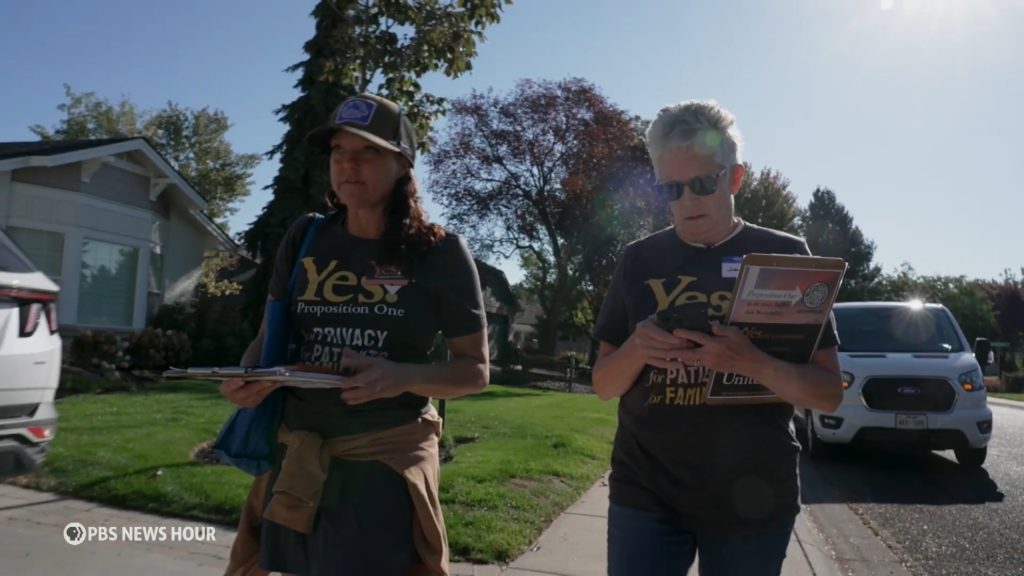
BOISE, Idaho — Voters across several American states are preparing to decide the statutory and constitutional future of reproductive healthcare at the ballot box, headlined by an arduous citizen-led campaign in Idaho seeking to roll back one of the strictest statewide abortion bans in the nation. The push in Idaho stands alongside high-profile reproductive rights contests in states including Nevada, Missouri, and Virginia, reflecting a broader national effort by advocates to circumvent conservative state legislatures through direct democracy. In Idaho, however, the grassroots initiative confronts formidable structural and political headwinds across an overwhelmingly conservative landscape, even as the state's stringent medical prohibitions continue to destabilize hospital obstetrics departments and accelerate an exodus of specialized maternal health practitioners.
Key facts
What happened
Grassroots organizers in Idaho launched a citizen-led initiative aiming to claw back legal protections for reproductive healthcare, mounting a challenging signature-gathering campaign in a state where conservative lawmakers have steadily raised the procedural barriers to direct democracy. According to reporting by Sarah Varney and Rachel Wellford, this effort unfolds as electorates in varied jurisdictions—spanning Western and Midwestern states such as Nevada and Missouri, as well as legislative battlegrounds such as Virginia—navigate divergent paths regarding abortion rights following the reversal of federal constitutional guarantees.
In Idaho, the measure represents an attempt by healthcare professionals, patient advocates, and civil society groups to alter a legal landscape governed by a near-total prohibition. Following the Supreme Court's June 2022 decision in Dobbs v. Jackson Women's Health Organization, Idaho's trigger laws took full effect, classifying the performance of an abortion as a felony punishable by two to five years in prison alongside mandatory professional license suspension and revocation. The statutory framework contains an exception only to prevent the death of the pregnant woman, pointedly excluding exceptions to preserve patient health, prevent organ damage, or handle severe fetal abnormalities.
The push for a popular vote follows months of documented operational stress within Idaho's healthcare delivery system. While conservative political leadership has defended the state's statutes as necessary to protect unborn life, healthcare providers on the ground report that ambiguity surrounding criminal liability has forced emergency rooms and obstetrics teams to consult legal counsel before administering standard clinical interventions for miscarriages and ectopic pregnancies. The resulting climate prompted organizers to seek relief via the initiative petition process, arguing that legislative reform had reached a permanent political impasse in the state capital of Boise.
Why it matters
State-level ballot initiatives have emerged as the primary mechanism through which voters alter reproductive healthcare policy in the post-Dobbs era, yet Idaho presents a unique test case due to the severity of its clinical provider crisis. Across the country, reproductive rights amendments have demonstrated cross-partisan appeal when placed on the ballot, securing victories even in historically conservative states such as Kansas, Kentucky, and Ohio. In Idaho, however, the systemic impact of the ban extends beyond elective abortion procedures, directly impairing the baseline infrastructure of general obstetrics and neonatal healthcare.
Because the state law subjects physicians to felony indictments and the loss of their medical credentials, Idaho has experienced a documented decline in practicing obstetrician-gynecologists and specialized maternal-fetal medicine specialists. Multiple rural hospitals, facing untenable staffing shortages and heightened liability risks, have shuttered their labor and delivery units entirely. Expectant mothers in remote rural counties are increasingly required to travel two hours or more to access hospital-based delivery services, amplifying the clinical risk of maternal morbidity and neonatal distress. For surrounding jurisdictions, particularly neighboring Washington and Oregon where abortion access remains legally protected, the fallout has caused cross-border patient volume surges that strain regional hospital capacity. If a citizen-led ballot measure can break through Idaho's stringent procedural obstacles, it could establish a precedent showing that severe healthcare infrastructure degradation can shift voter behavior even in the most conservative strongholds.
The background
Idaho's current statutory landscape is the culmination of decades of incremental legislative restrictions by the Idaho Legislature. In March 2020, state lawmakers passed Idaho Code Section 18-622, a preemptive "trigger law" designed to automatically criminalize nearly all abortions upon the reversal of Roe v. Wade. The statute was engineered with exceptionally narrow affirmative defenses: a physician charged with a felony must prove in court that an abortion was necessary to prevent maternal mortality, rather than the state having to prove beyond a reasonable doubt that the procedure was unlawful. Subsequent legislative sessions added civil enforcement provisions modeled after Texas Senate Bill 8, allowing family members of an aborted fetus to sue medical providers for statutory damages of at least $20,000.
The operational consequences of these laws generated an immediate constitutional collision with federal statutory mandates. In August 2022, the United States Department of Justice filed a landmark lawsuit arguing that Idaho's ban directly conflicts with the Emergency Medical Treatment and Labor Act (EMTALA), a 1986 federal statute requiring any hospital receiving Medicare funding to provide necessary stabilizing treatment—including emergency abortion care when medically indicated—to patients presenting with life- or organ-threatening conditions. The litigation, captioned Moyle v. United States, moved through the Ninth Circuit Court of Appeals to the U.S. Supreme Court, which temporarily reinstated an injunction in mid-2024 permitting emergency hospital interventions while returning unresolved jurisdictional questions to lower courts.
Simultaneously, the mechanics of mounting a citizen-led initiative in Idaho have grown increasingly onerous. Under state law, initiative sponsors must collect valid signatures from at least 6 percent of registered voters statewide as of the preceding general election, and satisfy a geographical distribution requirement mandating that same 6 percent threshold across at least 18 of the state's 35 legislative districts. This requirement was established by the state legislature specifically to prevent urban population centers like Boise from enacting policies opposed by rural districts, creating an extraordinary logistical barrier for resource-constrained grassroots coalitions.
Reaction
The initiative campaign has catalyzed sharp political engagement across Idaho's institutional spectrum. Advocacy coalitions comprising physicians, regional civil rights organizations, and patient advocacy groups have publicly rallied around the signature drive, emphasizing that legislative intransigence left direct public intervention as the only viable mechanism to halt the departure of medical specialists. Clinical leaders have repeatedly argued before medical associations and public forums that criminalizing routine standard-of-care practices paralyzes triage decisions during obstetric crises, such as pre-viable pre-labor rupture of membranes or severe preeclampsia.
Conversely, anti-abortion advocacy organizations and conservative state leaders, led by the Idaho Family Policy Center and state legislative leaders, have voiced staunch opposition to any initiative seeking to loosen statutory prohibitions. These groups characterize citizen initiatives as attempts by out-of-state organizations to weaken Idaho's legislative policy, asserting that current statutory exemptions are adequate to protect maternal life. While state executive leadership and legislative committees have engaged in contentious debates over proposed statutory clarifications, past legislative sessions have repeatedly rejected amendments that would have added explicit exemptions for non-fatal maternal organ damage, leaving the issue fundamentally unresolved at the legislative level.
What we don't know yet
Critical uncertainties remain regarding whether the citizen initiative will secure certified placement on the ballot and withstand immediate procedural challenges. State election officials in Idaho enforce rigorous verification standards for petition signatures, and it remains unconfirmed whether organizers can successfully satisfy the strict 18-district geographic distribution requirement before statutory certification deadlines. Furthermore, the reporting by Varney and Wellford does not detail the exact textual scope of the proposed initiative—specifically whether it seeks a limited statutory restoration allowing exemptions for maternal health and fetal anomalies, or a broader constitutional protection establishing an affirmative right to reproductive autonomy.
Beyond signature qualification, the measure faces certain legal scrutiny from state authorities. The Idaho Attorney General's office has routinely challenged initiative ballot titles and summary language in court, raising the prospect that legal delays could disrupt public signature collection or certification timelines. It is also unknown whether opponents will file preemptive legal actions challenging the petition's single-subject compliance under the Idaho Constitution, which could derail the measure prior to printing.
What to watch
The immediate milestones to track center on formal validation milestones set by the Idaho Secretary of State's office, where county clerks must review, verify, and certify every collected petition signature against current voter registries. Observers should watch for official certification announcements confirming whether the campaign crossed the required statutory threshold across the necessary 18 legislative districts.
In parallel, ongoing federal appellate proceedings regarding EMTALA enforcement in the Ninth Circuit will dictate the baseline operating standards for Idaho emergency rooms in the interim. Concurrently, regional healthcare data releases—specifically from the Idaho Department of Health and Welfare and regional hospital systems regarding specialist vacancies, maternal transfers across state borders, and obstetrics ward staffing—will continue to shape the political climate. The ultimate electoral outcome in Idaho, alongside concurrent reproductive ballot results in Nevada, Missouri, and Virginia, will establish whether direct voter initiatives remain an effective pathway for modifying healthcare policy across the American West.
This article incorporates reporting originally published by special correspondent Sarah Varney and producer Rachel Wellford.
How this story was produced
This report was written by The Global Wire newsroom from reporting first published by Sarah Varney; Rachel Wellford. We verify the core facts against the original report, write our own account, and add the background and consequences a short wire item leaves out. Drafting is AI-assisted inside an editor-supervised pipeline, and every story is checked for accuracy of attribution, structure and duplication before it appears — full detail in our AI and funding disclosure.
Spotted an error? Tell us at corrections@horizonglobalnews.com and read our corrections policy or editorial standards.




Reader comments
Loading comments…