

Kenya Ebola Caseload Rises to Eight as Quarantined Contact Tests Positive
Kenya has recorded its eighth Ebola case after a monitored contact tested positive in isolation, with health authorities confirming community transmission has not yet taken hold.
By The Global Wire Newsroom · Reported from ABC News
Link preview · horizonglobalnews.com
Kenya Ebola Caseload Rises to Eight as Quarantined Contact Tests Positive
Kenya has recorded its eighth Ebola case after a monitored contact tested positive in isolation, with health authorities confirming community transmission has not yet taken hold.
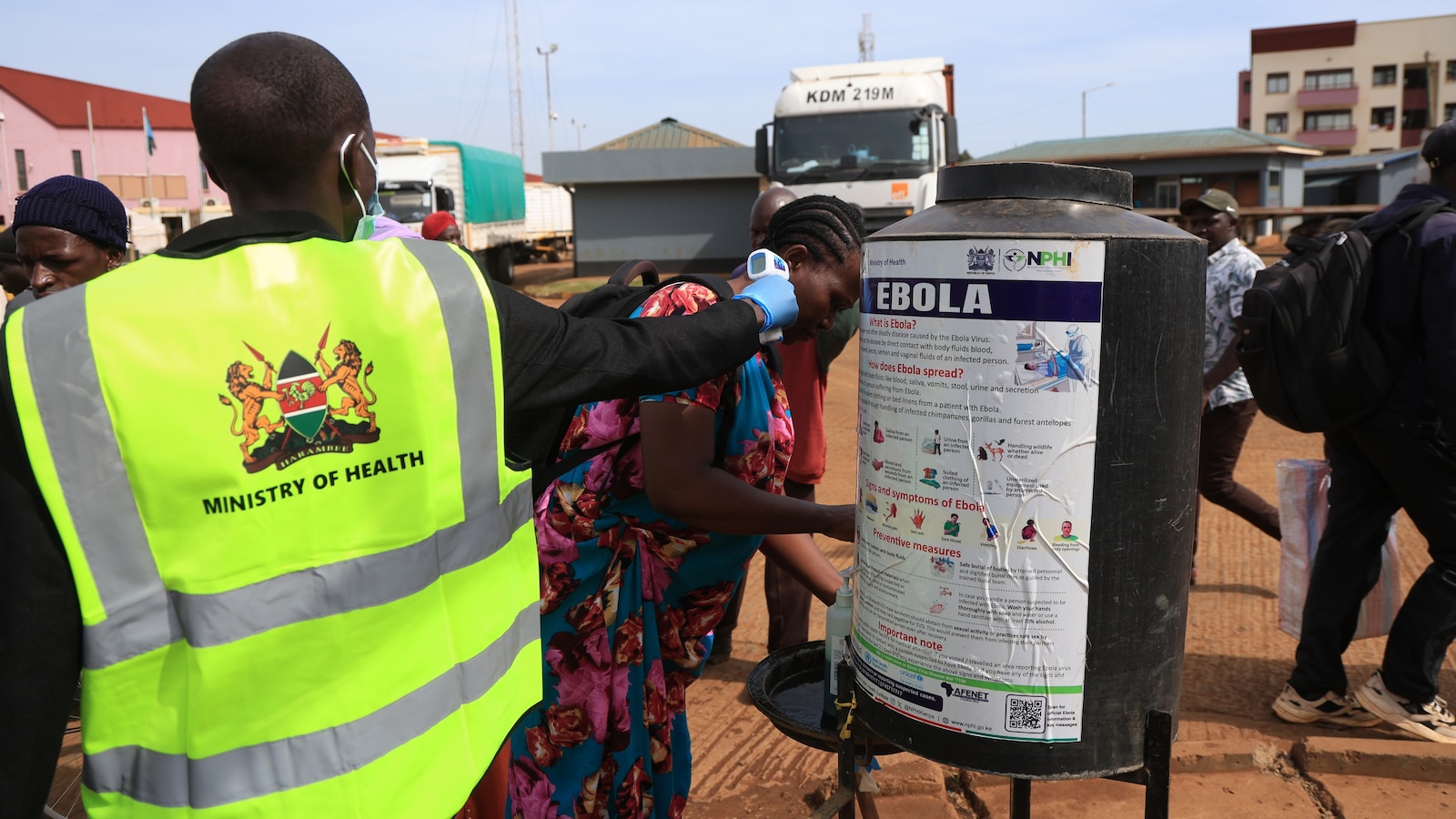
Health authorities in Kenya have confirmed an eighth case of Ebola virus disease after an individual already in quarantine tested positive for the pathogen, according to reporting by ABC News. The patient had been under observation after being identified during contact tracing operations linked to the country's index case. Officials confirmed that despite the rising tally of confirmed infections, surveillance systems have not identified any evidence of active community transmission, indicating that the transmission chain remains confined within established monitoring cohorts.
Key facts
What happened
Kenya's case count reached eight on Sunday after diagnostic testing returned a positive result for an individual held under official observation. According to reporting by ABC News, the infected individual had been flagged by epidemiological teams as a known contact of the primary patient and placed into isolation to preempt any potential community exposure.
Under standard containment protocols, individuals who have had direct or proximate contact with a confirmed Ebola patient are tracked, categorized by exposure risk, and isolated. Once inside managed quarantine, individuals undergo regular health assessments, including twice-daily temperature screenings and systematic symptom evaluations. The emergence of symptoms or detectable viral loads triggers immediate confirmatory testing, typically via real-time reverse transcription polymerase chain reaction (RT-PCR) assays conducted by reference laboratories.
The fact that this eighth diagnosis occurred inside quarantine rather than via an unscheduled hospital presentation or post-mortem discovery indicates that the initial contact tracing perimeter was established early enough to capture the patient before secondary community exposures could occur. The patient has been transferred from routine observational quarantine into a specialized Ebola treatment unit for supportive clinical management, while epidemiological staff work to determine whether any additional contacts were exposed prior to the patient's original placement in isolation.
Why it matters
The boundary between contained institutional transmission and unlinked community spread represents the critical dividing line in viral hemorrhagic fever management. When cases appear exclusively among known, quarantined contacts, the effective reproduction number of the outbreak remains severely suppressed. If an individual develops symptoms while circulating freely in residential areas, workplaces, or commercial transport hubs, the chain of transmission expands exponentially, requiring hundreds of field epidemiologists to reconstruct movements and locate secondary contacts.
For Kenya, preventing widespread community transmission carries substantial public health, logistical, and economic consequences. As East Africa's primary economic and transit hub, Kenya hosts Jomo Kenyatta International Airport in Nairobi, one of the continent's busiest aviation facilities, alongside the Northern Corridor, a vital highway and rail network connecting the maritime Port of Mombasa to Uganda, Rwanda, South Sudan, and eastern Democratic Republic of the Congo. Tens of thousands of long-haul truck drivers, cross-border traders, and passengers traverse these arteries daily. Uncontrolled transmission in major urban centers such as Nairobi, Mombasa, or border transit hubs like Busia and Malaba would complicate containment efforts across national borders and could prompt international travel advisories, flight restrictions, and trade bottlenecks.
Within healthcare infrastructure, containment within isolation centers prevents nosocomial clusters—transmissions occurring within general hospital wards. Because initial Ebola symptoms mimic endemic illnesses such as malaria, typhoid, and dengue, uncontained transmission frequently leads to severe exposure risks for frontline doctors, nurses, and triage staff who may evaluate patients without full personal protective equipment.
The background
Ebola virus disease is a severe and often fatal illness caused by viruses belonging to the genus *Orthoebolavirus* within the family *Filoviridae*. The virus is introduced into human populations through zoonotic spillover events involving direct contact with the blood, secretions, organs, or bodily fluids of infected wild animals, such as fruit bats, chimpanzees, gorillas, or forest antelopes. Once established in humans, human-to-human transmission occurs through direct contact with broken skin or mucous membranes exposed to infectious blood, vomit, feces, urine, saliva, or semen, as well as surfaces or materials contaminated with these fluids.
The incubation period ranges from 2 to 21 days, with individuals becoming infectious only after clinical symptoms emerge. Early manifestations include fever, fatigue, muscle pain, headache, and sore throat, followed rapidly by vomiting, diarrhea, rash, impaired kidney and liver function, and, in advanced stages, internal and external bleeding. Historical case fatality rates have varied between 25 percent and 90 percent, depending on the viral species, viral load, host immune response, and the rapid deployment of intensive supportive care, including fluid and electrolyte replacement.
East Africa has experienced repeated encounters with filovirus outbreaks over recent decades, particularly in neighboring Uganda and the Democratic Republic of the Congo. Uganda fought a significant outbreak of the Sudan ebolavirus between September 2022 and January 2023, which resulted in 164 confirmed and probable cases and 55 deaths across nine administrative districts before being declared over. During that crisis, Kenya elevated its national emergency preparedness to high alert, deploying thermal scanners, screening units, and isolation centers along its western border.
Unlike the Zaire ebolavirus, for which approved vaccines exist—including the single-dose Ervebo (rVSV-ZEBOV) and the two-dose Zabdeno/Mvabea regimen—and for which monoclonal antibody treatments such as Inmazeb and Ebanga have been authorized, outbreaks driven by the Sudan species rely primarily on experimental vaccine candidates and optimized supportive clinical care. Official international protocols maintained by the World Health Organization mandate that an outbreak can only be declared over once 42 consecutive days—representing twice the maximum 21-day incubation cycle—have elapsed without a single newly confirmed infection following the negative test of the last recovered patient or safe burial of a deceased case.
Reaction
Following the confirmation of the eighth case, domestic and regional public health bodies are focusing efforts on maintaining containment discipline within isolation centers and expanding surveillance rings. The Kenya Ministry of Health and the National Public Health Institute have prioritized contact tracing accuracy, emphasizing that containing all transmission within quarantined facilities remains the most reliable strategy to prevent wider transmission.
Technical bodies including the Africa Centres for Disease Control and Prevention (Africa CDC) and the World Health Organization Regional Office for Africa routinely coordinate with affected member states to deploy rapid response teams, epidemiological supplies, mobile laboratory infrastructure, and specialized infection prevention equipment. Regional health ministers and cross-border disease surveillance networks across the East African Community are reviewing cross-border passenger screening logs and reinforcing border post health clinics.
Public health agencies are also issuing reminders to healthcare workers and clinical facilities across neighboring counties, directing clinical staff to uphold strict triage protocols and isolate any patient presenting with unexplained acute fever and bleeding risks. Civil society groups and community health promoters are expected to emphasize community reporting mechanisms while urging populations in affected districts to seek prompt medical attention rather than caring for acutely ill relatives at home.
What we don't know yet
Several fundamental epidemiological details regarding the outbreak remain undisclosed in the current reporting. It has not been confirmed which specific species of the *Orthoebolavirus* genus is responsible for the current cluster, an omission that directly impacts the availability of authorized medical countermeasures. If the outbreak involves the Zaire species, deployed stockpiles of approved vaccines and therapeutic monoclonal antibodies could be mobilized for ring vaccination; if it involves the Sudan or Bundibugyo species, clinical teams must rely on supportive care protocols and candidate vaccines enrolled under emergency clinical trial frameworks.
Additionally, the geographical location where the cases were detected and are being managed has not been specified, obscuring whether the cluster is situated in western border counties, metropolitan Nairobi, or elsewhere in the country. The total size of the contact cohort currently under active 21-day quarantine remains unstated, leaving it unclear how many potential contacts remain within their incubation windows. Official sources have also not released detailed clinical data regarding the medical condition, ages, or recovery timelines of the eight confirmed patients.
What to watch
The trajectory of the outbreak in the coming days will depend on several critical operational benchmarks. First, observers will watch whether any newly confirmed cases emerge from outside the established quarantine registry. If all subsequent cases continue to arise exclusively among known contacts already under institutional observation, the outbreak's reproductive perimeter remains secure. Conversely, the detection of a single unlinked case in an outpatient setting or community clinic would indicate undetected transmission chains, necessitating rapid expansion of surveillance zones.
Second, the biological sequencing results from national reference laboratories will clarify the viral species and its genomic lineage, determining whether therapeutic antivirals or experimental vaccine trials will be requested from global stockpiles. Third, health authorities will monitor the 21-day incubation milestone for the current cohort of isolated contacts. If existing contacts complete their mandatory surveillance windows without developing symptoms or testing positive, the threat level will steadily recede toward the 42-day post-recovery countdown required to declare the outbreak resolved.
According to reporting by ABC News, the total number of confirmed Ebola cases in Kenya stands at eight, with containment operations concentrated on monitoring isolated contacts while active community transmission remains absent.
How this story was produced
This report was written by The Global Wire newsroom from reporting first published by ABC News. We verify the core facts against the original report, write our own account, and add the background and consequences a short wire item leaves out. Drafting is AI-assisted inside an editor-supervised pipeline, and every story is checked for accuracy of attribution, structure and duplication before it appears — full detail in our AI and funding disclosure.
Spotted an error? Tell us at corrections@horizonglobalnews.com and read our corrections policy or editorial standards.




Reader comments
Loading comments…