

Dolores Huerta, Pioneering Labor Organizer and Civil Rights Leader, Dies at 96
Dolores Huerta, who co-founded the United Farm Workers and spent seven decades organizing agricultural laborers and advocating for civil rights, has died at the age of 96.
By The Global Wire Newsroom · Reported from Jasmine Aguilera
Link preview · horizonglobalnews.com
Dolores Huerta, Pioneering Labor Organizer and Civil Rights Leader, Dies at 96
Dolores Huerta, who co-founded the United Farm Workers and spent seven decades organizing agricultural laborers and advocating for civil rights, has died at the age of 96.
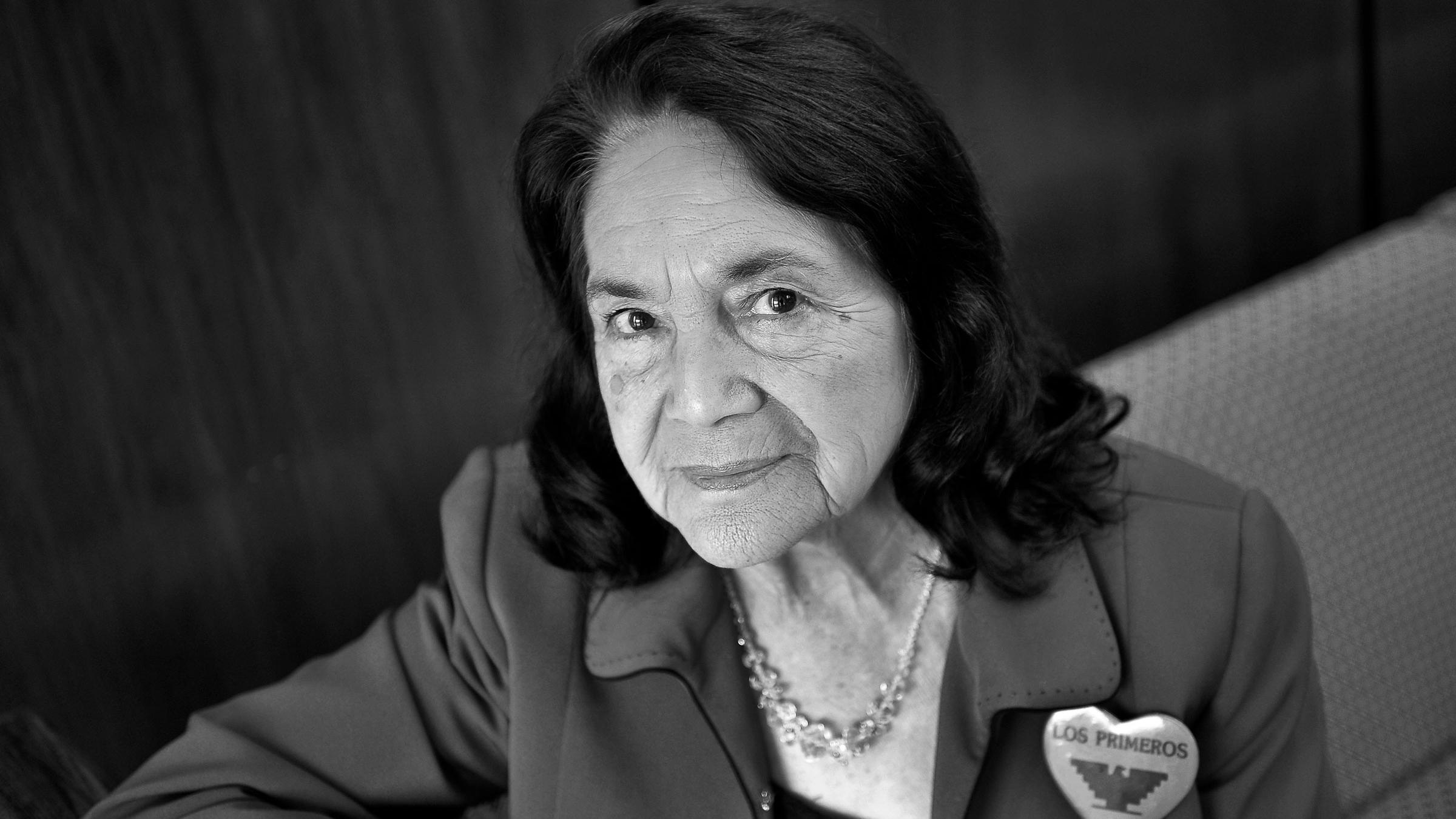
Dolores Huerta, the legendary labor leader and civil rights organizer whose strategic acumen, grassroots mobilization, and tireless advocacy transformed agricultural labor across the United States, has died at the age of 96. Huerta, who rose to national prominence during the 1960s as a principal architect of the farmworkers movement alongside Cesar Chavez, passed away on Wednesday, according to reporting by Jasmine Aguilera. Her death closes a foundational chapter in American labor history, marking the loss of an organizer who spent seven decades challenging agricultural conglomerates, establishing collective bargaining mechanisms for disenfranchised workers, and championing civil, feminist, and immigrant rights from the dusty fields of California’s Central Valley to the halls of legislative power in Sacramento and Washington.
Key facts
What happened
Dolores Huerta passed away on Wednesday at the age of 96, as reported by journalist Jasmine Aguilera. While detailed circumstances surrounding her passing, including the specific clinical cause of death and immediate memorial arrangements, were not comprehensively detailed in initial dispatches, her death marks the conclusion of one of the longest and most consequential careers in twentieth- and twenty-first-century American grassroots politics.
Born Dolores Clara Fernandez on April 10, 1930, in the mining town of Dawson, New Mexico, Huerta moved as a child with her mother and siblings to the agricultural hub of Stockton, California. After training as an elementary school teacher, she stepped away from the classroom in the mid-1950s, famously observing that she could do little to educate children who came to school barefoot, malnourished, and suffering from the brutal economic deprivation endured by their migrant farmworker parents. That realization propelled her into full-time organizing, initially through the Stockton chapter of the Community Service Organization, a civic empowerment group founded by Fred Ross.
It was through that early community work that Huerta met Cesar Chavez. Recognizing that standard civic programs failed to resolve the core economic vulnerability of agricultural laborers, Huerta and Chavez departed the organization in 1962 to establish the National Farm Workers Association in Delano, California. Operating without formal institutional funding or the protection of standard federal labor statutes, Huerta traversed agricultural camps, signed up field laborers, organized consumer boycotts, and faced physical intimidation from growers, local law enforcement, and opposing groups. Her persistent presence at negotiating tables throughout the late 1960s established her as the primary tactician who transformed isolated field walkouts into an international consumer boycott movement that permanently altered American agricultural labor dynamics.
Why it matters
Huerta’s passing matters fundamentally because agricultural labor in the United States remains an essential, structurally vulnerable sector of the domestic economy. Farmworkers remain largely excluded from the baseline protections of the National Labor Relations Act of 1935, a legacy of New Deal-era compromises that exempted agricultural and domestic workers from federal collective bargaining guarantees. Huerta’s life work proved that marginalized, non-citizen, and low-wage workers could nonetheless build sustained collective power through direct action, consumer pressure, and political coalition building.
Her career established modern organizing tactics that remain standard practice across contemporary labor, environmental, and civil rights movements. The consumer boycott strategy she designed during the Delano grape strike demonstrated that urban consumers hundreds or thousands of miles away could be mobilized around the working conditions of rural laborers. By pressuring grocery chains in major metropolitan centers such as New York, Chicago, and Boston, Huerta bypassed the geographic isolation of agricultural fields, bringing significant economic leverage against major growers.
Furthermore, Huerta broke profound gender barriers within both the trade union movement and the broader Chicano civil rights struggle. In an era when union executive boards and civil rights rostrums were dominated almost exclusively by men, Huerta operated as a lead negotiator, political strategist, and public spokeswoman while raising eleven children. Her insistence on intersectional advocacy—connecting agricultural labor conditions to systemic racism, environmental degradation from chemical pesticides, and gender equity—anticipated modern social movement frameworks by several decades. For policymakers, organizers, and agricultural enterprises navigating current labor shortages, guest-worker visa debates, and climate impacts on outdoor labor, Huerta’s tactical and legislative legacy remains an active reference point.
The background
To understand Huerta’s impact requires examining the institutional and legal environment confronting agricultural workers throughout the twentieth century. For decades, the agricultural economy of the American Southwest depended heavily on migrant labor forces that lacked statutory protections, stable housing, or the legal right to organize without fear of termination or deportation. The federal Bracero Program, an agreement between the United States and Mexico active from 1942 to 1964, brought millions of Mexican contract laborers into American fields under conditions that kept wages depressed and impeded domestic labor organizing.
Following the termination of the Bracero Program, conditions reached a turning point in September 1965 in Delano, California. Filipino farmworkers affiliated with the Agricultural Workers Organizing Committee, led by organizers including Larry Itliong and Philip Vera Cruz, initiated a strike against local table grape growers demanding wages commensurate with the federal minimum wage. Huerta and Chavez led the National Farm Workers Association to vote unanimously to join the walkout. The two organizations officially merged in 1966 to establish the United Farm Workers Organizing Committee, later known simply as the United Farm Workers.
While Chavez became the spiritual and moral figurehead of the movement, frequently undertaking long public fasts and long-distance marches, Huerta functioned as the operational linchpin. She directed the union’s boycott operations, lobbied state and federal lawmakers, and took charge of collective bargaining negotiations. Her hard-nosed negotiating style produced the historic 1970 union contracts with California table grape growers, securing significant wage increases, access to clean drinking water, sanitary facilities in the fields, and the formal regulation of toxic pesticides like DDT.
Her legislative advocacy culminated in the passage of the California Agricultural Labor Relations Act of 1975 under Governor Jerry Brown. The statute was the first continental American law to guarantee collective bargaining rights, secret-ballot union elections, and protection against unfair labor practices for agricultural workers. In her later years, after surviving a life-threatening beating by San Francisco police officers during a peaceful 1988 protest against the policies of Vice President George H.W. Bush, she founded the Dolores Huerta Foundation in 2002 to train grassroots community organizers in the Central Valley, remaining an active public figure well into her nineties.
Reaction
Initial reporting by Jasmine Aguilera focused on the announcement of Huerta’s death, with broader formal statements from national labor confederations, legislative caucuses, and historical preservation institutions expected to follow. Tributes are anticipated across the American political and labor spectrum, particularly from organizations she influenced directly, including the United Farm Workers, the AFL-CIO, the Congressional Hispanic Caucus, and civil rights bodies throughout California and the American Southwest.
State officials in California, where Huerta exercised considerable influence on agricultural and environmental legislation across six decades, are expected to introduce legislative resolutions recognizing her contributions. Statements are also anticipated from contemporary labor leaders who cite Huerta’s direct-action techniques as foundational to modern campaigns organizing service, agricultural, and logistics workers.
What we don't know yet
Several key details regarding Huerta’s passing remain unconfirmed in the immediate reporting. The initial summary by Jasmine Aguilera confirmed that she died on Wednesday at age 96 but did not disclose the specific clinical cause of death, whether she passed away at her residence in California or in a healthcare facility, or who was present at her bedside.
Additionally, specific schedules for public memorial services, official state commemorations, and funeral arrangements have yet to be published. Details concerning the leadership transition and the long-term stewardship of the Dolores Huerta Foundation, which coordinates active community organizing and voter education projects across Kern, Tulare, and Fresno counties, also remain to be formally detailed by representatives of her family and foundation staff.
What to watch
In the coming days, observers should monitor announcements from the Dolores Huerta Foundation and the Huerta family regarding public memorial ceremonies, which are expected to draw national political leaders, labor organizers, and agricultural laborers to California’s Central Valley. Observers should also watch whether California state leaders or federal representatives propose formal institutional honors, such as state funeral observances, dedications of public infrastructure, or national commemorative efforts.
Beyond immediate commemorations, Huerta’s death is likely to refocus public and legislative attention on the unresolved issues she championed. These include ongoing debates over federal heat-stress standards for outdoor workers, protections for agricultural laborers facing extreme climate conditions, and immigration reform proposals that would offer permanent legal status to unauthorized farmworkers. How modern labor coalitions mobilize her legacy during upcoming legislative sessions will serve as an indicator of her enduring organizational footprint.
This report draws upon initial reporting published by journalist Jasmine Aguilera covering the death and historical career of Dolores Huerta.
How this story was produced
This report was written by The Global Wire newsroom from reporting first published by Jasmine Aguilera. We verify the core facts against the original report, write our own account, and add the background and consequences a short wire item leaves out. Drafting is AI-assisted inside an editor-supervised pipeline, and every story is checked for accuracy of attribution, structure and duplication before it appears — full detail in our AI and funding disclosure.
Spotted an error? Tell us at corrections@horizonglobalnews.com and read our corrections policy or editorial standards.





Reader comments
Loading comments…