

Study Finds 2025 Los Angeles Wildfires Exposed 7 Million People to Spikes in Airborne Lead
Research indicates smoke plumes from urban interface fires in Southern California generated toxic heavy metal concentrations dozens of times above baseline levels.
By The Global Wire Newsroom · Reported from ABC News
Link preview · horizonglobalnews.com
Study Finds 2025 Los Angeles Wildfires Exposed 7 Million People to Spikes in Airborne Lead
Research indicates smoke plumes from urban interface fires in Southern California generated toxic heavy metal concentrations dozens of times above baseline levels.
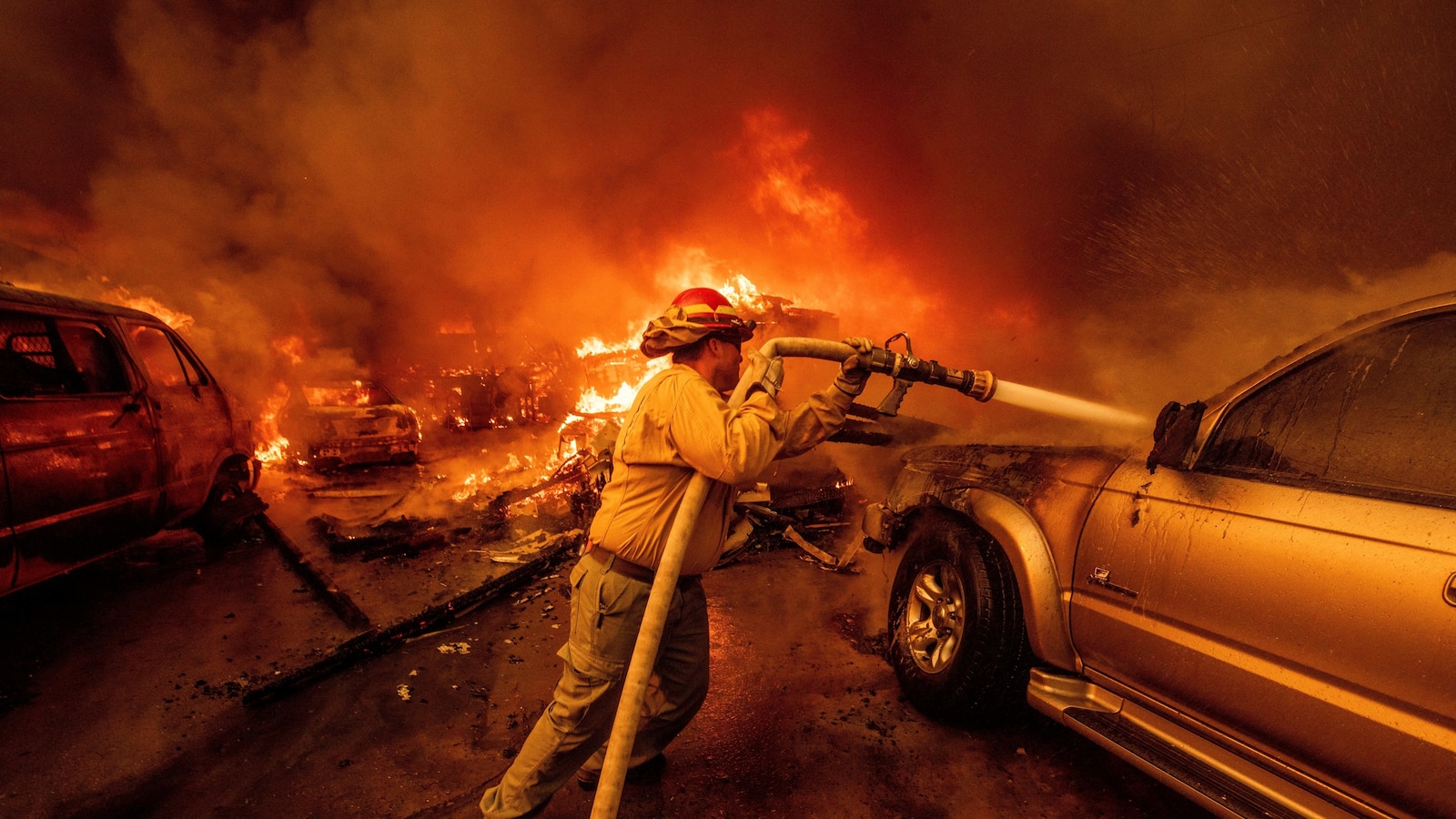
Smoke plumes generated during the height of the 2025 wildfire season across the Greater Los Angeles area exposed an estimated 7 million people to airborne lead levels that climbed to more than 80 times standard background measurements over a single 24-hour period, according to a newly released scientific study. The findings, reported by ABC News following the publication of the research, reveal that burning structures, vehicles, consumer goods, and historical soil deposits within the wildland-urban interface transformed vegetative wildfire smoke into a complex airborne cocktail of toxic heavy metals, presenting unexpected environmental health hazards for dense urban populations far removed from the active fire perimeters.
Key facts
What happened
During the catastrophic wildfire events that impacted the Los Angeles basin during the 2025 fire season, intense blazes swept across critical transition zones where undeveloped chaparral and suburban neighborhoods meet. Strong seasonal winds pushed dense plumes of smoke downwind across the heavily populated coastal plain and inland valleys. While emergency authorities and air regulators tracked standard particulate matter indices, specialized atmospheric analyses subsequently revealed that the chemical profile of the plume differed substantially from conventional forest fire smoke.
According to reporting by ABC News on the academic findings published on Wednesday, the resulting atmospheric fallout delivered extraordinary concentrations of heavy metals directly into neighborhoods housing millions of people. At the most severe point of the atmospheric event, roughly 7 million people resided in zones where 24-hour concentrations of respirable airborne lead reached more than 80 times the typical local background rate.
Researchers analyzing atmospheric collection samples and chemical dispersion modeling determined that this surge in airborne lead did not originate solely from vegetative fuel. Instead, the fires engulfed modern housing tracts, older residential neighborhoods, commercial properties, utility poles, and parked automobiles. As structures combusted at high temperatures, legacy materials—including vintage exterior paints, older plumbing fixtures, automotive lead-acid batteries, solder, electrical wiring, and decades of roadside soil deposits from the era of leaded gasoline—were aerosolized. The resulting particulate matter was swept high into thermal updrafts and carried across the broader metropolitan area, blanketing urban corridors with fine, inhalable dust enriched with heavy metals.
Why it matters
These findings mark a fundamental shift in how scientists, environmental regulators, and public health officials must evaluate wildfire risk in modern urbanized regions. For decades, emergency guidance during wildfire smoke emergencies has focused almost exclusively on fine particulate matter known as PM2.5—particles smaller than 2.5 micrometers in diameter. Public warnings typically recommend staying indoors, using high-efficiency particulate air (HEPA) filters, or wearing N95 respirators to avoid airway irritation, asthma exacerbations, and cardiovascular stress. However, traditional particulate monitoring rarely conducts real-time isotopic or chemical characterization to determine the specific elemental toxicity of those particles.
Airborne lead presents an entirely distinct toxicological profile from organic wood smoke. When lead particles are inhaled, they can cross the alveolar-capillary membrane directly into the bloodstream, circulating throughout the body and accumulating in organs and skeletal tissue. The U.S. Environmental Protection Agency (EPA) and the World Health Organization (WHO) have established that lead has no safe level of exposure in humans. In children, even transient elevations in blood lead levels are clinically associated with irreversible neurodevelopmental harm, lower cognitive performance, behavioral disorders, and deficits in executive function. In adults, acute and chronic lead exposures are linked to elevated risks of hypertension, cardiovascular disease, and chronic renal impairment.
Furthermore, the economic and structural implications for the wildland-urban interface are profound. If wildfire smoke must now be classified during structure-burning events as a vehicle for industrial heavy metals rather than pure biomass emissions, regional air quality management districts, school boards, municipal health agencies, and workplace safety administrators will face urgent demands to overhaul emergency response protocols. Public remediation efforts may need to extend beyond cleaning up ash piles at the burn site to assessing soil and surface contamination across surrounding residential areas downwind.
The background
Wildfires in Southern California are driven by unique geographic, ecological, and meteorological dynamics. The Mediterranean climate creates long summer and autumn dry periods, during which low humidity and prolonged heat desiccate endemic vegetation such as sage scrub and chaparral. These dry fuels coincide historically with offshore wind patterns, commonly known as the Santa Ana winds, which funnel high-pressure air through mountain passes toward the coast at gale force, propelling fires into suburban developments at unprecedented speeds.
Over the past century, Southern California's rapid suburban expansion pushed housing developments deep into canyons and foothills, creating one of the largest wildland-urban interfaces in North America. This geographic convergence poses a dual challenge: it increases ignition sources within the landscape and places tens of thousands of man-made structures directly in the path of recurrent fire. When suburban developments burn, the fuel composition changes dramatically compared to backcountry wilderness fires. The combustion of treated lumber, polyvinyl chloride (PVC) pipes, synthetic carpets, electronics, roofing tar, and vehicles releases known carcinogens, volatile organic compounds, polycyclic aromatic hydrocarbons, and heavy metals.
Lead contamination in older urban centers like Los Angeles also carries a historical legacy. Prior to the federal ban on leaded automotive gasoline under the Clean Air Act, decades of vehicle emissions deposited thousands of metric tons of fine lead dust onto roadside soils, parkways, and canyon slopes. Concurrently, homes constructed prior to the 1978 federal ban on residential lead-based paint retain thick layers of the heavy metal under newer coatings. When intense, wind-driven interface fires incinerate these communities, both the historical soil reserves and structural components become airborne, effectively remobilizing decades of sequestered industrial toxins into the regional airshed.
Under current regulatory structures, the EPA sets National Ambient Air Quality Standards (NAAQS) for criteria air pollutants, including lead, PM2.5, sulfur dioxide, nitrogen dioxide, and ozone. While the federal ambient standard for lead is 0.15 micrograms per cubic meter averaged over a rolling three-month period, standard monitoring networks rely on stationary, filter-based samplers that are often analyzed retrospectively in laboratories rather than providing real-time data to dispatch immediate public advisories during fast-moving disaster events.
Reaction
Following the publication of the study, environmental health advocates, atmospheric scientists, and civic leaders are expected to demand formal reviews of state and local public health alert mechanisms. Regulators such as the California Air Resources Board (CARB) and the South Coast Air Quality Management District (South Coast AQMD)—the agency responsible for air pollution control across non-desert portions of Los Angeles, Orange, Riverside, and San Bernardino counties—face growing calls to incorporate heavy-metal speciation monitoring into their emergency deployable sensor networks.
Public health agencies, including the Los Angeles County Department of Public Health, will likely face questions regarding post-fire surveillance and whether pediatric blood-lead testing programs should be recommended or subsidized following major structural wildland-urban interface fires. Community advocacy groups representing environmental justice neighborhoods—frequently situated in low-lying parts of the basin where stagnant air can cause dense smoke plumes to settle for extended periods—are also expected to use the findings to lobby for increased state investments in household filtration systems, retrofitted public shelters, and more protective occupational standards for outdoor municipal and utility workers.
Industry groups, including construction associations and insurance carriers, are monitoring the emerging science around wildfire particulate composition closely, as enhanced understanding of toxic smoke dispersion could influence property damage liability, municipal building codes, and hazardous materials mitigation requirements for wildfire-recovery operations.
What we don't know yet
While the study establishes a dramatic 24-hour surge in atmospheric lead concentrations, several critical questions remain unaddressed in the currently available reporting. The public summary does not delineate the exact geographic distribution of the peak exposure zones across Los Angeles County, leaving it unclear which specific neighborhoods, microclimates, or socioeconomic corridors bore the brunt of the 80-fold increase.
Additionally, the available reporting does not specify whether subsequent biomonitoring was conducted to evaluate actual systemic uptake among residents. While airborne lead levels surged, the degree to which that atmospheric pulse translated into measurable increases in blood lead concentrations among the exposed 7 million people remains unquantified. The research summary also does not provide the exact absolute concentrations recorded in micrograms per cubic meter, nor does it detail the specific contributions of other toxic heavy metals, such as cadmium, arsenic, chromium, or nickel, which are typically found alongside lead in urban structure fires. Finally, the long-term environmental fate of this fallout—such as whether the settling dust has permanently contaminated residential soils, community gardens, or school playgrounds downwind—remains unmeasured.
What to watch
In the coming months, several key developments will indicate how regulatory and scientific institutions respond to this new evidence. First, researchers and environmental regulators will look for subsequent clinical studies and public health data evaluating pediatric blood lead tests collected in Southern California during and immediately following the 2025 fire season to assess physiological impacts.
Second, attention will turn to the South Coast AQMD and CARB to see if they initiate pilot programs deploying rapid-turnaround chemical speciation technology during future wildfire emergencies. Observers should watch upcoming public board meetings of these agencies for formal agenda items addressing wildland-urban interface toxic emissions.
Third, legislative bodies in Sacramento and municipal councils across the Los Angeles metropolitan area may consider legislation requiring enhanced air filtration standards in schools and child-care facilities, as well as revised protocols for declaring smoke emergencies based on structure loss rather than biomass burned alone. Federal oversight will also be an area to monitor, as the EPA periodically reviews its ambient monitoring networks and guidelines for wildland-urban interface incident response teams.
This report is based on coverage originally published by ABC News regarding findings on the atmospheric composition of smoke from the 2025 Los Angeles fires.
How this story was produced
This report was written by The Global Wire newsroom from reporting first published by ABC News. We verify the core facts against the original report, write our own account, and add the background and consequences a short wire item leaves out. Drafting is AI-assisted inside an editor-supervised pipeline, and every story is checked for accuracy of attribution, structure and duplication before it appears — full detail in our AI and funding disclosure.
Spotted an error? Tell us at corrections@horizonglobalnews.com and read our corrections policy or editorial standards.




Reader comments
Loading comments…