

Sisi Seeks Parliament Approval for Saudi Defense, Rules Out Ground Attack in Yemen
Egypt's president asked lawmakers to authorize military support for Saudi Arabia upon request, insisting any deployment would strictly defend Saudi territory.
By The Global Wire Newsroom · Reported from AP
Link preview · horizonglobalnews.com
Sisi Seeks Parliament Approval for Saudi Defense, Rules Out Ground Attack in Yemen
Egypt's president asked lawmakers to authorize military support for Saudi Arabia upon request, insisting any deployment would strictly defend Saudi territory.
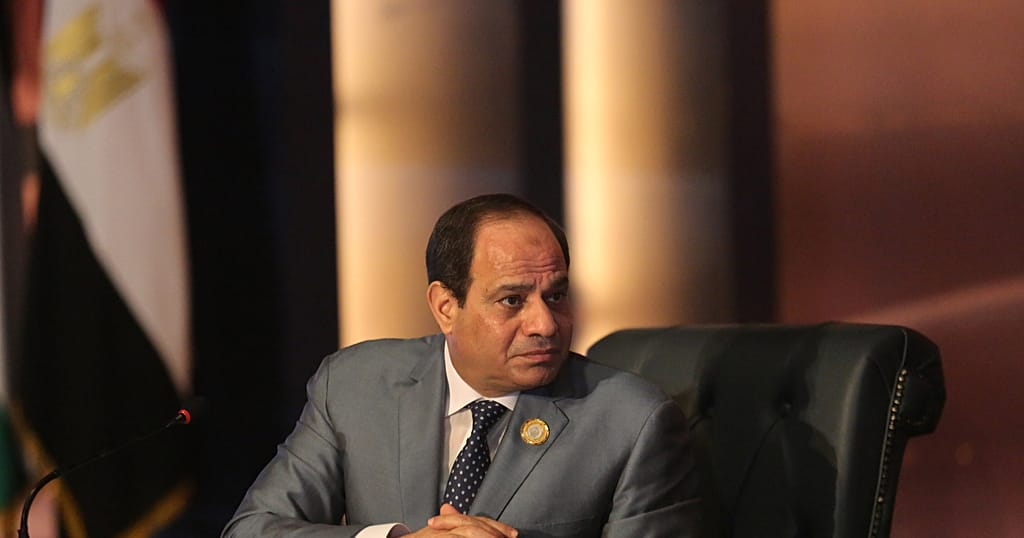
CAIRO — Egyptian President Abdel Fattah el-Sisi has asked parliament to authorize potential military assistance to Saudi Arabia, emphasizing that any prospective mobilization would focus exclusively on safeguarding the kingdom's sovereign borders rather than participating in offensive strikes inside neighboring Yemen. Addressing lawmakers, Sisi framed the step as a contingent measure designed to support Riyadh against attacks by Yemen's Iran-aligned Houthi movement, stipulating that Egyptian forces would only deploy if formally requested by Saudi authorities.
Key facts
What happened
President Abdel Fattah el-Sisi formally approached the Egyptian parliament to seek institutional backing for potential military support to Saudi Arabia, according to reporting by the Associated Press. In his remarks, the Egyptian president articulated a strict operational boundary for any deployment, explicitly assuring domestic and regional audiences that Cairo has no intention of launching attacks on Yemeni soil.
Sisi underscored that the proposed authorization is conditional, resting on the prerequisite of an explicit request from the Saudi government. By establishing this caveat, the Egyptian presidency created an operational reserve: Cairo can prepare the legal and domestic groundwork for deployment without obligating itself to an immediate dispatch of troops or hardware.
The measure adheres to the legal requirements governing external troop deployments under the Egyptian legal framework. Under established constitutional rules, the executive branch cannot unilaterally deploy armed forces on external combat assignments. Sisi's approach to the legislative branch marks the necessary first formal domestic hurdle required before the armed forces can legally mobilize beyond national borders in non-peacekeeping capacities.
While the presidency did not publicize an itemized manifest of potential military assets, the declaration established a conceptual perimeter around any future mission. Sisi reiterated that Egypt's strategic doctrine prioritizes Gulf security as an integral component of Egyptian national defense, but insisted that this commitment would remain defensive, designed to neutralize incoming aerial threats or safeguard territorial integrity rather than entangling Egyptian soldiers in Yemen's terrain.
Why it matters
Sisi’s explicit limitation of military assistance to defensive operations inside Saudi Arabia carries significant strategic, economic, and geopolitical ramifications for the wider Middle East. For Riyadh, the formal prospect of Egyptian armed forces reinforcing its territory provides a substantial political and conventional deterrent against Houthi cross-border incursions, missile barrages, and one-way attack drones. Egypt possesses the largest conventional standing military in the Arab world, with extensive air defense arrays, combat aviation assets, and ground formations that could reinforce critical infrastructure across Saudi Arabia's southern and western provinces.
Economically, the announcement directly impacts the stability of Red Sea maritime trade and the Suez Canal, Egypt's premier source of foreign currency. Houthi strikes targeting regional infrastructure and commercial shipping around the Bab el-Mandeb strait have repeatedly forced international maritime carriers to divert traffic around Africa's Cape of Good Hope, inflicting acute losses on Egypt's transit revenues. Demonstrating readiness to reinforce Gulf defense aligns Cairo with the security architecture protecting vital trade waterways while avoiding a direct offensive campaign that could provoke retaliatory attacks against Egyptian targets.
Domestically, the distinction between defending Saudi soil and attacking Yemen is critical for Sisi’s administration. By categorically ruling out an offensive inside Yemen, the presidency mitigates widespread domestic anxieties regarding foreign military adventures. Egyptian public opinion and military leadership remain cautious about external ground wars, making a defensive mandate far more palatable to the domestic political establishment and the broader public.
Regionally, the conditional offer reinforces the patron-client and mutual-support dynamics between Cairo and Gulf capitals. Saudi Arabia, alongside the United Arab Emirates and Kuwait, has channeled tens of billions of dollars in central bank deposits, direct foreign investments, and energy shipments to support Egypt's currency and economy over the past decade. Fulfilling its constitutional prerequisites to assist Riyadh demonstrates that Cairo remains willing to act as an ultimate security guarantor for its financial benefactors.
The background
Egypt's caution regarding military operations in Yemen is anchored in modern military history. In 1962, President Gamal Abdel Nasser deployed tens of thousands of Egyptian troops to North Yemen to support republican officers who had overthrown the Zaydi imamate, triggering an eight-year civil war. Saudi Arabia backed the royalist forces, resulting in an exhausting proxy conflict that cost Egypt an estimated 10,000 to 26,000 casualties and depleted the military's budget and readiness. Often referred to by military historians as "Egypt's Vietnam," the Yemen intervention severely compromised Egyptian preparedness ahead of the 1967 Six-Day War against Israel. The institutional memory of that quagmire continues to inform Cairo's strategic doctrine, instilling a deep aversion to deploying infantry into Yemen's mountainous interior.
When a Saudi-led coalition launched Operation Decisive Storm in March 2015 to roll back the Houthi takeover of Sanaa and reinstate the internationally recognized government of President Abdrabbuh Mansur Hadi, Egypt officially joined the alliance. However, Cairo's operational contribution was deliberately confined. Egypt dispatched naval vessels to enforce blockades and safeguard maritime navigation in the southern Red Sea and provided air and logistical support, but steadfastly refused requests to deploy ground divisions into combat zones.
Constitutionally, foreign deployments are strictly regulated under Egypt's post-2013 legal architecture. Article 152 of the 2014 Constitution designates the president as the Supreme Commander of the Armed Forces but forbids declaring war or sending forces on combat missions outside national borders without the formal consultation of the National Defense Council and the approval of a two-thirds majority in the House of Representatives. Sisi's approach to parliament is the mandated procedure to satisfy this legal requirement.
In recent years, the conflict has witnessed fluctuating periods of active hostilities, fragile truces, and direct cross-border strikes against Saudi commercial hubs and energy installations run by state oil giant Saudi Aramco. The Houthi movement's acquisition of long-range ballistic missiles and loitering munitions, provided with Iranian technological assistance, broadened the geographic risk to Saudi civil and military installations, sustaining Riyadh's demand for foreign air defense and radar coverage.
Reaction
While official responses from Riyadh were not immediately detailed in initial reporting, Saudi defense planners have long sought deeper operational integration with regional partners to defend critical national infrastructure against asymmetric threats. Saudi officials routinely highlight the strategic unity between Cairo and Riyadh, frequently citing Sisi’s recurring public doctrine that Gulf security is a red line for Egyptian national defense.
Within the Egyptian House of Representatives, where pro-government coalitions hold an overwhelming majority, the executive request is expected to receive wide backing following review by defense and national security committees. Lawmakers have historically endorsed executive military directives, particularly those presented as defensive measures supporting regional allies rather than prolonged expeditionary interventions.
Yemeni Houthi leadership has regularly warned regional states against collaborating with the Saudi-led coalition, frequently threatening to expand their targeting aperture to include any military assets assisting Saudi operations. While Sanaa's de facto authorities did not immediately issue a direct response to Sisi's remarks, Houthi military spokespersons have historically maintained that any foreign base or asset participating in hostilities against their forces represents a legitimate military target.
What we don't know yet
Significant operational and logistical elements of the proposed authorization remain unclarified by the available reporting. It is not currently known what specific branches of the Egyptian armed forces would be involved in a potential deployment. The authorization could encompass specialized air defense batteries, radar surveillance teams, border security advisers, or mechanized units positioned away from active combat lines.
Furthermore, the exact triggers that would prompt Riyadh to request the deployment remain undefined. It is unclear whether Saudi Arabia seeks Egyptian units as a permanent deterrent garrison or as an emergency reserve to be called upon only if cross-border attacks escalate past a specific threshold.
The logistical and financial arrangements underpinning any prospective mission also remain undisclosed. In past multinational arrangements, hosting governments typically absorbed the operational and sustainment costs of allied detachments, but no formal bilateral framework between Cairo and Riyadh has been made public regarding this measure.
What to watch
The immediate next step will be the legislative processing of Sisi's request within the Egyptian House of Representatives. Observers will monitor the National Defense Council's deliberations, the formal parliamentary debate, and the eventual vote count to assess whether any domestic opposition surfaces regarding foreign deployments.
Subsequent developments will also hinge on formal diplomatic communications from Riyadh. Statements from the Saudi Ministry of Defense or the Royal Court will indicate whether the kingdom plans to activate the bilateral request or hold the Egyptian offer in reserve as a diplomatic and strategic deterrent against its adversaries.
Finally, observers of regional maritime and military affairs will watch for reactions from the Houthi movement and Iran, particularly regarding potential shifts in rhetoric or targeting patterns. Any eventual deployment of Egyptian air defense or naval assets near the Saudi-Yemeni border or across the Red Sea littoral could redefine the rules of engagement and affect broader diplomatic talks aimed at reaching a permanent settlement to the Yemeni conflict.
*This report is based on original reporting by the Associated Press.*
How this story was produced
This report was written by The Global Wire newsroom from reporting first published by AP. We verify the core facts against the original report, write our own account, and add the background and consequences a short wire item leaves out. Drafting is AI-assisted inside an editor-supervised pipeline, and every story is checked for accuracy of attribution, structure and duplication before it appears — full detail in our AI and funding disclosure.
Spotted an error? Tell us at corrections@horizonglobalnews.com and read our corrections policy or editorial standards.





Reader comments
Loading comments…