

SLAC Physicists Clock Record Hard X-Ray Pulses Below 400 Attoseconds
Researchers at California’s Linac Coherent Light Source have produced and measured sub-400-attosecond hard X-ray bursts, unlocking new precision for observing subatomic electron motion.
By The Global Wire Newsroom · Reported from Mrigakshi Dixit
Link preview · horizonglobalnews.com
SLAC Physicists Clock Record Hard X-Ray Pulses Below 400 Attoseconds
Researchers at California’s Linac Coherent Light Source have produced and measured sub-400-attosecond hard X-ray bursts, unlocking new precision for observing subatomic electron motion.
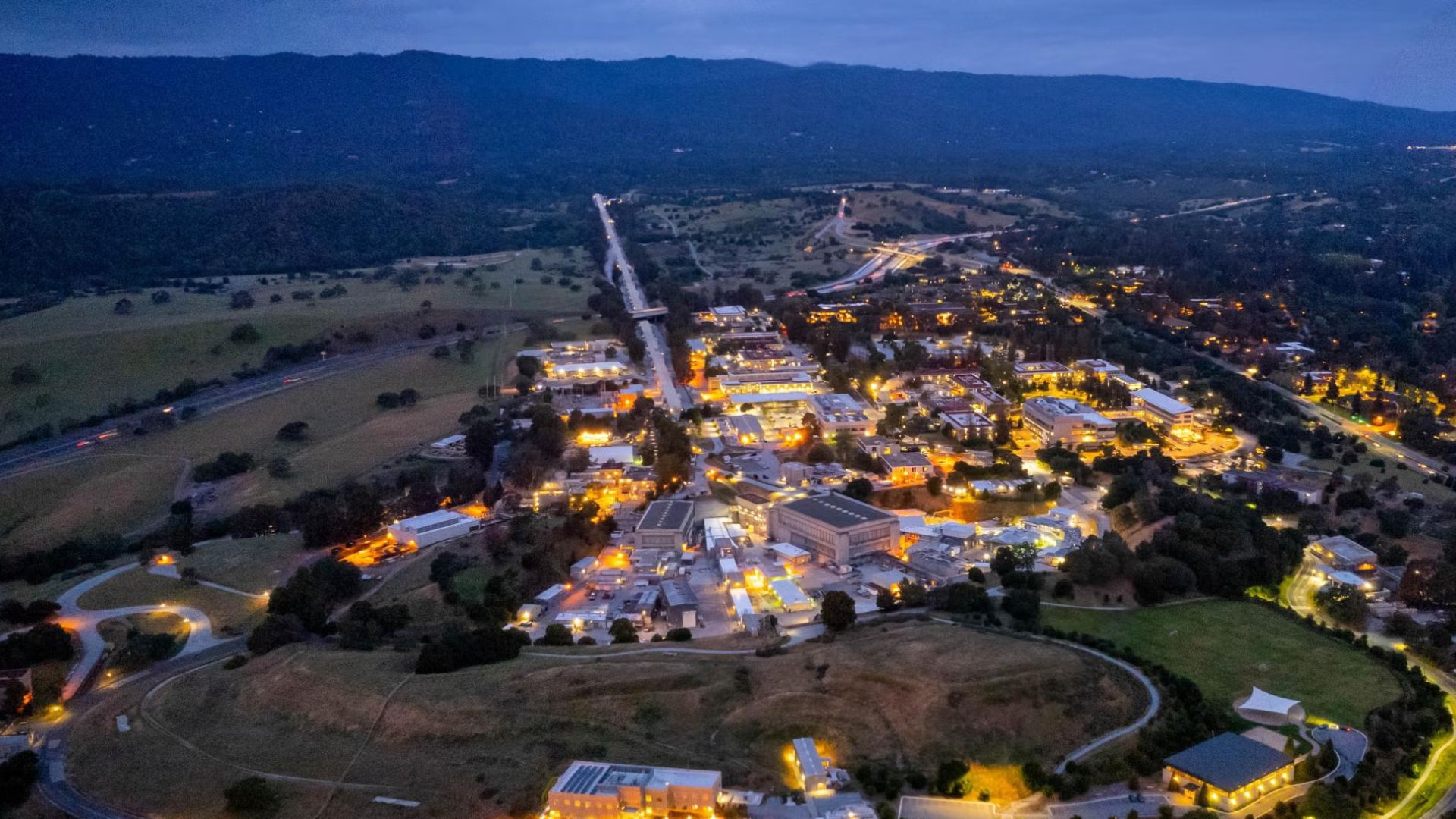
MENLO PARK, Calif. — Physicists operating the Linac Coherent Light Source at the SLAC National Accelerator Laboratory in California have generated and measured the shortest high-energy X-ray pulses ever recorded at an X-ray free-electron laser, reaching durations beneath 400 attoseconds. The measurement establishes a new operational threshold for free-electron laser facilities worldwide, compressing the duration of high-energy photon bursts to a scale capable of capturing the fastest electronic processes in matter.
Key facts
What happened
According to reporting by science journalist Mrigakshi Dixit, experimental teams utilizing the Linac Coherent Light Source (LCLS) succeeded in both synthesizing and directly characterizing hard X-ray pulses measuring under 400 attoseconds in duration. Hard X-rays operate at photon energies typically exceeding 5 to 10 kiloelectronvolts, characterized by angstrom-scale wavelengths that match the distances between atoms in chemical lattices.
In an X-ray free-electron laser, bursts of light are produced by accelerating bunches of electrons to relativistic velocities—near the speed of light—through a kilometer-scale linear particle accelerator. These accelerated electron packets are subsequently guided through undulators, periodic arrays of alternating permanent magnets. As the electrons traverse this magnetic structure, they oscillate along an undulating path, emitting synchrotron radiation. Through a process called self-amplified spontaneous emission (SASE), the emitted light interacts back on the electron bunch, organizing the electrons into tiny microbunches spaced at the X-ray wavelength. This grouping causes the radiation to amplify exponentially into an intensely bright, coherent laser pulse.
Historically, standard SASE operations yielded pulses lasting several tens of femtoseconds (one femtosecond equals 1,000 attoseconds). To push into the attosecond domain, accelerator physicists deploy specialized electron-beam shaping techniques, such as using high-power optical lasers to modulate a localized slice of the electron bunch, alongside slotted magnetic chicanes that discard all but a sliver of the microbunched charge.
Generating an attosecond hard X-ray flash is only half the engineering equation; measuring it represents an equally steep technical hurdle. Conventional photodetectors operate on nanosecond or picosecond scales and cannot resolve events separated by quintillionths of a second. To confirm the sub-400-attosecond mark, the research group had to implement ultrafast diagnostic methods, typically utilizing angular streaking or high-resolution electron spectrometers to reconstruct the X-ray temporal profile from secondary photoelectrons ejected from a target gas.
Why it matters
The ability to produce hard X-ray pulses under 400 attoseconds bridges a long-standing physical trade-off between spatial and temporal resolution in molecular dynamics. In nature, the movements of atomic nuclei occur primarily on the femtosecond timescale, corresponding to chemical bond vibrations and molecular rearrangements. However, the electrons that mediate these bonds move substantially faster, governed by the attosecond timescale. An electron orbiting the nucleus of a hydrogen atom, for instance, requires approximately 151 attoseconds to complete a single orbital circuit.
Until recently, attosecond science was largely confined to table-top high-harmonic generation (HHG) laser systems. While HHG systems routinely produce attosecond pulses, they primarily generate low-energy extreme ultraviolet (EUV) or soft X-ray photons. These lower-energy photons lack the penetration depth and angstrom-scale wavelengths needed to resolve individual atomic positions within complex molecules or solid-state materials.
Hard X-rays generated by an XFEL solve this problem by pairing sub-atomic spatial resolution with attosecond duration. Achieving pulses under 400 attoseconds enables structural biologists, solid-state physicists, and materials scientists to design pump-probe experiments that track inner-shell electron migrations in real time. In such experiments, an initial laser pulse initiates a chemical reaction or electronic transition, and a synchronized sub-400-attosecond hard X-ray pulse takes a snapshot of the resulting charge configuration before the surrounding atomic nuclei have time to move.
This capability has immediate implications for the study of radiation damage, semiconductor performance, quantum materials, and artificial photosynthesis. Understanding how charge relocates across molecules within fractions of a femtosecond is fundamental to designing more efficient solar cells, preventing structural degradation in radiation-exposed electronics, and controlling catalytic chemical reactions at the most basic level.
The background
The quest for shorter light pulses has defined ultrafast optics for more than five decades, progressing from picosecond ruby lasers in the 1960s to femtosecond titanium-sapphire lasers in the 1980s and 1990s. The attosecond frontier opened formally at the turn of the twenty-first century, when researchers demonstrated that focusing intense infrared laser pulses into noble gases could produce bursts of high-harmonic radiation measured in hundreds of attoseconds. This groundbreaking work led to the awarding of the 2023 Nobel Prize in Physics to Pierre Agostini, Ferenc Krausz, and Anne L’Huillier for developing experimental methods that generate attosecond pulses for the study of electron dynamics.
Parallel to table-top laser advancements, the international particle accelerator community pursued large-scale light sources. In 2009, SLAC launched the original Linac Coherent Light Source, converting a one-kilometer section of its historic three-kilometer radio-frequency linear accelerator into the world’s first hard X-ray free-electron laser. The facility delivered X-ray pulses a billion times brighter than storage-ring synchrotrons, but initial pulses were tens of femtoseconds long.
Over the past decade, other major facilities came online to compete in the hard X-ray regime, including the SACLA facility in Japan (2011), PAL-XFEL in South Korea (2016), the European XFEL in Hamburg, Germany (2017), and SwissFEL in Switzerland (2017). Across these installations, researchers developed specialized operational modes, such as the X-ray Laser-Enhanced Attosecond Pulse (XLEAP) project at SLAC, specifically to shave pulse durations down from tens of femtoseconds into the hundreds of attoseconds.
In recent years, SLAC completed a major infrastructure enhancement known as LCLS-II, introducing a superconducting radio-frequency linear accelerator capable of firing up to one million pulses per second, compared to the original facility’s 120 pulses per second. This sustained investment in accelerator architecture created the operational stability necessary to isolate, control, and accurately measure sub-400-attosecond hard X-ray beams.
Reaction
While the reporting by Mrigakshi Dixit outlines the empirical achievement, formal reactions from institutional bodies and the broader academic community will crystallize as peer-reviewed publications detailing the exact accelerator parameters enter circulation. The Department of Energy’s Office of Basic Energy Sciences, which oversees funding for SLAC and comparable synchrotron user facilities, typically incorporates such benchmarks into future facility roadmaps.
Within the ultrafast physics and chemical dynamics communities, researchers who rely on user-access proposals at SLAC are expected to examine how readily this operating mode can be integrated into standard experimental beamlines. Leading scientific conferences, including meetings convened by the American Physical Society and the Optical Society (Optica), frequently serve as the venues where peer groups scrutinize the measurement methodology, signal-to-noise thresholds, and spatial coherence metrics underpinning record-setting pulse claims.
What we don't know yet
Several key operational parameters remain unspecified in the initial summary reporting. First, the exact pulse duration—beyond the general classification of being under 400 attoseconds—has not been stated, nor has the experimental margin of error associated with the temporal diagnostic technique. Determining whether the pulses consistently measured closer to 350 attoseconds or 100 attoseconds is critical for researchers planning experiments on specific subatomic decay timescales.
Second, the pulse energy and photon flux per burst were not detailed. In free-electron laser physics, compressing an electron bunch to shorten the pulse duration frequently reduces the total number of photons delivered per shot. If the pulse energy drops too low, capturing clear diffraction patterns or spectroscopic signals from dilute samples becomes statistically difficult.
Third, it remains unconfirmed whether this sub-400-attosecond mode is currently stable enough to be offered as a standard operational setup for general visiting scientists at LCLS, or if it remains a delicate, machine-development demonstration requiring hands-on optimization by accelerator specialists.
What to watch
Moving forward, several milestones will indicate the operational viability of this breakthrough. The immediate next step is the release of a detailed peer-reviewed paper in a recognized physical science journal, which will outline the undulator configurations, electron-beam compression metrics, and reconstruction algorithms used to verify the pulse duration.
Observer attention will also turn to the upcoming beamtime proposal cycles published by SLAC. If the facility lists sub-400-attosecond hard X-ray capability in its call for user proposals, it will signal that facility engineers have solved the beam-stability and shot-to-shot reproducibility challenges that often complicate attosecond experiments.
Additionally, responses from competing international facilities will warrant tracking. Facilities such as the European XFEL in Germany and SwissFEL in Switzerland maintain dedicated ultrafast pulse-shaping research groups. How quickly peer institutions replicate or exceed the sub-400-attosecond threshold in the hard X-ray domain will determine how rapidly this level of temporal resolution becomes an industry-wide standard in molecular and materials research.
This report is based on coverage by Mrigakshi Dixit.
How this story was produced
This report was written by The Global Wire newsroom from reporting first published by Mrigakshi Dixit. We verify the core facts against the original report, write our own account, and add the background and consequences a short wire item leaves out. Drafting is AI-assisted inside an editor-supervised pipeline, and every story is checked for accuracy of attribution, structure and duplication before it appears — full detail in our AI and funding disclosure.
Spotted an error? Tell us at corrections@horizonglobalnews.com and read our corrections policy or editorial standards.





Reader comments
Loading comments…