

Razer Launches Barracuda V2 Pro Wireless Headset in Malaysia at RM969
Razer has introduced its updated Barracuda V2 Pro wireless headset to the Malaysian market, pairing hybrid active noise cancellation with a 70-hour battery rating.
By The Global Wire Newsroom · Reported from Janarrthine Kannan
Link preview · horizonglobalnews.com
Razer Launches Barracuda V2 Pro Wireless Headset in Malaysia at RM969
Razer has introduced its updated Barracuda V2 Pro wireless headset to the Malaysian market, pairing hybrid active noise cancellation with a 70-hour battery rating.
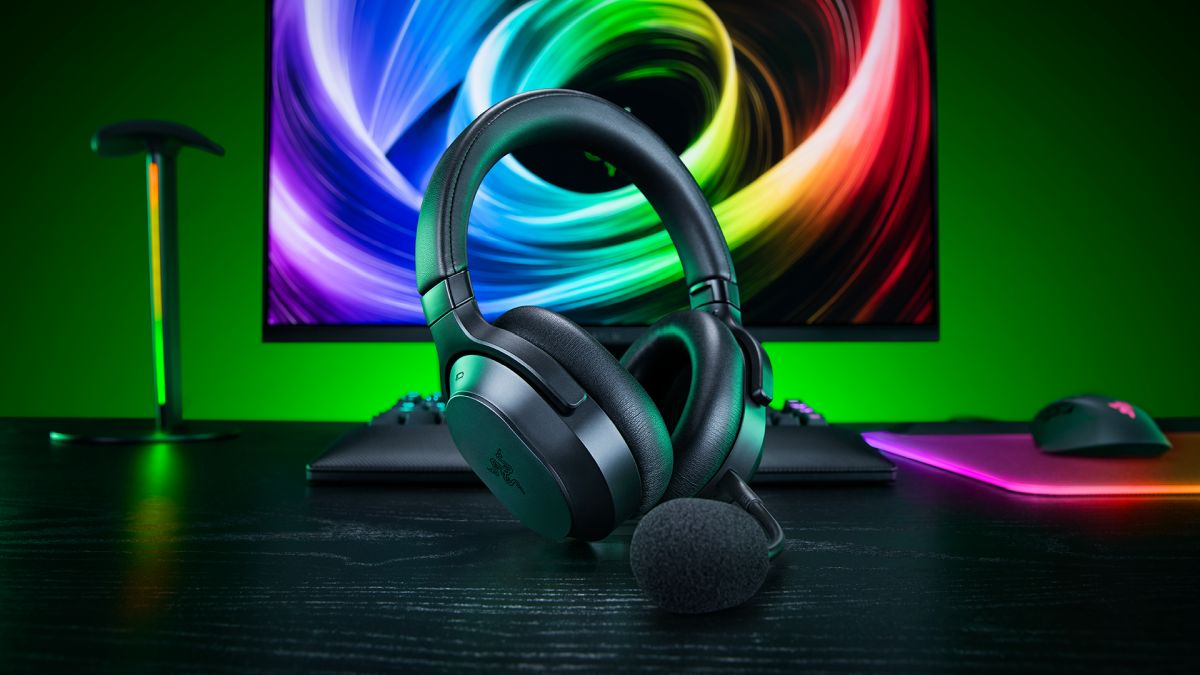
KUALA LUMPUR — Consumer gaming hardware manufacturer Razer has formally introduced the Barracuda V2 Pro wireless headset to the Malaysian market, setting the local retail price at RM969. The updated audio device incorporates hybrid active noise cancellation alongside an internal battery specification rated for up to 70 hours of continuous operation on a single charge cycle. The release marks a targeted effort to expand the company's hybrid gaming and lifestyle audio offerings within Southeast Asia, targeting consumers seeking a single device for desktop computing, mobile entertainment, and daily commuting.
Key facts
What happened
The arrival of the Barracuda V2 Pro in the Malaysian consumer pipeline expands Razer’s presence in regional audio hardware, according to reporting by Janarrthine Kannan. The company positioned the new peripheral at RM969, placing it squarely within the upper tier of the domestic consumer wireless audio segment.
The hardware announcement centers on two technical focal points: the integration of hybrid active noise cancellation and an operational run time of up to 70 hours. Active noise cancellation has increasingly migrated from dedicated travel and commuting headphones into personal computer gaming gear, but hybrid implementations—which utilize sensors both exterior to the ear cup and interior near the acoustic driver—remain primarily concentrated in high-end devices due to hardware costs and power consumption demands. By introducing a power envelope capable of sustaining 70 hours of active performance alongside hybrid noise filtering, the peripheral seeks to resolve long-standing compromises between signal-processing workloads and battery longevity.
The commercial rollout in Malaysia makes the hardware available to local consumers through standard consumer electronics distribution networks. While international hardware rollouts frequently occur in stages depending on supply chain allocations and regulatory radio-frequency approvals, the establishment of a formal Malaysian ringgit price point indicates commercial availability across local retail pipelines.
Why it matters
The introduction of the Barracuda V2 Pro carries strategic implications for both peripheral manufacturers and consumers navigating an increasingly unified consumer audio landscape. Historically, personal computer gaming headsets and personal travel headphones occupied distinct, non-overlapping product categories. Gaming headsets traditionally prioritized low-latency wireless transmission, microphone clarity, and stationary ergonomic comfort, often sacrificing form factor subtlety, battery efficiency, and ambient noise isolation. Conversely, mainstream Bluetooth headphones engineered by traditional consumer electronics firms emphasized acoustic fidelity, active isolation, and lightweight portability, while exhibiting latency characteristics that made them poorly suited for real-time competitive gaming.
Razer’s introduction of the Barracuda V2 Pro at RM969 illustrates the ongoing collapse of this product divide. For consumers in Malaysia and across Southeast Asia, an all-in-one peripheral that transitions between home desktop rigs and outdoor mobile devices eliminates the financial necessity of maintaining two separate audio systems. At RM969, the headset demands a noticeable financial commitment from consumers, sitting in a price band that competes directly with established wireless models from specialized acoustic brands as well as dedicated computer peripheral makers.
Furthermore, the 70-hour battery benchmark sets an exacting technical standard across the peripheral industry. As wireless hardware architectures evolve, extended battery performance shifts consumer expectations away from daily or bi-weekly recharging rituals toward multi-week usage cycles. This dynamic forces rival manufacturers operating in Southeast Asia—including Logitech G, SteelSeries, Corsair, and Sony—to reconsider their component selections, power-management integrated circuits, and battery chemistries in future hardware revisions.
The background
Razer Inc. was founded in 2005 by Min-Liang Tan and Robert Krakoff, establishing dual corporate headquarters in Irvine, California, and Singapore. The company initially built its global reputation on precision gaming mice, mechanical keyboards, and stationary headsets tailored explicitly for competitive esport competitors. Over two decades, the enterprise expanded into system manufacturing, lifestyle apparel, and digital software ecosystems. After completing an initial public offering on the Hong Kong Stock Exchange in November 2017 under stock code 1337, Razer operated as a publicly traded company before being taken private in May 2022 by a consortium led by its founders and financial investors, in a transaction that valued the business at approximately $3.17 billion.
The Barracuda product lineage originated as a deliberate strategic pivot within Razer's audio engineering division. In 2021, the company introduced the Barracuda X, marketing the peripheral as a multi-platform, cross-compatible device featuring a low-profile aesthetic devoid of traditional exterior gaming ornamentation such as prominent RGB lighting arrays. In May 2022, Razer broadened this line by releasing the original Barracuda and Barracuda Pro models. Those releases introduced dual-wireless switching capabilities, permitting users to toggle between low-latency 2.4-gigahertz wireless dongles for personal computers or consoles and standard Bluetooth connections for mobile handsets.
Hybrid active noise cancellation represents an engineering refinement over basic noise-cancelling systems. A standard feedforward noise-cancelling headset relies solely on external microphones to capture incoming acoustic waves, generating an inverted signal before the noise reaches the ear canal. A feedback system places microphones inside the ear cup to measure what the ear actually experiences. Hybrid active noise cancellation merges both topologies, utilizing digital signal processors to compute real-time corrections based on ambient noise outside the ear cup and residual acoustic leakage inside the chamber. While effective, hybrid processing traditionally imposes heavy demands on battery cells, making extended operational durations technically challenging to deliver without adding prohibitive physical weight to the headset headband and ear cups.
Malaysia has simultaneously emerged as a vital commercial hub for gaming hardware and digital sports in Southeast Asia. Government-backed initiatives, such as the National Esports Strategic Development Plan orchestrated through the Ministry of Youth and Sports, have catalyzed broad domestic engagement with digital gaming. This institutional environment has fostered a mature retail ecosystem for high-end peripherals across urban centers such as Kuala Lumpur, Penang, and Johor Bahru.
Reaction
Public institutional reactions to consumer electronics hardware rollouts are typically minimal, and no statutory agencies or international regulatory bodies have issued formal statements regarding the commercial debut of the Barracuda V2 Pro in Malaysia. Initial consumer commentary is expected to materialize across regional technology publications, specialized gaming discussion boards, and e-commerce community forums such as Shopee and Lazada, where verified buyers evaluate manufacturer claims against day-to-day usability.
Within local retail channels, consumer evaluation will largely center on the value proposition presented by the RM969 price point. In the broader enthusiast community, discussions surrounding wireless gaming headsets consistently scrutinize microphone performance, wireless interference resilience in dense urban radio-frequency environments, and long-term chassis durability. Hardware analysts and enthusiast communities will monitor whether the promised 70-hour operational duration remains consistent when hybrid active noise cancellation is continuously activated, as processing-intensive noise suppression typically reduces manufacturer-stated maximum battery figures.
What we don't know yet
While the primary retail price, battery capacity rating, and noise-cancelling architecture have been disclosed, several critical technical parameters remain unverified in the initial reporting. It is currently unstated whether the Barracuda V2 Pro retains the acoustic transducer architecture of its predecessor—such as Razer’s 50-millimeter bio-cellulose drivers—or whether it implements a redesigned acoustic chamber and voice coil design.
Similarly, the reporting leaves open questions regarding the peripheral’s wireless codec support. In modern multi-platform audio devices, the inclusion or exclusion of high-resolution Bluetooth codecs such as LDAC, aptX Adaptive, or the newer LC3 standard under the Bluetooth LE Audio specification directly dictates acoustic fidelity on mobile devices. The exact latency metrics across both Bluetooth and dedicated 2.4-gigahertz wireless protocols have not been published, leaving prospective competitive players without confirmation of audio synchronization performance during fast-paced software execution.
Finally, the technical documentation provided does not specify whether the 70-hour battery lifespan is achieved with hybrid active noise cancellation engaged or disengaged. Because signal processing and sensor powering consume measurable wattage, operational duration usually diverges dramatically depending on active feature states. The reporting also does not clarify the exact microphone array configuration—specifically whether the headset relies entirely on integrated beamforming pickup patterns or includes an auxiliary physical boom microphone for voice communication.
What to watch
The trajectory of the Barracuda V2 Pro in the Southeast Asian marketplace will be determined by several forthcoming benchmarks over the coming months. Observers should watch for the release of independent acoustic measurements, frequency response curves, and microphone signal-to-noise evaluations conducted by independent hardware testing laboratories. These independent assessments will establish whether the headset delivers balanced acoustic performance across music listening and spatial gaming scenarios.
Another critical development to track is the roll-out of regional firmware updates via Razer’s Synapse desktop software and companion mobile applications. Post-launch firmware distributions often adjust acoustic equalization profiles, microphone noise-gate thresholds, and power-saving sleep states, serving as a primary indicator of manufacturer support.
Additionally, market watchers should monitor promotional discounting patterns across major Southeast Asian e-commerce shopping festivals, such as upcoming end-of-year digital sales campaigns. Retailer discounting behavior will indicate consumer price sensitivity at the RM969 threshold and demonstrate how aggressively competing peripheral brands adjust their own pricing strategies to defend market share in Malaysia’s competitive personal audio sector.
This report is based on original reporting published by Janarrthine Kannan.
How this story was produced
This report was written by The Global Wire newsroom from reporting first published by Janarrthine Kannan. We verify the core facts against the original report, write our own account, and add the background and consequences a short wire item leaves out. Drafting is AI-assisted inside an editor-supervised pipeline, and every story is checked for accuracy of attribution, structure and duplication before it appears — full detail in our AI and funding disclosure.
Spotted an error? Tell us at corrections@horizonglobalnews.com and read our corrections policy or editorial standards.





Reader comments
Loading comments…