

Anthropic's Claude Designs Quantum Circuit Slashing Gate Count Seventeenfold
A 17-fold reduction in circuit gates designed by the Claude model could ease memory bottlenecks that have long constrained quantum computing algorithms.
By The Global Wire Newsroom · Reported from Aamir Khollam
Link preview · horizonglobalnews.com
Anthropic's Claude Designs Quantum Circuit Slashing Gate Count Seventeenfold
A 17-fold reduction in circuit gates designed by the Claude model could ease memory bottlenecks that have long constrained quantum computing algorithms.
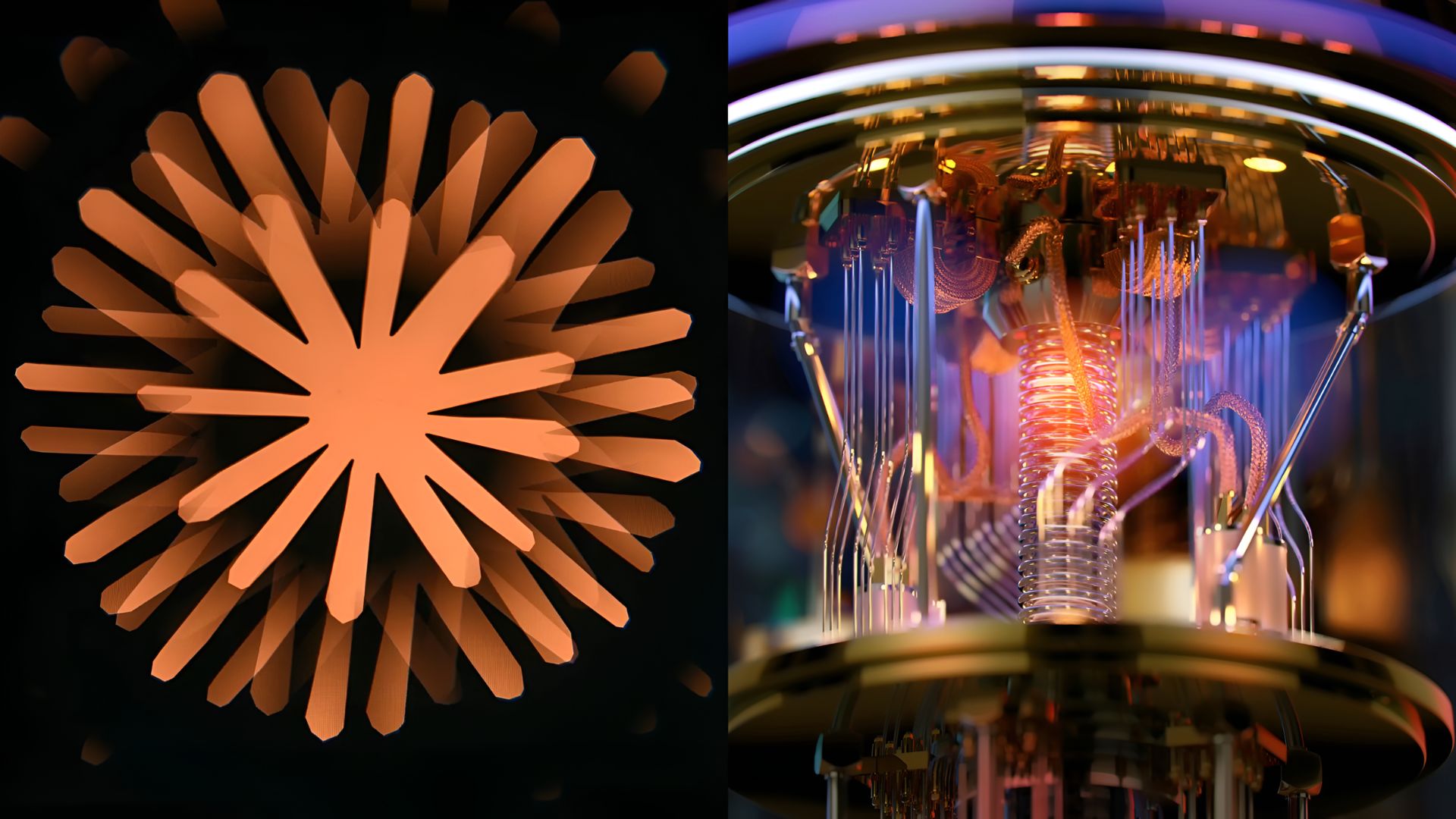
Artificial intelligence model Claude has generated a streamlined quantum circuit design that reduces gate requirements by a factor of 17, tackling a persistent memory bottleneck that restricts the execution of quantum algorithms, according to reporting published on Oct. 16, 2026, by technology analyst Aamir Khollam. The design optimization represents a significant algorithmic efficiency gain, potentially lowering the physical hardware resources and coherence times required to execute memory-intensive subroutines on quantum processors.
Key facts
What happened
According to reporting by Aamir Khollam, Anthropic's foundational model Claude succeeded in synthesizing a quantum circuit layout that operates with one-seventeenth of the logic gates typically demanded by conventional designs. The automated synthesis focused specifically on quantum memory operations, a notorious structural choke point in quantum computer science where algorithms must read, write, or access quantum information across distributed registers without collapsing delicate quantum superpositions.
Quantum algorithms do not execute via classical boolean logic gates such as AND, OR, and NOT. Instead, they rely on sequences of quantum gates—unitary mathematical transformations executed by physical mechanisms like laser pulses or microwave bursts applied to quantum bits, or qubits. The computational depth and complexity of a quantum routine are defined largely by the total number of gates and the sequence in which two-qubit entangling gates are applied. In the circuit synthesized by Claude, the model restructured the sequence of unitary operations, discovering an alternative mathematical path to accomplish the identical memory state transformation while shedding approximately 94 percent of the intermediate gate overhead.
While automated circuit synthesis and quantum compiler optimization have long been active subfields of computer science, human researchers and automated compilers frequently run into combinatorial walls when attempting to simplify circuits involving high-dimensional unitary matrices. Claude's generation of an alternative circuit topology that achieves a 17-fold reduction indicates that large-scale neural architectures can identify algorithmic shortcuts that elude traditional rule-based synthesis heuristics.
Why it matters
In practical quantum computation, circuit depth is the principal determinant of whether an algorithm can run to completion or dissolve into useless noise. Today's quantum devices exist largely in the noisy intermediate-scale quantum (NISQ) regime and the earliest stages of fault-tolerant error correction. In every physical hardware modality—whether superconducting transmon circuits, trapped ytterbium ions, neutral rubidium atom arrays, or photonic wave guides—each gate operation introduces a finite probability of error. When physical gate error rates hover between 0.1 percent and 1 percent for two-qubit operations, deep circuits containing thousands of gates rapidly accumulate errors that degrade output fidelity to zero.
Furthermore, when theoretical architectures transition to fault tolerance using quantum error-correcting codes, such as the surface code, the resource costs multiply exponentially. Fault-tolerant execution requires non-Clifford gates, most notably the T-gate, which cannot be implemented transversally and must instead be generated through a resource-intensive process known as magic state distillation. In fault-tolerant systems, magic state factories can account for more than 90 percent of the physical qubit footprint. A 17-fold reduction in total circuit gate count—particularly if it proportionally trims multi-qubit entangling operations and non-Clifford gates—dramatically lowers the physical hardware threshold required to run meaningful algorithms. Algorithms that previously demanded millions of physical error-corrected qubits to withstand memory-access overheads might, with leaner compilation, be moved forward by several hardware generations.
For enterprise sectors tracking quantum advantage, such as pharmaceutical molecular simulation, cryptographic analysis, logistics routing, and materials discovery, memory handling has remained a primary operational barrier. If memory operations consume fewer computational cycles, hybrid classical-quantum systems can spend their coherence budgets on calculation rather than memory retrieval.
The background
To understand the significance of a quantum memory bottleneck, it is necessary to examine how quantum computing manages data storage. In classical computing, the Von Neumann architecture separates the central processing unit from random-access memory (RAM), allowing an address bus to read and write bytes without modifying their logical integrity. In quantum computing, no such straightforward separation exists. Loading classical data into a quantum superposition—or accessing quantum states via Quantum Random Access Memory (QRAM)—is mathematically and physically demanding.
In standard QRAM designs, such as bucket-brigade architectures proposed in academic literature over the past two decades, querying an address of $N$ memory cells requires routing signals through an intricate tree of quantum switches. Each switch requires entanglement and phase coherence. If an algorithm requires coherent memory lookups, the number of required entangling gates scales rapidly, creating deep circuit bottlenecks. Consequently, theoretical algorithms that boast polynomial or logarithmic speedups on paper—such as the Harrow-Hassidim-Lloyd (HHL) algorithm for linear systems of equations or certain quantum machine learning models—frequently lose their practical speed advantage because the state-preparation and memory-retrieval steps require more gates than the core calculation itself.
For decades, circuit synthesis relied on human mathematicians applying linear algebra, group theory, and topological rewrites, alongside automated tools based on ZX-calculus or template matching. Over the past five years, artificial intelligence has increasingly entered quantum software compilation. Tech firms and academic laboratories have used reinforcement learning and machine learning models to optimize qubit routing and reduce SWAP-gate overhead on specific chip topologies. Anthropic, an American artificial intelligence public benefit corporation founded in 2021 by former senior members of OpenAI, has focused heavily on the advanced scientific and mathematical reasoning capabilities of its Claude model series. Applying large-scale reasoning models to the symbolic and unitary constraints of quantum logic represents an extension of AI-driven automated theorem proving and scientific discovery.
Reaction
The broader scientific community and quantum computing sector are expected to evaluate Claude's circuit design through formal academic preprints and experimental replication. Researchers in quantum information science at institutions such as the Massachusetts Institute of Technology, the University of Oxford, and the Max Planck Institute of Quantum Optics routinely benchmark automated synthesis claims against established compiler frameworks such as IBM's Qiskit, Google's Cirq, and Cambridge Quantum's TKET.
Hardware manufacturers are expected to examine whether the 17-fold leaner circuit adheres strictly to native gate sets. Industrial hardware developers operating across superconducting platforms (such as IBM and Google Quantum AI), trapped-ion architectures (such as Quantinuum and IonQ), and neutral-atom configurations (such as QuEra Computing) evaluate third-party circuit optimizations based on whether the reduced gates translate into native single- and two-qubit hardware operations without requiring costly decomposition steps that cancel out the theoretical gains.
Industry observers and software developers are also watching for formal documentation from Anthropic regarding the prompting, verification mechanisms, and algorithmic bounds used during Claude's generation of the circuit.
What we don't know yet
Several technical details remain unconfirmed in the initial reporting. Chief among them is the exact mathematical baseline against which the 17-fold reduction was measured. The reporting does not specify whether the benchmark circuit was an unoptimized naive QRAM layout, a standard bucket-brigade architecture, or an already optimized industrial compiler output. Without a specified reference circuit, calculating the exact absolute reduction in circuit depth remains difficult.
Additionally, it is not yet clear whether the circuit design is exact or approximate. In quantum circuit compilation, compilers often trade exactness for brevity by tolerating a small error threshold, known as epsilon, in the unitary synthesis. If Claude's circuit is an exact unitary equivalence, it represents a pure mathematical breakthrough; if it is an approximate synthesis, its utility will depend entirely on whether the approximation error falls within allowable fault-tolerance thresholds.
Finally, the reporting does not state whether the 17-fold reduction has been physically executed on actual quantum hardware or whether it exists purely as a validated mathematical proof and circuit diagram verified by classical simulation.
What to watch
The primary development to monitor in the coming months is the anticipated publication of a comprehensive technical white paper or peer-reviewed pre-print on repositories such as arXiv. Such a publication would disclose the full quantum gate matrix, the exact number of ancilla qubits utilized, the target Hamiltonian or unitary transformation, and the specific gate set used in the compilation.
Observers should also watch for independent verification runs from quantum compiler teams. If tools such as Qiskit or TKET integrate Claude's topological memory design as a standard synthesis routine, software engineers worldwide will be able to incorporate the 17-fold reduction into their algorithmic pipelines.
Finally, experimental results from hardware laboratories will determine real-world performance. Physical demonstrations comparing error rates and state fidelity when running the traditional memory circuit against Claude's leaner alternative across actual processor chips will prove whether the mathematical reduction translates into measurable coherence gains in laboratory environments.
This report is based on original reporting by Aamir Khollam.
How this story was produced
This report was written by The Global Wire newsroom from reporting first published by Aamir Khollam. We verify the core facts against the original report, write our own account, and add the background and consequences a short wire item leaves out. Drafting is AI-assisted inside an editor-supervised pipeline, and every story is checked for accuracy of attribution, structure and duplication before it appears — full detail in our AI and funding disclosure.
Spotted an error? Tell us at corrections@horizonglobalnews.com and read our corrections policy or editorial standards.




Reader comments
Loading comments…