

Sennheiser Refines Flagship Earbud Line With Swappable Batteries and Enhanced ANC
An evaluation by tech journalist Tony Ware highlights physical redesigns, user-replaceable power cells, and upgraded acoustic features in Sennheiser's MOMENTUM True Wireless 5 earbuds.
By The Global Wire Newsroom · Reported from Tony Ware
Link preview · horizonglobalnews.com
Sennheiser Refines Flagship Earbud Line With Swappable Batteries and Enhanced ANC
An evaluation by tech journalist Tony Ware highlights physical redesigns, user-replaceable power cells, and upgraded acoustic features in Sennheiser's MOMENTUM True Wireless 5 earbuds.
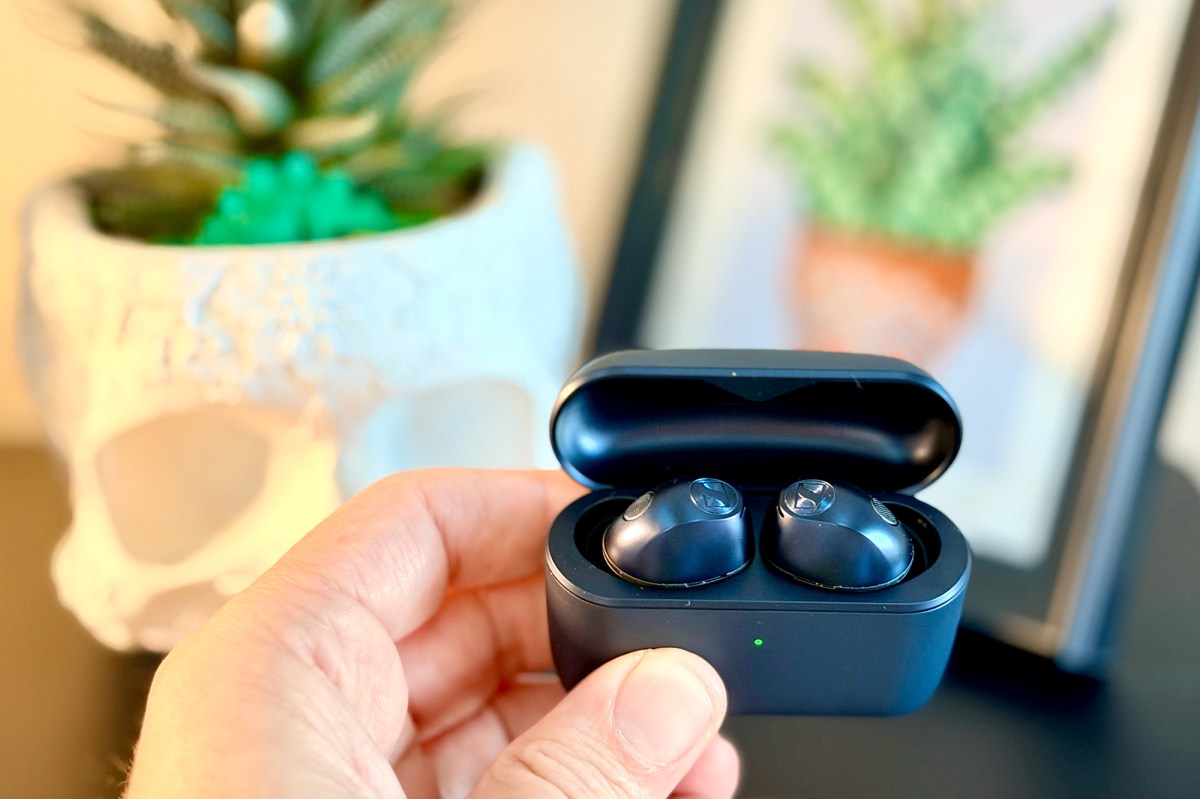
Consumer audio manufacturer Sennheiser has introduced its latest flagship wireless earbud model, the MOMENTUM True Wireless 5, featuring a re-engineered physical chassis, upgraded active noise cancellation capabilities, and user-serviceable battery components. According to a product review published on September 3, 2026, by technology journalist Tony Ware, the new earphone iteration retains the retail price point of its immediate predecessor while delivering a noticeably slimmer ear-housing profile, enhanced active noise suppression, and expanded equalizer customization through companion software. The product release represents the newest installment in Sennheiser's top-tier personal audio portfolio, which operates under the corporate stewardship of Swiss hearing healthcare firm Sonova Holding AG following its acquisition of Sennheiser's consumer division.
Key facts
What happened
According to reporting by Tony Ware, Sennheiser released the MOMENTUM True Wireless 5 as a direct sequel to its premium true wireless stereo (TWS) product line. The primary physical alteration highlighted in Ware's review is a reduction in overall earbud body volume, addressing a common critique of prior MOMENTUM models, which featured bulkier exterior shells that extended farther out from the user's pinna. The reduced dimensions are paired with refined acoustic nozzles and silicone tips intended to establish a more secure, fatigue-free seal within the ear canal.
In addition to physical reshaping, Ware's evaluation identifies three primary functional enhancements: upgraded Active Noise Cancellation (ANC), user-swappable batteries, and advanced Equalizer (EQ) carving capabilities. The enhanced ANC system utilizes onboard microphone arrays and signal processing algorithms to attenuate low-frequency ambient environmental noise, such as jet engine rumble and transit sounds, more aggressively than earlier iterations.
The inclusion of swappable batteries represents a significant architectural shift for Sennheiser's earbud design. Rather than permanently sealing tiny lithium-ion cells inside glued enclosures—a practice that historically rendered small wireless earbuds non-repairable once battery capacity degraded over several hundred charge cycles—the MOMENTUM True Wireless 5 incorporates modular or serviceable power cells.
On the software side, Ware reports that Sennheiser expanded the parametric EQ functionality within its companion mobile application. Users can manipulate sound profiles by carving specific frequency bands—adjusting bass, midrange, and treble registers to tailor audio output to individual acoustic preferences or compensate for personal hearing thresholds. Crucially, Ware notes that Sennheiser implemented these physical and technical refinements without raising the base retail cost relative to the fourth-generation model, positioning the earbuds as a high-value iterative update in the high-end personal audio segment.
Why it matters
The introduction of user-swappable batteries in a mainstream flagship earbud model carries direct implications for consumer rights, electronic waste reduction, and product lifespans across the consumer technology industry. For years, true wireless earbuds have been criticized by environmental groups and repairability advocates as disposable electronics. Because standard miniature lithium-ion cells typically lose significant operational capacity after 300 to 500 charge cycles—often equivalent to 18 to 24 months of daily use—consumers were frequently forced to replace entire earbud sets when power retention deteriorated, even if the driver diaphragms, wireless transceivers, and microprocessors remained fully functional. By implementing modular power cells, Sennheiser establishes a practical pathway for consumers to restore battery endurance without purchasing brand-new hardware.
From a regulatory standpoint, the incorporation of repairable power components aligns with shifting policy frameworks in major global markets, particularly the European Union. Regulation (EU) 2023/1542, enacted by the European Parliament and Council, mandates progressive eco-design standards, hazardous material limits, and battery removable/replaceable requirements across portable electronics sold within member states. As compliance deadlines approach between 2025 and 2027, major hardware manufacturers face statutory obligations to facilitate battery replacement by end-users or independent repair networks. Sennheiser’s design choices for the MOMENTUM True Wireless 5 demonstrate how premium audio brands can adapt to these emerging regulatory mandates while maintaining water resistance and compact form factors.
Marketplace dynamics also play a central role. The true wireless audio sector remains intensely competitive, dominated by tech conglomerates such as Apple, Sony, Bose, and Samsung. By keeping the price point steady while introducing swappable components and improved active noise cancellation, Sennheiser creates pricing pressure on rivals whose flagship models often exceed $250 to $300 without offering modular power options.
The background
Sennheiser electronic GmbH & Co. KG was established in 1945 by Fritz Sennheiser in Wedemark, near Hanover, Germany. Over nearly eight decades, the company established itself as a premier developer of studio microphones, audiophile headphones, and professional broadcast equipment. In the late 2010s, Sennheiser entered the rapidly expanding true wireless earbud market with its inaugural MOMENTUM True Wireless series, seeking to translate its acoustic heritage into the Bluetooth earphone space.
In May 2021, Sennheiser announced a major corporate restructuring, selling its Consumer Hearing business division to Sonova Holding AG, a publicly traded Swiss medical technology company headquartered in Stäfa, Switzerland, specializing in hearing aids and cochlear implants. The acquisition, completed in July 2021 for a purchase price of approximately €200 million, granted Sonova a perpetual license to manufacture and market consumer products under the Sennheiser brand name. Under Sonova’s stewardship, Sennheiser’s consumer division focused on integrating hearing health technologies, automated sound personalization, and speech enhancement algorithms into consumer audio products.
Subsequent product generations evolved incrementally. The MOMENTUM True Wireless 3 and MOMENTUM True Wireless 4 introduced adaptive noise cancellation, high-resolution Bluetooth codecs like Qualcomm's aptX Lossless, and Bluetooth 5.4 LE Audio capabilities with Auracast broadcast support. However, earlier iterations faced scrutiny over physical bulk and battery degradation over extended ownership periods.
True wireless earbuds function by receiving digitally encoded radio frequency signals over Bluetooth standard protocols, converting those signals through a Digital-to-Analog Converter (DAC), and amplifying the voltage to drive micro-dynamic acoustic transducers. Active Noise Cancellation relies on outward-facing feedforward microphones and inward-facing feedback microphones that continuously sample external environmental sound pressure and internal ear canal reverberation. Internal digital signal processors (DSPs) calculate out-of-phase anti-noise waves, which are mixed into the playback signal to cancel ambient sound waves through destructive interference.
Reaction
In his published assessment, reviewer Tony Ware praised the MOMENTUM True Wireless 5 as a refined iteration that delivers meaningful practical improvements over its predecessor without imposing a price surcharge. Ware characterized the release as a rare example of a hardware sequel that justifies upgrading due to its combination of superior physical comfort, stronger ambient noise suppression, and long-term sustainability through swappable power cells.
Broader market and industry reactions are expected to take place across several tech and regulatory forums. Consumer technology analysts, repairability advocates such as iFixit, and audio enthusiast communities are expected to examine the structural mechanism of Sennheiser's swappable battery design once teardowns and retail units become widely accessible. Environmental organizations focused on electronic waste reduction are likely to evaluate whether Sennheiser's battery replacement process requires proprietary tools or relies on standard standardized cell formats. Competitors in the premium earbud sector—including Sony Electronics, Bose Corporation, and Apple Inc.—have not issued formal public commentary regarding Sennheiser’s release, but industry observers anticipate that competing manufacturers will monitor consumer adoption of repairable earbuds as European sustainability regulations draw closer to full enforcement.
What we don't know yet
Despite the details provided in Ware's review, several technical and commercial specifics remain unconfirmed in the available reporting. The precise mechanical mechanism governing the battery swap process has not been detailed: it is unclear whether end-users can perform the replacement at home using simple hand tools, or if battery swapping requires sending units to authorized Sonova service centers or utilizing specialized repair kits.
Additionally, the exact battery chemistry, milliamp-hour (mAh) capacity ratings, expected battery life per single charge with ANC engaged, and retail pricing for replacement power cells have not been specified. Further unconfirmed aspects include the earbud's exact ingress protection rating (IP code) for dust and water resistance, which could potentially be impacted by adding user-accessible battery doors or latches. Finally, while Ware notes that the MOMENTUM True Wireless 5 matches the launch price of the previous model, the exact numerical MSRP across major regional currencies—such as US dollars, British pounds, or euros—was not explicitly stated in the summary report.
What to watch
Moving forward, key indicators will determine the commercial and technical impact of the MOMENTUM True Wireless 5 release. Tech teardown specialists and independent repair platforms are expected to publish disassembly analyses detailing the ease of battery extraction, component modularity, and repairability scores. These assessments will confirm whether Sennheiser’s design sets a new standard for sustainable personal audio hardware.
Observers should also track retail availability dates across North American, European, and Asian markets, alongside official pricing schedules for replacement battery packs and spare parts sold directly through Sennheiser and Sonova distribution channels. Furthermore, regulatory monitoring will focus on how European Union authorities evaluate earbud repairability under Regulation (EU) 2023/1542 guidelines as implementation deadlines approach. Finally, upcoming consumer electronics trade shows and competitor product launch cycles will reveal whether major rivals adopt user-serviceable battery designs in their next-generation true wireless earphones.
This report incorporates review findings published by technology journalist Tony Ware on September 3, 2026.
How this story was produced
This report was written by The Global Wire newsroom from reporting first published by Tony Ware. We verify the core facts against the original report, write our own account, and add the background and consequences a short wire item leaves out. Drafting is AI-assisted inside an editor-supervised pipeline, and every story is checked for accuracy of attribution, structure and duplication before it appears — full detail in our AI and funding disclosure.
Spotted an error? Tell us at corrections@horizonglobalnews.com and read our corrections policy or editorial standards.
Reader comments
Loading comments…