

Rubio Pledges Security Reset with Colombia's New Administration
U.S. Secretary of State Marco Rubio initiated a Latin American tour in Barranquilla, promising to rebuild defense and counternarcotics ties with Colombia's new conservative president.
By The Global Wire Newsroom · Reported from Simon Lewis; Julia Symmes Cobb; Humeyra Pamuk; Nelson Bocanegra
Link preview · horizonglobalnews.com
Rubio Pledges Security Reset with Colombia's New Administration
U.S. Secretary of State Marco Rubio initiated a Latin American tour in Barranquilla, promising to rebuild defense and counternarcotics ties with Colombia's new conservative president.
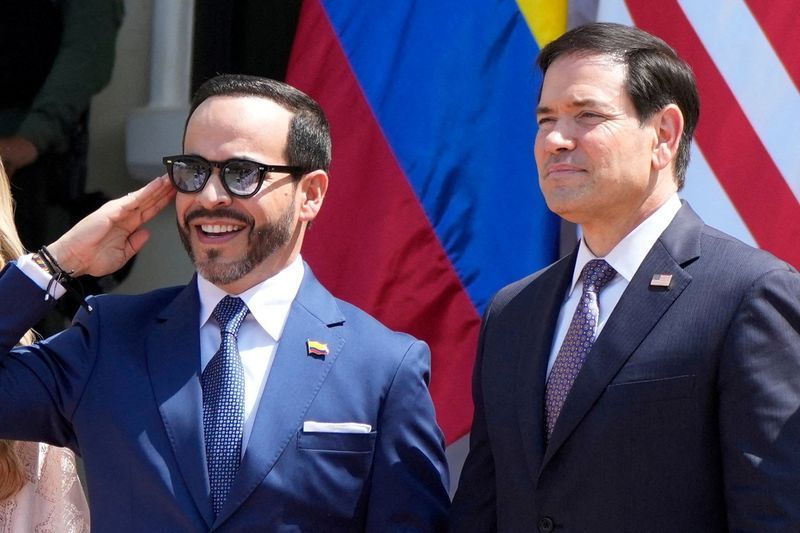
BARRANQUILLA, Colombia — United States Secretary of State Marco Rubio landed in the coastal city of Barranquilla on Sept. 8, 2026, launching a multi-nation diplomatic tour across Latin America centered on re-establishing close military, intelligence, and counternarcotics collaboration with the newly inaugurated conservative administration of Colombia. Speaking to reporters and diplomats upon his arrival in the capital of Colombia's Atlántico Department, Rubio signaled a decisive shift in Washington’s regional strategy, expressing expectations that bilateral security pacts will undergo a comprehensive revival following years of strained policy alignment under Colombia's previous executive leadership. The diplomatic mission marks the first major ministerial outreach by the United States to South America's longest-standing defense partner since Colombia completed its presidential transition earlier this year, setting the stage for renewed joint operations against illicit trafficking networks and transnational organized crime.
Key facts
What happened
Secretary of State Marco Rubio commenced his Latin American itinerary on Tuesday, Sept. 8, 2026, arriving in Barranquilla for bilateral discussions aimed at restoring robust security and intelligence mechanisms between the United States and Colombia. According to reporting by Reuters, Rubio emphasized Washington's desire to see bilateral defense ties rebound rapidly under the country’s newly sworn-in right-wing president, whose victory in recent national elections shifted the political orientation of South America’s third-most populous nation.
During the initial sessions of his visit, Rubio outlined the parameters of a proposed operational reset. The conversations focused primarily on reviving synchronized counter-narcotics operations, expanding inter-agency intelligence coordination, and bolstering logistical support for Colombian state security forces along vulnerable transit corridors. Rubio’s arrival in Barranquilla, a vital economic and port hub on Colombia’s Caribbean coast, highlighted the strategic importance of maritime interdiction efforts in combating trafficking routes targeting North America and Europe.
The stop in Colombia represents the leading edge of a broader diplomatic swing across Latin America, where Rubio is scheduled to meet with several conservative and center-right heads of state. State Department officials accompanying the delegation noted that the tour seeks to consolidate regional partnerships on immigration control, trade stabilization, and defense infrastructure, capitalizing on recent electoral shifts that brought ideologically compatible leadership to power in key regional capitals.
Why it matters
The reset in U.S.-Colombia relations carries profound implications for South American security architecture, global drug enforcement, and regional diplomatic power balances. For more than two decades, Colombia served as Washington’s primary strategic partner in South America, acting as an anchor for Western Hemisphere counter-narcotics initiatives and military collaboration. However, divergence over crop eradication targets, rural peace initiatives, and security protocols during the preceding left-wing Colombian administration introduced operational frictions that slowed joint interdiction efforts and complicated intelligence exchanges.
A renewed alignment between Washington and Bogotá restores a vital operational framework for United States law enforcement and defense agencies, particularly the Department of Defense's Southern Command and the Drug Enforcement Administration. Renewed bilateral cooperation is expected to directly impact supply chain disruptions targeting cocaine processing hubs and maritime smuggling networks operating out of South America's Pacific and Caribbean littoral zones.
Furthermore, the diplomatic pivot signals a broader realigning of ideological blocs in Latin America. As several regional capitals transition toward conservative policy agendas, Washington gains renewed leverage to build coalitions focused on law enforcement, economic security, and migration control. This shift provides the United States with an enhanced capacity to coordinate regional responses to illicit finance networks, irregular migration routes through the Darién Gap, and security challenges stemming from unresolved governance crises in neighboring territories such as Venezuela.
The background
The security framework between the United States and Colombia is built upon a quarter-century of institutionalized cooperation, most notably codified under Plan Colombia. Initiated in 2000 during the administrations of U.S. President Bill Clinton and Colombian President Andrés Pastrana, Plan Colombia funneled more than $12 billion in American civilian and military assistance to Bogotá over two decades. The program transformed Colombia’s armed forces, enhancing air mobility, special operations capability, and counter-insurgency tactics while significantly weakening armed guerrilla groups such as the Revolutionary Armed Forces of Colombia (FARC).
Despite its strategic achievements, the bilateral relationship experienced significant friction following the 2022 election of Gustavo Petro, Colombia’s first left-wing president. Petro’s administration pursued a "Total Peace" policy, which prioritized negotiated settlements with lingering rebel groups—including the National Liberation Army (ELN) and dissident FARC factions—over unilateral military pressure. Crucially, Petro altered Colombia’s anti-narcotics strategy by suspending compulsory aerial spraying of coca crops and prioritizing voluntary substitution programs for small-scale farmers over forced manual eradication. These policy pivots created visible tension with U.S. lawmakers and officials, who cited historic spikes in potential cocaine production and expanding cultivated acreage as evidence of declining enforcement efficacy.
The inauguration of Colombia's new conservative president in 2026 marks a decisive political reversal, bringing to power an administration that campaigned on restoring strict public security measures, resuming aggressive coca eradication, and repairing institutional bonds with Washington. Marco Rubio, who long served on the U.S. Senate Foreign Relations Committee prior to his appointment as Secretary of State, has historically maintained a sharp focus on Western Hemisphere affairs. Throughout his legislative and executive tenure, Rubio has consistently advocated for robust security assistance to South American allies, stringent sanctions against authoritarian regimes in Caracas, Havana, and Managua, and strict adherence to extradition treaties for suspected narcotics trafficking leaders.
Reaction
The diplomatic engagement in Barranquilla has drawn distinct responses across the political spectrum in both Colombia and the broader international community. Conservative lawmakers, business federations, and military leadership in Colombia broadly welcomed Secretary Rubio’s statements, framing the visit as a necessary step toward restoring national security capabilities and reaffirming economic stability. Proponents within the Colombian Congress emphasized that enhanced technical and financial support from the United States is essential for reclaiming territorial control in rural regions where criminal syndicates expanded their footprint in recent years.
Conversely, political figures aligned with Colombia’s parliamentary opposition and human rights organizations have voiced caution regarding a return to militarized counternarcotics policies. Critics argue that relying heavily on forced eradication and security-centric operations risks reigniting rural social conflicts, undermining local agricultural economies, and damaging delicate peace dialogues established with rural communities.
Internationally, regional observers anticipate that neighboring governments will closely evaluate the outcomes of Rubio's trip. Left-leaning administrations in the region are expected to monitor whether the U.S. strategic framework emphasizes security hardware and enforcement at the expense of regional developmental aid and climate change initiatives.
What we don't know yet
While Secretary Rubio’s public statements reflect a clear intent to deepen defense integration, the precise structural and financial parameters of the renewed security partnership remain unannounced. It is currently unclear whether the U.S. executive branch will request formal increases in Foreign Military Financing or International Narcotics Control and Law Enforcement funding from Congress to support Colombia’s security forces in upcoming fiscal cycles.
Additionally, specific operational details concerning coca eradication methodologies—such as whether the new Colombian government will attempt to reinstate aerial glyphosate spraying despite ongoing environmental and legal hurdles—have not been finalized. The reporting by Reuters also leaves open the exact itinerary and full list of sovereign host nations included in Secretary Rubio's broader Latin American tour, as well as the specific bilateral agreements or defense memorandums expected to be signed during subsequent stops.
What to watch
In the coming weeks, several key developments will indicate the speed and scope of the U.S.-Colombia security realignment:
This report is based on original news reporting conducted by Simon Lewis, Julia Symmes Cobb, Humeyra Pamuk, and Nelson Bocanegra for Reuters.
How this story was produced
This report was written by The Global Wire newsroom from reporting first published by Simon Lewis; Julia Symmes Cobb; Humeyra Pamuk; Nelson Bocanegra. We verify the core facts against the original report, write our own account, and add the background and consequences a short wire item leaves out. Drafting is AI-assisted inside an editor-supervised pipeline, and every story is checked for accuracy of attribution, structure and duplication before it appears — full detail in our AI and funding disclosure.
Spotted an error? Tell us at corrections@horizonglobalnews.com and read our corrections policy or editorial standards.

Reader comments
Loading comments…