

Rafael Nadal Nominated to Join Real Madrid Board of Directors
The 22-time Grand Slam champion is set to join the governing board of Real Madrid two years after retiring from professional tennis, deepening his ties to the European champions.
By The Global Wire Newsroom · Reported from Parv Anand
Link preview · horizonglobalnews.com
Rafael Nadal Nominated to Join Real Madrid Board of Directors
The 22-time Grand Slam champion is set to join the governing board of Real Madrid two years after retiring from professional tennis, deepening his ties to the European champions.
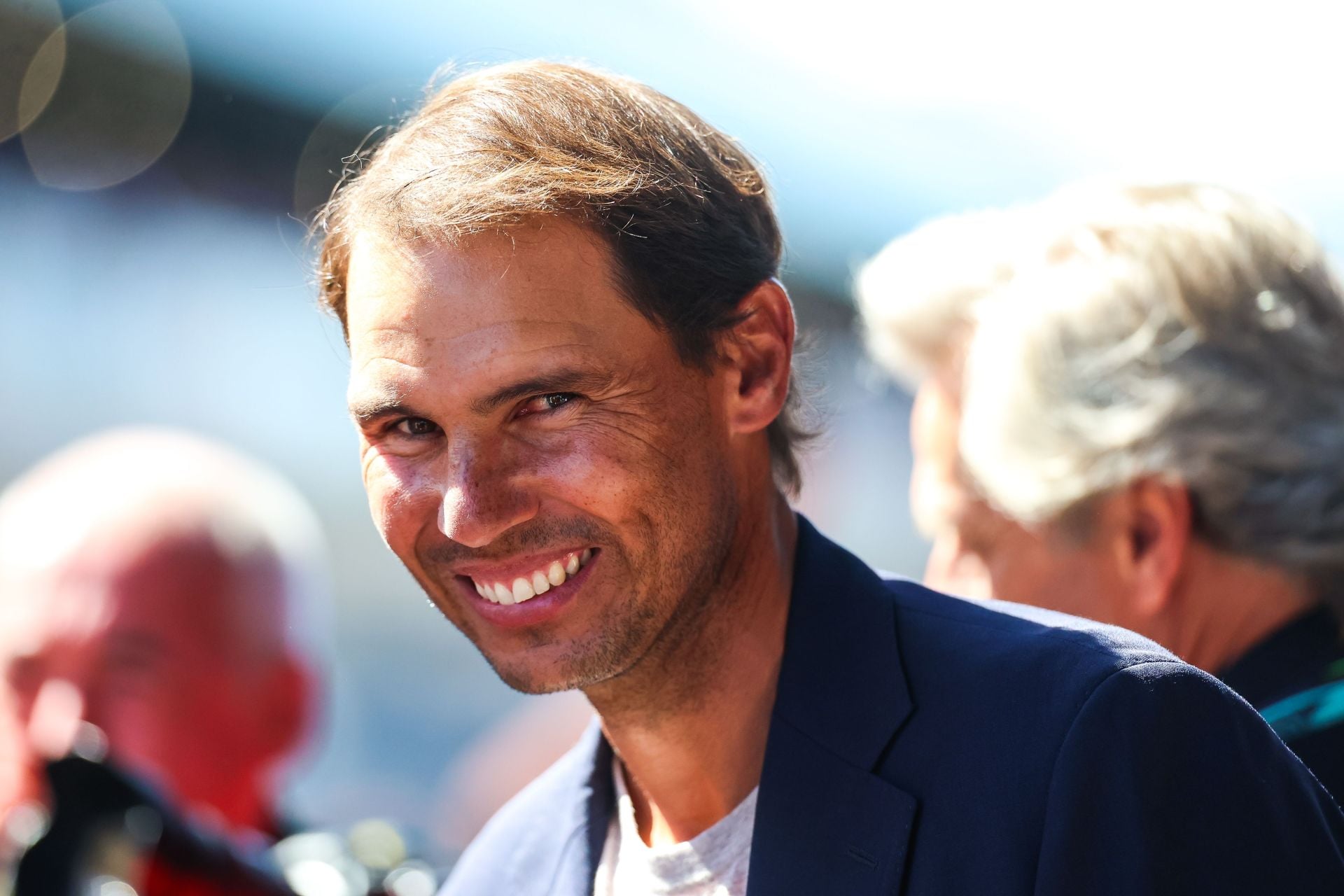
MADRID — Spanish tennis icon Rafael Nadal is set to transition from global sports stardom to football governance following a proposal to appoint him to the board of directors at Real Madrid. The nomination, advanced by the leadership of the reigning European and Spanish champions, positions the 22-time Grand Slam singles champion to take an active role in the stewardship of one of the world's most valuable and decorated sporting institutions. The move marks Nadal's most significant institutional appointment since he concluded his legendary athletic career, formalizing a longstanding bond between the Mallorcan athlete and the club he has publicly supported for decades.
Key facts
What happened
Real Madrid's senior leadership submitted a proposal to integrate Rafael Nadal into the club's board of directors, signaling a high-profile expansion of the team's executive leadership. According to reporting by Parv Anand, the initiative aims to bring Nadal directly into the decision-making apparatus of the La Liga powerhouse, roughly two years after he retired from competitive tennis.
Under Real Madrid's governance structure, the board of directors, known locally as the Junta Directiva, oversees the strategic, commercial, and institutional affairs of the club. The board operates under the leadership of club president Florentino Pérez, who has steered the institution through an era of unprecedented modern financial growth, multiple UEFA Champions League titles, and the extensive multi-billion-euro redevelopment of the Santiago Bernabéu Stadium. Nadal's prospective appointment places him among the circle of directors charged with safeguarding the club's economic stability and athletic competitiveness.
The administrative process requires that proposed additions to the board conform strictly to Real Madrid's statutory bylaws. While the executive leadership can nominate candidates to fill vacancies or expand advisory functions, statutory appointments must adhere to membership tenure rules and face presentation before the club's delegate members (socios compromisarios) during their general assembly. Club officials have moved the process forward, seeking to integrate Nadal's international stature and commercial experience into the boardroom.
Why it matters
The entry of Rafael Nadal into the boardroom of Real Madrid represents far more than a symbolic celebrity endorsement. Real Madrid is not a privately owned corporation or a state-backed enterprise; it is one of four professional clubs in Spanish football—alongside FC Barcelona, Athletic Club Bilbao, and CA Osasuna—owned entirely by its registered members, or socios. In this structure, board members hold genuine fiduciary and strategic responsibilities, guiding a multi-faceted entertainment enterprise whose annual operating revenues routinely surpass €1 billion.
By placing an athlete of Nadal's global standing onto the Junta Directiva, Real Madrid significantly reinforces its global brand presence and diplomatic influence. In modern sport, European football clubs operate in an intensely competitive international marketplace against sovereign wealth funds, American private equity consortiums, and multi-club conglomerates. Nadal brings universally recognized sporting credibility, exceptional commercial relationships, and extensive experience navigating high-stakes international partnerships. His background managing his own sports academy empire and commercial ventures gives him practical executive literacy that few former athletes possess.
Furthermore, the move carries substantial political resonance within Spanish football. Nadal has long been viewed by sections of the club's membership as a potential future club president. While Florentino Pérez remains firmly entrenched at the helm, questions regarding generational transition and long-term succession planning inevitably linger across Spanish sports institutions. Integrating Nadal into the formal governance structure provides him with direct exposure to football administration, financial compliance, and club diplomacy, laying an institutional foundation should he ever choose to seek higher executive office under Real Madrid's stringent electoral rules.
The background
Rafael Nadal's connection to Real Madrid spans decades, despite deep family roots tied to the club's fiercest historical rival. Nadal was born in Manacor on the Balearic island of Mallorca. His paternal uncle, Miguel Ángel Nadal, was an anchor of the legendary FC Barcelona "Dream Team" managed by Johan Cruyff during the 1990s, winning five La Liga titles and the 1992 European Cup. Despite his uncle's iconic status at Camp Nou, Rafael Nadal grew up an ardent supporter of Real Madrid, frequently spotted in the presidential box at the Santiago Bernabéu during crucial domestic and continental matches.
In March 2011, Real Madrid's board granted Nadal the title of "socio de honor" in recognition of his extraordinary sporting career and exemplary embodiment of sporting values. Over the years, Nadal has maintained a close personal and professional relationship with Florentino Pérez. When Real Madrid pursued major transfers or international projects, Nadal occasionally served as an informal ambassador, notably playing a supportive role in encouraging talent like Marco Asensio, another native of Mallorca, to sign with Madrid in 2014.
Beyond the tennis court, Nadal built a substantial business infrastructure. He established the Rafa Nadal Academy in Manacor in 2016, which has expanded into an international network with satellite facilities in Mexico, Greece, and Kuwait. He also formed Aspemir, an investment vehicle managing real estate, hospitality partnerships with Spanish hotel giant Meliá, and hospitality brands such as the Tatel restaurant chain.
Real Madrid's governance framework is uniquely demanding. Under club statutes amended in 2012, any member wishing to run for the club presidency must have been an active socio for at least 20 years and personally guarantee 15 percent of the club's annual operating budget through a bank guarantee recognized by the Bank of Spain, without relying on third-party funds. Board members similarly face strict membership longevity criteria and legal liabilities under Spanish sports law. Nadal's entrance into the governing body aligns with these rigorous standards, cementing his transition from active competition to sports corporate management.
Reaction
The report of Nadal's proposed appointment has sparked extensive discussion across Spanish sports media and international football circles. Real Madrid supporters have largely welcomed the development, viewing Nadal as an exemplary figure who mirrors the club's core ethos of resilience and competitive excellence. Because Nadal is revered throughout Spain regardless of regional sporting allegiances, his elevation to Madrid's board brings high reputational equity to the club's public profile.
Institutional stakeholders, including the club's representative delegates, are expected to review the nomination during their upcoming statutory sessions. In such forums, delegate members typically scrutinize board appointments to ensure compliance with club bylaws, conflict-of-interest regulations, and the preservation of the club's member-owned identity. Neither Nadal nor Real Madrid's communications department issued immediate public statements confirming the timeline of the appointment, as official communications typically follow formal board meetings and regulatory filings.
What we don't know yet
While the proposal represents a definitive shift in Nadal's relationship with Real Madrid, critical operational details remain unclarified in the available reporting. It is not yet specified whether Nadal will occupy an executive directorship with assigned portfolio duties—such as oversight of international institutional relations, youth development, or global foundations—or serve as an independent non-executive director offering high-level strategic counsel.
Additionally, the precise legal and administrative timeline for his formal installation remains open. Club statutes dictate specific administrative protocols before a newly appointed director is fully seated, including regulatory validation and assembly notifications. Finally, it remains unclear how Nadal's existing commercial commitments, ambassadorial contracts, and ongoing business operations with his tennis academies will interact with the strict corporate governance and conflict-of-interest mandates enforced by Real Madrid and La Liga regulatory bodies.
What to watch
The immediate next step will be the formal communication from Real Madrid's Junta Directiva detailing the convocation of the board and the explicit terms of Nadal's appointment. Observers will be watching for the official agenda of the next Asamblea General de Socios Compromisarios, where delegate members gather to vote on club accounts, statutory matters, and organizational ratifications.
Industry analysts will also monitor whether Nadal assumes specific public-facing duties, particularly surrounding Real Madrid's expanding international ventures and the commercial utilization of the renovated Santiago Bernabéu as an elite global entertainment hub. In the medium term, observers will examine whether this appointment signals the beginning of a deliberate, long-term pathway toward club leadership, tracking how Nadal balances his philanthropic foundation, his tennis facilities, and the demanding responsibilities of board governance at the world's most scrutinized football club.
This account is based on reporting published by Parv Anand.
How this story was produced
This report was written by The Global Wire newsroom from reporting first published by Parv Anand. We verify the core facts against the original report, write our own account, and add the background and consequences a short wire item leaves out. Drafting is AI-assisted inside an editor-supervised pipeline, and every story is checked for accuracy of attribution, structure and duplication before it appears — full detail in our AI and funding disclosure.
Spotted an error? Tell us at corrections@horizonglobalnews.com and read our corrections policy or editorial standards.


Reader comments
Loading comments…