

Former NRL Hooker Manase Fainu Released on Parole Following Stabbing Conviction
Manase Fainu has walked free from prison on parole after serving time for a 2019 church car park stabbing, confronting a changed rugby league landscape and strict reintegration conditions.
By The Global Wire Newsroom · Reported from Adrian Proszenko
Link preview · horizonglobalnews.com
Former NRL Hooker Manase Fainu Released on Parole Following Stabbing Conviction
Manase Fainu has walked free from prison on parole after serving time for a 2019 church car park stabbing, confronting a changed rugby league landscape and strict reintegration conditions.
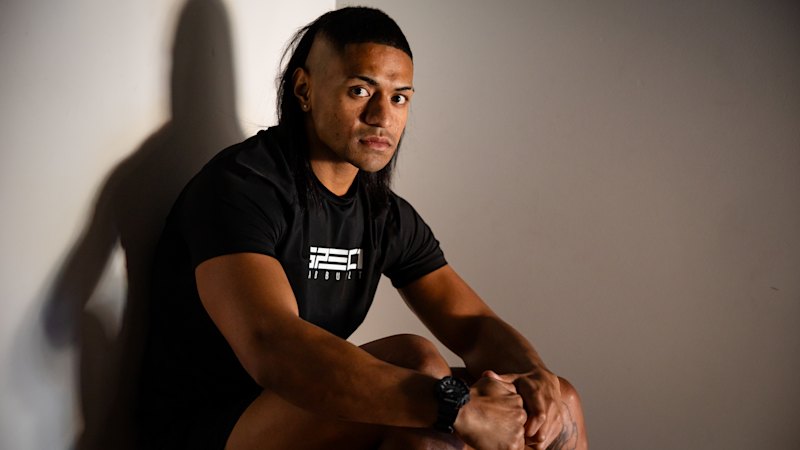
Former Manly Warringah Sea Eagles hooker Manase Fainu has been released on parole after serving his custodial sentence for a violent 2019 stabbing outside a Sydney church, reflecting on his physical and mental struggles behind bars while outlining his intention to rebuild his life, according to reporting by Adrian Proszenko. The release concludes the custodial portion of an eight-year sentence imposed by the District Court of New South Wales following a protracted legal battle that disrupted one of Australian rugby league's most promising careers. Fainu, who maintained his innocence throughout trial proceedings before being convicted of wounding with intent to cause grievous bodily harm, entered the correctional system as an elite professional athlete and now faces the complex task of societal reintegration under mandatory community supervision.
Key facts
What happened
Following the completion of his mandatory non-parole period, Manase Fainu walked out of correctional custody into the supervision of Community Corrections officers in New South Wales, marking the end of more than four years behind bars. In his first public reflections on the experience, reported by Adrian Proszenko, Fainu described an arduous period of incarceration characterized by deep clinical depression, significant weight gain, and a bitter estrangement from the sport that had defined his youth.
Fainu revealed that the initial phases of his custodial sentence led to severe emotional withdrawal. Disconnected from daily athletic training, routine team environments, and professional support networks, he experienced deteriorating physical conditioning and profound mental distress. The psychological burden of transitioning from an elite first-grade rugby league contract to life in a maximum- and medium-security correctional environment fostered deep resentment toward rugby league, prompting him to disengage from following the sport entirely while imprisoned.
Over the course of his sentence, Fainu worked through the correctional system's structured behavioral programs and gradual classification reductions. Speaking upon his parole date, he stated an explicit determination to turn his life around, focus on family stability, and re-establish productive routines outside prison walls. His transition back into civilian life will be governed by standardized parole conditions, which typically mandate regular reporting to a supervising probation officer, strict adherence to good behavior requirements, travel restrictions, and prohibitions on contacting specified individuals associated with the original criminal proceedings.
Why it matters
Fainu's case represents a watershed moment in the governance of modern professional sport and the legal administration of athlete misconduct in Australia. When the National Rugby League enacted its "no-fault stand down" framework in early 2019, it fundamentally altered employment dynamics across the Australian sporting landscape. Under the policy, any player charged with a criminal offense carrying a maximum penalty of 10 or more years imprisonment is automatically suspended on full pay pending legal resolution. Fainu was the inaugural test case for this framework, spending nearly three full seasons on the sidelines under contract before his conviction ultimately invalidated his playing registration.
For the NRL and broader professional sports bodies, the management of players convicted of severe violent felonies presents acute ethical, commercial, and regulatory dilemmas. Fainu's release triggers inevitable scrutiny over whether athletes convicted of grievous bodily harm can or should ever be permitted to participate in professional or semi-professional competitions. The governing body must weigh player welfare and rehabilitation against brand protection, sponsor sensitivities, and institutional commitments against domestic and community violence.
Beyond the sporting arena, the case highlights the systemic realities of the New South Wales criminal justice and correctional systems. Reintegrating high-profile offenders poses unique challenges, particularly when public scrutiny intersects with the rigorous requirements of post-custodial supervision. For victims of violent crime, the parole of a perpetrator serves as a reminder of long-term trauma, contrasting with the legal system's dual mandate of punishment and offender rehabilitation.
The background
Manase Fainu emerged through the junior ranks as one of the most dynamic young hookers in the National Rugby League. Making his first-grade debut for the Manly Warringah Sea Eagles in 2018, he quickly established himself as a future cornerstone of the franchise, playing 34 top-flight matches and signing a multi-year contract extension that positioned him as the club's primary long-term hooker.
The trajectory of his life and career shifted permanently on the evening of October 25, 2019. Fainu attended a youth dance hosted at The Church of Jesus Christ of Latter-day Saints meetinghouse in Wattle Grove, in Sydney's south-western suburbs. A brawl erupted in the facility's car park involving multiple attendees. During the altercation, youth leader Faamanu Levi was attacked and sustained life-threatening injuries, including a punctured lung and severe lacerations caused by a knife.
Fainu was arrested and charged by New South Wales Police with wounding with intent to cause grievous bodily harm—an offense carrying a maximum statutory penalty of 25 years imprisonment under Section 33 of the NSW Crimes Act 1900. Throughout a series of delays compounded by the COVID-19 pandemic and multiple court fixtures, Fainu vigorously maintained his innocence. His defense team argued mistaken identity, pointing out that Fainu had his left arm immobilized in a surgical sling following shoulder reconstruction surgery, which they contended made it improbable for him to have executed the stabbing.
In August 2022, following a two-week trial in the District Court of New South Wales, a jury rejected the defense arguments and found Fainu guilty. In December 2022, presiding District Court Judge Nanette Williams sentenced him to an aggregate term of eight years imprisonment. Taking into account subjective factors and sentencing principles, the court fixed a non-parole period of four years and three months, backdated to account for pre-sentence custody served following the jury's verdict.
During Fainu's incarceration, his family remained deeply entrenched in the NRL. His younger brothers—Latu, Samuela, and Sione—progressed through elite development pathways, with Latu and Samuela eventually securing high-value contracts with the Wests Tigers, maintaining the family name at the pinnacle of the code while Manase served his sentence.
Reaction
The announcement of Fainu's release on parole, as reported by Adrian Proszenko, has generated focused discussion across the rugby league community and the broader Australian public. While Fainu has expressed personal remorse and a desire to redirect his life positively, formal institutional responses from governing bodies remain measured and constrained by administrative protocols.
The National Rugby League and its Integrity Unit have not issued any immediate commitment regarding Fainu's eligibility to register contracts at any tier of the sport. Historically, the Australian Rugby League Commission has maintained an exceptionally high threshold regarding the registration of individuals convicted of serious violent felonies, particularly those involving weapons. Player advocacy representatives from the Rugby League Players Association (RLPA) typically emphasize the importance of holistic post-custodial rehabilitation, educational pathways, and transition support for former athletes, regardless of their prospects of returning to active competition.
Community and victim support organizations frequently view high-profile parole milestones through the lens of justice and ongoing accountability. For the victim, Faamanu Levi, and his family, the conclusion of Fainu's non-parole period represents the operational conclusion of the punitive phase of sentencing, though the broader physical and psychological consequences of the 2019 assault remain enduring.
What we don't know yet
Several substantive legal and professional questions remain unanswered in the wake of Fainu's release on parole. Most prominent is whether Fainu will formally apply for registration with the New South Wales Rugby League (NSWRL) or the NRL to compete in semi-professional competitions such as the NSW Cup or the Ron Massey Cup. The governing body retains ultimate discretion under its fit-and-proper-person rules to refuse contract registration, and it is entirely unknown whether Fainu harbors realistic aspirations of attempting an athletic comeback at age 28, given his prolonged absence from competitive conditioning.
Furthermore, the precise behavioral conditions attached to Fainu's parole order by the State Parole Authority have not been publicly detailed. It remains unconfirmed whether he faces specific geographical restrictions, mandatory counseling directives, or community service obligations beyond standardized supervision terms. The reporting does not disclose whether civil compensation claims or restitution orders relating to the victim have been concluded, leaving the civil liability dimensions of the case unresolved in the public sphere.
What to watch
In the immediate term, attention will focus on Fainu's compliance with Community Corrections supervision and his efforts to establish sustainable employment and personal stability away from correctional facilities. Any breach of parole conditions would trigger immediate review by the State Parole Authority and could result in the revocation of parole and a return to prison to serve the remainder of the eight-year sentence, which extends toward the late 2020s.
Observers of the sport will monitor whether any tier-two or tier-three rugby league clubs approach the NRL Integrity Unit to test the waters regarding Fainu's registration eligibility. Key calendar dates for such determinations typically align with the pre-season registration deadlines for regional and state competitions. Additionally, the public positioning of the Manly Warringah Sea Eagles and Wests Tigers—where his brothers are contracted—will be closely tracked to see whether informal mentoring, strength and conditioning, or welfare support is extended to the former hooker as he navigates the delicate transition back into community life.
This account is based on original reporting by Adrian Proszenko.
How this story was produced
This report was written by The Global Wire newsroom from reporting first published by Adrian Proszenko. We verify the core facts against the original report, write our own account, and add the background and consequences a short wire item leaves out. Drafting is AI-assisted inside an editor-supervised pipeline, and every story is checked for accuracy of attribution, structure and duplication before it appears — full detail in our AI and funding disclosure.
Spotted an error? Tell us at corrections@horizonglobalnews.com and read our corrections policy or editorial standards.



Reader comments
Loading comments…