

Annie Cannon-Brookes' Southern Highlands Farm Venture Faces Planning Scrutiny
Local council authorities are questioning development approvals for the billionaire's regenerative agriculture and hospitality project in rural New South Wales.
By The Global Wire Newsroom · Reported from Lucy Macken; Patrick Begley
Link preview · horizonglobalnews.com
Annie Cannon-Brookes' Southern Highlands Farm Venture Faces Planning Scrutiny
Local council authorities are questioning development approvals for the billionaire's regenerative agriculture and hospitality project in rural New South Wales.
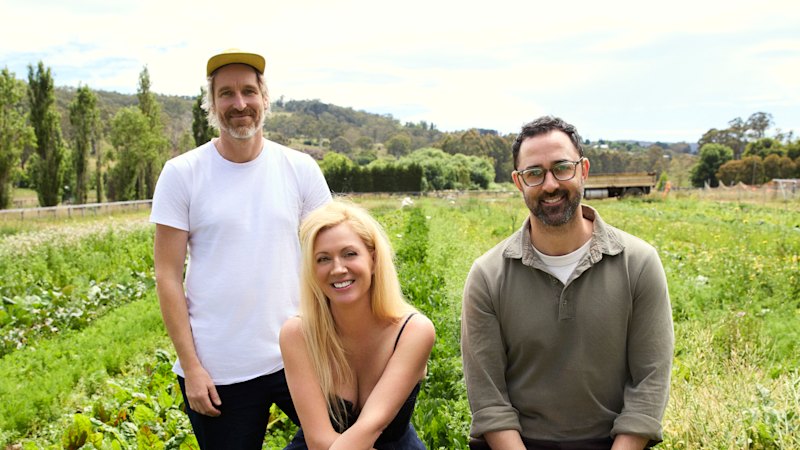
A regenerative agriculture and hospitality project spearheaded by billionaire investor Annie Cannon-Brookes has come under formal scrutiny by local municipal authorities in the Southern Highlands of New South Wales, Australia. The commercial paddock-to-plate operation is facing a series of inquiries from the regional council regarding whether aspects of the enterprise align with its approved development permissions, according to reporting by investigative journalists Lucy Macken and Patrick Begley. The review highlights mounting regulatory friction across regional Australia as prominent high-net-worth investors convert traditional pastoral holdings into blended tourist, dining, and ecological ventures.
Key facts
What happened
Local planning officials have begun examining the permits, conditions of consent, and operational activities associated with the agricultural and dining precinct established by Annie Cannon-Brookes in the Southern Highlands, according to reporting published by Lucy Macken and Patrick Begley. The development, designed as an integrated showcase for regenerative land management and farm-to-table food service, has drawn administrative scrutiny over whether its built infrastructure and use categories correspond to the development approvals originally granted for the land.
Municipal planning staff have raised specific questions concerning compliance with the terms of the project's development applications. In New South Wales planning practice, development consents stipulate precise parameters governing hours of operation, visitor capacity, structural modifications, traffic management, waste disposal, and the boundary between agricultural production and commercial retail or dining. The council inquiry is examining whether works undertaken across the site or the commercial hospitality offerings currently being staged exceed the scope of what was formally permitted under statutory land-use determinations.
While the reporting confirms that municipal officers have directed inquiries toward the venture to assess its regulatory standing, neither the council nor the project proponents have issued formal findings of an unlawful breach. The process represents an active compliance review, a standard administrative mechanism utilized by local governments to verify that on-the-ground reality matches documented planning instruments before deciding whether formal enforcement, retrospective approval applications, or operational adjustments are required.
Why it matters
The planning review into Annie Cannon-Brookes' estate carries significant implications for regional economic policy, the regulatory treatment of elite landholdings, and the broader agritourism sector across Australia. The Southern Highlands, situated approximately 110 kilometres south-west of Sydney, has long served as a prime agricultural district and a favoured retreat for corporate executives and prominent figures. In recent years, substantial capital inflows have accelerated the transition of historic grazing properties into multifaceted lifestyle, wellness, and luxury hospitality destinations.
When high-profile ventures face planning challenges, it underscores the systemic regulatory tension between traditional rural zoning and modern agritourism business models. Under Australian planning law, land classified for primary production is strictly regulated to prevent urban encroachment, preserve farming viability, protect soil and water resources, and limit commercial vehicle traffic on rural road networks. However, contemporary paddock-to-plate operations inherently depend on bringing large volumes of consumers, delivery transport, and event traffic directly onto agricultural properties.
For municipal councils, balancing economic development and tourism promotion against the statutory duty to enforce zoning laws is a persistent challenge. If an enterprise backed by one of the country's wealthiest individuals encounters compliance obstacles, it signals to other rural investors and hospitality operators that local governments are unwilling to overlook planning discrepancies, regardless of the sustainability credentials or environmental intent of a project. Moreover, it exposes the legal vulnerability of commercial concepts that operate in the grey zone between bona fide agricultural output and retail hospitality.
The background
The Southern Highlands region encompasses towns including Bowral, Moss Vale, Berrima, and Robertson, operating under the planning oversight of the Wingecarribee Shire Council. For decades, land management in the district has been governed by instruments such as the Wingecarribee Local Environmental Plan 2010, which implements zoning frameworks derived from the New South Wales Environmental Planning and Assessment Act 1979. Under this system, rural land is typically designated under RU1 Primary Production or RU2 Rural Landscape classifications, both of which enforce strict thresholds on permissible non-agricultural commercial activity.
Annie Cannon-Brookes emerged as an independent property and business owner of vast scale following her separation from tech billionaire and Atlassian co-founder Mike Cannon-Brookes, which became public in 2023. Prior to and following the division of their assets, the Cannon-Brookes name was associated with some of the most substantial real estate transactions in Australian history, including landmark residential properties in Sydney and extensive rural consolidations across regional New South Wales. In the Southern Highlands, Annie Cannon-Brookes has invested heavily in pastoral holdings, acquiring large-scale farms and heritage properties with an explicit focus on regenerative farming, conservation, and ethical food systems.
Regenerative agriculture seeks to restore soil health, enhance biodiversity, and capture carbon through holistic grazing and reduced chemical reliance. To achieve economic viability and consumer engagement, operators frequently couple these practices with on-site hospitality, offering diners food grown directly on the surrounding acreage. Recognising the growing demand for such enterprises, the New South Wales state government introduced planning reforms in late 2022 designed to facilitate agritourism, allowing certain low-impact activities—such as small-scale farm gates, farm tours, and boutique lodging—to occur as exempt or complying development without standard council consent.
However, these state-wide exemptions contain rigorous limits regarding floor area, patron numbers, operating hours, and vehicle movements. When an operation expands into a full-scale commercial restaurant, event space, or destination precinct, it automatically falls outside exempt categories and requires comprehensive development consent. In historic rural communities, established local residents frequently raise objections to such developments, citing noise pollution, loss of rural amenity, heightened bushfire evacuation risks, and the deterioration of unsealed or narrow country roads unequipped for commercial patron volumes.
Reaction
Public and institutional responses to the council's inquiry remain measured as administrative assessments continue. Wingecarribee Shire Council planning authorities generally handle active planning investigations through formal compliance channels rather than public declarations, in order to afford landowners procedural fairness under administrative law.
Neither Annie Cannon-Brookes nor representatives of her regional operating business have released detailed public statements addressing the specific inquiries highlighted by Macken and Begley. In planning reviews of this nature, standard protocol involves the landowner's legal counsel, town planners, and environmental consultants providing documentation, historical development records, and technical impact studies directly to council planning officers.
Community sentiment in rural and semi-rural districts experiencing substantial capital influx is typically divided between local trade and business chambers, which welcome the investment, employment, and prestige associated with premier paddock-to-plate dining, and neighbouring rural landholders, who emphasize preserving traditional agricultural tranquillity and council zoning integrity.
What we don't know yet
Several substantive details regarding the investigation have not yet been placed on the public record by authorities or the reporting journalists. The specific planning parcels and precise operational components currently under review have not been publicly detailed, leaving it unclear whether the council's inquiries focus on structural building work, dining seating capacities, traffic access, water management infrastructure, or operating hours.
It is also not yet known whether the council initiated this inquiry through routine compliance monitoring, internal audit of ongoing works, or in response to formal complaints lodged by neighbouring property owners. Crucially, the timeline for the council's determination remains unstated, as does the question of whether the venture will be forced to pause its commercial hospitality operations while discussions regarding development approval compliance proceed.
What to watch
The trajectory of the situation will be determined by several concrete procedural steps over the coming months. First, municipal planning officers will either accept the explanatory documentation submitted by Cannon-Brookes' representatives or issue a formal administrative notice, such as a Notice of Intention to Issue a Development Control Order under the Environmental Planning and Assessment Act.
Second, observers should watch the council's public planning register for the potential submission of a retrospective development application or a Section 4.55 application to modify existing development consents. Modifying a consent is the standard regulatory pathway used by property developers in New South Wales to regularise discrepancies between approved plans and built reality.
Finally, should council planners determine that the operation cannot be reconciled with local rural zoning rules, the matter could escalate to formal enforcement notices or proceedings before the Land and Environment Court of New South Wales. Future meetings of the Wingecarribee Shire Council and public regulatory filings will indicate whether the council and the venture reach an administrative accommodation or whether the dispute enters formal litigation.
This account is based on original reporting by Lucy Macken and Patrick Begley.
How this story was produced
This report was written by The Global Wire newsroom from reporting first published by Lucy Macken; Patrick Begley. We verify the core facts against the original report, write our own account, and add the background and consequences a short wire item leaves out. Drafting is AI-assisted inside an editor-supervised pipeline, and every story is checked for accuracy of attribution, structure and duplication before it appears — full detail in our AI and funding disclosure.
Spotted an error? Tell us at corrections@horizonglobalnews.com and read our corrections policy or editorial standards.






Reader comments
Loading comments…