

Victoria Discloses Health System Delays and Budget Overruns in 192 Tabled Papers
A massive parliamentary document disclosure in Victoria exposes years-long hospital bed waits, missed ambulance targets, and state budget pressures.
By The Global Wire Newsroom · Reported from Angus Delaney; Grant McArthur; Henrietta Cook; Kieran Rooney; Cara Waters; Caroline Schelle
Link preview · horizonglobalnews.com
Victoria Discloses Health System Delays and Budget Overruns in 192 Tabled Papers
A massive parliamentary document disclosure in Victoria exposes years-long hospital bed waits, missed ambulance targets, and state budget pressures.
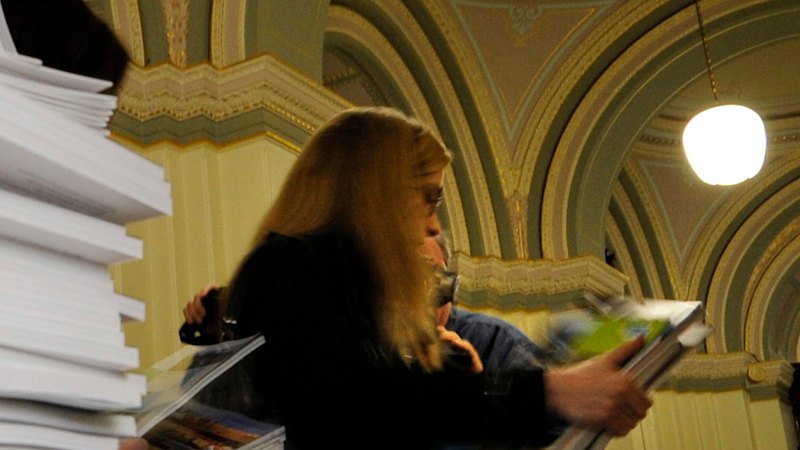
MELBOURNE, Australia — The Victorian state government tabled 192 official reports and departmental documents in a single afternoon sitting of the state parliament, disclosing acute operational stresses across public hospitals, systemic ambulance response shortfalls, and significant fiscal blowouts across state portfolios. The coordinated release, executed on a Friday as part of the established parliamentary convention colloquially termed "dump day," concentrated dozens of statutory agency reviews, departmental accounts, and compliance assessments into an immediate disclosure window that effectively limits concurrent public and parliamentary examination.
Key facts
What happened
During a standard Friday legislative sitting in Melbourne, parliamentary clerks tabled a volume of 192 distinct official papers, encompassing annual balance sheets, departmental performance disclosures, and performance monitoring data from across the Victorian public sector. According to reporting by Angus Delaney, Grant McArthur, Henrietta Cook, Kieran Rooney, Cara Waters, and Caroline Schelle, the released tranches contained extensive admissions of structural failure within the state’s healthcare administration and wide-ranging fiscal overruns in core agency budgets.
Central to the tabled materials were performance audits from Victoria's metropolitan and regional health networks. The documents revealed that thousands of patients encountered extreme delays spanning years to secure dedicated hospital admissions and definitive surgical bed allocations. Compounding the hospital-level bottlenecks, emergency transport logs detailed recurring failures to meet benchmark emergency arrival times. Emergency paramedics routinely missed statutory target response windows for life-threatening medical calls amid widespread transfer delays at saturated emergency department receiving docks.
Alongside operational failures in clinical care, the collective filings registered substantial budget overruns across government portfolios. Capital delivery authorities, health service networks, and general administrative agencies logged expenditure far exceeding initially appropriated provisions, pointing to rising operational overheads, debt-servicing demands, and cost escalation on state-managed programs.
By convention, public entities must place their annual accounting reports before both houses of the Parliament of Victoria before specific statutory deadlines, typically arriving toward the close of October. The simultaneous tabling of almost two hundred detailed dossiers inside a single afternoon sitting concentrated scrutiny into a compressed timeframe, a standard political and administrative maneuver designed to exhaust investigative resources across the parliamentary press gallery and opposition research units.
Why it matters
For residents, patients, and taxpayers across Victoria, the disclosures confirm prolonged operational strain across essential public goods. When public hospital beds remain inaccessible for years and emergency ambulance networks miss basic arrival metrics, the risk to patient safety escalates directly. Extended bed wait times suppress hospital throughput, stranding patients in acute discomfort, worsening underlying clinical conditions, and driving severe emergency department crowding. When transfer teams cannot offload arriving patients into hospital beds, ambulance crews are immobilized on hospital ramps, leaving regional and metropolitan sectors with depleted frontline coverage for new emergency calls.
Beyond clinical delivery, the disclosure of widespread budgetary blowouts underscores structural fiscal vulnerability in Australia's second-most populous state. Significant cost overruns within operating departments inevitably force governments to divert capital from planned social programs, defer maintenance on public infrastructure, or rely on increased public sector borrowing. In an economic environment marked by sustained interest rates and elevated construction inflation, compounding agency deficits place direct pressure on Victoria’s sovereign credit rating, state payroll liabilities, and future tax frameworks. Persistent blowouts also reduce executive capacity to direct emergency discretionary capital to health networks that are already experiencing demonstrable resource shortages.
The background
Parliamentary "dump day" is a longstanding institutional phenomenon within Westminster-style systems, particularly across Australian federal and state legislatures. Under the Financial Management Act 1994 and related public administration statutes in Victoria, ministers and executive agencies are bound by statutory timelines requiring audited annual reports to be tabled in both the Legislative Assembly and Legislative Council within prescribed periods following the conclusion of the fiscal year on June 30. Executive governments frequently defer the physical delivery of these reports until the final allowable parliamentary sitting days before the deadline, releasing hundreds of disparate balance sheets simultaneously on a late Friday afternoon.
Victoria's health sector has faced sustained organizational and clinical pressures over several consecutive reporting periods. In typical operational structures overseen by the Victorian Department of Health, emergency call response metrics rely on Ambulance Victoria maintaining strict response times—historically targeting dispatch and arrival for highest-priority Code 1 emergency calls within 15 minutes in at least 85 percent of cases. Similarly, elective surgical admissions and inpatient bed allocations are governed by clinical triage bands established to ensure care delivery within 30 to 365 days depending on acuity.
Prior annual cycles and recurring inquiries by the Victorian Auditor-General’s Office (VAGO) have repeatedly documented systemic challenges, including persistent hospital ramp times, high staff vacancy rates across regional healthcare hubs, and mounting capital debts stemming from major statewide infrastructure investments. While executive leadership has previously cited global health disruptions and population growth as drivers of service backlogs, successive statutory performance metrics have shown prolonged difficulty in returning baseline medical delivery indicators to targeted operational thresholds.
Reaction
Following the table office's release of the 192 files, scrutiny from crossbench legislators, the parliamentary opposition, and independent accountability bodies focused on both the content of the disclosures and the procedure employed to release them. Executive leaders routinely defend late-sitting bulk disclosures as standard compliance with statutory calendar deadlines, maintaining that departmental accounts must pass through rigorous Victorian Auditor-General clearance before formal submission to parliament.
Non-government members and independent watchdogs historically challenge the practice of bulk document releases, arguing that using late-sitting procedural drops serves as an institutional shield against open legislative debate. Detailed interrogations regarding specific department overruns and health performance failures are expected to emerge during subsequent parliamentary question times, as well as before the Public Accounts and Estimates Committee (PAEC). In those hearings, departmental secretaries and responsible portfolio ministers will face direct questioning over administrative failures, missed ambulance response thresholds, and agency spending deficits.
What we don't know yet
While the 192 documents confirm the presence of system-wide failures and fiscal blowouts, the raw tabling leaves several fundamental questions unaddressed. The summary reporting does not delineate the full breakdown of which regional versus metropolitan health networks experienced the longest inpatient bed delays, nor does it quantify the specific clinical categories where waits stretched into multi-year backlogs. Furthermore, the exact cumulative total of the budget overruns across all 192 reporting bodies remains unaggregated in the immediate release, leaving the gross fiscal impact on the state's forward estimates unclear.
It is also not yet established whether the recorded ambulance response deficits represent localized regional shortfalls or a uniform deterioration across metropolitan Melbourne, nor have the documents explicitly identified what percentage of these delays resulted directly from offload delays at emergency departments rather than dispatch capacity constraints. Finally, the material tabled does not outline what specific corrective actions, capital reallocations, or workforce interventions individual hospital boards have formally committed to enact to resolve these delays.
What to watch
The immediate consequence of the disclosures will play out through parliamentary scrutiny mechanisms over the coming sitting weeks. Specific items to monitor include:
This report is based on disclosures and original reporting by Angus Delaney, Grant McArthur, Henrietta Cook, Kieran Rooney, Cara Waters, and Caroline Schelle detailing the tabling of 192 state government documents in the Victorian parliament.
How this story was produced
This report was written by The Global Wire newsroom from reporting first published by Angus Delaney; Grant McArthur; Henrietta Cook; Kieran Rooney; Cara Waters; Caroline Schelle. We verify the core facts against the original report, write our own account, and add the background and consequences a short wire item leaves out. Drafting is AI-assisted inside an editor-supervised pipeline, and every story is checked for accuracy of attribution, structure and duplication before it appears — full detail in our AI and funding disclosure.
Spotted an error? Tell us at corrections@horizonglobalnews.com and read our corrections policy or editorial standards.






Reader comments
Loading comments…