

Proton Collision Data Offers Major Test for Decades-Old Subatomic Gluon Theory
Surplus baryons emerging from nuclear collision experiments provide strong empirical support for theories that gluons carry baryon numbers, according to reporting by Rupendra Brahambhatt.
By The Global Wire Newsroom · Reported from Rupendra Brahambhatt
Link preview · horizonglobalnews.com
Proton Collision Data Offers Major Test for Decades-Old Subatomic Gluon Theory
Surplus baryons emerging from nuclear collision experiments provide strong empirical support for theories that gluons carry baryon numbers, according to reporting by Rupendra Brahambhatt.
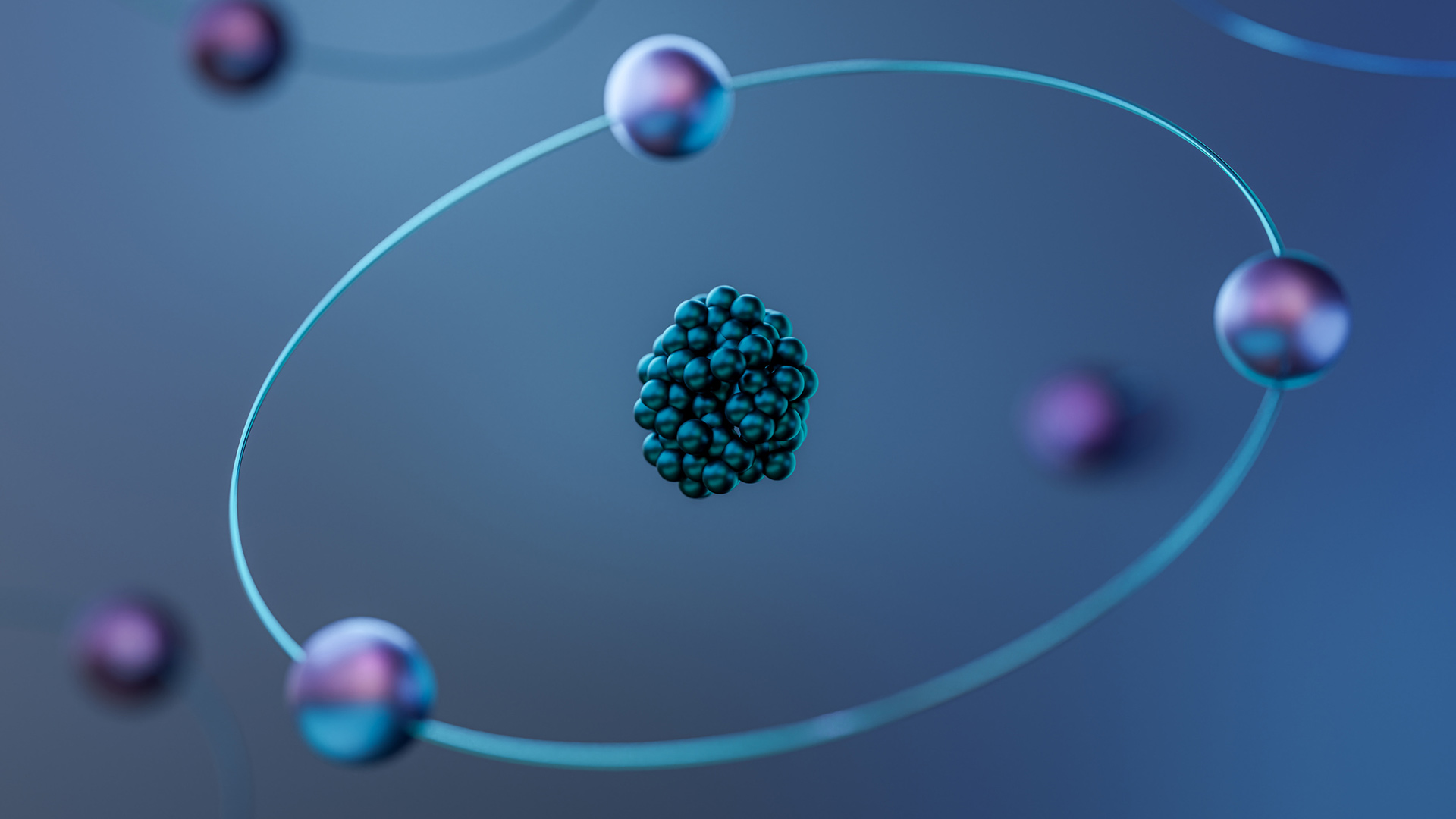
Physicists analyzing high-energy nuclear collisions have uncovered an unexpected surplus of baryons, providing the strongest experimental test yet for a theoretical model proposed decades ago. The findings, which suggest that gluons rather than quarks may be the primary carriers of baryon number, could reshape the scientific understanding of subatomic particle dynamics and the fundamental structure of matter, according to reporting by Rupendra Brahambhatt.
The observation emerged from experiments in which atomic nuclei were accelerated and smashed together at extreme energies. Rather than yielding the precise ratios of subatomic particles predicted by traditional models, the collisions produced a distinctive excess of baryons—a category of composite subatomic particles that includes protons and neutrons. This anomaly provides empirical backing for a long-standing hypothesis regarding the fundamental nature of the strong nuclear force.
Experimental Findings from Nuclear Collisions
In modern particle physics, high-energy particle colliders smash protons and heavy atomic nuclei together at near light-speed velocities to probe the internal dynamics of subatomic matter. During these violent collisions, the boundaries of individual nucleons break down, briefly liberating their internal constituents into a dense, high-temperature environment.
When the resulting system cools and expands, subatomic particles recombining from this energetic state are recorded by sensitive detector arrays. According to reporting by Rupendra Brahambhatt, measurements recorded during recent nuclear collision experiments revealed a strange surplus of baryons relative to theoretical baselines.
Under standard assumptions, the distribution and momentum of produced particles were expected to follow patterns governed strictly by the valence quarks contained within the colliding particles. However, the observed surplus of baryons indicates that the underlying mechanism governing how baryon identity is preserved and transported across high-energy interactions may operate differently than previously assumed.
Re-evaluating Quarks and Gluons
To understand the significance of the result, nuclear physicists distinguish between the primary constituent particles that make up atomic nuclei: quarks and gluons. Quarks are fundamental matter particles that possess electric charge, fractional spin, and color charge. They combine in sets of three to form baryons, such as protons and neutrons, or in quark-antiquark pairs to form mesons.
Gluons, by contrast, are massless gauge bosons that mediate the strong nuclear force—the powerful interaction that binds quarks together inside hadrons. In the standard framework of quantum chromodynamics, the physical theory describing strong interactions, gluons carry color charge and continuously exchange force between quarks.
For decades, conventional physics models assumed that the property known as baryon number—a conserved quantum number in subatomic physics—was inherently tied to the individual quarks themselves. Because every quark was assigned a fractional baryon number of one-third, a particle containing three quarks naturally possessed a total baryon number of one. Under this conventional view, the transport of baryon number through a collision was thought to follow the paths of the participating quarks.
The Theoretical Debate over Baryon Number
The recent findings provide crucial empirical support for an alternative theoretical framework that originated decades ago. That hypothesis proposed that baryon number might not be exclusively anchored to individual quarks, but could instead be carried by complex configurations of gluons, often described in theoretical physics as gluonic junctions or gluon fields.
In this theoretical picture, when nuclei collide at ultra-relativistic speeds, gluons form intricate topological configurations that can store and transport the quantum numbers defining a baryon. If gluons carry the baryon number during collisions, the resulting particle distributions would produce a distinct surplus of baryons in specific kinematic regions, separated from the initial valence quarks.
The surplus observed in recent experimental data offers researchers their clearest evidence to date that this gluon-based mechanism plays an active role in particle production. The measurements effectively allow physicists to test theoretical predictions that were previously beyond experimental reach due to the extreme conditions required to observe them.
Implications for Nuclear Physics
The potential shift in understanding how baryon number is carried carries broad implications across the field of nuclear and particle physics. Quantum chromodynamics is one of the pillars of the Standard Model of particle physics, yet mathematically modeling the strong force at low energies and high density remains one of the most challenging problems in theoretical physics.
If gluons are confirmed to play a decisive role in carrying baryon number, theoretical models governing hadronization—the process by which free quarks and gluons condense into observable particles—will require refinement. Researchers will need to re-examine how energy, momentum, and quantum numbers are redistributed during high-energy heavy-ion collisions.
Furthermore, these findings could influence cosmological models that describe the state of the universe micro-seconds after the Big Bang. During that epoch, matter existed as a quark-gluon plasma, a superheated state where quarks and gluons moved freely before cooling to form the first stable protons and neutrons. Understanding how gluons influence baryon transport helps refine models of how matter assembled during the primordial expansion of the cosmos.
Outlook and Next Steps
Following these observations, experimentalists and theorists are preparing further investigations to validate and expand upon the findings. Researchers plan to analyze additional collision datasets across varying energy levels and collision geometries to trace the exact distribution of the baryon surplus.
Theoretical physicists are simultaneously working to incorporate gluon-driven baryon transport into computational models and lattice quantum chromodynamics calculations. Refining these theoretical predictions will allow scientists to make more precise comparisons against future collider data.
As research continues, the results reported by Rupendra Brahambhatt mark a key milestone in the long-running effort to decipher the fundamental mechanics of the strong nuclear force.
This article relies on original reporting conducted by Rupendra Brahambhatt.
How this story was produced
This report was written by The Global Wire newsroom from reporting first published by Rupendra Brahambhatt. We verify the core facts against the original report, write our own account, and add the background and consequences a short wire item leaves out. Drafting is AI-assisted inside an editor-supervised pipeline, and every story is checked for accuracy of attribution, structure and duplication before it appears — full detail in our AI and funding disclosure.
Spotted an error? Tell us at corrections@horizonglobalnews.com and read our corrections policy or editorial standards.
Reader comments
Loading comments…