

Proposed Sale of Suburban Melbourne Park to Aged Care Home Triggers Community Battle
An aged care provider's plan to acquire an adjacent Melbourne pocket park has raised fears of a precedent for privatizing public open space.
By The Global Wire Newsroom · Reported from Cassandra Morgan
Link preview · horizonglobalnews.com
Proposed Sale of Suburban Melbourne Park to Aged Care Home Triggers Community Battle
An aged care provider's plan to acquire an adjacent Melbourne pocket park has raised fears of a precedent for privatizing public open space.
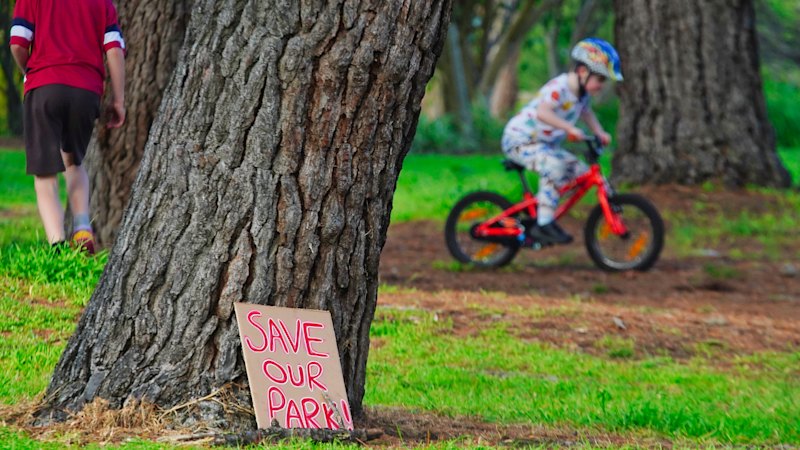
A proposal by an aged care service to acquire a public park in suburban Melbourne has ignited a fierce debate over the protection of municipal green space, according to reporting by Cassandra Morgan. The care operator contends that the pocket park, bordered by mature pine trees, is underutilized, poorly integrated, and uninviting in its current condition, presenting a compelling case for acquisition to expand essential elder care facilities. However, neighborhood residents strongly contest this characterization, arguing that liquidating public parkland to accommodate institutional expansion sets a troubling precedent for local government reserves across the Victorian capital.
Key facts
What happened
The conflict arose when an aged care provider initiated steps to buy a neighboring municipal park to facilitate an expansion of its facility footprint, as reported by Cassandra Morgan. Representatives for the aged care service maintained that the parcel of land—shaded by pine trees but lacking significant active amenities—sees minimal public use and presents an uninviting atmosphere to the surrounding neighborhood. The operator submitted that repurposing the reserve would deliver substantial public benefit by enabling the construction of additional senior living accommodations and nursing care beds in a region experiencing demographic aging.
Local residents quickly mobilized against the proposed land sale, disputing the provider's assertion that the space lacks community value. Opponents argue that small suburban pocket parks provide critical passive recreation, mental health benefits, shade, and local biodiversity, particularly in established residential areas where replacing lost parkland is practically impossible. Community advocates contend that public land, once divested to private or non-profit entities, is permanently removed from the public realm, creating an appealing shortcut for institutions seeking land at the expense of community assets.
At the heart of the dispute is a clash over how public land utility is measured. While institutional applicants frequently assess parkland through metrics of foot traffic, formal sporting infrastructure, and land efficiency, local communities place high intrinsic value on neighborhood buffer zones, tree canopy coverage, and unbuilt open spaces.
Why it matters
The confrontation between residential aged care expansion and public park retention underscores an escalating structural tension across Australian metropolitan planning. Greater Melbourne's population, currently around 5 million residents, is projected by state planning demographers to grow to over 8 million by mid-century. At the same time, the proportion of Australians aged 65 and older is expanding rapidly, placing immense pressure on health and aged care infrastructure within established suburban suburbs where vacant land is extremely scarce and costly.
For local councils, municipal parks represent non-renewable public assets that provide essential cooling effects, urban biodiversity, and community health benefits. Selling council-owned reserves to institutional care operators can generate short-term capital or address pressing social care shortages, but it permanently reduces the urban green footprint. Under planning guidelines recognized across Victoria, municipalities establish minimum accessible open space ratios per resident—targets that become increasingly difficult to meet if small local parks are carved up for development.
If local councils allow pocket parks to be reclassified and sold on the basis of low recorded usage, community groups fear a widespread ripple effect across Melbourne's 31 local government areas. Other institutions, including schools, private hospitals, and commercial developers, could use similar arguments of low visitation to target neighboring public reserves, gradually eroding the city's suburban green space network.
The background
Public land administration in Victoria is governed by a comprehensive regulatory framework involving local municipal councils, the Department of Energy, Environment and Climate Action (DEECA), and the *Local Government Act 2020*. Under Victorian statutory rules, before a municipal council can sell or transfer public land, it must issue formal public notices, conduct community consultation, and formally review public submissions. Where land is designated as public open space, local Open Space Strategies typically mandate that any land disposal should ideally be offset by acquiring equivalent replacement parkland nearby or reinvesting sale proceeds directly into upgrading remaining local reserves.
In Melbourne's suburban landscape, pocket parks and neighborhood reserves were regularly set aside during 20th-century residential land subdivisions. These small reserves, often ranging between 1,000 and 5,000 square meters, were designed to ensure suburban households had walkable access to green space, tree canopy, and children's play areas. Over several decades, mature trees—such as the pines located at the contested Melbourne site—have grown into crucial components of local urban forest canopy, helping to combat the urban heat island effect.
Concurrently, the Australian aged care sector has undergone significant structural transformation following the Royal Commission into Aged Care Quality and Safety, which delivered its final report in March 2021. The Royal Commission highlighted the need for modernized facilities, smaller household-style residential layouts, and enhanced access to outdoor green environments for residents. These recommendations encourage aged care providers to seek larger land sites to build modern single-occupancy rooms with private amenities. When an existing facility is landlocked by suburban housing, adjacent municipal parkland often emerges as an attractive target for expansion.
Reaction
The community response to the proposed purchase has been characterized by organized neighborhood advocacy and broader debate among urban planning experts, according to Cassandra Morgan's reporting. Local residents have expressed deep concern over the potential permanent loss of public land, stressing that unbuilt passive green spaces are vital for neighborhood liveability regardless of whether they feature built playground equipment or formal sports facilities.
While the aged care provider views the proposal as a pragmatic strategy to expand vital healthcare services on land it considers underutilized, community members argue that low visitation often stems from a lack of municipal maintenance rather than a lack of public affection. Advocates maintain that rather than selling off parks deemed uninviting, councils should invest in rejuvenation—such as adding park benches, improving lighting, planting native understory flora, and creating accessible footpaths.
Municipal councilors faced with purchase applications must navigate competing statutory responsibilities: supporting essential social infrastructure for aging populations while protecting public open space for future generations. While initial land sale decisions rest with local council votes, land use rezonings and planning permits can ultimately be appealed to the Victorian Civil and Administrative Tribunal (VCAT) or require final approval from the Victorian Minister for Planning.
What we don't know yet
Key technical and financial details surrounding the proposed land purchase remain undisclosed in the initial reporting by Cassandra Morgan. The specific municipal council jurisdiction and exact acreage of the contested park have not been detailed, leaving the market valuation and precise planning zone overlay of the site unconfirmed. It is also unclear whether the aged care provider has submitted a binding commercial offer or if discussions remain at an exploratory policy stage.
Furthermore, the reporting does not specify whether the operator has offered compensatory measures—such as funding the purchase of alternative green space nearby or upgrading surrounding reserves. Without a published statutory notice under section 114 of the *Local Government Act 2020*, the exact timetable for formal council deliberations and public hearings remains unannounced. It is also unknown whether the mature pine trees on the site are protected by municipal vegetation overlays or environmental significance overlays, which could restrict land clearing even if ownership were transferred.
What to watch
In the coming months, several key milestones will determine the outcome of the contested Melbourne parkland:
This report is based on original news reporting by Cassandra Morgan.
How this story was produced
This report was written by The Global Wire newsroom from reporting first published by Cassandra Morgan. We verify the core facts against the original report, write our own account, and add the background and consequences a short wire item leaves out. Drafting is AI-assisted inside an editor-supervised pipeline, and every story is checked for accuracy of attribution, structure and duplication before it appears — full detail in our AI and funding disclosure.
Spotted an error? Tell us at corrections@horizonglobalnews.com and read our corrections policy or editorial standards.





Reader comments
Loading comments…