

Perseid Meteor Shower Set to Reach Peak Activity on Wednesday Night
The annual Perseid meteor shower will offer skywatchers its best viewing opportunity of the season on Wednesday night as Earth passes through the core of the comet debris stream.
By The Global Wire Newsroom · Reported from Maddie Molloy; Matt Taylor
Link preview · horizonglobalnews.com
Perseid Meteor Shower Set to Reach Peak Activity on Wednesday Night
The annual Perseid meteor shower will offer skywatchers its best viewing opportunity of the season on Wednesday night as Earth passes through the core of the comet debris stream.
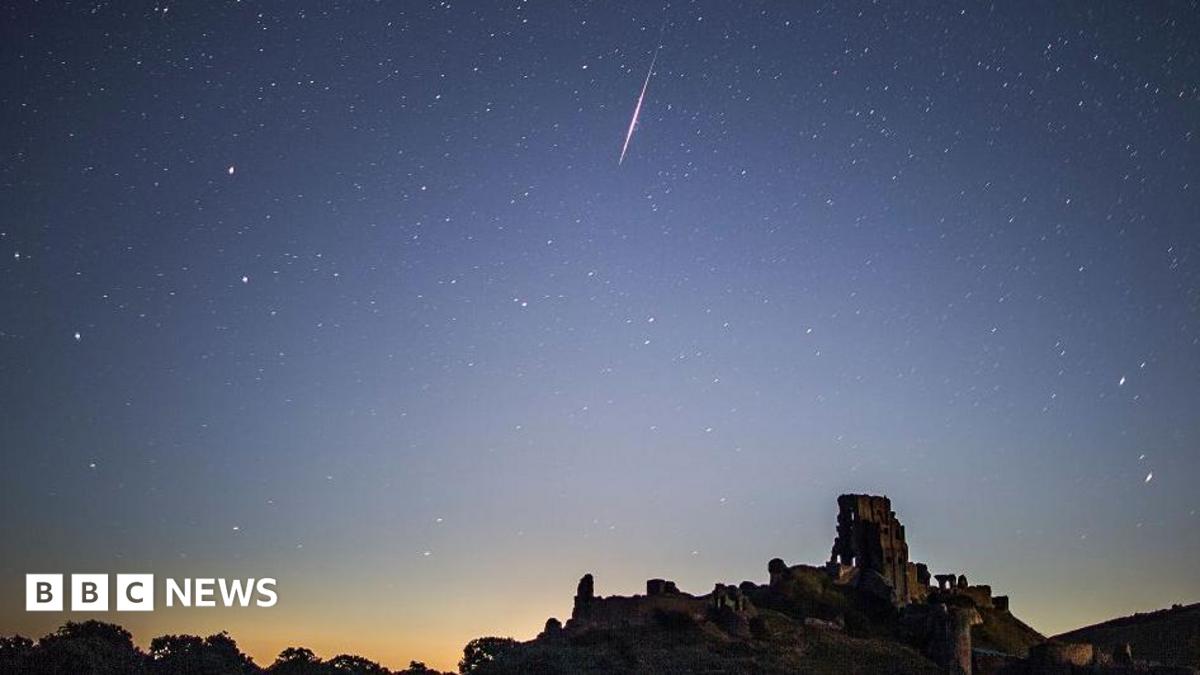
Skywatchers across the globe are preparing for one of the primary celestial events of the summer as the annual Perseid meteor shower reaches its maximum activity level. According to reporting by Maddie Molloy and Matt Taylor, Wednesday night will mark the peak of the display, offering observers their strongest opportunity of the year to view meteors crossing the night sky.
Peak Viewing Window
The peak of a meteor shower represents the precise period during which Earth passes through the densest concentration of cosmic debris along its orbital path. While individual meteors associated with the Perseids can be seen across a multi-week window extending from mid-July through late August, the highest density of activity is concentrated within a narrow period lasting roughly 24 to 48 hours. On Wednesday night, orbital geometry aligns to yield the maximum potential frequency of visible atmospheric entries.
Astronomical consensus indicates that during this peak phase, the rate of visible meteors increases substantially compared to the surrounding days. Because Earth intersects the central core of the dust trail during this timeframe, observers located under dark, clear skies are positioned to witness a higher volume of streaks per hour than at any other point in the shower's annual cycle.
Mechanics of the Perseid Display
The scientific origin of the Perseid meteor shower lies in the orbital debris trail left behind by Comet 109P/Swift-Tuttle, a massive body composed of ice, dust, and rock that orbits the Sun once every 133 years. As the comet travels through the inner solar system during its periodic passes, solar heat causes volatile gases and embedded particles to shed into space. This displaced material settles into a vast, elongated dust stream along the comet's established orbital trajectory.
Each year in August, Earth’s orbital path takes the planet directly through this particle trail. As Earth moves through space, these small fragments—frequently no larger than grains of sand or small pebbles—collide with the upper atmosphere at velocities exceeding 130,000 miles per hour. The immense kinetic energy generated by this high-speed entry compresses and heats the air in front of the particle. This process creates a glowing trail of ionized gas that briefly illuminates the sky before the fragment completely vaporizes.
Radiant Point and Viewing Conditions
Although the meteoroid fragments enter the atmosphere on roughly parallel paths, visual perspective makes them appear to radiate outward from a single focal point in the sky. This location, known as the radiant, sits in the direction of the constellation Perseus, from which the meteor shower derives its name. As the constellation rises higher above the horizon during the late night and pre-dawn hours, the visibility of the meteors generally improves for ground-based observers.
Astronomical guidelines emphasize several standard practices for optimal viewing during Wednesday night's peak. Specialized optical equipment, such as telescopes or binoculars, is generally discouraged for meteor watching because such devices significantly restrict the field of view. Unassisted visual observation provides the wide-angle perspective necessary to detect fast-moving meteors that can appear anywhere across the visible sky.
Observational success also depends heavily on dark adaptation. The human eye requires approximately 20 to 30 minutes in continuous darkness to fully adapt to low-light conditions. Exposure to bright light sources, including mobile device displays or flashlights, instantly resets dark adaptation and reduces the eye's ability to discern faint or fast-moving meteors.
Impact of Light Pollution
The overall quality of a meteor viewing session is strongly influenced by local environmental conditions and ambient light levels. Urbanization and expanded municipal lighting have created widespread skyglow, a condition where artificial illumination scatters off atmospheric particles and creates a permanent background haze over populated areas.
In urban and densely populated suburban environments, skyglow obscures fainter celestial phenomena, leaving only the brightest fireballs visible. Consequently, skywatching organizations recommend travelling away from major population centers to designated dark-sky locations, rural areas, or elevated positions. Locations with clear, unobstructed horizons free from tall buildings or tree cover maximize the visible volume of the night sky.
Broader Astronomical Context
The Perseid display is recognized by astronomical institutions as one of the most consistent major meteor showers in the annual calendar. Unlike astronomical phenomena that require specialized filtering equipment or complex photographic techniques, meteor showers are fully observable without artificial aids, making them highly accessible to the public.
Beyond public observation, meteor showers offer astronomers opportunities to monitor the evolution of cometary debris fields. By recording the timing, trajectory, and frequency of meteors over extended spans, researchers gather data regarding how solar radiation, gravitational interactions, and solar wind alter the distribution of particles within cometary orbits over time.
What Comes Next
Following the peak on Wednesday night, the density of the debris trail encountered by Earth will steadily decline over the remainder of the week. While occasional meteors linked to the Perseid stream will remain visible through late August, the event will gradually subside as Earth exits the dust trail. Celestial observers seeking similar displays will look toward late autumn, when subsequent annual showers such as the Orionids and Geminids reach their respective peaks.
This article includes reporting originally published by Maddie Molloy and Matt Taylor.
How this story was produced
This report was written by The Global Wire newsroom from reporting first published by Maddie Molloy; Matt Taylor. We verify the core facts against the original report, write our own account, and add the background and consequences a short wire item leaves out. Drafting is AI-assisted inside an editor-supervised pipeline, and every story is checked for accuracy of attribution, structure and duplication before it appears — full detail in our AI and funding disclosure.
Spotted an error? Tell us at corrections@horizonglobalnews.com and read our corrections policy or editorial standards.

Reader comments
Loading comments…