

Pacific Summit in Palau Exposed to Diplomatic Rifts as Leaders Skip Key Talks
High-level absences at the Pacific Islands Forum summit in Palau highlight deepening regional divisions amid intensified Chinese pressure over Taiwan's involvement.
By The Global Wire Newsroom · Reported from SECTIONS China’s Pacific push gets a boost as key leaders skip island forum ET Online
Link preview · horizonglobalnews.com
Pacific Summit in Palau Exposed to Diplomatic Rifts as Leaders Skip Key Talks
High-level absences at the Pacific Islands Forum summit in Palau highlight deepening regional divisions amid intensified Chinese pressure over Taiwan's involvement.
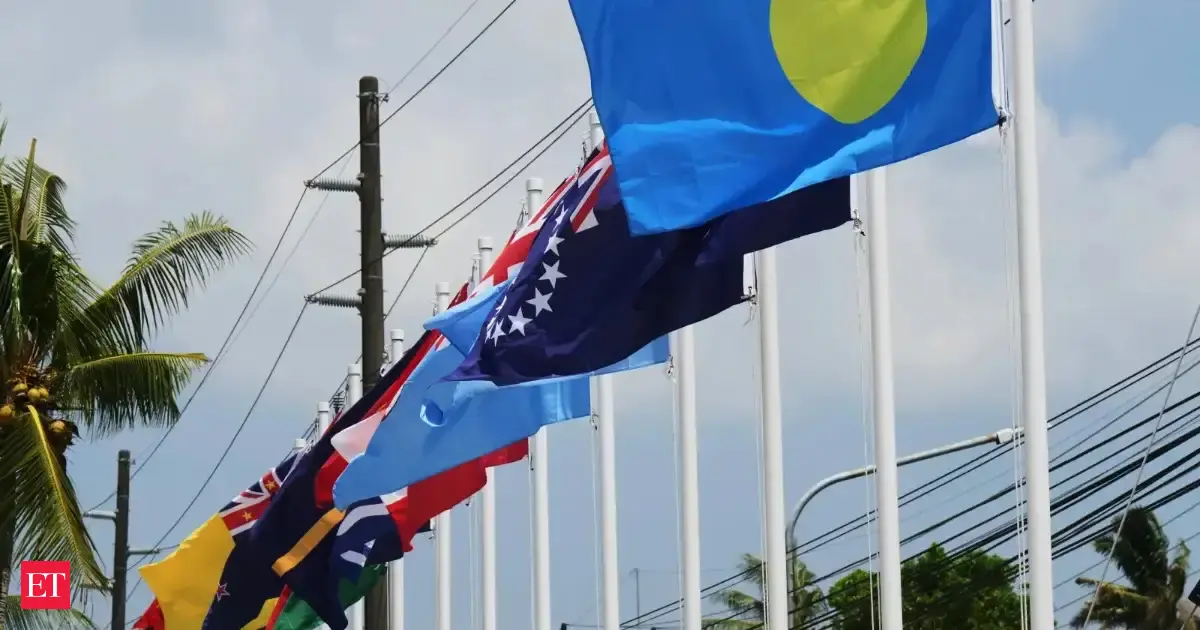
The annual Pacific Islands Forum leaders’ summit convened in Palau in late August 2026 amid noticeable diplomatic friction, as several key regional leaders chose not to attend the high-level gathering, according to reporting by ET Online. The host nation welcomed delegations against a backdrop of increasing fragmentation among Oceania’s sovereign states, a trend that threatens to undermine collective bargaining power on climate change, maritime domain awareness, and economic development. Central to the political friction is Beijing’s persistent campaign to limit Taiwan’s participation in regional bodies. As China steps up diplomatic pressure on Pacific nations to restrict Taipei’s status within the forum, the absence of prominent regional heads of state has complicated attempts to present a unified strategy on shared security and economic challenges.
Key facts
What happened
The opening of the Pacific Islands Forum (PIF) summit in Palau was marked by empty seats at the head table, as multiple island leaders opted not to attend the premier political gathering of the South Pacific. While host officials strove to maintain focus on the summit's core agenda—encompassing economic development, sustainable fisheries management, and climate change vulnerability—the proceedings were overshadowed by geopolitical maneuverings.
Beijing utilized the summit to push back vigorously against Taiwan’s ongoing involvement in forum activities. Taiwan has long held the status of a development partner within the PIF framework, allowing its representatives to attend post-forum dialogues and engage directly with Pacific governments. However, Chinese officials have consistently argued that regional organizations should adhere strictly to Beijing's "One China" principle, demanding that Taipei’s formal standing within the summit be curtailed or eliminated entirely.
The low summit attendance among certain key heads of government exposed widening fault lines within the Pacific community. While official delegations from attending nations attempted to address pressing local priorities—such as ocean conservation, debt sustainability, and disaster response funding—the lack of consensus on external alignment made it difficult to forge binding agreements. The absenteeism left working-level diplomats with the challenge of negotiating language for the final summit communique that would accommodate both pro-Beijing governments and those maintaining formal diplomatic ties with Taipei.
Why it matters
The diplomatic fractures visible at the Palau summit carry direct implications for governance, security, and economic assistance across Oceania. For decades, the Pacific Islands Forum operated under the principle of consensus-based diplomacy, allowing small island developing states to aggregate their influence when negotiating with major global powers. When key leaders skip the summit, that collective leverage deteriorates, leaving individual nations more vulnerable to bilateral pressure from larger external actors.
For global trade and security networks, a fragmented Pacific complicates efforts to establish cohesive maritime regimes. Major shipping lanes, vast Exclusive Economic Zones (EEZs), and critical subsea telecommunications infrastructure span the sovereign waters of PIF member states. When regional consensus breaks down over ideological or foreign policy lines, standardizing regulations for deep-sea mining, illegal fishing enforcement, and port access becomes far more challenging.
Furthermore, the contest between Beijing and Western allies directly impacts aid distribution and infrastructure development across the Pacific. While Chinese investments often target large-scale transport and telecommunications projects, Western partners like Australia, Japan, and the United States have focused on transparent development aid, climate financing, and institutional strengthening. The rivalry forces Pacific governments to navigate competing strategic interests, sometimes at the expense of long-term policy consistency and regional cohesion.
The background
The Pacific Islands Forum was established in 1971 as the South Pacific Forum, created to give independent and self-governing island nations a collective political voice free from former colonial oversight. Over the decades, the organization grew to 18 members, including Australia, New Zealand, small island states across Polynesia, Micronesia, and Melanesia, and self-governing territories. To engage key international stakeholders without granting them voting rights, the forum instituted a system of "Dialogue Partners" in 1989, followed by specific partner arrangements for third parties.
Taiwan established its official role as a PIF development partner in 1992, institutionalizing financial support for regional development funds and medical exchanges. However, China’s dramatic economic growth and expanding maritime ambitions over the past two decades transformed Oceania into a strategic battleground for diplomatic recognition. Beijing has systematically incentivized Pacific states to sever relations with Taipei in favor of diplomatic ties with China.
This diplomatic realignment accelerated significantly over the past decade. In September 2019, both the Solomon Islands and Kiribati switched diplomatic recognition from Taipei to Beijing within days of each other. Early in 2024, the Republic of Nauru similarly withdrew recognition from Taiwan, leaving only three Pacific island nations—Palau, the Marshall Islands, and Tuvalu—that maintain official diplomatic ties with Taipei. Host nation Palau has remained one of Taiwan’s stanchest allies in Micronesia, operating under a Compact of Free Association with the United States while resisting Chinese economic pressure.
As China’s network of Pacific partners expanded, Beijing increased pressure on the forum to alter Taiwan’s standing, contending that Taipei’s participation breaches international norms. This campaign has created ongoing friction within Micronesia and Melanesia, leading to periodic threats of withdrawal and deep administrative strains within the forum secretariat.
Reaction
Official reactions across the region reflect the careful diplomatic balancing act required of Pacific nations. While the summit organizers in Palau emphasized the technical achievements of the working groups, leaders of Taiwan-aligned nations reaffirmed their commitments to sovereign choice in foreign relations. Taiwanese officials have consistently condemned Beijing’s efforts to exclude Taipei from international organizations, emphasizing that Taiwanese development assistance in the Pacific is transparent and unattached to political coercion.
For its part, the Chinese foreign ministry routinely reiterates that the One China principle is a fundamental norm of international relations, asserting that any participation by Taiwanese representatives in intergovernmental forums is improper. Beijing maintains that its bilateral partnerships in the Pacific are aimed at mutual economic growth and infrastructure improvement without security preconditions.
Western powers, particularly Australia and the United States, have expressed implicit support for maintaining inclusive regional dialogues that respect long-standing Pacific governance mechanisms. Australian diplomats have consistently urged all external actors to respect the primacy of the Pacific Islands Forum as the region's central decision-making body, advocating for "Pacific-led" solutions to security and development challenges. However, civil society groups and regional commentators have raised concerns that intense external competition is diverting attention from urgent domestic crises, including rising sea levels, economic inflation, and healthcare infrastructure deficits.
What we don't know yet
Several critical details surrounding the summit remain unconfirmed in public reporting. It is currently unclear which specific leaders chose to skip the summit and whether their absences were driven by domestic political emergencies, scheduling conflicts, or a deliberate diplomatic statement regarding the forum's direction.
Additionally, the extent to which Beijing’s push against Taiwan altered the final language of the post-summit communique remains uncertain. It is unknown whether attending members agreed to review the forum's partner guidelines or if Palau and its allies successfully blocked attempts to downgrade Taiwan's status.
Finally, the long-term financial consequences for the forum's institutional budget are uncertain if China or Western allies adjust their aid commitments based on the summit's political outcomes. The full breakdown of new bilateral aid pledges or infrastructure commitments made on the sidelines of the Palau gathering has not yet been fully disclosed.
What to watch
In the coming weeks, close attention should be paid to the publication of the official PIF Leaders’ Communique, which will reveal whether any procedural changes were made regarding Taiwan's status as a development partner. Any language referencing regional security arrangements or external partner frameworks will indicate how successfully the forum navigated competing external pressures.
Observers should also monitor upcoming political developments in the remaining Pacific nations that recognize Taiwan—Palau, the Marshall Islands, and Tuvalu. Diplomatic pressure from Beijing often intensifies following regional summits, making local elections and legislative debates in these capitals key indicators of future diplomatic alignments.
Additionally, upcoming diplomatic engagements, such as bilateral talks between Pacific leaders and foreign ministry officials from Beijing, Washington, and Canberra, will show whether the absenteeism in Palau signals a permanent shift toward bilateral negotiation over multilateral regional consensus. The location and hosting arrangements for the next PIF summit will also serve as a barometer for regional unity.
This report is based on original news reporting from ET Online.
How this story was produced
This report was written by The Global Wire newsroom from reporting first published by SECTIONS China’s Pacific push gets a boost as key leaders skip island forum ET Online. We verify the core facts against the original report, write our own account, and add the background and consequences a short wire item leaves out. Drafting is AI-assisted inside an editor-supervised pipeline, and every story is checked for accuracy of attribution, structure and duplication before it appears — full detail in our AI and funding disclosure.
Spotted an error? Tell us at corrections@horizonglobalnews.com and read our corrections policy or editorial standards.





Reader comments
Loading comments…