

OpenAI to End Model Access for Cursor Following SpaceX Acquisition
OpenAI will terminate artificial intelligence model supply to code editor Cursor on Nov. 12, 2026, after SpaceX acquired the platform, which already integrates Grok 4.5.
By The Global Wire Newsroom · Reported from Ana Maria Constantin
Link preview · horizonglobalnews.com
OpenAI to End Model Access for Cursor Following SpaceX Acquisition
OpenAI will terminate artificial intelligence model supply to code editor Cursor on Nov. 12, 2026, after SpaceX acquired the platform, which already integrates Grok 4.5.
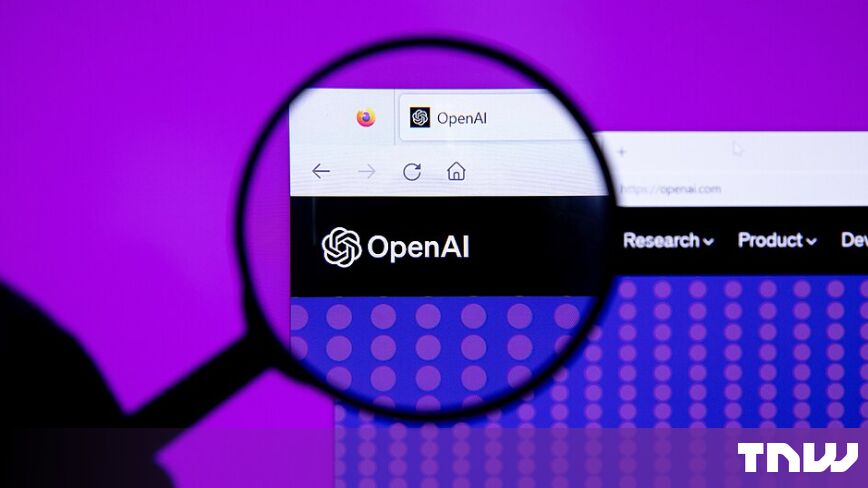
SAN FRANCISCO — OpenAI will stop supplying its artificial intelligence models to the code editing platform Cursor on Nov. 12, 2026, following the platform’s acquisition by aerospace and technology firm SpaceX. The decision marks a major realignment in the software developer tooling sector, severing model access for one of the industry’s most widely adopted AI-native programming environments. The move follows Cursor’s integration of Grok 4.5—a model created in partnership with SpaceX’s specialized artificial intelligence division, SpaceXAI, in July 2026—into its core editor interface, establishing a direct competitive and organizational alignment between the code editor and Elon Musk’s corporate ecosystem, according to reporting by technology journalist Ana Maria Constantin.
Key facts
What happened
The decision by OpenAI to cut off Cursor represents the formal dissolution of a high-profile partnership between a leading artificial intelligence model vendor and a prominent AI-native integrated development environment.
According to reporting by Ana Maria Constantin, the catalyst for OpenAI’s service termination was the acquisition of Cursor by SpaceX. Cursor, which enables software engineers to write, edit, and debug code using natural-language prompts and context-aware autocomplete engines, had historically relied on third-party foundational models to power its backend system. OpenAI’s language models served as a primary processing option for millions of developer queries daily.
The connection between Cursor and SpaceX’s broader technology stack began formalizing prior to the acquisition announcement. In July 2026, Cursor began shipping Grok 4.5, an advanced language model co-developed with SpaceXAI. That release gave Cursor users native access to the Grok model family, providing an alternative foundation model directly inside the editor interface.
Following the full buyout of Cursor by SpaceX, OpenAI issued formal notice that it would cease supplying its models to the platform effective Nov. 12, 2026. The move establishes a clear boundary between OpenAI’s intellectual property and a software product now owned by a direct corporate rival. The cutoff date gives Cursor’s enterprise and individual user base a limited window to adjust their development environments before OpenAI's endpoints are disconnected from the platform.
Why it matters
The severing of model supply between OpenAI and Cursor highlights an accelerating trend toward vertical integration in the artificial intelligence sector, as model developers seek to control both the underlying neural networks and the end-user software applications through which developers interact with them.
For software engineers, the Nov. 12, 2026 deadline imposes immediate operational adjustments. Programmers who configured their daily software development pipelines around OpenAI’s models within Cursor must prepare to migrate to alternative model backends, such as Grok 4.5, or transition to competing code editors that retain active OpenAI API partnerships. For enterprise software engineering departments, changing model providers requires evaluating code generation accuracy, checking security compliance, and adjusting internal prompt engineering workflows.
From an industry perspective, SpaceX's acquisition of Cursor and the earlier deployment of Grok 4.5 signal SpaceX's determination to establish a strong foothold in developer tools. Code editors function as crucial distribution channels for foundational AI models; controlling the interface where software engineers spend their working hours provides influence over developer standards, API usage patterns, and telemetry data used to train future coding models.
Additionally, OpenAI’s refusal to supply models to a SpaceX-owned entity reflects the intense strategic rivalries surrounding AI infrastructure. By enforcing a firm cutoff on Nov. 12, OpenAI prevents its technology from powering a product owned by a major competitor, even if doing so forces developers to choose between their preferred code editor and their preferred AI model provider.
The background
To understand the rupture between OpenAI and Cursor, it is essential to examine the evolution of AI-driven coding assistants and the competitive structure of artificial intelligence API ecosystems.
Over recent years, software development underwent a rapid transformation as AI-assisted code editors replaced traditional programming setups. Early line-completion plugins quickly evolved into standalone, AI-native integrated development environments. Cursor emerged as a leading tool in this category by building on the open-source foundation of Microsoft’s Visual Studio Code (VS Code) and embedding repository-wide model access into the text editor. Developers could select extensive sections of source code, request automated refactoring, generate software unit tests, and diagnose errors using conversational prompts.
To deliver these capabilities, platforms like Cursor relied on third-party artificial intelligence API vendors. OpenAI, through its commercial developer endpoints, functioned as a key infrastructure provider for numerous AI software startups. Under this model, application builders paid OpenAI based on processing tokens, allowing third-party tools to offer advanced language model capabilities without training or hosting massive model parameters on their own servers.
Concurrently, the competitive dynamic between OpenAI and entities controlled by Elon Musk grew increasingly complex. Musk, a co-founder of OpenAI in 2015 alongside current chief executive Sam Altman and others, left OpenAI’s board in 2018. Musk subsequently founded xAI to create competing foundation models under the Grok brand. The expansion of these artificial intelligence investments into SpaceX through SpaceXAI marked a broader push to incorporate frontier AI into aerospace engineering, satellite operations, and developer software tools.
When Cursor integrated Grok 4.5 in July 2026, it demonstrated that SpaceXAI had developed competitive coding capabilities suitable for high-volume developer environments. SpaceX's subsequent acquisition of Cursor consolidated this technical partnership into an outright corporate buyout, setting the stage for OpenAI's API termination.
Reaction
The announcement of OpenAI’s model cutoff date has generated significant attention across the software development community and technology sector.
As detailed in reporting by Ana Maria Constantin, OpenAI set the Nov. 12, 2026 deadline as an operational boundary following SpaceX's acquisition of Cursor. The action reflects established tech industry practices regarding API access when client services are purchased by direct market competitors.
Neither SpaceX nor Cursor leadership issued detailed public breakdowns regarding how user subscriptions, enterprise licenses, or model routing settings will be restructured after the November deadline. However, the existing integration of Grok 4.5 within the editor—first introduced in July 2026—provides Cursor with an established native model option for its user community.
Software engineering leads and independent programmers using Cursor have begun assessing the transition ahead of November. Online technical forums reflect active debate over whether Grok 4.5 can match OpenAI's models across complex code refactoring, multi-language syntax support, and codebase indexing, or whether development teams will pivot to alternative tools such as GitHub Copilot, Windsurf, or standard VS Code extensions.
What we don't know yet
While the cutoff timeline is clear, several operational and technical details regarding the acquisition and API termination remain unconfirmed in the available reporting.
First, it remains unknown whether OpenAI's API restriction applies exclusively to Cursor’s built-in model subscriptions, or if OpenAI will also block individual programmers from entering their own personal OpenAI API keys into the Cursor application after Nov. 12, 2026. If direct API key pass-through is also blocked, developers using Cursor will lose all access to OpenAI models within that specific editor.
Second, the financial terms, valuation, and organizational arrangements of SpaceX’s acquisition of Cursor have not been publicly disclosed. It is unclear whether Cursor will operate as an independent business unit under SpaceX or be integrated directly into SpaceXAI’s software division.
Third, the status of other third-party model providers within Cursor remains an open question. The available reporting does not specify whether other major AI labs will maintain API connectivity with a SpaceX-owned editor or if Cursor will eventually transition into an exclusive showcase for Grok models.
What to watch
In the coming months, several specific developments will clarify the impact of this API termination on the software industry:
This report is based on original reporting by Ana Maria Constantin.
How this story was produced
This report was written by The Global Wire newsroom from reporting first published by Ana Maria Constantin. We verify the core facts against the original report, write our own account, and add the background and consequences a short wire item leaves out. Drafting is AI-assisted inside an editor-supervised pipeline, and every story is checked for accuracy of attribution, structure and duplication before it appears — full detail in our AI and funding disclosure.
Spotted an error? Tell us at corrections@horizonglobalnews.com and read our corrections policy or editorial standards.
Reader comments
Loading comments…