

OpenAI Disappointed by Low User Adoption of Apple Intelligence ChatGPT Integration
OpenAI characterized the performance of its ChatGPT integration within Apple Intelligence as dramatically underperforming expectations following its 2024 launch.
By The Global Wire Newsroom · Reported from Marcus Mendes
Link preview · horizonglobalnews.com
OpenAI Disappointed by Low User Adoption of Apple Intelligence ChatGPT Integration
OpenAI characterized the performance of its ChatGPT integration within Apple Intelligence as dramatically underperforming expectations following its 2024 launch.
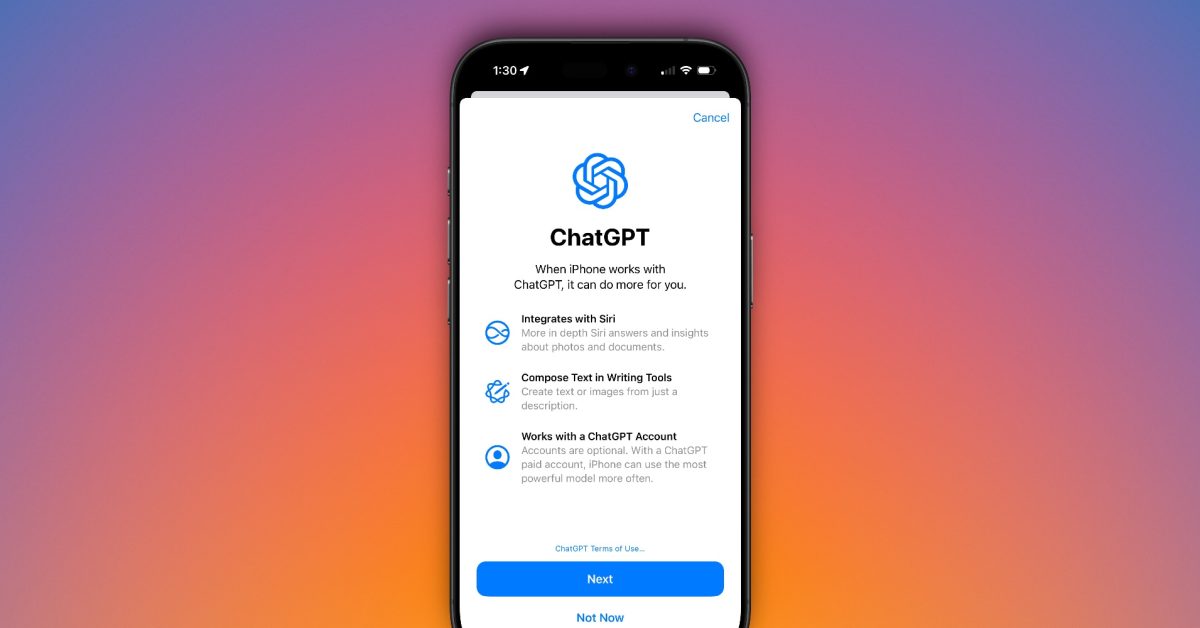
OpenAI has expressed disappointment over the performance of its ChatGPT integration within Apple Intelligence, revealing that user adoption has "dramatically underperformed" initial expectations following its rollout in late 2024, according to reporting published by 9to5Mac on September 23, 2026. The high-profile partnership, designed to bring OpenAI’s artificial intelligence technology directly into the operating systems of hundreds of millions of iPhones, iPads, and Mac computers, was initially viewed as a major distribution win for the AI firm. However, internal assessments at OpenAI suggest that embedding ChatGPT within Apple’s software ecosystem has yielded surprisingly low engagement, raising broader questions about how users interact with third-party generative artificial intelligence tools when integrated into mobile and desktop operating systems.
Key facts
What happened
When Apple introduced Apple Intelligence in late 2024, the cornerstone of its third-party expansion was a deep integration with OpenAI's ChatGPT. Under the design implemented across iOS, iPadOS, and macOS, Apple’s native digital assistant, Siri, could delegate complex user requests—such as summarizing long documents, generating custom images, or answering specialized factual inquiries—to OpenAI's flagship artificial intelligence model, GPT-4o.
However, despite reaching an installed base of millions of active Apple devices globally, the expected surge in ChatGPT usage failed to materialize. According to reporting by 9to5Mac, OpenAI executive leadership was dissatisfied with the volume of queries originating from Apple’s operating systems. The integration was expected to serve as a high-volume top-of-funnel conversion tool, bringing casual smartphone users into OpenAI's broader product ecosystem and driving upgrades to paid subscription tiers.
Instead, the actual usage metrics fell far short of internal projections. The workflow established by Apple requires explicit confirmation prompts whenever Siri or Apple's Writing Tools attempt to hand off a task to ChatGPT. Every time a user requests an action that requires third-party AI processing, an on-screen modal appears asking the user to confirm that their data may be sent to OpenAI. Industry observers note that this additional step introduces user friction, frequently leading users to abandon the request or stick to Apple's native, on-device capabilities.
Furthermore, the default implementation allows Apple device owners to access basic ChatGPT functions without logging into an account or creating a profile. While designed to lower the barrier to entry, this anonymous access model appears to have limited OpenAI’s ability to retain users, build personalized interaction histories, or effectively convert free device users into paying subscribers for its premium services.
Why it matters
The underperformance of the ChatGPT-Apple Intelligence integration carries substantial strategic implications for the artificial intelligence industry, tech platform distribution models, and investor expectations surrounding generative AI monetization.
For OpenAI, secured placement on Apple’s ecosystem was viewed as an unprecedented customer acquisition vector. Mobile device integration historically serves as the primary gateway for mass-market software adoption. If integration into the world's most lucrative consumer hardware ecosystem cannot drive meaningful user growth or subscription revenue, artificial intelligence developers may be forced to rethink their reliance on OS-level distribution strategies. The failure of this pathway to generate projected engagement highlights the reality that native OS inclusion does not automatically translate into active daily usage if the user experience is hampered by permission prompts or if consumer demand for multi-step AI handoffs remains limited.
For Apple, the findings validate the company's deliberate strategy of building its own on-device and private cloud infrastructure rather than relying entirely on external partners. Apple’s architecture prioritizes privacy-centric, localized models for everyday tasks like notification summarizing and basic text rewriting. The weak adoption of third-party handoffs suggests that Apple's core customer base may prefer integrated, privacy-focused native features over external AI models, even if those external models possess superior reasoning capabilities.
For the broader technology market, the performance metrics illustrate the challenges of monetization in the generative AI space. Developing, fine-tuning, and operating frontier AI models requires billions of dollars in capital expenditure for data center compute and electrical power. When distribution partnerships fail to yield proportional user growth or financial conversion, the return on investment for hosting massive multi-tenant integrations comes under intense scrutiny.
The background
The relationship between Apple and OpenAI was officially announced during the keynote address at Apple's Worldwide Developers Conference (WWDC) in June 2024. At the time, Apple presented the partnership as a way to supplement its native Apple Intelligence suite. While Apple developed its own on-device foundational models and Private Cloud Compute server architecture to handle routine tasks, it recognized that specialized domain knowledge and advanced creative generation required world-class large language models. OpenAI’s GPT-4o was selected as the launch partner for this extension mechanism.
Under the terms established during negotiations in 2024, neither company paid the other upfront cash for the integration. Industry sources at the time revealed that Apple viewed the arrangement as providing OpenAI with broad brand exposure and distribution to hundreds of millions of premium device owners, while OpenAI provided Apple with access to state-of-the-art artificial intelligence capabilities without direct license fees.
Privacy was a core requirement enforced by Apple during the software integration process. To satisfy Apple's strict consumer privacy mandates, OpenAI agreed not to store user prompts submitted through Apple Intelligence, nor to use data originating from Apple devices to train its foundational models. Additionally, user IP addresses were obscured to protect location privacy.
To facilitate seamless operation, Apple built extension hooks into its system-wide Writing Tools and Siri interface. When a user asks Siri a question that exceeds its built-in knowledge base, Siri offers to query ChatGPT. Similarly, in text-editing fields, users can invoke ChatGPT to generate text or create images using OpenAI's DALL-E model. Despite these capabilities, the architecture deliberately kept OpenAI at arm's length, requiring explicit permission pop-ups to ensure transparency regarding data sharing.
The backdrop of this integration also includes Apple's long-term plan to incorporate multiple third-party artificial intelligence models into Apple Intelligence. Executives from Apple previously indicated intent to offer alternative models, including Google's Gemini and Anthropic's Claude, giving users choices among external AI providers.
Reaction
While official public statements from executive leadership at Apple and OpenAI have been limited, the reported discontent highlights tension between platform operators and third-party AI developers.
Industry analysts specializing in consumer technology and software distribution have observed that strict privacy guardrails implemented by Apple inherently conflict with the frictionless user experiences that drive high engagement in consumer apps. The requirement for repeated per-query authorizations, intended to protect consumer privacy, created operational drag that deterred casual users from establishing habitual usage patterns.
Within the software development community, reaction has centered on the balance of power between operating system gatekeepers and independent software vendors. Developers note that operating system vendors like Apple retain total control over the user interface, placement of prompts, and default behaviors. When an OS vendor prioritizes privacy warnings and local processing, external services integrated into sub-menus face structural adoption hurdles.
Investors and market watchers monitoring artificial intelligence business models are evaluating how this underperformance impacts future commercial negotiations between AI labs and hardware manufacturers. The lack of financial revenue flowing directly from Apple Intelligence to OpenAI underlines the difficulty of monetizing free OS-level integrations without direct revenue-sharing frameworks or integrated payment processing within native system dialogs.
What we don't know yet
Several key details regarding the performance and future of the partnership remain unconfirmed in the available reporting:
What to watch
Looking ahead, several key developments will indicate the trajectory of AI integrations within consumer operating systems:
This report is based on original reporting by Marcus Mendes for 9to5Mac.
How this story was produced
This report was written by The Global Wire newsroom from reporting first published by Marcus Mendes. We verify the core facts against the original report, write our own account, and add the background and consequences a short wire item leaves out. Drafting is AI-assisted inside an editor-supervised pipeline, and every story is checked for accuracy of attribution, structure and duplication before it appears — full detail in our AI and funding disclosure.
Spotted an error? Tell us at corrections@horizonglobalnews.com and read our corrections policy or editorial standards.


Reader comments
Loading comments…