

Compact Supercritical CO2 Unit Boosts Gas Turbine Power Output by Up to 50 Percent
A newly presented waste heat recovery system captures gas turbine exhaust using supercritical carbon dioxide, increasing power generation efficiency without additional fuel combustion.
By The Global Wire Newsroom · Reported from Neetika Walter
Link preview · horizonglobalnews.com
Compact Supercritical CO2 Unit Boosts Gas Turbine Power Output by Up to 50 Percent
A newly presented waste heat recovery system captures gas turbine exhaust using supercritical carbon dioxide, increasing power generation efficiency without additional fuel combustion.
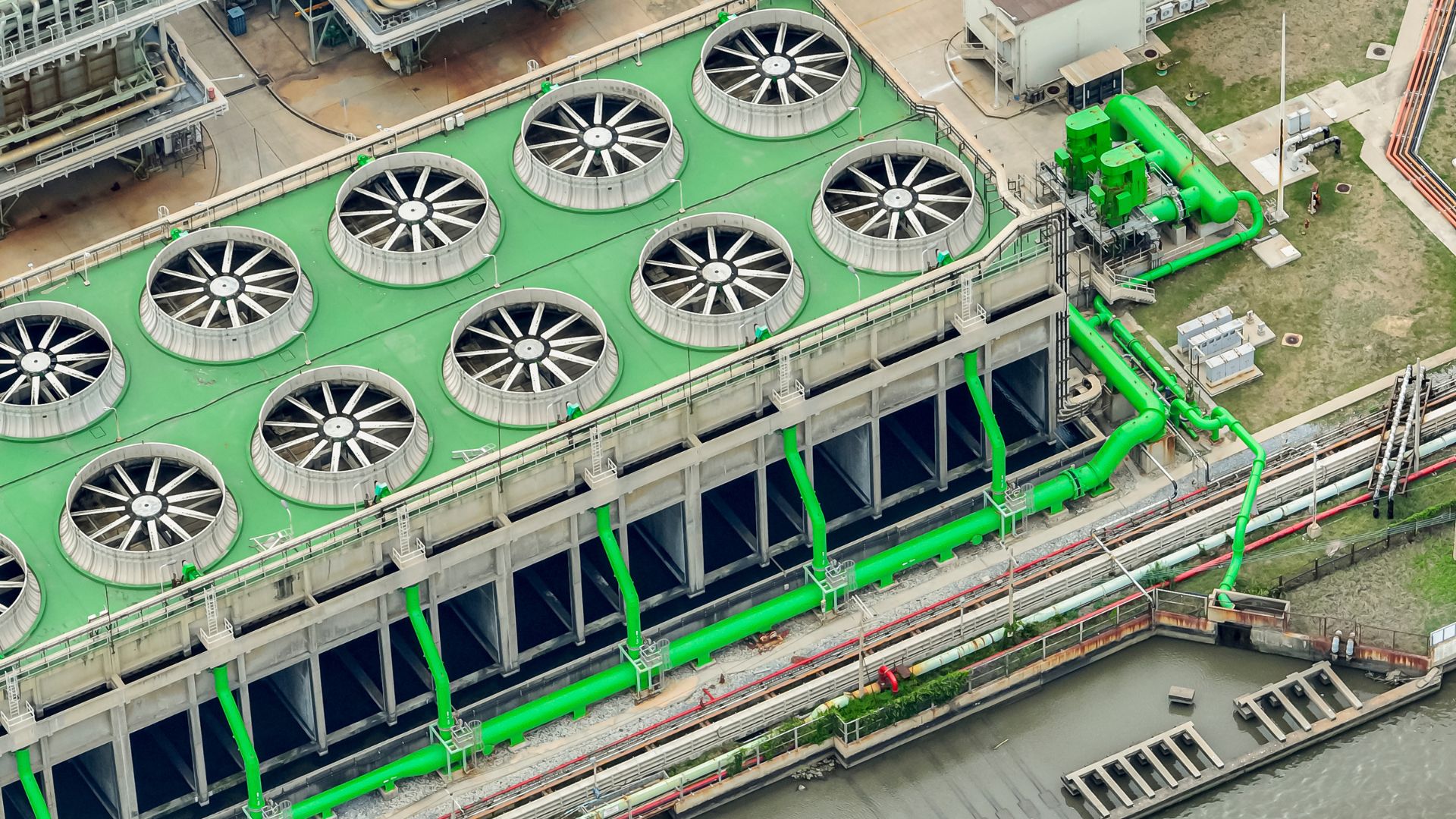
On September 24, 2026, details emerged regarding a compact supercritical carbon dioxide system engineered to capture high-temperature waste heat from gas turbines, enabling facilities to boost electricity output by up to 50 percent without burning additional fuel, according to reporting by Neetika Walter. The system utilizes carbon dioxide maintained above its thermodynamic critical threshold to extract energy from exhaust gas flues that would otherwise dissipate into the atmosphere. By integrating a closed-loop supercritical recovery circuit directly into existing or new turbine configurations, the technology offers a pathway to increase plant efficiency and lower carbon intensity across power generation and industrial sectors. The development comes amidst growing global demand for high-efficiency energy infrastructure capable of optimizing resource utilization without requiring expanded fuel inputs.
Key facts
What happened
According to reporting by Neetika Walter, the newly highlighted energy technology focuses on capturing the substantial volume of thermal energy lost through industrial exhaust stacks. When standard gas turbines operate, combustion gases drive the primary turbine blades before exiting the exhaust stack at temperatures frequently ranging from 450 to 650 degrees Celsius. In conventional simple-cycle power plants, this vast quantity of heat is vented directly into the surrounding atmosphere, resulting in significant primary energy losses.
The compact recovery system reported by Neetika Walter addresses this inefficiency by tapping into the turbine exhaust stream using a closed loop filled with supercritical carbon dioxide (sCO2). Carbon dioxide enters a supercritical state when subjected to pressures and temperatures above its critical thermodynamic point. In this state, the compound exhibits the fluid density of a liquid alongside the gas-like diffusivity and transport characteristics of a gas. This unique combination allows the working fluid to absorb rapid thermal transfers from heat exchangers placed within the turbine exhaust channel.
Once heated by the exhaust stream, the pressurized supercritical carbon dioxide expands through a specialized high-density power turbine. This turbine drives an electric generator, creating supplementary electric power without igniting additional fuel or producing auxiliary direct emissions. After passing through the turbine stage, the carbon dioxide passes through a recuperative heat exchanger and cooling unit before being re-compressed and recirculated back into the main thermal recovery loop.
Because supercritical carbon dioxide possesses high mass density and favorable fluid dynamics, the components required for this power loop—including turbines, compressors, and heat exchangers—are substantially smaller than equivalent steam-based systems. As reported by Neetika Walter, this structural compactness allows the system to achieve power output enhancements of up to 50 percent relative to baseline turbine performance, while fitting into restricted footprints typical of decentralized industrial plants, pipeline compression stations, and marine power installations.
Why it matters
Gas turbines remain a vital backbone of global electrical power systems and heavy industrial infrastructure, delivering rapidly dispatchable power necessary for maintaining electrical grid stability. However, traditional simple-cycle gas turbines generally convert only 30 to 40 percent of input fuel energy into usable electricity, casting off the remaining 60 to 70 percent as waste heat. Although combined-cycle power plants mitigate this issue by using waste heat to produce steam for secondary turbines, steam-based infrastructure requires massive physical space, extensive civil engineering, complex water treatment units, and substantial cooling water reserves.
The emergence of efficient, compact supercritical carbon dioxide recovery systems fundamentally shifts these operational economics. By enabling power producers and industrial operators to extract up to 50 percent more power from identical fuel volumes, the technology provides an immediate mechanism to reduce operational expenditure and fuel procurement costs. For energy-intensive industries such as chemical manufacturing, steel production, and natural gas transport, higher fuel efficiency directly correlates with lower operating overhead and improved margin resilience against volatile energy markets.
From an environmental and policy perspective, enhancing turbine fuel efficiency directly reduces carbon intensity—the mass of greenhouse gases emitted per unit of generated electricity. As regulatory frameworks in jurisdictions across Europe, North America, and Asia enforce stricter carbon accounting standards and impose financial penalties on industrial emissions, thermal power facilities face escalating pressure to minimize fuel usage per megawatt-hour. Furthermore, as regional power grids onboard higher proportions of variable renewable energy sources, flexible gas turbines equipped with high-efficiency recovery loops can provide low-emission balancing power without incurring the land and capital burdens associated with legacy combined-cycle infrastructure.
The background
The conceptual foundations of supercritical fluid power cycles have existed in thermodynamic literature for decades, but practical hardware implementations were historically hindered by manufacturing limitations and extreme material demands. Carbon dioxide reaches its thermodynamic critical point at a temperature of 31.1 degrees Celsius (88.0 degrees Fahrenheit) and a pressure of 7.39 megapascals (approximately 72.9 atmospheres). Operating above these threshold parameters transforms the compound into a dense fluid that exhibits minimal fluid friction and extreme heat capacity.
The key advantage of supercritical carbon dioxide over conventional steam in power cycles lies in fluid compression mechanics. Near the critical point, carbon dioxide becomes highly incompressible compared to ideal gases. Consequently, the mechanical energy required to compress the working fluid before heating is drastically reduced compared to gas-phase compression. This reduction in parasitic compression work significantly elevates overall net cycle efficiency. Additionally, because sCO2 exhibits high fluid density, the physical volume of turbomachinery required to generate a given wattage can be up to ten times smaller than equivalent steam equipment.
Historically, industrial waste heat recovery relied primarily on the steam Rankine cycle or the Organic Rankine Cycle (ORC). While steam systems excel at large utility scales, their size and water demands limit retrofitting capabilities in small or space-constrained facilities. Organic Rankine Cycles use organic fluids with lower boiling points to capture low-to-medium temperature heat, but these working fluids often suffer from thermal decomposition at high temperatures and present environmental or toxicity challenges. Supercritical CO2 cycles bridge this operational gap by managing high exhaust temperatures safely and efficiently within a non-toxic, non-flammable, and abundant working medium.
Over the past two decades, energy research organizations—including the U.S. Department of Energy, Sandia National Laboratories, and private aerospace and power technology companies—have invested heavily in testing sCO2 cycle components. Key technical hurdles historically included designing leak-proof turbomachinery seals capable of operating at hundreds of atmospheres, managing severe thermal gradients across structural casings, and manufacturing ultra-compact heat exchangers. Recent advances in diffusion-bonded printed circuit heat exchangers (PCHEs) and modern metallurgy have successfully resolved many of these engineering obstacles, paving the way for commercial industrial implementations.
Reaction
While specific commercial announcements and customer deployments related to this design remain under development, industry analysts and energy technology specialists have consistently viewed supercritical CO2 recovery systems as a high-potential frontier for industrial decarbonization. Power generation equipment manufacturers and industrial energy consumers have expressed strong interest in alternative bottoming cycles capable of improving plant economics without requiring fundamental overhauls of primary turbine architecture.
Environmental policy organizations and energy transition advocates offer a nuanced perspective. While acknowledging that efficiency gains directly reduce short-term fuel consumption and carbon emissions, some environmental groups advocate that financial capital should prioritize zero-carbon technologies such as green hydrogen, grid-scale battery storage, and direct renewable generation. Conversely, grid operators and energy security analysts emphasize that dispatchable thermal capacity will remain indispensable for grid firming during the medium-term energy transition, making rapid efficiency improvements in thermal generation an essential pragmatic step.
Equipment suppliers in the industrial turbomachinery sector are monitoring real-world validation data to determine whether compact sCO2 waste heat recovery units will displace traditional steam bottoming cycles in medium-scale installations. As regulatory pressure on industrial emissions accelerates globally, commercial adoption is expected to hinge on proven mechanical reliability and clear financial payback horizons.
What we don't know yet
Despite the high efficiency gains highlighted in the reporting by Neetika Walter, several critical technical and commercial details remain unconfirmed. The available reporting does not specify the precise capital costs associated with manufacturing, acquiring, and installing the compact sCO2 recovery system, making it impossible to compute definitive return-on-investment timelines for prospective operators.
Furthermore, empirical data regarding long-term component durability under continuous high-pressure and high-temperature operating cycles is not detailed in the report. Critical components, such as microchannel heat exchanger passages and turbine shaft seals, must demonstrate resistance to thermal fatigue, fouling, and structural degradation over thousands of operational hours without requiring frequent maintenance interventions.
It also remains unclear what minimum power plant capacity is required to make the retrofit economically viable, or how the system's efficiency scales across variable ambient temperature conditions. Finally, the report does not outline specific manufacturing partnerships, initial commercial delivery dates, or target regional deployment markets, leaving open questions regarding how rapidly the technology can be scaled for industrial adoption.
What to watch
In the coming months and years, several key milestones will clarify the commercial trajectory of compact supercritical CO2 waste heat recovery systems. Stakeholders will closely monitor pilot facility demonstrations and commercial field deployment announcements to verify whether the 50 percent power boost reported by Neetika Walter can be consistently replicated under real-world grid and industrial operating conditions.
Additionally, technical observers will look for third-party engineering studies and peer-reviewed performance data detailing continuous runtime hours, thermal stress tolerance, and maintenance schedules for the high-pressure sCO2 turbomachinery. Any published operational data from extended pilot runs will provide vital insight into long-term mechanical reliability.
Regulatory developments and safety certification processes across major industrial jurisdictions, including the European Union and the United States, will also serve as an important indicator. Regulatory approvals regarding high-pressure system operations and grid interconnection standards will be necessary before widespread commercial rollout can occur.
Finally, industry observers should track strategic alliances, technology licensing deals, or joint ventures between the developer and established gas turbine manufacturers, engineering procurement contractors, and major energy utility operators. Such partnerships would signal strong market confidence and accelerate commercial deployment across global energy markets.
This report is based on coverage originally published by Neetika Walter.
How this story was produced
This report was written by The Global Wire newsroom from reporting first published by Neetika Walter. We verify the core facts against the original report, write our own account, and add the background and consequences a short wire item leaves out. Drafting is AI-assisted inside an editor-supervised pipeline, and every story is checked for accuracy of attribution, structure and duplication before it appears — full detail in our AI and funding disclosure.
Spotted an error? Tell us at corrections@horizonglobalnews.com and read our corrections policy or editorial standards.



Reader comments
Loading comments…