

Nepal Floods: Eight-Year-Old Boy Survives Torrential Inundation by Scaling Forest Trees
An eight-year-old child in central Nepal survived severe floodwaters by taking shelter in a tree before being safely reunited with his family in Nuwakot district.
By The Global Wire Newsroom · Reported from thestar.com.my
Link preview · horizonglobalnews.com
Nepal Floods: Eight-Year-Old Boy Survives Torrential Inundation by Scaling Forest Trees
An eight-year-old child in central Nepal survived severe floodwaters by taking shelter in a tree before being safely reunited with his family in Nuwakot district.
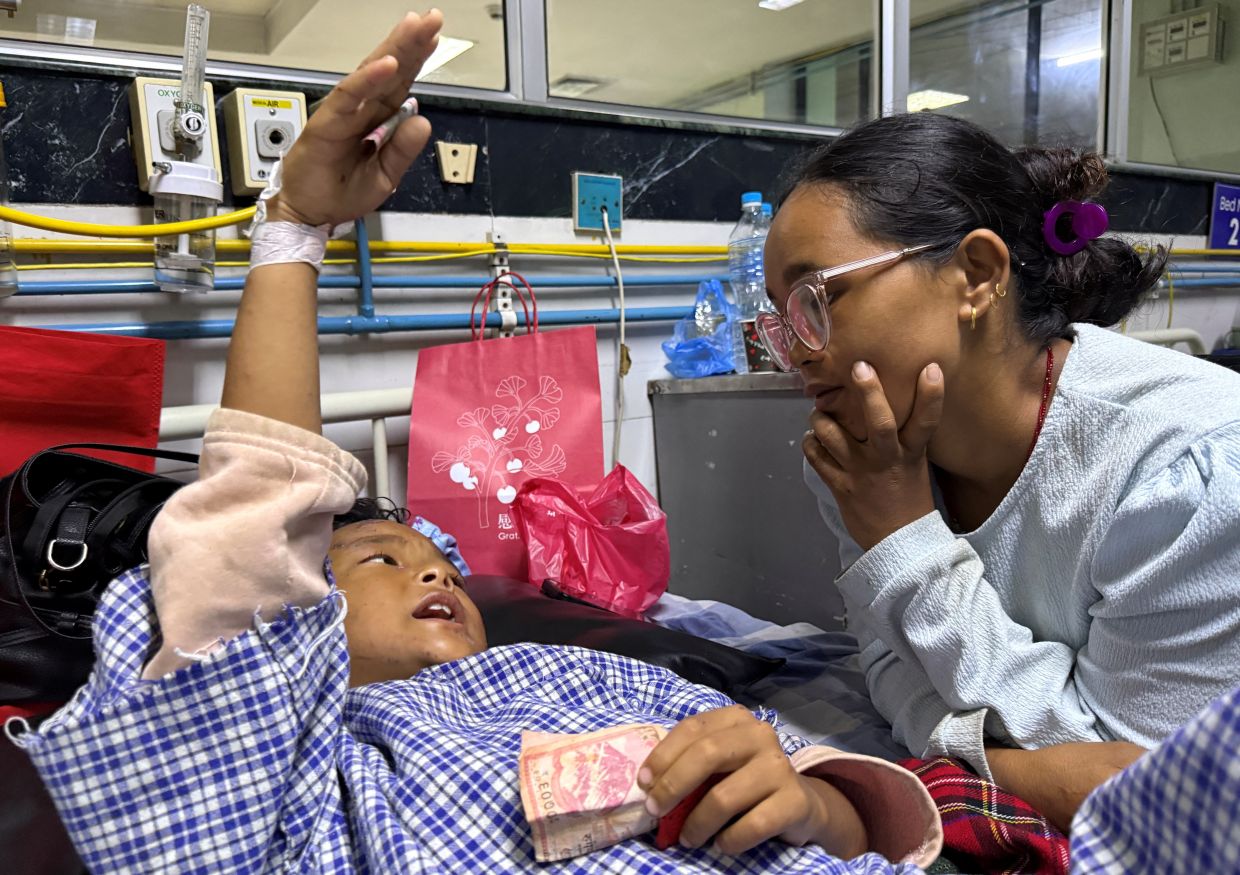
An eight-year-old child in central Nepal was reunited with his mother on Friday, August 28, after fleeing into a nearby forest and climbing trees to survive destructive floodwaters that inundated his community in Nuwakot district. The child, identified as Zoyal Ghale, took refuge high above the ground after torrential monsoon rains triggered sudden flooding across the region. His mother had previously feared that both Zoyal and his brother had been killed inside their local school when heavy waters struck the area. The reunion in Nuwakot highlights the severe hazards facing rural Himalayan communities during the annual South Asian monsoon, where flash floods and landslide surges regularly cut off remote villages and threaten vulnerable residents.
Key facts
What happened
According to reporting published by The Star, the emergency unfolded when severe floodwaters swept through parts of Nuwakot district in central Nepal, putting residents and local infrastructure at immediate risk. As the floodwaters rapidly rose near a local school, eight-year-old Zoyal Ghale sought escape by fleeing away from the structural danger and into a neighboring forested area.
To avoid being swept away by the fast-moving torrent, the young boy scaled trees within the forest, remaining elevated above the hazardous currents until the immediate danger subsided. During the chaotic event, Zoyal's mother lost contact with her children and came to believe that both Zoyal and his brother had perished within the school grounds as water engulfed the complex.
After surviving the period of elevated risk in the forest, Zoyal was successfully located and brought back to safety. On Friday, August 28, he was reunited with his mother in Nuwakot district, bringing an end to the family's agonizing ordeal during the flooding crisis.
Why it matters
The survival of an eight-year-old in Nuwakot underlines the persistent life-safety challenges that seasonal monsoon floods pose to isolated populations throughout Nepal. In high-relief topographies, water levels can rise within minutes due to sudden cloudbursts or glacial river surges, leaving residents—particularly children—with negligible reaction time. Schools in rural Himalayan districts are frequently situated along valley floors or near river channels, making them acute flashpoints when river basins overflow.
From an infrastructure and civil defense perspective, the incident illustrates critical vulnerabilities in emergency early-warning coverage for rural academic institutions. When localized drainage channels fail, children and educators are often forced to improvised escape strategies, such as fleeing into surrounding woodlands or taking refuge on high ground, rather than executing planned evacuation protocols.
The event also emphasizes the psychological and social toll borne by rural families during disaster events. In mountain terrain where mobile communications and road networks are easily severed by landslips, families frequently endure agonizing periods of uncertainty regarding the survival of missing relatives. Across South Asia, flood disasters routinely disrupt academic calendars, destroy primary infrastructure, and exacerbate rural poverty through loss of housing and agricultural assets.
The background
Nepal's geography makes it uniquely susceptible to hydrometeorological disasters during the summer monsoon season, which typically runs from June through September. The country receives approximately 80 percent of its annual precipitation during this four-month window, driven by moist air masses moving northward from the Bay of Bengal toward the Himalayan mountain range. Nuwakot district, situated directly north of the Kathmandu Valley along the Trishuli River basin, features steep topographic gradients, deep river gorges, and fragile mountain slope geology that significantly amplify flood and landslide hazards.
In recent decades, flood risks across central and eastern Nepal have escalated due to changing weather patterns, rapid urban expansion, and unmanaged rural road construction. According to historical disaster data maintained by Nepal's National Disaster Risk Reduction and Management Authority (NDRRMA), monsoon-related events account for the vast majority of natural disaster casualties and economic losses reported nationwide each year. Torrential downpours frequently trigger simultaneous flash floods, debris flows, and slope failures that engulf roads, bridges, power infrastructure, and residential quarters.
Major disaster years, including severe monsoon inundations in 2017, 2021, and 2024, have repeatedly exposed the limitations of local search-and-rescue resources in remote hill districts. In many rural municipalities, local relief operations depend heavily on community initiative, security personnel, and basic search teams before central government assets or heavy equipment can navigate blocked highway passes.
Furthermore, international climate studies focused on the Hindu Kush Himalaya region indicate that warming temperatures are altering monsoon dynamics, producing more frequent extreme precipitation events within shortened durations. This trend of high-intensity short-duration rainfall increases the probability of catastrophic flash floods in river basins like the Trishuli, putting mountain communities like those in Nuwakot under continuous seasonal threat.
Reaction
Following news of the child's survival, local community members and humanitarian watchers expressed relief over the family's reunion while reiterating calls for improved safety measures around mountain schools. In disaster response contexts across Nepal, local district administration offices and municipal disaster management committees typically oversee immediate assistance, food distribution, and emergency shelter allocations for displaced households.
Government agencies including the Ministry of Home Affairs and regional security forces—such as the Nepalese Army, Armed Police Force, and Nepal Police—are routinely mobilized during monsoon surges to conduct search, rescue, and evacuation operations across affected districts. Environmental and child-advocacy organizations in Nepal frequently emphasize the urgent need to harden school infrastructure against extreme weather, construct dedicated flood shelters, and integrate community-based disaster risk reduction into primary school curricula.
What we don't know yet
Significant operational and personal details regarding the incident remain unverified in available reports. First, the current condition and whereabouts of Zoyal's brother have not been publicly clarified in the initial dispatch. While reporting confirmed that the mother had feared both brothers died in the school, it remains unclear whether the brother was rescued separately, survived inside the school structure, or remains unaccounted for.
Second, the precise duration Zoyal spent in the forest and the specific techniques or assistance involved in extracting him from the trees have not been detailed. It is similarly unknown whether he sustained any physical injuries during his flight into the woods or while exposed to flood conditions.
Third, comprehensive statistics regarding overall casualties, home destruction, and structural damages to the school or surrounding community in Nuwakot district were not provided in the original account. Establishing these facts will require formal updates from Nuwakot's District Administration Office or national disaster management authorities.
What to watch
In the coming days, observers should monitor official announcements from Nepal's National Disaster Risk Reduction and Management Authority (NDRRMA) regarding localized damage assessments and human casualties across Nuwakot and adjacent hill districts. Further statements from local authorities may provide clarity regarding the safety and location of Zoyal's brother and other students who were present at the school when floodwaters struck.
Weather conditions across the Trishuli River catchment and central Nepal will remain critical through the remainder of the monsoon window. Residents and disaster agencies will be tracking meteorological updates from the Department of Hydrology and Meteorology, which issues real-time river level monitoring and flood alerts for vulnerable river basins.
Additionally, policy discussions regarding school safety protocols in high-risk flood zones are expected to draw renewed attention. Humanitarian agencies and civil society groups will be monitoring whether local governments implement structural reinforcements, alter school siting guidelines, or institute early warning sirens for rural educational institutions in Himalayan valley settlements.
This report contains information originally reported by The Star.
How this story was produced
This report was written by The Global Wire newsroom from reporting first published by thestar.com.my. We verify the core facts against the original report, write our own account, and add the background and consequences a short wire item leaves out. Drafting is AI-assisted inside an editor-supervised pipeline, and every story is checked for accuracy of attribution, structure and duplication before it appears — full detail in our AI and funding disclosure.
Spotted an error? Tell us at corrections@horizonglobalnews.com and read our corrections policy or editorial standards.





Reader comments
Loading comments…