

NASA Updates Community College Aerospace Program to Broaden Technical STEM Pathways
A revamped federal initiative aims to connect U.S. community college students with aerospace career pathways amid expanding workforce demands in the space sector.
By The Global Wire Newsroom · Reported from NASA STEM Team; Sandra May
Link preview · horizonglobalnews.com
NASA Updates Community College Aerospace Program to Broaden Technical STEM Pathways
A revamped federal initiative aims to connect U.S. community college students with aerospace career pathways amid expanding workforce demands in the space sector.
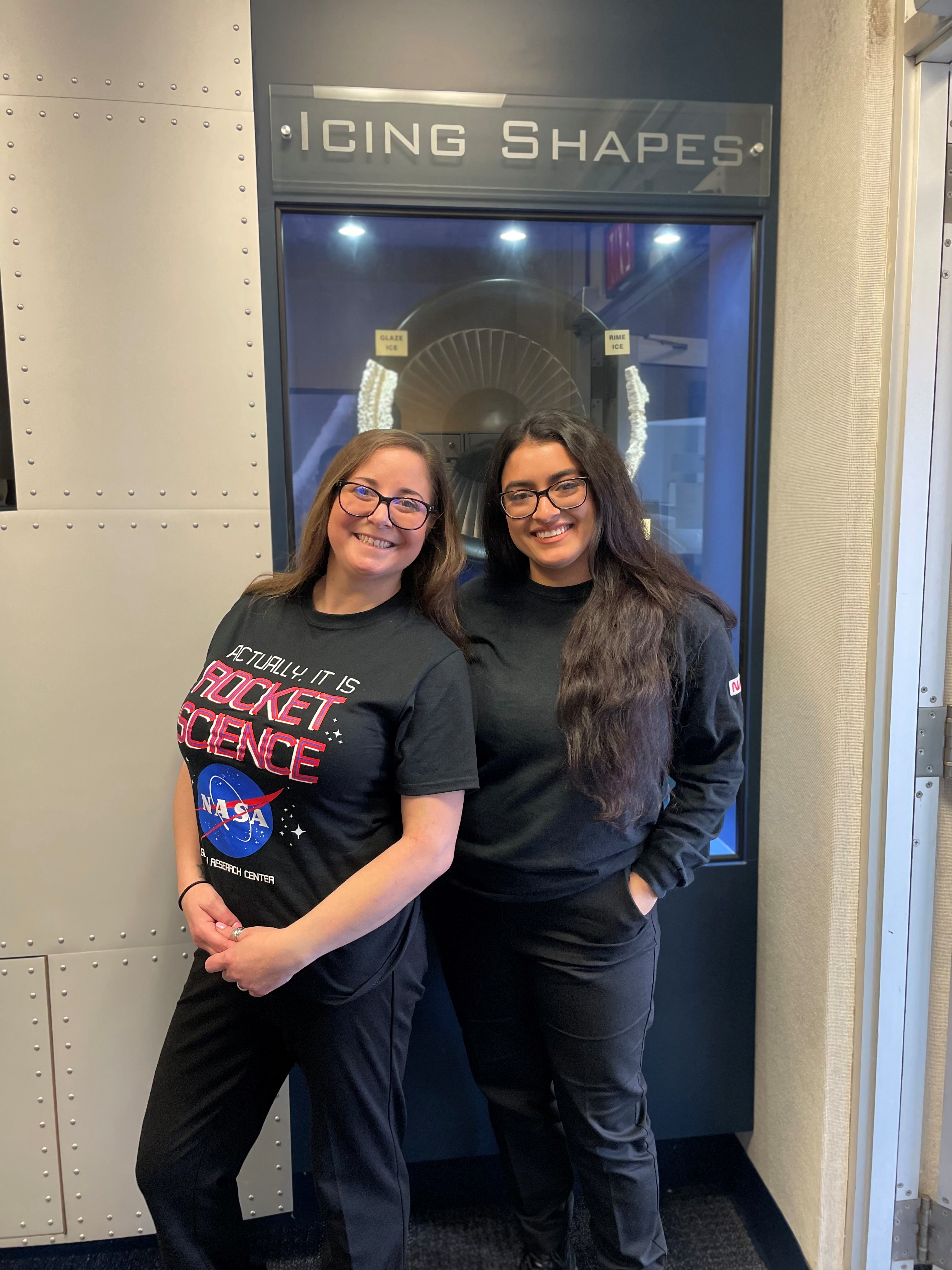
On Sept. 2, 2026, the National Aeronautics and Space Administration updated one of its core higher education initiatives designed to connect community college students across the United States with technical career pathways in the aerospace sector. According to official public information released by NASA STEM Team writer Sandra May, the federal space agency has overhauled the student competition framework to better align community college coursework with entry-level workforce requirements in space exploration and technology. The program modification targets students enrolled in two-year degree programs and vocational tracks, providing hands-on project experience, mentorship from agency professionals, and direct exposure to engineering and scientific operations.
Key facts
What happened
According to details released by NASA STEM Team author Sandra May on Sept. 2, 2026, NASA has restructured its student competition framework specifically tailored for two-year higher education institutions. The updated program is designed to provide community college students across the United States with structured projects that mirror real-world aerospace challenges.
While full administrative documentation for the revamped challenge was issued through NASA's educational communication channels, the published notice focuses on linking classroom learning to professional roles within the agency and the broader space industry. Participating students engage in team-based activities, technical design exercises, and problem-solving scenarios that align with active engineering and scientific missions.
The program overhaul reflects adjustments in how NASA engages non-four-year academic institutions. Historically, federal aerospace challenges have heavily emphasized four-year university engineering colleges. The refreshed challenge format creates dedicated pathways for students earning Associate of Science, Associate of Applied Science, or technical certificates. By redesigning the curriculum and mission briefs, NASA aims to capture technical talent early in academic careers, providing mentorship from NASA scientists and engineers while offering participants practical insight into space flight operations, hardware manufacturing, data analysis, and systems management.
Why it matters
The update to NASA's community college programming carries significant implications for national workforce planning, higher education equity, and aerospace industry competitiveness.
According to data from the American Association of Community Colleges, two-year institutions educate roughly 4.1 million credit students across more than 1,000 public colleges in the United States, representing approximately 40 percent of all undergraduate students in the nation. Furthermore, community colleges serve a significantly higher proportion of first-generation college students, low-income individuals, and underrepresented minority populations compared to traditional four-year universities. By directly targeting this demographic, NASA creates a broader pipeline into high-tech fields that have historically struggled with workforce diversity.
From an industry perspective, the U.S. aerospace and defense sector faces a critical labor shortage driven by a wave of retirements among senior engineers and rapid expansion in both civil space exploration and commercial launch markets. The U.S. Bureau of Labor Statistics projects continued growth across aerospace engineering, avionics maintenance, and specialized manufacturing roles through the end of the decade. Specialized technical technicians—such as composite fabricators, precision welders, hardware assembly specialists, and system test operators—are increasingly sourced from community college technical programs rather than four-year theoretical engineering degrees.
By formalizing links between two-year academic credits and federal aerospace career pipelines, NASA helps ensure that students outside elite research universities gain direct access to federal laboratory environments, agency internships, and contractor recruitment pools.
The background
NASA's engagement with community colleges forms part of a broader federal strategy mandated under the America COMPETES Act and successive NASA authorization bills, which direct federal science agencies to expand science, technology, engineering, and mathematics (STEM) outreach across all levels of higher education.
For more than a decade, NASA's Office of STEM Engagement has operated specialized student experiences, most notably the NASA Community College Aerospace Scholars (NCAS) program established in the late 2000s. NCAS was originally created to give community college students an authentic NASA experience, beginning with online learning modules followed by competitive invitations to attend multi-day workshops at NASA installations such as Johnson Space Center in Houston, Texas, or Kennedy Space Center in Florida.
Over the past decade, the U.S. space policy landscape has undergone a major shift with the establishment of the Artemis program, which aims to return humans to the lunar surface and establish a sustained presence on the Moon as a stepping stone to Mars. Executing the Artemis architecture requires an expanded industrial supply chain spanning thousands of subcontractors across all 50 U.S. states. NASA's 10 major field centers—including Marshall Space Flight Center in Alabama, Goddard Space Flight Center in Maryland, and Glenn Research Center in Ohio—have placed increased emphasis on building regional workforce pipelines with nearby community and technical colleges to meet localized hiring needs.
Simultaneously, federal science policy under recent presidential administrations has emphasized expanding non-traditional pathways into technical careers, recognizing that many technical roles in modern manufacturing, clean energy, and space systems do not require a four-year baccalaureate degree at entry level. NASA's effort to revamp its challenge framework aligns with federal initiatives aimed at strengthening registered apprenticeships, community college technical certifications, and direct-to-workforce educational programs.
Reaction
Formal responses from academic institutions and space industry trade organizations to the Sept. 2, 2026 announcement are expected as NASA rolls out full application guidelines to college administrators.
Community college leaders and STEM department chairs are expected to welcome the revamped challenge format, as federal agency partnerships provide crucial institutional prestige and career placement metrics for public two-year colleges. Advocacy organizations such as the American Association of Community Colleges (AACC) and the Association of Community College Trustees (ACCT) frequently advocate for greater inclusion of two-year students in federal research and development grants.
Industry trade groups, including the Aerospace Industries Association (AIA) and the Space Foundation, have repeatedly urged federal agencies to expand technical training initiatives to meet commercial sector workforce shortages. Representatives from major NASA contractors—such as Boeing, Lockheed Martin, Northrop Grumman, and SpaceX—are expected to evaluate how the challenge framework integrates with their existing internship and technician apprenticeship programs.
Neither NASA administrator offices nor external education coalitions issued separate press briefings immediately following the initial publication on Sept. 2, 2026, though formal institutional webinars for academic advisors are typically scheduled following NASA STEM program updates.
What we don't know yet
Several technical and administrative operational details remain unverified based on the preliminary release from NASA STEM Team author Sandra May.
First, the exact structural changes made to the challenge curriculum—such as whether the competition includes physical hardware build components, virtual simulations, or on-site center visits—have not been fully detailed in the initial summary statement.
Second, the specific eligibility deadlines, cohort capacity limits, and grant funding amounts associated with this cycle of the program were omitted from the initial brief. It remains unclear whether participating students will receive direct academic stipends, college credit transfers, or direct track placement into NASA Pathway internships.
Third, the announcement does not specify which specific NASA field centers will host the culmination phases of the revamped challenge, or whether commercial space partners will directly sponsor team mentoring and employment recruitment during the competition lifecycle.
What to watch
In the coming weeks, several key developments will indicate the scope and operational impact of NASA's revamped challenge:
This account is based on public reporting and programmatic documentation released by NASA STEM Team writer Sandra May on Sept. 2, 2026.
How this story was produced
This report was written by The Global Wire newsroom from reporting first published by NASA STEM Team; Sandra May. We verify the core facts against the original report, write our own account, and add the background and consequences a short wire item leaves out. Drafting is AI-assisted inside an editor-supervised pipeline, and every story is checked for accuracy of attribution, structure and duplication before it appears — full detail in our AI and funding disclosure.
Spotted an error? Tell us at corrections@horizonglobalnews.com and read our corrections policy or editorial standards.
Reader comments
Loading comments…