

NASA 1967 Biosatellite II Data Shows Spaceflight Amplifies Radiation Malformations in Insects
A historical NASA study on flour beetles demonstrates that weightlessness interacts with radiation during metamorphosis, increasing structural deformities from 29.9 percent to 44.8 percent.
By The Global Wire Newsroom · Reported from TOI Science Desk
Link preview · horizonglobalnews.com
NASA 1967 Biosatellite II Data Shows Spaceflight Amplifies Radiation Malformations in Insects
A historical NASA study on flour beetles demonstrates that weightlessness interacts with radiation during metamorphosis, increasing structural deformities from 29.9 percent to 44.8 percent.
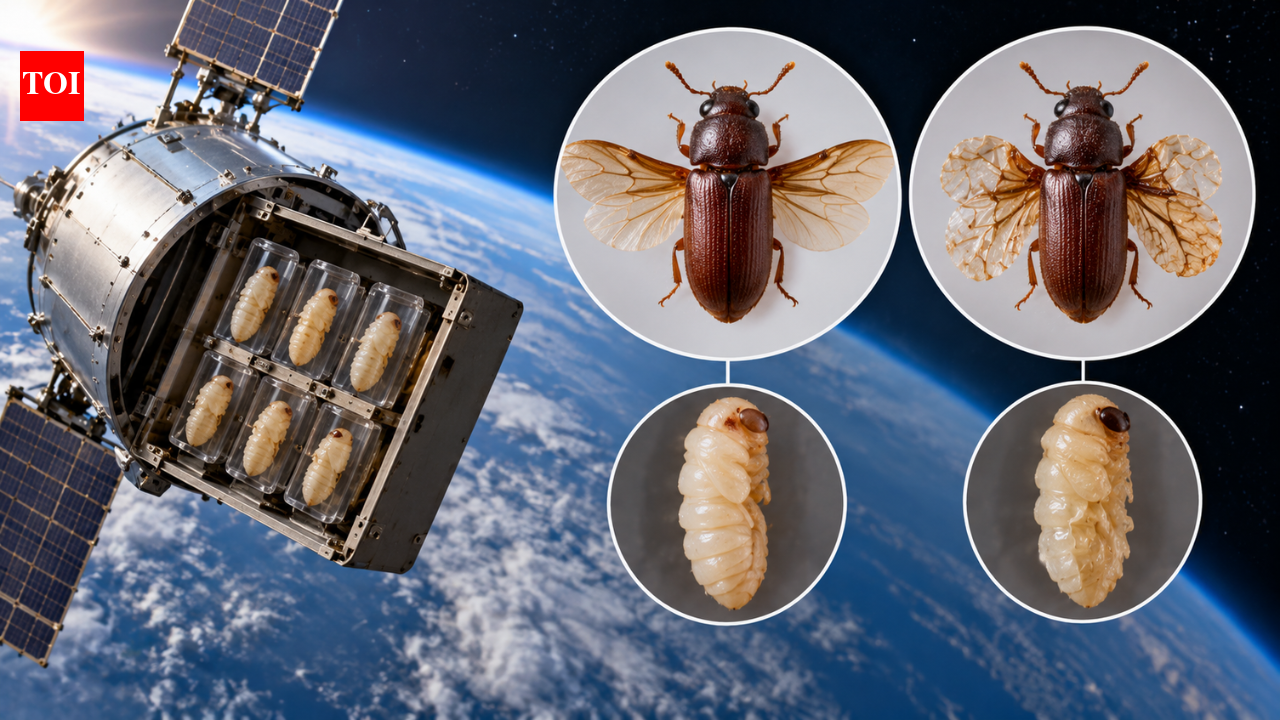
Historical research records highlighted in recent coverage by TOI Science Desk have focused renewed attention on NASA’s 1967 Biosatellite II mission, a landmark experiment that provided early evidence of how microgravity and space radiation interact in living organisms. Launched in September 1967, the uncrewed orbital spacecraft carried thousands of biological specimens into Low Earth Orbit, including young red flour beetle pupae (*Tribolium castaneum*). During the 45-hour mission, researchers exposed pupae to artificial gamma radiation to measure developmental changes against ground controls. The experiment revealed a sharp increase in physical deformities: wing abnormalities among irradiated beetles rose from 29.9 percent in ground controls to 44.8 percent in spaceflight samples, proving that weightlessness can exacerbate radiation damage during biological development.
Key facts
What happened
The Biosatellite II mission represented one of the initial systematic biological research flights of the early space era. Designed by NASA’s Ames Research Center, the spacecraft launched aboard a Delta rocket from Cape Canaveral, Florida, on September 7, 1967. The objective was to determine whether microgravity alters cellular and tissue sensitivity to ionizing radiation during organismal growth.
To separate experimental variables, NASA engineers installed an onboard Strontium-90 radiation source capable of delivering measured doses to designated specimen chambers while shielding control chambers. The red flour beetle was selected as a primary subject due to its compact size, predictable developmental timeline, and well-documented genetics.
Thousands of synchronized beetle pupae were placed in flight hardware. The experimental design split the specimens into four distinct groups: non-irradiated ground controls, irradiated ground controls, non-irradiated flight specimens, and irradiated flight specimens. Ground controls were kept in identical hardware at Ames Research Center under matching environmental conditions, leaving gravity as the single variable.
Biosatellite II orbited at altitudes between 220 and 330 kilometers. However, severe weather near the Pacific recovery zone and telemetry anomalies led mission controllers to shorten the flight from three days to approximately 45 hours. The re-entry capsule detached, deployed its parachute, and was captured in mid-air by a U.S. Air Force aircraft on September 9, 1967.
Post-flight evaluation traced the pupae through their completion of metamorphosis into adult beetles. While non-irradiated flight specimens showed only minor baseline developmental changes, the combination of orbit and radiation triggered severe structural defects. The rate of wing malformations—including split, creased, or blistered elytra—rose from 29.9 percent in irradiated ground controls to 44.8 percent in spaceflight samples. Statistical analysis showed that this increase exceeded simple additive expectations, establishing a synergistic interaction between microgravity and radiation exposure.
Why it matters
The results from Biosatellite II altered radiobiological understanding by demonstrating that physical weightlessness directly affects biological response to radiation. On Earth, cellular repair mechanisms routinely repair DNA breaks caused by background radiation. The beetle experiment indicated that microgravity hinders or delays these repair pathways, allowing radiation damage to manifest as permanent physiological malformations.
These findings are directly relevant as space agencies prepare for long-duration crewed exploration to the Moon and Mars. Deep-space environments expose astronauts and biological life-support systems to continuous galactic cosmic rays without the protection of Earth's magnetosphere. If microgravity degrades cellular stress responses, radiation safety models derived solely from Earth-based studies will underestimate overall biological risk.
Furthermore, model organisms like *Tribolium castaneum* share foundational cellular mechanisms with higher animals, including pathways for DNA repair and tissue morphogenesis. The vulnerability of metamorphic growth under combined space stressors informs research into astronaut health, including tissue repair, immune system stability, and reproductive biology during extended spaceflight. The findings also inform designs for space agriculture, where invertebrates may be cultivated for ecological recycling or food production.
The background
NASA created the Biosatellite program in the mid-1960s to study fundamental space biology. Early Mercury and Gemini missions confirmed human short-term survival in weightlessness, but scientists required precise data on how space environments affected cellular division, organ development, and genetic stability.
The program was planned for three missions. Biosatellite I launched in December 1966, but a retrorocket failure prevented capsule recovery, destroying the experiment on re-entry. Biosatellite II thus became the first mission to yield recoverable biological data. The final mission, Biosatellite III in June 1969, carried a pig-tailed macaque but ended early due to the animal's physiological decline.
During this period, the Soviet Union conducted parallel research through its Bion satellite program. Both space programs sought to determine whether living organisms could grow, reproduce, and repair cellular structures in Earth orbit.
The red flour beetle was chosen because its pupal stage represents a sensitive developmental window. During pupation, rapid cell division and tissue reorganization occur within a concise timeframe, allowing researchers to observe how radiation impacts structural differentiation.
Over subsequent decades, orbital research expanded to the Space Shuttle, Mir, and the International Space Station (ISS). Nevertheless, Biosatellite II's discovery of microgravity-radiation synergy remains a foundational reference point in space radiobiology.
Reaction
Following the initial publication of results in the late 1960s, the Biosatellite II findings prompted significant discussion among radiobiologists and space medicine specialists. Researchers highlighted that the data disproved the traditional assumption that radiation damage operates independently of gravitational forces.
Contemporary space biologists treat Biosatellite II as a landmark demonstration of environmental stress interaction. Institutions such as NASA's Human Research Program and the European Space Agency cite its findings when designing deep-space radiation protection frameworks and life science payloads.
Modern researchers note that while Biosatellite II provided clear macroscopic results, its methodologies were limited by 1960s technology. Current space life scientists continue to advocate for updated orbital studies using modern genetic sequencing to trace the precise cellular pathways involved.
What we don't know yet
Several biological questions from the 1967 experiment remain unanswered. Because the flight predated modern molecular tools, researchers could not monitor gene expression, protein synthesis, or real-time DNA repair during the flight.
Furthermore, the exact impact of non-gravitational flight stressors remains difficult to separate entirely. While researchers controlled for temperature and dose, secondary factors such as launch vibration and hypergravity during ascent may have contributed to initial cellular stress.
It also remains unclear how precisely insect metamorphic deformities map to mammalian systems. While cellular DNA repair pathways are highly conserved, complex mammals possess distinct organ-level physiological buffers that could alter the magnitude of synergistic effects.
What to watch
Upcoming lunar and deep-space missions will provide opportunities to re-examine these findings. Researchers are watching for biological experiments scheduled aboard NASA’s Artemis program and the Lunar Gateway, which will expose model organisms to real cosmic radiation beyond Earth's magnetic shielding.
On the International Space Station and future commercial habitats, automated gene-sequencing modules will measure real-time DNA damage and repair kinetics in microgravity.
Additionally, space agency updates to deep-space risk models will show how historical synergistic data influences radiation safety standards, shielding design, and biological countermeasures for crewed Mars missions.
This report is based on historical scientific documentation and reporting published by TOI Science Desk.
How this story was produced
This report was written by The Global Wire newsroom from reporting first published by TOI Science Desk. We verify the core facts against the original report, write our own account, and add the background and consequences a short wire item leaves out. Drafting is AI-assisted inside an editor-supervised pipeline, and every story is checked for accuracy of attribution, structure and duplication before it appears — full detail in our AI and funding disclosure.
Spotted an error? Tell us at corrections@horizonglobalnews.com and read our corrections policy or editorial standards.
Reader comments
Loading comments…