

Mumbai Cricket Association Petitions BCCI for Youth Women's Tournament and Wankhede Fixtures
The MCA has formally submitted a four-point proposal to the national board requesting a new Under-17 girls tournament, more international matches in Mumbai, and improved scheduling protocols.
By The Global Wire Newsroom · Reported from Express News Service
Link preview · horizonglobalnews.com
Mumbai Cricket Association Petitions BCCI for Youth Women's Tournament and Wankhede Fixtures
The MCA has formally submitted a four-point proposal to the national board requesting a new Under-17 girls tournament, more international matches in Mumbai, and improved scheduling protocols.
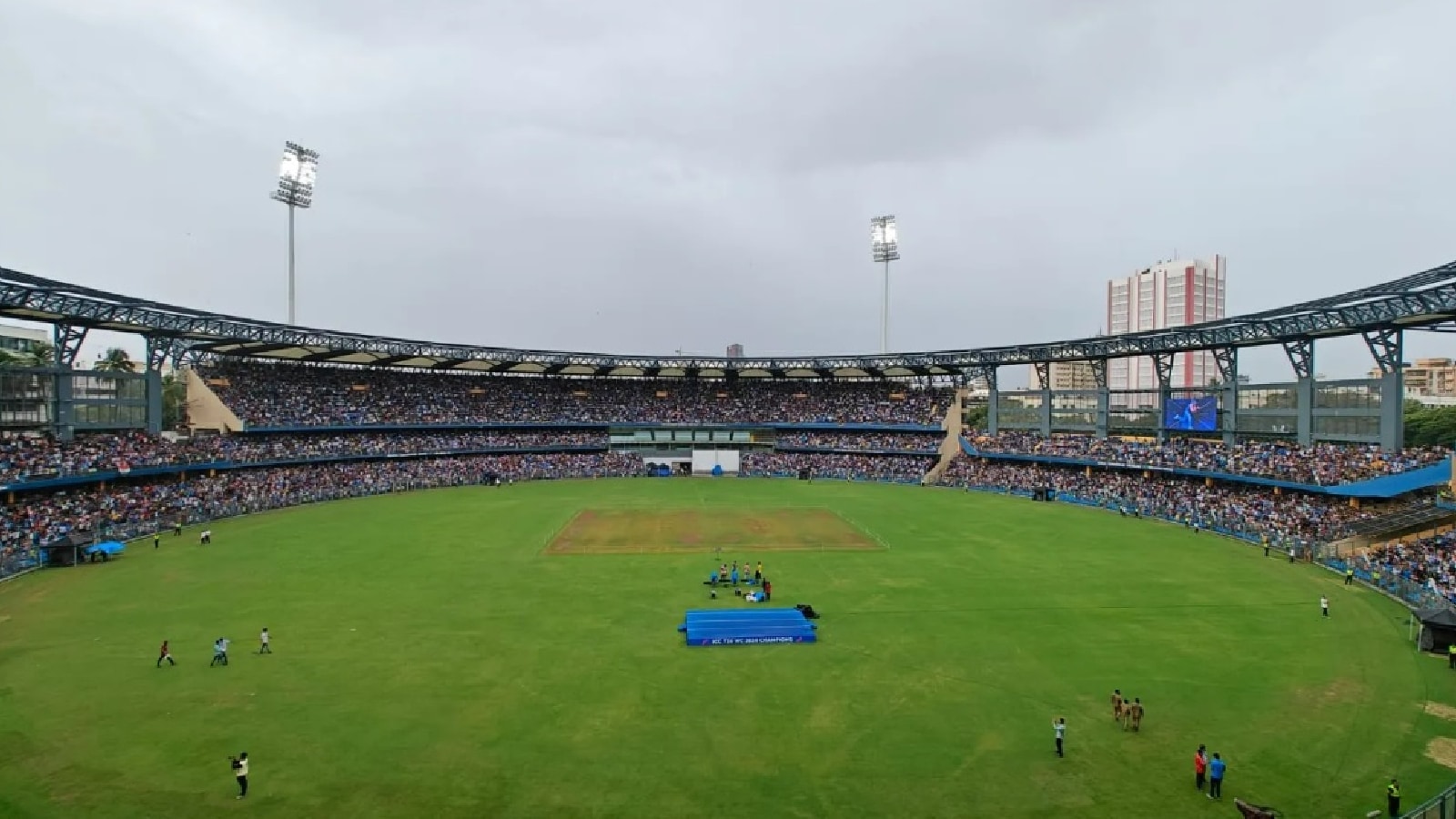
The Mumbai Cricket Association has formally submitted a multi-part petition to the Board of Control for Cricket in India, requesting the creation of a national Under-17 tournament for female cricketers and demanding an increased allocation of international matches at the iconic Wankhede Stadium. According to administrative correspondence accessed by Indian media outlets in September 2026, the state governing body outlined four specific requests and recommendations to the national cricket board's general secretary. The filing highlights growing friction between regional administrators and the central board over stadium usage rights, venue scheduling protocols, and the structured development of junior pathways within domestic women's cricket.
Key facts
What happened
The Mumbai Cricket Association (MCA), which oversees cricket administration across Mumbai and its adjoining districts, dispatched a comprehensive letter to the office of the Board of Control for Cricket in India (BCCI) secretary. The correspondence, detailed in reporting by Express News Service and accessed through internal board documentation, presents a four-part appeal aimed at recalibrating how the apex body manages match distribution and junior domestic competitions.
At the forefront of the MCA submission is a proposal to establish an official Under-17 national championship for girls. The state association argued that while domestic structures currently feature competitive platforms at the Under-15, Under-19, Under-23, and senior levels, the absence of an Under-17 tier leaves a significant gap in player development. An Under-17 division, the MCA contended, would allow young female cricketers transitioning out of junior ranks to gain crucial match exposure before competing at the national Under-19 level.
In addition to youth development, the MCA expressed concern regarding the distribution of international fixtures to Wankhede Stadium, the historic home ground of Mumbai cricket. The association requested that the BCCI assign a higher number of international matches—encompassing Test matches, One Day Internationals, and Twenty20 Internationals—to the Mumbai venue. MCA officials indicated that Wankhede Stadium, which underwent extensive infrastructure upgrades ahead of recent major events, possesses world-class facilities capable of hosting high-profile international double-headers and bilateral series on a more regular basis.
The third key pillar of the MCA petition focuses on administrative communication and scheduling logistics. The state unit requested that the BCCI implement clearer and more predictable notification procedures whenever matches—including international fixtures, domestic tournaments, or Indian Premier League games—are scheduled or relocated to grounds falling under MCA jurisdiction. The association emphasized that operational efficiency, crowd management, security deployments, and pitch preparation require sufficient advance notice from the national board rather than short-notice venue assignments.
Why it matters
The formal appeal by the Mumbai Cricket Association carries significant structural implications for the governance of Indian cricket, venue economic models, and the growth trajectory of women's sports across the country.
For domestic women's cricket, the proposed creation of an Under-17 national tournament addresses a structural void in talent identification. Following India's success in international youth competitions and the commercial growth of the Women's Premier League (WPL), the demand for elite-level match practice at younger age brackets has increased dramatically. A dedicated Under-17 age group ensures that high-potential athletes receive specialized coaching, elite competition, and national scouting visibility during critical developmental years, preventing burnout or drop-off when transitioning directly from Under-15 competitions into Under-19 squads.
From an economic and administrative perspective, venue allocation remains one of the most sensitive operational matters within Indian cricket. Hosting international fixtures generates substantial revenue for state associations through gate receipts, local corporate hospitality sales, and regional commercial partnerships. For a premier venue like Wankhede Stadium—which bears high year-round operational and maintenance costs—a shortfall in international match assignments directly impacts local balance sheets and grassroots funding.
Furthermore, the request for improved communication underscores long-standing tension between the centralized authority of the BCCI and its constituent state units. As the BCCI manages an increasingly congested national and international calendar, state associations responsible for local ground logistics, security clearances, and pitch preparation require standardized scheduling protocols to prevent operational gridlock.
The background
The Board of Control for Cricket in India operates as an umbrella organization comprising over 30 state associations, each responsible for developing the sport within its defined geographic boundary. Historically, the Mumbai Cricket Association has held a preeminent position within Indian cricket governance. Formed in 1930, the association has produced dozens of national team captains and international players, while Mumbai's senior men's team has dominated domestic competition with over 40 Ranji Trophy titles.
Wankhede Stadium, situated in Churchgate, Mumbai, was constructed in 1974 and has served as the flagship arena for Mumbai cricket for over five decades. The venue has hosted numerous landmark historical moments, including the final of the 2011 ICC Cricket World Cup, in which India defeated Sri Lanka to win its second 50-over world title. Despite its historical pedigree, Wankhede Stadium faces intense competition for international match allocations due to a rapid expansion of modern stadium infrastructure across India over the past two decades.
In recent years, the BCCI has implemented a rotation system intended to distribute international matches equitably across new and established venues. This policy has seen international fixtures spread to newly built multi-purpose facilities in cities such as Ahmedabad, Lucknow, Rajkot, Ranchi, and Guwahati. While this decentralization has broadened cricket's regional footprint across India, it has simultaneously led to fewer international match days assigned to legacy centers such as Mumbai, Kolkata, Chennai, and Delhi.
Concurrently, the pathway for women's cricket in India has undergone rapid evolution since the BCCI officially integrated women's cricket governance into its fold in 2006. The launch of the Women's Premier League in 2023 marked a transformation in commercial investment and player pathways. However, state associations have continuously pointed out that grassroots structures require systematic alignment with men's junior cricket, where multi-tiered age-group tournaments (including Under-14, Under-16, Under-19, and Under-23 divisions) have functioned effectively for decades.
Reaction
The Board of Control for Cricket in India has not yet issued a formal public response to the letter submitted by the Mumbai Cricket Association. Standard administrative procedure dictates that proposals concerning tournament additions and calendar modifications are submitted to the BCCI Apex Council, the Chief Executive Officer, or the domestic tournament committee for preliminary evaluation before being presented at the board's Annual General Meeting or Working Committee meetings.
Other prominent state cricket associations, including the Cricket Association of Bengal, Tamil Nadu Cricket Association, and Karnataka State Cricket Association, are expected to monitor the progress of MCA's representation closely. Proposals regarding venue rotation and match distribution frequently prompt broader discussions among state units, as any adjustment to Wankhede Stadium's allocation quota directly affects the availability of fixtures for other international venues across the country.
Coaching staff, youth developers, and former international players involved in women's cricket have generally supported structural additions to the junior domestic calendar. Development experts note that expanding age-group tournaments aligns with recommendations made by technical committees aiming to broaden the talent pool for future national team selections and WPL franchise drafting.
What we don't know yet
Several key operational details and administrative outcomes remain unconfirmed following the disclosure of the MCA's petition:
What to watch
In the coming months, several key administrative milestones will indicate how the BCCI intends to address the MCA's proposals:
This account incorporates reporting originally published by Express News Service and The Indian Express.
How this story was produced
This report was written by The Global Wire newsroom from reporting first published by Express News Service. We verify the core facts against the original report, write our own account, and add the background and consequences a short wire item leaves out. Drafting is AI-assisted inside an editor-supervised pipeline, and every story is checked for accuracy of attribution, structure and duplication before it appears — full detail in our AI and funding disclosure.
Spotted an error? Tell us at corrections@horizonglobalnews.com and read our corrections policy or editorial standards.





Reader comments
Loading comments…