

Minnesota Lake Restoration Demonstrates Dramatic Recovery After Invasive Carp Removal
A long-term project at Pickerel Lake in Minnesota showed how eradicating common carp led to a nearly 600 percent increase in water clarity and a surge in native aquatic plant cover.
By The Global Wire Newsroom · Reported from TOI World Desk
Link preview · horizonglobalnews.com
Minnesota Lake Restoration Demonstrates Dramatic Recovery After Invasive Carp Removal
A long-term project at Pickerel Lake in Minnesota showed how eradicating common carp led to a nearly 600 percent increase in water clarity and a surge in native aquatic plant cover.
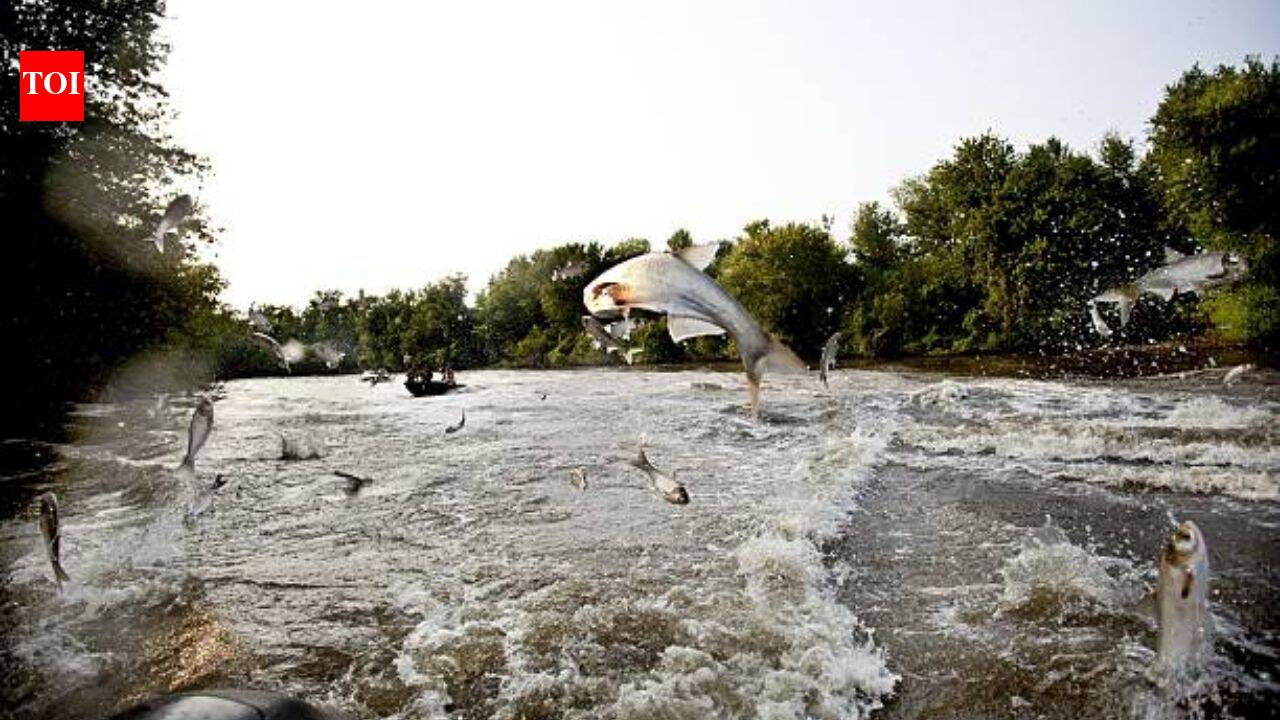
A long-term environmental restoration effort at Pickerel Lake in Minnesota has highlighted the profound impact that managing invasive species can have on freshwater ecosystems. According to reporting by TOI World Desk, state environmental managers treated the shallow lake with a targeted fish poison in 2009 to eradicate an overabundant population of common carp (*Cyprinus carpio*). In the years following the chemical intervention, the water body underwent a striking ecological recovery: water clarity increased by nearly 600 percent, while coverage of submersed aquatic plants expanded from a sparse baseline of 4.6 percent of the lake bed to 90 percent. The dramatic shift underscores the central role that bottom-feeding invasive species play in maintaining degraded, murky conditions in shallow northern lakes.
Key facts
What happened
For decades, Pickerel Lake, a shallow water body located in Minnesota, remained locked in a severely degraded ecological state. Characterized by murky, brown-green water and frequent blooms of planktonic algae, the lake supported almost no submersed vegetation. The primary catalyst for this poor water quality was the dense population of common carp (*Cyprinus carpio*), a non-native fish species that thrives in shallow aquatic environments.
Common carp feed by sucking up soft bottom sediments, sifting out microscopic invertebrates, and expelling the remaining mud back into the water column. In shallow lakes like Pickerel Lake, where wind action and shallow depth already make sediment prone to disturbance, thousands of foraging carp continuously keep fine soil particles suspended. This relentless mechanical disruption blocks sunlight from reaching the lake bed, preventing native aquatic plants from taking root and growing. Furthermore, the disturbance releases phosphorus and nitrogen trapped in the sediment into the open water, fueling explosive growth of free-floating microscopic algae.
In 2009, state wildlife authorities and ecological restoration specialists implemented a major management intervention. According to TOI World Desk, managers treated Pickerel Lake with a specialized piscicide—a chemical compound designed to selectively eliminate fish populations while breaking down rapidly in natural water systems. The goal was to completely remove the invasive carp biomass and allow the lake's natural biological processes to reset.
The post-treatment outcomes revealed a rapid and massive ecological transformation. With the invasive fish removed, suspended sediments settled to the bottom, allowing sunlight to penetrate deep into the water column. Dormant seeds embedded in the lake bed germinated for the first time in years. Systematic environmental monitoring revealed that water clarity surged by nearly 600 percent compared to pre-treatment measurements. Concurrently, submersed aquatic plant cover expanded from a negligible 4.6 percent of the lake bed prior to the 2009 chemical application to an extraordinary 90 percent cover in the post-treatment evaluation period.
Why it matters
The ecological transformation of Pickerel Lake provides a clear, empirical illustration of a fundamental principle in aquatic ecology known as the theory of alternative stable states. Pioneered by limnologists studying shallow lakes, this framework establishes that shallow freshwater systems generally exist in one of two distinct regimes: a clear-water state dominated by rooted aquatic vegetation (macrophytes), or a turbid, green-water state dominated by planktonic algae and devoid of plants.
Once an ecosystem shifts into the turbid, algal state—often triggered by high nutrient loading or invasive species like common carp—it can remain locked in that condition indefinitely. The carp act as a biological anchor, maintaining high turbidity and preventing vegetation from re-establishing. Removing the carp breaks this feedback loop, allowing the ecosystem to flip back into a stable, clear-water regime.
The expansion of aquatic plant coverage from 4.6 percent to 90 percent carries profound consequences for local biodiversity and environmental health. Rooted aquatic plants stabilize bottom sediments, preventing wind-driven wave action from resuspending silt. They also absorb large quantities of dissolved phosphorus and nitrogen from the water column, effectively starving harmful blue-green algae (cyanobacteria) of the nutrients required for toxic blooms.
Furthermore, dense underwater plant meadows create essential nursery habitat, shelter, and foraging grounds for native game fish, including largemouth bass, northern pike, yellow perch, and various panfish species. Waterfowl, aquatic invertebrates, and amphibians also depend directly on diverse macrophyte beds for food and shelter. In a state like Minnesota, where lake-based outdoor recreation, sport fishing, and shoreline property values form critical components of the regional economy, demonstrating effective pathways to rehabilitate degraded shallow lakes carries substantial public policy and financial importance.
The background
The common carp (*Cyprinus carpio*), native to Eurasia, was intentionally introduced to North American waters in the late 19th century. During the 1870s and 1880s, the U.S. Fish Commission distributed carp across the country as a fast-growing, hardy source of food for expanding rural populations. The fish quickly escaped stocked ponds and spread rapidly through the vast interconnecting waterways of the Mississippi River basin and the Laurentian Great Lakes.
In shallow Midwestern lakes—defined generally as water bodies with average depths under 15 feet—common carp found ideal habitat. Lacking effective natural predators once fully grown and capable of surviving in low-oxygen conditions that kill native sport fish during harsh northern winters, carp populations exploded. Across North America, thousands of shallow lakes gradually transitioned from clear, vegetation-rich wetlands into murky, carp-dominated basins.
To combat such invasions, fisheries biologists in the United States began utilizing chemical reclamation techniques in the mid-20th century. The most common tool, rotenone, is a naturally occurring compound derived from the roots of tropical legume plants. Used by indigenous South American populations for centuries to capture fish, rotenone was adopted by American natural resource agencies in the 1930s. The compound works by interfering with cellular respiration specifically in organisms that absorb it through gills, making it highly effective against fish while degrading naturally under exposure to sunlight and heat within a few days to weeks.
While whole-lake chemical treatments are considered radical measures because they temporarily remove all fish species from a targeted basin, ecological managers view them as necessary interventions when invasive carp populations reach densities that prevent natural recovery. Following successful carp eradication, state agencies typically reintroduce native fish species to establish a balanced, self-sustaining fishery.
Reaction
The results observed at Pickerel Lake have drawn widespread interest from freshwater ecologists, wildlife biologists, and lake management associations across the American Midwest. According to environmental managers and fisheries scientists, the project highlights how addressing the primary biological stressor in a degraded lake can yield far greater water quality improvements than isolated watershed nutrient controls alone.
Conservation organizations dedicated to wetland restoration, such as Ducks Unlimited and local watershed districts, frequently point to successful carp management projects as evidence that historical lake conditions can be restored even after decades of severe degradation. These groups emphasize that clear-water conditions and abundant vegetation are vital for migratory waterfowl, which rely on submersed tubers and associated invertebrates for energy during annual migrations.
At the same time, fisheries management professionals caution that chemical treatments must be viewed as part of a broader, integrated pest management strategy rather than a simple, one-time fix. Without physical fish barriers, water control structures, or active monitoring, carp can easily re-enter restored lakes through connected streams, agricultural ditches, or high-water flooding events.
What we don't know yet
While the immediate post-treatment metrics at Pickerel Lake demonstrate a dramatic ecological recovery, several long-term operational and environmental details remain unclarified in the available reporting.
First, the current long-term stability of Pickerel Lake's carp-free status is not detailed. The reporting by TOI World Desk does not specify whether secondary physical barriers or ongoing removal efforts have been required to prevent common carp from recolonizing the basin via connected waterways in the years since 2009.
Second, the specific species composition and population density of native fish reintroduced to Pickerel Lake following the 2009 piscicide application are not disclosed. It remains unknown how quickly native top predators, such as northern pike or largemouth bass, were re-established to maintain ecological balance.
Third, the total financial cost of the 2009 chemical application, along with the specific chemical formulation and dosage used during the treatment, is not specified in the initial reporting. Finally, the extent to which surrounding watershed land-use practices, such as agricultural fertilizer runoff or urban stormwater discharges, continue to impact the lake's long-term nutrient budget remains an unaddressed variable.
What to watch
In the coming years, environmental observers and natural resource officials will monitor several key developments to evaluate the lasting success of shallow lake reclamation strategies in Minnesota and the broader region.
A primary indicator will be the publication of long-term aquatic vegetation surveys and water clarity trends from the Minnesota Department of Natural Resources and regional watershed management districts. These long-term datasets will show whether the 90 percent plant coverage baseline can be sustained over multiple climate cycles, including periods of severe drought or unusually wet winters.
Another critical factor will be the implementation of integrated carp control technologies in surrounding water systems. Managers increasingly rely on advanced techniques, such as radio-telemetry tracking of "Judas fish" to locate winter carp aggregations, commercial netting under ice, and low-voltage electric fish barriers installed at lake inlets and outlets.
Finally, policy researchers will watch state legislative funding allocations for aquatic invasive species management and habitat restoration grants. Demonstrable successes like the Pickerel Lake project could encourage state legislatures and federal conservation programs to increase funding for similar whole-lake restoration initiatives across carp-impacted waterways in the United States.
This report is based on original reporting by TOI World Desk.
How this story was produced
This report was written by The Global Wire newsroom from reporting first published by TOI World Desk. We verify the core facts against the original report, write our own account, and add the background and consequences a short wire item leaves out. Drafting is AI-assisted inside an editor-supervised pipeline, and every story is checked for accuracy of attribution, structure and duplication before it appears — full detail in our AI and funding disclosure.
Spotted an error? Tell us at corrections@horizonglobalnews.com and read our corrections policy or editorial standards.


Reader comments
Loading comments…