

Israel Raises Major Security Concerns With US Over Proposed Hamas Disarmament Plan
Israeli officials have shared detailed security objections with the White House regarding a proposed framework to disarm Hamas, according to reporting by ABC News.
By The Global Wire Newsroom · Reported from ABC News
Link preview · horizonglobalnews.com
Israel Raises Major Security Concerns With US Over Proposed Hamas Disarmament Plan
Israeli officials have shared detailed security objections with the White House regarding a proposed framework to disarm Hamas, according to reporting by ABC News.
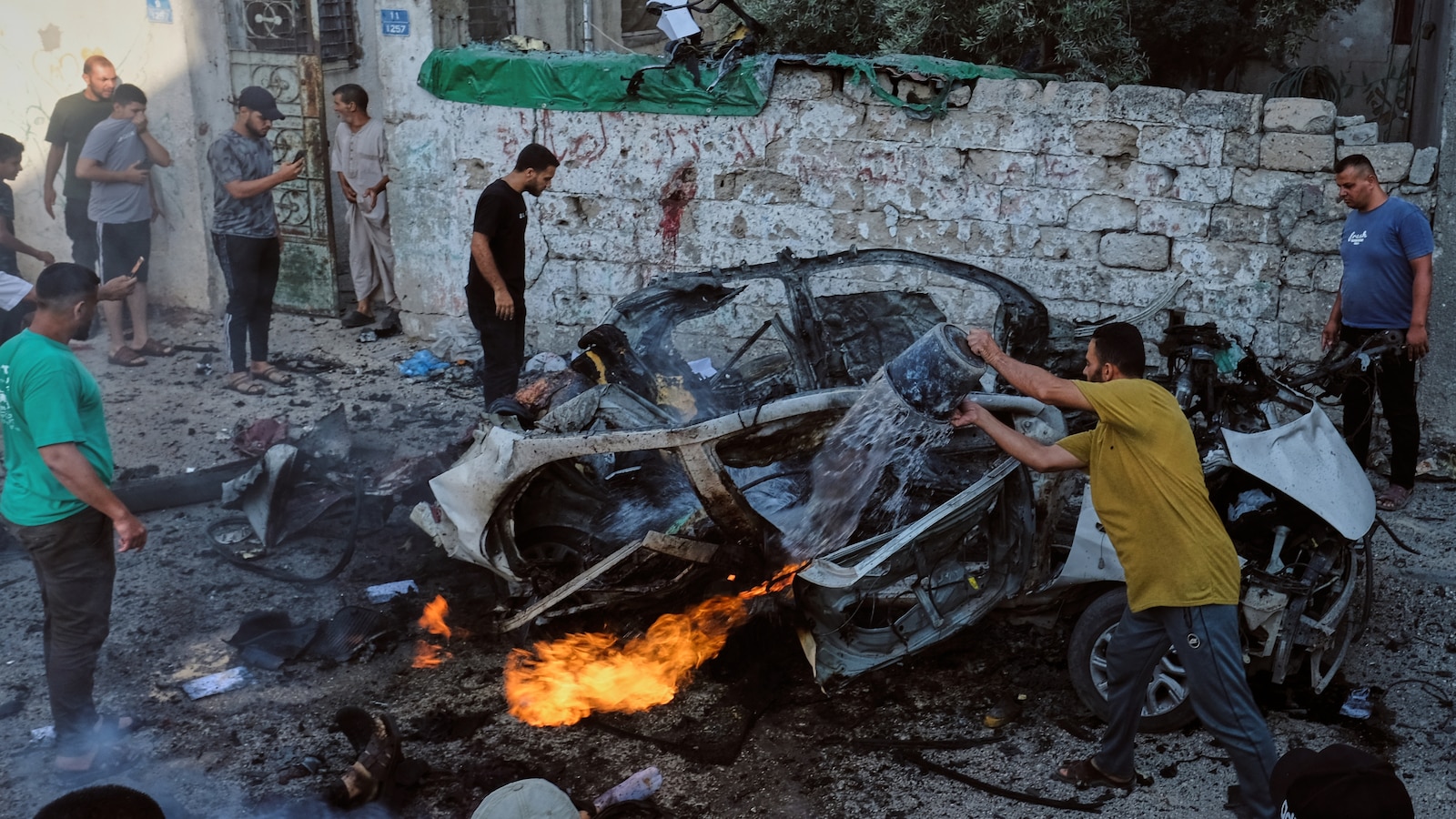
Israeli officials have conveyed profound security reservations to the White House regarding a proposed framework designed to achieve the disarmament of Hamas, according to reporting by ABC News. The high-level communications reflect lingering skepticism within the Israeli national security establishment concerning the viability and enforcement mechanisms of international proposals aimed at demilitarizing the Gaza Strip.
The development underlines ongoing diplomatic friction surrounding efforts to negotiate an end to conflict in the region while addressing Israel's core requirement that Hamas be permanently stripped of its military capabilities. According to reporting by ABC News, Israeli representatives presented their specific concerns directly to Biden administration officials, emphasizing that any deal lacking rigorous verification protocols could leave Israel vulnerable to future armed threats.
Strategic concerns over disarmament terms
At the center of Israel's objections is the structural integrity of any potential demilitarization agreement. According to reporting by ABC News, Israeli defense and political leaders have expressed grave doubts regarding how a disarmament agreement would be monitored, executed, and enforced on the ground.
Israeli national security doctrine holds that any plan failing to guarantee the complete and verifiable destruction of offensive military infrastructure poses an unacceptable risk. Specifically, Israeli security officials are cautious about scenarios in which Hamas might nominally agree to hand over overt weaponry while retaining hidden arsenals, specialized manufacturing equipment, or subterranean networks.
Historically, Israeli military strategists have argued that partial or ill-defined disarmament schemes allow non-state armed groups to regroup, rearm, and rebuild capabilities during periods of operational pause. Consequently, the reservations conveyed to the White House stress that vague assurances or international oversight without direct, intrusive inspection mechanisms are insufficient to guarantee long-term security along Israel's borders.
Bilateral dialogue with the White House
The communication between Jerusalem and Washington highlights the crucial role played by the United States as both a diplomatic mediator and Israel's primary security partner. The White House has consistently maintained that any durable resolution to the conflict must ensure that Gaza can no longer serve as a launchpad for armed attacks against Israeli civilian populations.
However, translating that objective into a mutually acceptable diplomatic framework requires constant calibration between American diplomatic strategies and Israeli defense priorities. According to reporting by ABC News, Israeli officials utilized direct channels with senior White House advisers to articulate why current proposals fall short of their necessary security thresholds.
These bilateral exchanges often focus on the mechanics of enforcement, including which international bodies or third-party entities might oversee compliance, how intelligence sharing would function, and what measures would be triggered in the event of non-compliance. While the United States continues to explore diplomatic avenues to stabilize the region, Israeli officials maintain that diplomatic agreements cannot substitute for concrete, operational security guarantees.
The complex history of demilitarization in Gaza
The challenge of disarming Hamas has been a persistent obstacle in Middle Eastern diplomacy for decades. Since Hamas assumed control of the Gaza Strip in 2007, the group has developed an extensive military apparatus centered around its armed wing, the Izz ad-Din al-Qassam Brigades.
This force built an arsenal that expanded from rudimentary short-range rockets and small arms to sophisticated long-range rocketry, anti-tank guided missiles, armed unmanned aerial vehicles, and an intricate underground network of fortified tunnels. This subterranean infrastructure has historically allowed the group to command forces, store munitions, and execute cross-border operations outside the view of aerial surveillance.
Previous diplomatic attempts to condition the economic rehabilitation of Gaza on demilitarization have repeatedly stalled. While international mediators have frequently proposed formulas offering economic incentives, sanctions relief, or reconstruction aid in exchange for military concessions, Hamas leadership has consistently rejected absolute disarmament as a prerequisite, treating its military capabilities as a non-negotiable aspect of its political identity.
Regional mediation and enforcement hurdles
International diplomatic efforts aimed at resolving the conflict typically rely on a complex network of mediators, prominently including the United States, Egypt, and Qatar. Each mediator brings distinct leverage and channels of communication to the table, yet harmonizing these diplomatic efforts with Israel's security requirements remains a formidable challenge.
Regional mediators often advocate for structured, multi-stage frameworks designed to build mutual trust, beginning with temporary ceasefires and humanitarian aid delivery before progressing toward broader structural issues like disarmament and long-term governance. Conversely, Israel's strategic posture demands definitive, front-loaded commitments regarding security enforcement to prevent armed groups from using diplomatic intervals to fortify their positions.
Enforcement remains the primary practical hurdle in any proposed disarmament scheme. Non-state armed actors operate in dense urban environments, making the total accounting of small arms, light weapons, and localized munitions production facilities extraordinarily difficult without comprehensive, ground-level access. International peacekeeping forces or monitoring missions historically deployed in regional conflicts have rarely possessed the mandate or capability to forcibly disarm non-state combatants, a key point of concern raised by Israeli security analysts during discussions with Washington.
Broader diplomatic and security implications
The hesitation expressed by Israel underscores the deep operational divide between diplomatic aspirations for a structured peace process and the security realities on the ground. For Israel, the issue of disarmament is not merely a negotiating stance but a fundamental prerequisite for national defense.
If a disarmament proposal is perceived as flawed or unenforceable, Israeli leadership risks exposing its border communities to renewed threats, an outcome that national security officials have repeatedly stated they will not accept. On the other hand, failure to achieve a diplomatic consensus on demilitarization threatens to prolong regional instability, complicate humanitarian assistance, and delay long-term reconstruction initiatives.
The dialogue between the White House and Israeli leadership serves as a reality check for broader diplomatic initiatives. It highlights that no international proposal can gain traction without satisfying the defense criteria of the state directly exposed to security risks.
Next steps in bilateral consultations
As discussions between Washington and Israeli representatives continue, technical teams are expected to further review the specific terms of the draft proposal. According to reporting by ABC News, the dialogue between the White House and Israeli officials remains active as both sides seek to address the identified security gaps.
Future talks are likely to concentrate on refining verification standards, defining exact parameters for weapons turnover, and establishing clear protocols for monitoring critical infrastructure. Whether these technical consultations can bridge the fundamental gap between diplomatic framework proposals and Israel's security standards remains a critical question for the future trajectory of the region.
This article includes reporting originally conducted by ABC News.
How this story was produced
This report was written by The Global Wire newsroom from reporting first published by ABC News. We verify the core facts against the original report, write our own account, and add the background and consequences a short wire item leaves out. Drafting is AI-assisted inside an editor-supervised pipeline, and every story is checked for accuracy of attribution, structure and duplication before it appears — full detail in our AI and funding disclosure.
Spotted an error? Tell us at corrections@horizonglobalnews.com and read our corrections policy or editorial standards.





Reader comments
Loading comments…