

How Nuclear Submarines Use Fission and Electrolysis for Months Undersea
An analysis of naval technology explains how onboard reactors, water electrolysis, and desalination allow nuclear submarines to remain submerged for months without surfacing.
By The Global Wire Newsroom · Reported from Kaif Shaikh
Link preview · horizonglobalnews.com
How Nuclear Submarines Use Fission and Electrolysis for Months Undersea
An analysis of naval technology explains how onboard reactors, water electrolysis, and desalination allow nuclear submarines to remain submerged for months without surfacing.
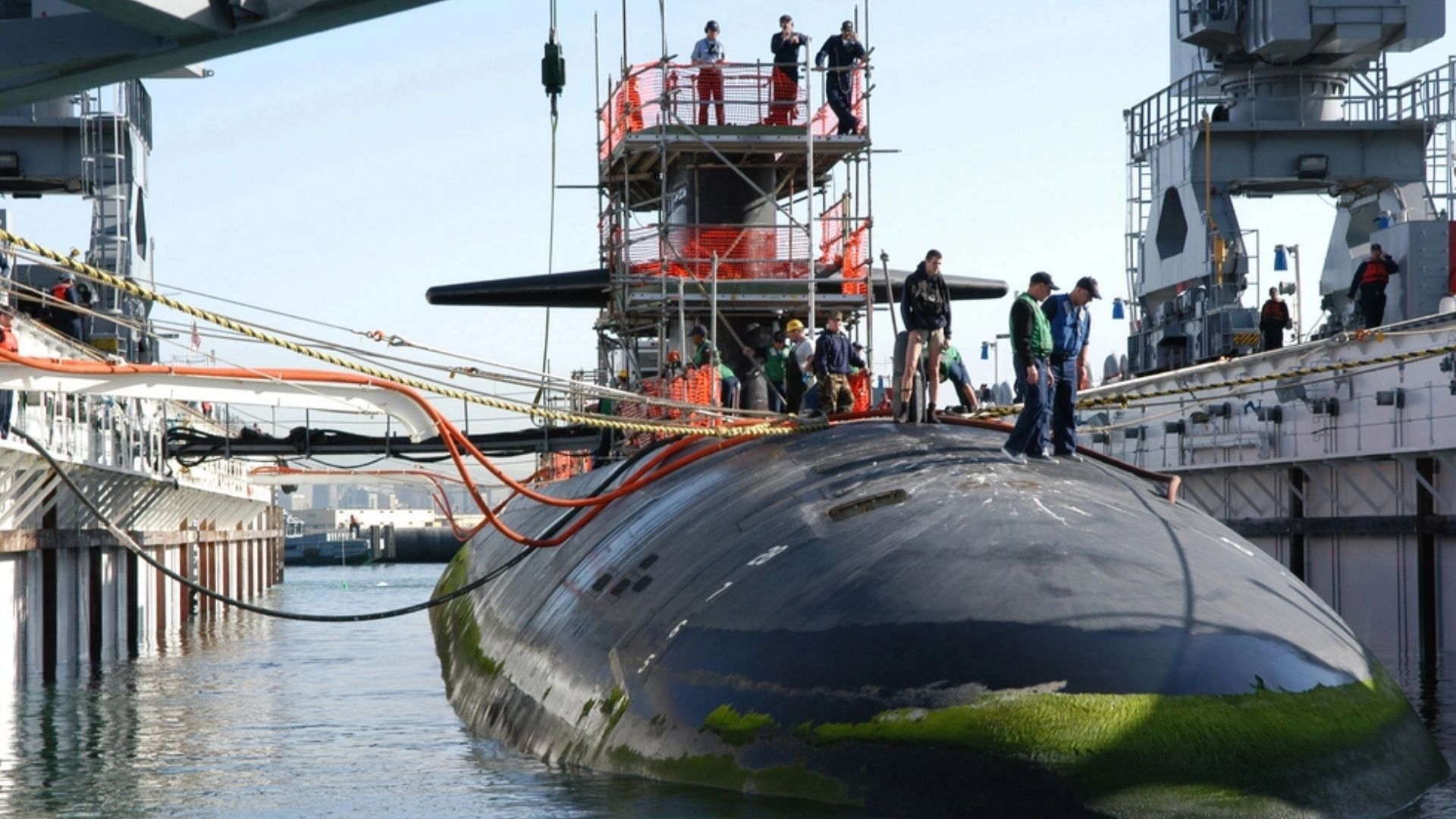
A technical analysis of modern naval engineering details the self-contained life-support, environmental control, and propulsion architectures that allow nuclear-powered submarines to operate submerged for months at a time without surfacing or refueling. According to reporting published by Kaif Shaikh, these specialized warships maintain multi-month undersea deployments by independently producing their own propulsion power, electrical current, breathing oxygen, and potable water. Unlike conventional diesel-electric submarines that must surface or extend a snorkel mast to draw atmospheric air for internal combustion engines, nuclear attack and ballistic missile submarines rely on onboard nuclear fission reactors. This technological capability fundamentally transforms maritime defense posture, enabling continuous deep-water operations where mission duration is constrained primarily by food storage capacity and crew psychological limits rather than energy reserves or atmospheric supplies.
Key facts
What happened
The engineering framework that enables extended underwater operations relies on three interdependent systems: power generation, air revitalization, and water distillation. At the heart of the vessel is a compact naval pressurized water reactor. In this system, nuclear fission inside the reactor core generates intense thermal energy. This heat is transferred to a primary coolant water loop under high pressure, preventing it from boiling. The hot primary water passes through a steam generator, transferring heat to a secondary water loop. This secondary loop boils into high-pressure steam, which expands through main turbines to turn the propeller shaft or hydro-jet propulsor, while auxiliary turbo-generators produce all electrical power for onboard systems.
Because nuclear fission involves no chemical combustion, the reactor consumes zero oxygen and produces no exhaust gas. A modern reactor core contains sufficient enriched uranium fuel to run continuously for decades. On modern vessels like the U.S. Navy's Virginia-class attack submarines, the reactor core is built to last the full 33-year operational life of the submarine without requiring refueling.
To maintain a habitable environment inside the sealed pressure hull, the submarine continuously regenerates breathable air. Oxygen is produced through high-pressure water electrolysis units. Distilled water generated on board is subjected to an electric current, splitting water molecules into oxygen and hydrogen. The oxygen gas is fed directly into the vessel's internal ventilation grid, while the hydrogen gas is safely compressed and discharged overboard into the ocean.
Concurrently, carbon dioxide exhaled by the crew is removed to prevent toxic hypercapnia. Submarines pass internal air through chemical scrubbing units—typically using liquid monoethanolamine or solid absorbent materials—to capture carbon dioxide. Auxiliary catalytic burners, operating at elevated temperatures over precious-metal catalysts, oxidize trace amounts of carbon monoxide, hydrogen gas from battery banks, and organic vapors into harmless carbon dioxide and water vapor before recirculating the air.
Fresh water production completes the life-support loop. Submarines generate tens of thousands of gallons of fresh water each day using multi-stage flash evaporators powered by secondary steam loop heat, alongside high-pressure reverse osmosis filtration units. Seawater is stripped of salts and minerals, yielding ultra-pure water required for human drinking and cooking, crew sanitation, primary reactor coolant loops, and oxygen-generating electrolysis systems.
Why it matters
The ability to remain submerged continuously for several months bestows nuclear submarines with unmatched operational stealth and strategic leverage. In modern naval warfare, military surveillance relies on radar, satellite optical imaging, infrared sensors, and electronic signal monitoring. Conventional diesel-electric submarines, even those equipped with Air-Independent Propulsion systems like fuel cells or Stirling engines, must periodically surface or operate near periscope depth using a snorkel mast to recharge onboard batteries. Snorkeling creates a visible surface wake, exposes a radar-reflective mast, and releases thermal signatures easily detected by anti-submarine warfare aircraft and surface ships.
By contrast, a nuclear submarine can submerge immediately after leaving port and remain hundreds of meters below the sea surface for the entirety of its mission—often lasting 60 to 90 days for attack submarines and up to 100 days for strategic deterrent patrols. Lacking any need to surface or snorkel, nuclear vessels present virtually zero optical, radar, or thermal cross-section.
This operational profile forms the foundation of global nuclear deterrence. Ballistic missile submarines (SSBNs) exploit this permanent stealth to hide in vast ocean patrol areas, maintaining an invulnerable second-strike nuclear capability. Concurrently, nuclear attack submarines (SSNs) leverage sustained submerged speeds exceeding 20 to 25 knots to escort aircraft carrier strike groups, track adversary submarines, perform covert intelligence gathering, and launch precision land-attack cruise missiles without giving away their locations.
The background
Submarine nuclear propulsion was pioneered on January 17, 1955, when the world's first nuclear-powered vessel, USS Nautilus (SSN-571), transmitted the famous radio message: "Underway on nuclear power." Developed under the direction of U.S. Navy Admiral Hyman G. Rickover, Nautilus transformed naval warfare by cruising thousands of miles fully submerged, culminating in the first underwater transit across the geographic North Pole in August 1958.
Before the introduction of nuclear reactors, submarines were essentially surface craft capable of temporary submersions. During World War I and World War II, submarines relied on electric lead-acid batteries when underwater. This restricted submerged speeds to a few knots and limited underwater endurance to less than 48 hours before the vessel was forced to surface and run diesel engines for battery recharging. The introduction of the snorkel mast by the Royal Netherlands Navy, later deployed extensively by Germany's Kriegsmarine, allowed battery charging at periscope depth but left vessels vulnerable to radar and visual detection.
Nautilus inaugurated a major Cold War naval race. The United States, the Soviet Union, the United Kingdom, France, and China established dedicated nuclear submarine fleets. In more recent years, India commissioned its domestically built Arihant-class SSBNs, while the AUKUS security agreement forged in 2021 between Australia, the United Kingdom, and the United States set a framework for Australia to acquire conventionally armed, nuclear-powered attack submarines by the late 2030s.
Engineering over the past six decades has focused on reactor safety, noise reduction, and core longevity. Early nuclear submarines required complex shipyard overhauls every few years to replace depleted reactor fuel. In contrast, modern U.S. Navy Columbia-class SSBNs and British Royal Navy Dreadnought-class vessels feature life-of-ship reactors designed to operate for over 30 years without mid-life refueling overhauls.
Reaction
Naval strategists and military analysts observe that while nuclear reactors provide virtually limitless propulsion and electrical energy, human endurance remains the ultimate operational constraint. Defense experts highlight that long deployments in confined spaces without exposure to natural sunlight create significant physical and mental stress for crew members. Naval medical authorities continue to research shift scheduling, psychological support, and lighting systems to mitigate fatigue and sleep disruption during multi-month submerged assignments.
At the same time, defense economists note the formidable financial and industrial barriers to operating nuclear submarine fleets. Building, maintaining, and eventually decommissioning nuclear vessels requires specialized shipyards, highly trained technical personnel, and strict nuclear safety infrastructure. Consequently, many navies choose non-nuclear diesel-electric or AIP submarines, which operate very quietly in shallow coastal waters at a fraction of the cost. However, major naval powers maintain that nuclear propulsion remains indispensable for long-range, deep-ocean missions requiring high speed and continuous submerged persistence.
What we don't know yet
Despite public knowledge of general nuclear engineering principles, specific technical performance metrics for military submarine reactors remain strictly classified. Details concerning uranium enrichment levels—which vary from low-enriched uranium around 5% to 20% in French designs to highly enriched uranium exceeding 90% in American and British reactors—are closely guarded state secrets.
In addition, precise data regarding acoustic silencing mechanisms, such as natural circulation cooling loops that eliminate pump noise at low speeds, magnetic bearing pumps, and rubberized anti-reflection hull coatings, are unavailable to the public. Official reports also leave unstated the maximum operational limits of air scrubbers under emergency conditions, the precise wear rates of high-pressure electrolysis cells, and the long-term health effects of subtle trace atmospheric contaminants on crew members during prolonged deployments.
What to watch
Key developments and strategic decision points in nuclear submarine technology and deployment include:
This news report is based on technical analysis and reporting by Kaif Shaikh regarding the operational principles, energy systems, and atmospheric control mechanisms of nuclear-powered submarines.
How this story was produced
This report was written by The Global Wire newsroom from reporting first published by Kaif Shaikh. We verify the core facts against the original report, write our own account, and add the background and consequences a short wire item leaves out. Drafting is AI-assisted inside an editor-supervised pipeline, and every story is checked for accuracy of attribution, structure and duplication before it appears — full detail in our AI and funding disclosure.
Spotted an error? Tell us at corrections@horizonglobalnews.com and read our corrections policy or editorial standards.
Reader comments
Loading comments…