

Grace Wong Represents Malaysia's Final Athletics Medal Hope at Asian Games
Malaysian hammer thrower Grace Wong enters the Asian Games final as the national athletics delegation's last chance for a podium finish.
By The Global Wire Newsroom · Reported from thestar.com.my
Link preview · horizonglobalnews.com
Grace Wong Represents Malaysia's Final Athletics Medal Hope at Asian Games
Malaysian hammer thrower Grace Wong enters the Asian Games final as the national athletics delegation's last chance for a podium finish.
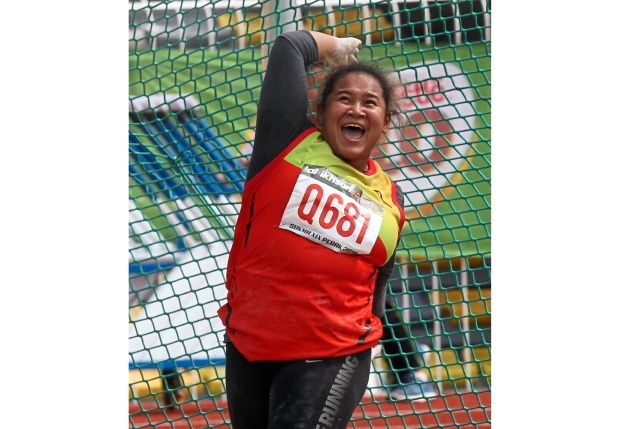
Malaysian track and field athlete Grace Wong entered the final of the women's hammer throw at the Asian Games, representing her nation's final opportunity to claim a medal in track and field following a difficult continental campaign, according to reporting by The Star. Wong's appearance in the final comes as the Malaysian athletics delegation seeks to avoid leaving the Games without a podium finish in the sport. The competition puts the spotlight on one of Southeast Asia's top field athletes as she competes against Asia's elite throwers in the flagship multi-sport tournament.
Key facts
What happened
According to reporting published by The Star, Grace Wong has emerged as the sole remaining medal prospect for Malaysia in the track and field program at the Asian Games. The Malaysian athletics team has faced significant headwinds during the competition, enduring a series of early eliminations and missed podium targets across various track and field disciplines.
As the athletics schedule draws toward its conclusion, Wong's qualification for the women's hammer throw final places the full national focus on her performance. The athletics segment of the Asian Games features elite competitors from across Asia, including leading throwers from traditional field powerhouses such as China, Japan, and South Korea. For the Malaysian delegation, which entered the multi-sport tournament with high expectations across several sporting disciplines, the failure to secure early podium places in track events elevated the importance of Wong's final appearance.
In field events such as the hammer throw, all qualified finalists execute three initial attempts in the opening rounds. The top eight athletes following those three rounds advance to the final three attempts, with the highest valid distance across all six attempts deciding the final podium standings. Wong enters the field aiming to deliver her best distance under high pressure, serving as the final representative capable of preventing a winless campaign for the national athletics program.
Why it matters
The performance of individual athletes at continental championships like the Asian Games carries substantial long-term implications for national sports policy, public funding, and athletic development infrastructure. In Malaysia, national sports funding is closely tied to performance metrics established by the National Sports Council and the Ministry of Youth and Sports. High-profile international multi-sport competitions serve as the primary benchmark for assessing the return on investment in elite athlete training programs, coaching appointments, and high-performance facilities.
A failure by a national athletics delegation to secure a single medal at the Asian Games often triggers formal technical reviews, reallocation of training grants, and strategic restructuring of national sports federations. Track and field is historically regarded as one of the flagship sports of any multi-sport Games. For Southeast Asian nations, bridging the competitive gap with East Asian and Middle Eastern powerhouses presents an ongoing challenge due to disparities in training infrastructure, sports science support, and talent identification pools.
Furthermore, individual success in technical field events like the hammer throw serves as a vital proof of concept for non-traditional athletics pathways in Southeast Asia. While track events such as sprints and middle-distance races often draw the largest public profile, field events require specialized coaching expertise, custom throwing cages, and dedicated strength training regimens. A podium finish or strong showing by Wong provides leverage for field event coaches advocating for sustained investment in throwing disciplines, which have historically received less funding than track disciplines in regional sports programs.
The background
The Asian Games, held under the auspices of the Olympic Council of Asia, represents the highest level of multi-sport competition in Asia. Held quadrennially since the inaugural 1951 Games in New Delhi, India, the tournament features thousands of athletes competing across dozens of sports. Athletics has been an integral component of the Asian Games program since its inception, providing a continental benchmark for track and field excellence.
In the women's hammer throw, international competition is governed by technical regulations established by World Athletics. The event was added to the standard international athletics program for women in the late 1990s and made its debut at the Asian Games during the 2002 Games in Busan, South Korea. The discipline requires extreme physical power, technical precision, and balance. The implement used in women's competition consists of a solid metallic head weighing exactly 4 kilograms (8.82 pounds), connected by a steel wire to a grip handle, with an overall length ranging between 119.5 centimeters and 121.5 centimeters.
Athletes throw from within a protective wire cage into a designated 34.92-degree landing sector on an open field. The throwing circle measures 2.135 meters (7 feet) in diameter, bordered by a white rim. Athletes must complete their rotations—typically three or four full turns—without stepping on or over the top of the circle rim during or immediately after the attempt, remaining inside the circle until the implement has landed.
Grace Wong has established herself as one of Southeast Asia's premier field athletes over several years of competition. She has consistently represented Malaysia at major regional events, including the Southeast Asian (SEA) Games, where she has secured multiple gold medals and set regional competition records in the hammer throw. However, transitioning from regional dominance at the SEA Games level to continental podium contention at the Asian Games presents a steep escalation in competitive standards, as East Asian athletes from nations such as China have historically dominated the Asian Games hammer throw podium with throws extending well past the 70-meter threshold.
Reaction
Reporting by The Star highlighted the heavy weight of expectation resting on Wong, describing her as the last remaining hope to salvage a result from what the outlet characterized as a bruising athletics campaign for Malaysia. The phrase underscores the frustration within the national sporting community following earlier missed opportunities across the track and field schedule.
While immediate post-event statements from the Malaysian Athletics Federation and the National Sports Council remained pending at the time of publication, sports administration bodies typically face intense public scrutiny following major Games. If Wong secures a medal, sports officials are expected to highlight her performance as evidence of resilience within the national program. Conversely, should the delegation finish without a medal, leadership within the Malaysian Athletics Federation is expected to face calls for comprehensive performance audits and administrative reviews from stakeholders and media outlets.
What we don't know yet
Several key details remain unresolved in the immediate reporting surrounding Wong's participation in the final. The initial summary published by The Star did not provide the specific distance achieved by Wong or her final placement in the event standings, as the reporting focused on her upcoming entry into the event final.
Additionally, the complete starting list, including the seasonal best performances and personal records of her competitors in the final, was not detailed in the available summary. The exact impact of atmospheric conditions, such as wind or rain on the competition circle, also remains unverified. Understanding these factors is critical for contextualizing whether Wong's performance met or exceeded her personal best metrics during the final round of throws.
What to watch
In the immediate term, observers should monitor the official results bulletin released by the Asian Games organizing committee to confirm the final order of finish and winning distances in the women's hammer throw final. Attention will then turn to official statements from the Malaysian Athletics Federation and the National Sports Council regarding the overall evaluation of the track and field team's campaign.
Over the coming months, sports analysts will watch for potential structural adjustments within Malaysia's high-performance sports framework, including coaching contracts, athlete funding tiers, and preparation strategies for upcoming regional events such as the next edition of the Southeast Asian Games. The performance in the hammer throw final will also dictate whether Wong receives prioritized high-performance training grants for the next international competition cycle.
This report is based on original news coverage by The Star.
How this story was produced
This report was written by The Global Wire newsroom from reporting first published by thestar.com.my. We verify the core facts against the original report, write our own account, and add the background and consequences a short wire item leaves out. Drafting is AI-assisted inside an editor-supervised pipeline, and every story is checked for accuracy of attribution, structure and duplication before it appears — full detail in our AI and funding disclosure.
Spotted an error? Tell us at corrections@horizonglobalnews.com and read our corrections policy or editorial standards.





Reader comments
Loading comments…