

GPS Tracking Data Challenges Existing Theories on Lion and Hyena Competition
Newly released telemetry data offers fresh insights into the complex spatial and competitive dynamics between sub-Saharan Africa's top carnivores.
By The Global Wire Newsroom · Reported from Margherita Bassi
Link preview · horizonglobalnews.com
GPS Tracking Data Challenges Existing Theories on Lion and Hyena Competition
Newly released telemetry data offers fresh insights into the complex spatial and competitive dynamics between sub-Saharan Africa's top carnivores.
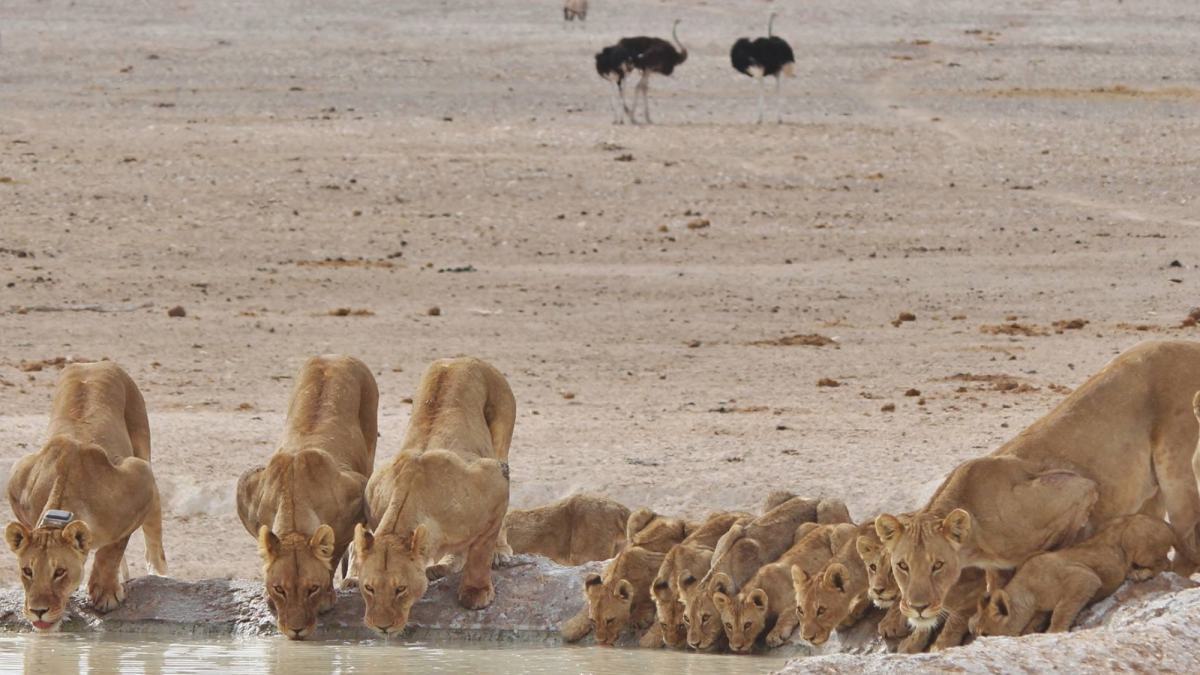
Recent wildlife tracking research utilizing GPS collar technology has provided new empirical data that challenges long-held scientific assumptions regarding how lions (Panthera leo) and spotted hyenas (Crocuta crocuta) interact in shared African ecosystems, according to reporting published on September 9, 2026, by Margherita Bassi. High-resolution spatial tracking of both apex predator species has shed light on the fine-scale behavioral mechanisms, temporal partitioning, and competitive dynamics that govern their cohabitation across sub-Saharan African landscapes. By tracking the precise movements of neighboring carnivore prides and clans, researchers are obtaining unprecedented visibility into how these direct ecological competitors navigate territory, shared prey resources, and direct confrontational risks.
Key facts
What happened
According to reporting published by Margherita Bassi, researchers analyzing high-density GPS telemetry data from wild carnivore populations have uncovered movement patterns that alter established understanding of lion and hyena interactions. Historically, field observations relied heavily on visual sightings, which were predominantly restricted to daylight hours or limited nocturnal spotlighting along accessible road networks. The deployment of advanced GPS collars equipped with multi-sensor accelerometers and satellite transmission capabilities has allowed scientists to monitor continuous movement metrics for both species across full 24-hour cycles.
The newly analyzed telemetry data reveals complex behavioral adjustments executed by both predators when navigating overlapping ranges. Rather than simple, linear dominance where lions unconditionally displace hyenas or hyenas rely solely on superior numerical density to challenge lion prides, the tracking data demonstrates fine-scale spatial and temporal resource partitioning. Individual animals and social groups alter their movement velocities, rest locations, and hunting trajectories in direct response to the real-time proximity of their competing species.
By mapping location points collected at frequent intervals, researchers observed that spotted hyenas actively exploit spatial buffers and micro-habitat structures to minimize high-risk encounters with lions while remaining within range to scavenge or hunt ungulate herds. Conversely, lion prides adjust their spatial utilization in response to hyena clan movements, particularly in areas where hyena density is high or during periods when male lions are absent from the group. The fine-scale resolution provided by modern telemetry exposes dynamic risk-assessment behaviors that were previously obscured by observational limitations.
Why it matters
Understanding the nuanced interactions between lions and spotted hyenas is critical for ecological science, wildlife management, and regional conservation strategy. As top predators, both species exert strong top-down influences on ecosystem structure, influencing ungulate population dynamics, vegetation distribution through herbivore movement alteration, and the behavior of smaller mesopredators like cheetahs and African wild dogs. Re-evaluating how these two species interact directly impacts theoretical models of intraguild competition and co-existence.
For conservation practitioners and national park authorities, accurate behavioral data is essential for designing effective landscape-level management strategies. Protected area managers across Africa face growing challenges from habitat fragmentation, land-use conversion, and human-wildlife conflict along reserve boundaries. Understanding how large carnivores share space and divide prey resources allows managers to calculate realistic carrying capacities and model predator dynamics within fenced or isolated reserves.
Furthermore, these findings have direct implications for assessing how predator populations respond to environmental stress, climate variability, and prey depletion. When prey availability contracts during droughts or seasonal migrations, competitive pressure between lions and hyenas intensifies. Precise movement models inform conservationists where spatial bottlenecks occur, helping to target corridor preservation and anti-poaching patrols. In an era where ecological restoration and rewilding initiatives are expanding across southern and eastern Africa, empirical baseline data on apex predator coexistence provides vital guidance for successfully reintroducing large carnivores into former ranges.
The background
To appreciate the significance of current telemetry findings, it is useful to review the historical development of research into African carnivore ecology. For much of the twentieth century, scientific and popular accounts categorized spotted hyenas primarily as secondary scavengers reliant on lion kills. This paradigm began to shift significantly following the publication of Dutch zoologist Hans Kruuk’s groundbreaking 1972 study, The Spotted Hyena: A Study of Predation and Social Behavior, which established through extensive field observations in Serengeti National Park and Ngorongoro Crater that hyenas are highly capable active hunters that kill up to 95 percent of the food they consume.
Subsequent long-term field studies, including decades of research by the Serengeti Lion Project founded in 1966 and long-term hyena research projects in Kenya's Maasai Mara National Reserve, established that lions and hyenas occupy almost identical ecological niches. Both species target mid-to-large-sized ungulates such as blue wildebeest (Connochaetes taurinus), plains zebra (Equus quagga), and buffalo (Syncerus caffer). Because their dietary requirements overlap so extensively, direct interference competition is intense, frequently resulting in violent physical clashes, kleptoparasitism (food stealing), and mutual mortality.
Historically, lions have been viewed as the absolute dominant competitor due to their significantly larger body mass; an adult female lion weighs between 120 and 150 kilograms, while an adult male can exceed 190 kilograms, compared to an adult female spotted hyena which weighs between 55 and 80 kilograms. However, hyenas counteract this size disadvantage through complex social cooperation and numerical superiority within matrix-structured clans that can exceed 80 individuals.
The advent of GPS telemetry in wildlife biology over the past two decades has revolutionized the field. Traditional VHF radio collars required researchers to physically track signals on foot or from vehicles using directional antennas, limiting data collection to accessible terrain during specific operational windows. Modern GPS devices store or transmit thousands of highly accurate coordinate positions daily, enabling spatial ecologists to analyze continuous trajectory paths, movement velocities, home-range overlap metrics, and dynamic interactions with unprecedented statistical rigour.
Both lions and spotted hyenas currently face conservation pressure across sub-Saharan Africa. The International Union for Conservation of Nature (IUCN) classifies the lion (Panthera leo) as Vulnerable, with global wild populations estimated between 20,000 and 25,000 individuals, representing a decline of roughly 43 percent over the past three decades. The spotted hyena (Crocuta crocuta) is listed as Least Concern globally, with an estimated population between 27,000 and 47,000 individuals, though outside of large protected conservation complexes like Kruger National Park or the Serengeti-Mara ecosystem, populations are declining due to habitat loss, prey depletion, and retaliatory persecution by livestock farmers.
Reaction
Following publication of the report by Margherita Bassi on September 9, 2026, members of the international wildlife conservation and scientific communities are evaluating the implications of the updated telemetry data. Spatial ecologists and large-carnivore specialists are expected to incorporate these movement findings into mathematical models of interspecific competition, predator-prey dynamics, and habitat suitability mapping.
Wildlife management authorities across range states in southern and eastern Africa, including agencies such as South African National Parks (SANParks), the Kenya Wildlife Service (KWS), and the Tanzania Wildlife Research Institute (TAWIRI), regularly utilize published telemetry studies to update management protocols for national parks and game reserves. Academic peer reviews and discussions are anticipated in leading conservation science forums, such as meetings of the IUCN SSC Cat Specialist Group and Hyaena Specialist Group, where experts evaluate empirical evidence to update regional action plans and conservation management strategies.
What we don't know yet
While the GPS tracking data provides significantly refined spatial coordinates, critical gaps in understanding remain. The telemetry data published in reporting by Margherita Bassi highlights movement trajectories, but remote GPS positions alone do not fully reveal the underlying behavioral motives or energetic costs associated with every interaction. For example, spatial proximity metrics indicate when lions and hyenas come within close range, but telemetry alone cannot determine whether a specific encounter resulted in successful hunting, kleptoparasitism, injury, or physical mortality without simultaneous field verification or audio/video recording.
Additionally, questions remain regarding how seasonal variation, vegetation cover density, and differing prey abundance levels modify these interaction rules across contrasting African biomes. Behavioral patterns observed in open, short-grass plains like the Serengeti may differ markedly from dynamics in dense woodland, riverine thickets, or arid environments like the Kalahari. Further long-term data collection across diverse landscape types is required before scientists can confirm whether the observed behavioral patterns represent universal species-level strategies or habitat-specific adaptations.
What to watch
In the coming months and years, several developments will determine how this updated understanding influences carnivore research and conservation practice:
This article is based on original news reporting published by Margherita Bassi on September 9, 2026.
How this story was produced
This report was written by The Global Wire newsroom from reporting first published by Margherita Bassi. We verify the core facts against the original report, write our own account, and add the background and consequences a short wire item leaves out. Drafting is AI-assisted inside an editor-supervised pipeline, and every story is checked for accuracy of attribution, structure and duplication before it appears — full detail in our AI and funding disclosure.
Spotted an error? Tell us at corrections@horizonglobalnews.com and read our corrections policy or editorial standards.


Reader comments
Loading comments…