

Global Solar Panel Prices Plummet to Cents per Watt Amid Market Surplus
An extraordinary surge in photovoltaic manufacturing has driven solar module costs down to single-digit cents per watt, fundamentally altering project economics worldwide.
By The Global Wire Newsroom · Reported from Joe Wilkins
Link preview · horizonglobalnews.com
Global Solar Panel Prices Plummet to Cents per Watt Amid Market Surplus
An extraordinary surge in photovoltaic manufacturing has driven solar module costs down to single-digit cents per watt, fundamentally altering project economics worldwide.
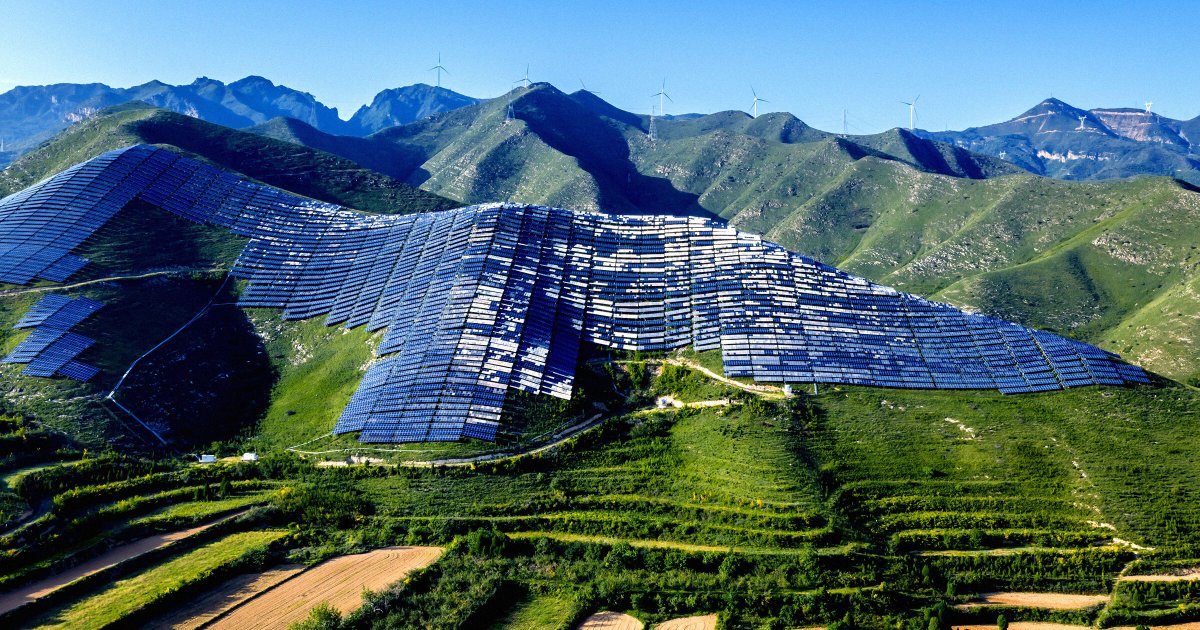
Global energy markets are experiencing a landmark shift in the economics of renewable generation as solar photovoltaic panel prices fall to mere cents per watt, according to reporting published on September 20, 2026, by journalist Joe Wilkins. The drastic drop in module costs follows an overwhelming supply of photovoltaic equipment entering international trade streams, creating a deep market saturation. This collapse in hardware expenses marks a crucial threshold for clean energy deployment, significantly lowering the upfront capital required to acquire solar technology while reshaping the financial dynamics for manufacturers, project developers, and electric power utilities worldwide.
Key facts
What happened
The rapid price decline reported by Joe Wilkins represents the convergence of aggressive manufacturing expansion and sudden inventory accumulation across global clean energy supply chains. Over recent years, industrial investments in silicon refining, wafer production, photovoltaic cell manufacturing, and module assembly reached historic highs. As these newly constructed facilities reached full operational scale, the volume of completed solar panels entering the market vastly outpaced immediate installation demand in several key regional sectors.
This structural imbalance between supply and demand led to widespread price discounting across wholesale distribution channels. Distributors and equipment manufacturers, facing swelling warehouse inventories and holding costs, lowered spot market prices to move volume. As reported by Joe Wilkins, module prices fell to just a few cents per watt, a pricing level previously considered improbable by industry analysts for standard commercial and utility-grade silicon panels.
The sudden availability of exceptionally cheap panels has created immediate operational shifts across the renewable energy sector. Engineering, procurement, and construction firms, alongside independent power producers, are recalibrating project budgets to reflect the diminished cost of generation hardware. At the same same time, equipment manufacturers are grappling with severe margin compression, with wholesale pricing approaching or falling below direct cash production costs for less efficient facilities.
Why it matters
The drop in solar hardware costs to single-digit cents per watt fundamentally alters the capital structure of renewable energy installations across utility, commercial, and residential sectors. Historically, the photovoltaic panel was the single most expensive component of a solar array, often dictating whether a project achieved financial viability. At current price levels, the module itself represents a minor fraction of the overall capital expenditure, transferring the primary cost burdens to balance-of-system components, land acquisition, electrical infrastructure, labor, and permitting.
This shift significantly reduces the levelized cost of electricity for new solar projects, enabling solar generation to compete even more aggressively against conventional fossil-fuel power sources such as natural gas and coal, even in regions without direct subsidies. Low hardware prices create opportunities for off-grid applications, agricultural solar integration, and green hydrogen production facilities that require large amounts of cheap daytime electricity.
However, the rapid decline in prices presents severe economic risks for panel manufacturers. When module prices drop to a few cents per watt, operating margins vanish, risking corporate bankruptcies, facility idling, and consolidation within the manufacturing industry. Furthermore, cheap panels alone cannot accelerate clean energy transition timelines if transmission grids lack the capacity to interconnect new arrays, or if energy storage systems are unavailable to manage solar power intermittent output during peak demand hours.
The background
The solar industry has operated under a continuous cost reduction trajectory for over five decades, often described by Swanson's Law. Named after Richard Swanson, founder of SunPower Corporation, this empirical observation notes that the price of photovoltaic modules tends to drop by approximately 20 percent for every doubling of cumulative global shipped capacity. In the 1970s, early solar modules cost upwards of $70 per watt, restricting their application primarily to space satellites and remote telecom installations.
By the early 2000s, technological refinements and initial subsidy programs in Western Europe brought module costs down to roughly $5 to $10 per watt. Over the subsequent decade, heavy industrial scaling—primarily centered in China—transformed solar panel production from a high-cost specialty industry into a mass-market commodity. By the mid-2010s, module prices had fallen below $0.50 per watt, and by the early 2020s, standard utility-scale panels routinely traded below $0.20 per watt.
Governments worldwide have sought to shape this industrial trajectory through legislative packages and trade policies. In 2022, the United States enacted the Inflation Reduction Act, which provided multi-billion-dollar tax incentives for domestic clean energy manufacturing, including solar ingots, wafers, cells, and modules. Concurrently, the European Union established the Net Zero Industry Act to bolster domestic renewable energy manufacturing capacity. Despite these policy interventions designed to localize supply chains, aggressive global production expansion created the massive supply surplus that pushed market prices to the single-digit cents per watt level documented in late 2026.
Reaction
The steep decline in panel prices has provoked divergent responses across the global energy landscape. Project developers, independent power producers, and clean energy advocacy organizations have welcomed the price collapse, viewing cheap modules as an opportunity to lower capital expenditure and accelerate global decarbonization targets. Commercial real estate operators and community solar developers report increased interest in converting underutilized rooftops and vacant land into power generation assets.
Conversely, module manufacturers and solar industry trade groups have expressed deep concern regarding long-term market sustainability. Industry associations in North America and Europe are evaluating the impact of cheap imported equipment on domestic factory buildouts, warning that sustained sub-cost pricing could threaten newly built manufacturing facilities. Financial analysts anticipate a wave of corporate restructurings, insolvencies, or reduced capital expenditure among solar equipment makers as companies struggle to maintain profitability in an oversupplied market.
Government regulatory bodies and trade officials are expected to come under renewed pressure from domestic producers to enforce or expand trade protection measures, including anti-dumping duties, countervailing tariffs, and strict country-of-origin regulations to insulate domestic supply chains from cheap global imports.
What we don't know yet
While reporting by Joe Wilkins establishes that panel costs have dropped to a few cents per watt, several critical operational and economic questions remain unanswered. First, it is unclear how long pricing will remain at these depressed levels before manufacturers curtail output or close inefficient production lines to restore market balance.
Second, the extent to which regional trade barriers will isolate specific domestic markets from global spot prices remains uncertain. Tariff structures in North America and Europe may prevent local buyers from accessing single-digit cent modules, creating sharp price disparities between domestic and international markets.
Finally, available data does not reveal how rapidly electrical grid operators can process queue backlogs to connect cheap solar power to high-voltage transmission networks. If interconnection delays and grid congestion persist, cheap solar modules may accumulate in regional storage facilities rather than generating active electricity on the grid.
What to watch
In the coming months, several key indicators will signal the trajectory of the solar market following this price collapse. Industry observers should monitor upcoming quarterly earnings reports and production guidance from major global photovoltaic panel manufacturers to see if output cuts are announced to stabilize prices.
Additionally, regulatory filings from energy regulatory commissions and trade departments—particularly in the United States and the European Union—will reveal whether emergency trade petitions or updated tariff schedules are introduced to protect domestic clean energy manufacturing investments.
Finally, market analysts should track regional balance-of-system cost trends and battery energy storage system installation rates. Because panel hardware is now exceptionally inexpensive, overall solar growth will increasingly depend on whether soft costs decrease and whether battery storage prices decline rapidly enough to complement low-cost solar generation.
This report is based on original reporting published by Joe Wilkins on September 20, 2026.
How this story was produced
This report was written by The Global Wire newsroom from reporting first published by Joe Wilkins. We verify the core facts against the original report, write our own account, and add the background and consequences a short wire item leaves out. Drafting is AI-assisted inside an editor-supervised pipeline, and every story is checked for accuracy of attribution, structure and duplication before it appears — full detail in our AI and funding disclosure.
Spotted an error? Tell us at corrections@horizonglobalnews.com and read our corrections policy or editorial standards.





Reader comments
Loading comments…