

China Prepares Supersonic Demonstrator Aircraft for Initial High-Speed Test Flights
China is set to conduct first high-speed flight tests of an experimental supersonic prototype, marking a key milestone in high-speed civil aviation research.
By The Global Wire Newsroom · Reported from Bojan Stojkovski
Link preview · horizonglobalnews.com
China Prepares Supersonic Demonstrator Aircraft for Initial High-Speed Test Flights
China is set to conduct first high-speed flight tests of an experimental supersonic prototype, marking a key milestone in high-speed civil aviation research.
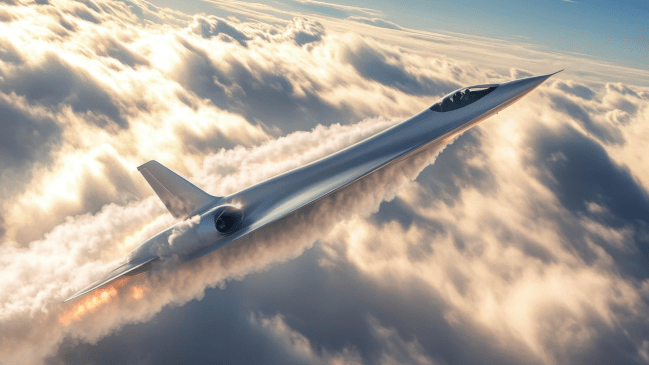
China has prepared an experimental supersonic aircraft demonstrator for its initial high-speed flight tests, marking a significant milestone in the country's efforts to develop next-generation aviation technology. According to reporting by journalist Bojan Stojkovski published on September 20, 2026, the prototype aircraft has reached a stage where full-scale flight evaluations can begin. While the project remains in an early technological phase, the upcoming test flights represent a crucial step toward validating aerodynamic designs, propulsion integration, and structural stability required for sustained flight beyond the speed of sound. Developers emphasize that extensive additional testing will be necessary before any commercial passenger applications or operational deployments become viable.
Key facts
What happened
The transition of the aircraft from ground-based testing and aerodynamic design modeling to active flight testing represents a pivotal milestone for China's high-speed aeronautics program. As reported by Bojan Stojkovski, the demonstrator aircraft is now prepared to begin its initial high-speed flight regime, where test pilots and system engineers will evaluate real-world performance against computational simulations and wind-tunnel data.
During these upcoming initial test flights, engineering teams will assess basic flight control mechanics, airframe structural integrity under intense aerodynamic stress, and propulsion stability as the aircraft accelerates toward and through trans-sonic speeds. Experimental flight demonstrators are essential tools in aerospace development, providing a physical platform to test specialized composite structures, advanced thermal barrier coatings, electronic flight systems, and integrated propulsion without committing the vast capital resources needed for a full-scale passenger airliner.
This initial evaluation phase prioritizes fundamental data gathering over cruise distance or cabin comfort. Flight parameters will focus on monitoring boundary-layer airflow, shockwave pattern generation, fuel burn efficiency, and structural vibration across varied altitudes and flight velocities. Results from these early sorties will determine whether the fundamental design architecture can be scaled up or refined for future multi-engine prototypes aimed at high-altitude, sustained supersonic transport.
Why it matters
Commercial supersonic flight has been largely absent from civil aviation since the retirement of the Anglo-French Concorde in 2003. Historical supersonic transport was constrained by high operating costs, low fuel efficiency, restricted flight corridors due to disruptive sonic booms, and environmental concerns regarding high-altitude emissions. China's advancement of a functional demonstrator to high-speed flight testing reflects a broader global resurgence of interest in high-speed civil aviation powered by modern aerospace engineering.
If supersonic technology can be successfully commercialized, it will significantly alter global transportation and economic integration by cutting flight durations on major international routes in half. A transatlantic or transpacific journey that currently requires 10 to 12 hours on conventional subsonic aircraft could theoretically be completed in five hours or less. Beyond civil transport, technological capabilities developed through high-speed flight programs—including heat-resistant composite alloys, advanced flight controls, and quiet airframe designs—have direct dual-use applications across defense manufacturing, advanced propulsion, and space launch systems.
For the international aerospace sector, China's active flight-testing program intensifies competition with Western firms and research institutions. Companies in the United States, such as Boom Supersonic, along with research agencies like NASA, are actively working on quiet supersonic designs and commercial prototypes. Progress by Chinese developers signals that Asia-Pacific state and commercial research entities are committed to securing a prominent position in defining the next era of global aviation infrastructure.
The background
The history of civil supersonic aviation is defined by remarkable engineering accomplishments paired with severe economic and environmental constraints. The Anglo-French Concorde and the Soviet Tupolev Tu-144, both developed during the Cold War era, demonstrated that passenger travel at speeds exceeding Mach 2—twice the speed of sound, or approximately 1,350 miles per hour (2,170 kilometers per hour) at cruising altitude—was technically feasible.
However, Concorde suffered from high fuel consumption per passenger-mile, limited passenger capacity, exceptionally high ticket prices, and severe regulatory flight bans over populated landmasses imposed by international authorities, including the United States Federal Aviation Administration (FAA). The ban on overland supersonic flight, enacted to protect communities from explosive sonic booms, severely limited Concorde's operational routes primarily to transatlantic flights between Western Europe and North America.
Following Concorde's retirement in October 2003—spurred by soaring maintenance costs, low passenger demand following a fatal 2000 crash, and broader air travel downturns—commercial aviation shifted its primary focus toward fuel efficiency, operational economics, and reduced carbon footprints. This led to the widespread adoption of high-efficiency twin-engine subsonic jets like the Boeing 777, Boeing 787 Dreamliner, and Airbus A350.
In recent years, dramatic advances in high-performance supercomputing, carbon-fiber composite materials, additive manufacturing, and high-bypass jet engine technology have renewed interest in supersonic transport. Computational fluid dynamics now enables engineers to shape aircraft fuselages and swept-wing geometries to lessen shockwave coalescing, potentially reducing sonic booms to a low thud and enabling future overland flight certification.
China's aerospace sector has expanded rapidly over the past two decades, supported by national initiatives aimed at advancing high-tech manufacturing and aerospace capabilities. Major state-backed institutions, such as the Aviation Industry Corporation of China (AVIC) and the Chinese Academy of Sciences (CAS), alongside private aerospace ventures like Space Transportation (Lingkong Tianxing), have invested heavily in high-speed aeronautics. These initiatives span both supersonic flight and hypersonic research (speeds exceeding Mach 5), positioning Chinese aerospace engineering as a core participant in next-generation atmospheric flight.
Reaction
While specific public reactions from foreign governments and aviation bodies were not detailed in the reporting by Bojan Stojkovski, the advancement of China's supersonic demonstrator to flight testing will be followed closely by international civil aviation authorities, aerospace manufacturers, and defense analysts.
International regulatory bodies, including the International Civil Aviation Organization (ICAO), are currently working to update global noise and emissions standards specifically designed for modern supersonic aircraft. Regulatory agencies in North America and Europe will evaluate acoustic and environmental data from emerging supersonic platforms, as compliance with international environmental standards will determine whether Chinese supersonic platforms will eventually be granted flight permits and landing rights at international airports.
Industry analysts and commercial aerospace leaders in Western nations view China's flight-testing progress as confirmation that high-speed commercial flight is transitioning from theoretical design to practical testing. This milestone is expected to influence strategic planning and investment decisions among Western aerospace developers seeking to maintain technological parity in high-speed civil aviation.
What we don't know yet
Despite the significance of the flight test announcement, several key operational and technical details remain unconfirmed in the reporting by Bojan Stojkovski.
First, the specific physical and performance parameters of the demonstrator—including its exact airframe dimensions, maximum takeoff weight, targeted maximum Mach speed, operational ceiling, and range—have not been detailed. It is currently unknown whether the prototype utilizes a custom propulsion design, an adapted existing jet engine, or an experimental hybrid engine configuration.
Second, the precise schedule, venue, and flight profile for the test campaign remain unspecified. High-speed flight testing requires dedicated, restricted airspace equipped with specialized tracking radar and ground telemetry stations, typically situated in remote inland or coastal regions.
Third, the organizational structure backing the demonstrator—specifically whether it is led by a state defense contractor, an academic research institute, or a private commercial startup—is not explicitly stated. Furthermore, the timeline required to progress from an early demonstrator platform to a fully certified commercial aircraft remains undetermined, as civil certification for novel supersonic airframes historically demands years of rigorous safety and reliability testing.
What to watch
The primary indicator to watch in the coming months will be official performance reporting and telemetry data following the demonstrator's initial high-speed flight attempt. Confirmation of whether the aircraft successfully achieves supersonic velocity (Mach 1 or greater) while maintaining dynamic stability will mark a major technical milestone.
Subsequent test phases will offer critical insights into the platform's advanced capabilities, particularly regarding thermal management under sustained atmospheric friction, engine air-intake stability during speed transitions, and structural durability across repeated flight cycles. Observers will also track any technical data released regarding the aircraft's noise profile, as sonic boom mitigation remains the fundamental requirement for future commercial overland operations.
On the regulatory and commercial fronts, monitor official policy updates from the International Civil Aviation Organization (ICAO) regarding supersonic noise limits, as well as any announcements from Chinese aerospace institutions regarding scaled-up prototypes or commercial partnership roadmaps aimed at passenger transport.
This report is based on original reporting published by technology journalist Bojan Stojkovski on September 20, 2026.
How this story was produced
This report was written by The Global Wire newsroom from reporting first published by Bojan Stojkovski. We verify the core facts against the original report, write our own account, and add the background and consequences a short wire item leaves out. Drafting is AI-assisted inside an editor-supervised pipeline, and every story is checked for accuracy of attribution, structure and duplication before it appears — full detail in our AI and funding disclosure.
Spotted an error? Tell us at corrections@horizonglobalnews.com and read our corrections policy or editorial standards.





Reader comments
Loading comments…