

US Combines Quantum Machine Learning and Processing to Catalyze Rare Earth Discovery
A new American initiative pairs quantum computational algorithms with hydrometallurgy to identify novel molecules for separating critical minerals.
By The Global Wire Newsroom · Reported from Atharva Gosavi
Link preview · horizonglobalnews.com
US Combines Quantum Machine Learning and Processing to Catalyze Rare Earth Discovery
A new American initiative pairs quantum computational algorithms with hydrometallurgy to identify novel molecules for separating critical minerals.
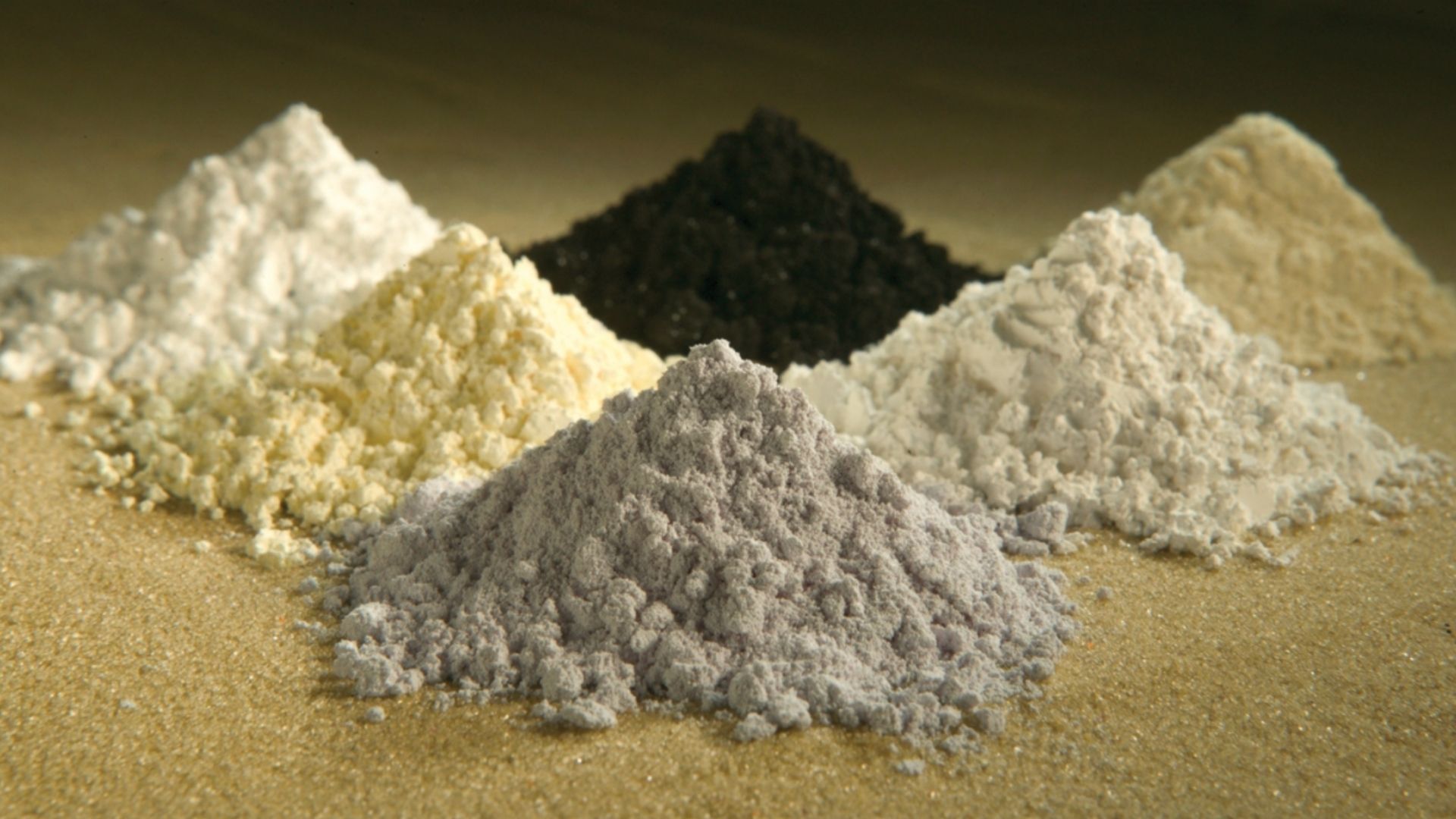
The United States has launched a research initiative combining quantum machine learning with industrial mineral processing to discover specialized molecules capable of separating rare earth elements more efficiently, according to reporting published by Atharva Gosavi on September 19, 2026. The technical initiative aims to address a fundamental bottleneck in critical mineral supply chains, where separating individual, chemically near-identical rare earth metals requires complex, multi-stage industrial operations. By applying quantum computational algorithms to molecular chemistry, the project seeks to model and design extractant molecules that can isolate target elements with higher selectivity, potentially reducing the energy, cost, and environmental footprint of midstream processing.
Key facts
What happened
According to reporting by Atharva Gosavi, the United States project targets the intersection of quantum software architecture and industrial hydrometallurgy. Researchers are utilizing quantum machine learning frameworks to simulate how specific chemical structures interact with rare earth ions at an atomic level. The primary goal is to accelerate the identification of novel organic ligands—molecules that bind selectively to specific metal ions in an aqueous solution—thereby enabling cleaner and faster separation of individual rare earth elements from raw concentrate.
Traditional chemical discovery relies heavily on trial-and-error laboratory synthesis or classical computer simulations. However, simulating rare earth atoms on classical computers presents severe computational hurdles because of the complex, strongly correlated electron structures in their inner valence shells. The new project applies quantum machine learning algorithms to model these electronic interactions more accurately, evaluating millions of candidate molecular configurations in digital simulations before selecting the most promising candidates for physical laboratory testing and mineral processing integration.
By integrating these quantum computational tools directly into mineral-processing workflows, the initiative attempts to bridge the gap between theoretical molecular chemistry and bench-scale extractive metallurgy. The computational models evaluate binding energies, spatial geometry, and solubility characteristics to ensure that discovered molecules are not merely theoretically selective, but also robust enough for practical industrial hydrometallurgical operations.
Why it matters
Rare earth elements—a group of 17 metallic elements including neodymium, dysprosium, terbium, europium, and praseodymium—are essential components in high-performance permanent magnets, defense guidance systems, wind turbine generators, electric vehicle motors, and advanced electronics. While rare earths are relatively abundant in the Earth's crust, finding them in economically viable concentrations and, more importantly, separating them from one another poses an extraordinary chemical challenge.
Because all lanthanide elements share nearly identical ionic radii and oxidation states—a chemical phenomenon known as lanthanide contraction—their chemical behaviors are almost indistinguishable in standard industrial reactions. Currently, separating heavy rare earths from light rare earths requires liquid-liquid solvent extraction circuits that cycle chemical solutions through hundreds of mixer-settler tanks. This legacy process consumes massive volumes of concentrated acids, organic solvents, and water, generating substantial chemical waste and requiring enormous capital expenditures for refinery construction.
If quantum machine learning can successfully identify ligands with significantly higher separation factors between adjacent lanthanides, the number of extraction stages required to achieve high purity (such as 99.99 percent) could be dramatically reduced. A reduction in processing stages directly translates to lower operational costs, smaller physical facility footprints, reduced toxic waste generation, and lower capital requirements for establishing domestic refining plants. Furthermore, establishing advanced processing techniques provides a technological route to bypassing traditional, highly polluting separation methods, potentially shifting the economic landscape of critical mineral manufacturing in favor of nations that hold advanced quantum and computational capabilities.
The background
To contextualize this development, the global rare earth supply chain is historically divided into three primary stages: mining, chemical separation (refining), and downstream manufacturing (such as magnet alloy production). For several decades, global refining capacity has been heavily concentrated in China, which controls an estimated 85 to 90 percent of global rare earth separation infrastructure and over 90 percent of rare earth magnet production. While mining operations have expanded in other regions—such as the Mountain Pass mine in California and the Mount Weld operation in Western Australia—unrefined concentrates from many international mines have historically been shipped overseas for chemical separation due to a lack of local midstream infrastructure.
In recent years, the U.S. government has designated critical minerals as vital to national security and economic stability. Initiatives led by the U.S. Department of Energy, including the Critical Materials Innovation Hub hosted at Ames National Laboratory, alongside funding from the Department of Defense under Title III of the Defense Production Act, have poured hundreds of millions of dollars into domestic processing technology. Research avenues have included biological extraction using specialized proteins, ionic liquid solvents, membrane separation, and advanced thermodynamic modeling.
Concurrently, quantum computing has transitioned from purely theoretical physics toward practical domain applications, particularly in computational chemistry and materials science. Classical supercomputers struggle with quantum chemistry calculations because the computational resources required scale exponentially with the number of electrons in a molecular system. Rare earths, situated in the lanthanide series of the periodic table, possess partially filled 4f electron shells. The complex electronic correlations and relativistic effects present in these f-orbitals make rare earth complexes among the most difficult chemical systems to model accurately on classical hardware. Quantum machine learning algorithms, running on hybrid quantum-classical hardware, are designed to natively represent these electronic states, offering a path toward predictive molecular engineering that was previously intractable.
Reaction
The integration of quantum computing into critical mineral engineering represents a notable shift toward high-tech interventions in industrial supply chains. Industry analysts and materials scientists have long noted that midstream chemical processing, rather than raw mining capacity, constitutes the primary vulnerability in Western critical mineral supply chains. The application of advanced computational chemistry is viewed by market observers as a necessary step to overcome the decades-long head start held by legacy refining facilities.
Quantum software developers and computational chemists have highlighted materials discovery as one of the most commercially promising early applications for noisy intermediate-scale quantum (NISQ) systems and hybrid algorithms. Rather than waiting for fully fault-tolerant quantum computers, hybrid quantum-classical approaches can assist machine learning models in identifying spatial features and binding characteristics that standard algorithms miss.
Environmental researchers and policy experts are expected to closely monitor whether the project yields extractants that reduce hazardous chemical usage. Standard hydrometallurgical processing generates substantial quantities of acidic wastewater and radioactive tailings (often associated with naturally occurring thorium and uranium in rare earth ores). Any technological advance that streamlines processing steps or enables closed-loop chemical recycling is viewed favorably by regulatory bodies tasked with approving new domestic processing plants.
What we don't know yet
While the scope of the project combines quantum machine learning with mineral processing, several specific operational details remain unverified in the available reporting:
What to watch
Moving forward, several key indicators will reveal the progress and practical impact of this quantum-assisted critical mineral project:
This report is based on original reporting published by Atharva Gosavi on September 19, 2026.
How this story was produced
This report was written by The Global Wire newsroom from reporting first published by Atharva Gosavi. We verify the core facts against the original report, write our own account, and add the background and consequences a short wire item leaves out. Drafting is AI-assisted inside an editor-supervised pipeline, and every story is checked for accuracy of attribution, structure and duplication before it appears — full detail in our AI and funding disclosure.
Spotted an error? Tell us at corrections@horizonglobalnews.com and read our corrections policy or editorial standards.




Reader comments
Loading comments…