

SwRI Introduces Index to Benchmark Sodium-Ion Battery Cell Substitution
The Electrical Interchangeability Index developed by Southwest Research Institute provides an empirical framework to determine when sodium-ion cells can replace lithium-ion batteries.
By The Global Wire Newsroom · Reported from Rupendra Brahambhatt
Link preview · horizonglobalnews.com
SwRI Introduces Index to Benchmark Sodium-Ion Battery Cell Substitution
The Electrical Interchangeability Index developed by Southwest Research Institute provides an empirical framework to determine when sodium-ion cells can replace lithium-ion batteries.
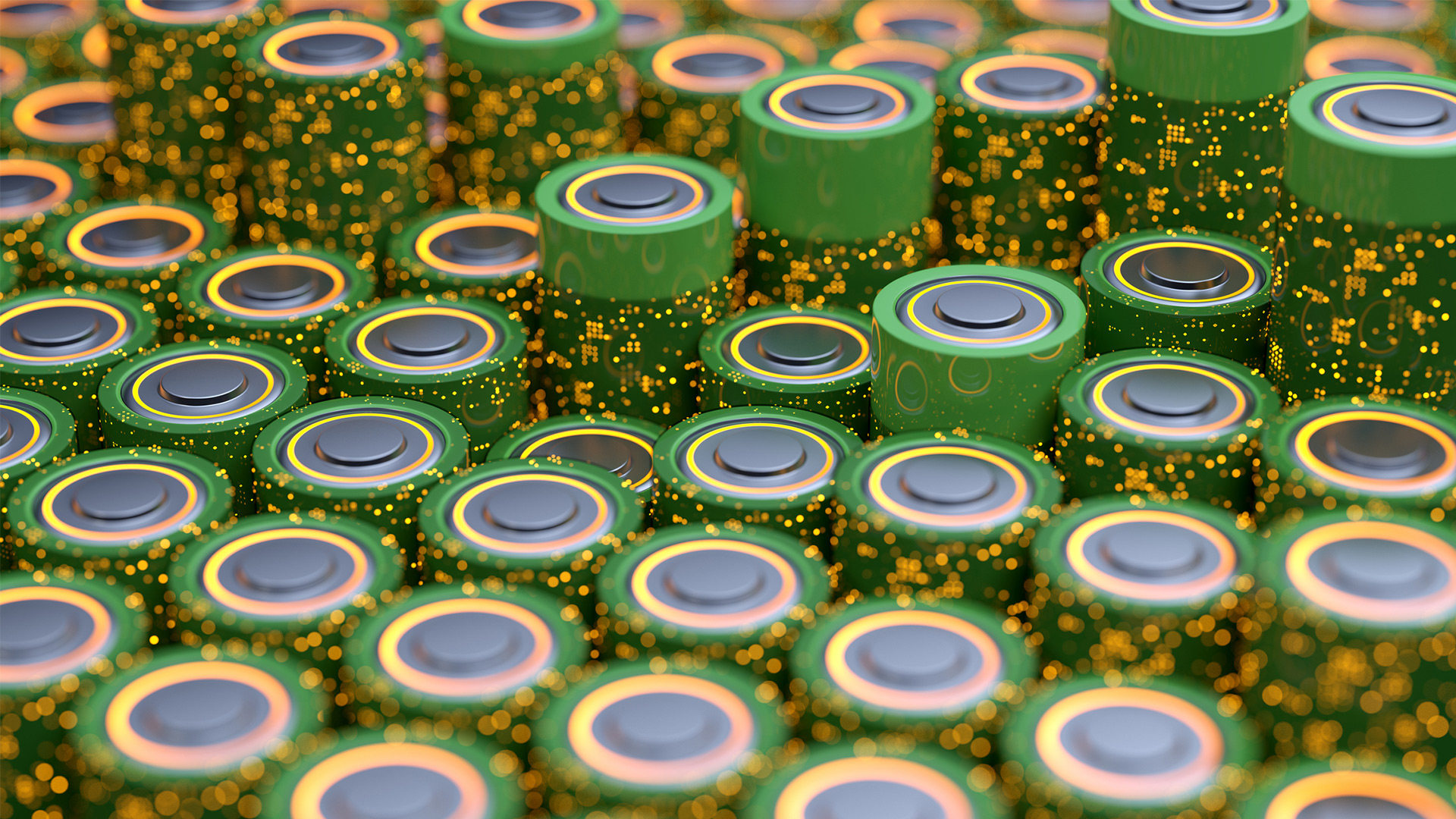
San Antonio-based research organization Southwest Research Institute has introduced an analytical framework known as the Electrical Interchangeability Index to determine whether sodium-ion battery cells can effectively replace standard lithium-ion chemistry across specific device workloads. Reported on September 20, 2026, by technology reporter Rupendra Brahambhatt, the diagnostic system evaluates dynamic load demands, thermal behavior, and electrical compatibility to identify precise operational thresholds for cell substitution. As product designers across stationary energy storage, consumer hardware, and light transport seek lower-cost alternatives to geographically concentrated lithium supply chains, the tool aims to replace broad chemical assumptions with quantitative, application-specific compatibility data.
Key facts
What happened
The Southwest Research Institute (SwRI) established the Electrical Interchangeability Index to address a persistent engineering challenge in energy storage design: evaluating whether alternative cell chemistries can meet the real-world operational profiles of devices designed around traditional lithium-ion batteries. According to reporting by Rupendra Brahambhatt, the tool generates empirical interchangeability ratings based on specific device duty cycles and power requirements.
Engineers seeking to transition a product line from lithium-ion to sodium-ion chemistry often encounter complex trade-offs that go beyond simple capacity figures. While basic cell specifications provide nominal voltage and milliamp-hour ratings, they rarely capture how a cell behaves under sustained high-current discharge, rapid charge cycles, or fluctuating thermal loads. The index created by SwRI integrates dynamic electrical characterization to model how a sodium-ion cell handles the exact current draw patterns, peak power bursts, and voltage drops of a target application.
By applying the index, product manufacturers in sectors ranging from stationary power units to small electronics can determine whether a sodium-ion cell candidate can operate safely and reliably within an existing system architecture. Brahambhatt reported that the framework enables developers to identify the precise conditions under which sodium-ion technology provides equivalent performance, as well as scenarios where system redesign or continued reliance on lithium-ion chemistry remains necessary.
Why it matters
The introduction of a standardized evaluation index addresses a major bottleneck in the global transition toward diversified battery chemistries. Over the past two decades, lithium-ion technology—particularly nickel-manganese-cobalt and lithium iron phosphate formulations—has dominated portable electronics, electric vehicles, and grid storage due to its high gravimetric energy density, typically ranging between 150 and 260 watt-hours per kilogram. However, reliance on lithium-ion cells exposes manufacturers to supply chain risks, volatile commodity pricing for raw materials like lithium carbonate and cobalt, and geopolitical concentration in refining capacity.
Sodium-ion chemistry offers a compelling alternative because sodium is vastly more abundant and geographically dispersed, largely derived from soda ash or common salt deposits. Raw material costs for sodium-ion cells are substantially lower, and the cells do not depend on scarce nickel or cobalt. However, sodium-ion technology historically delivers lower energy density, generally between 100 and 160 watt-hours per kilogram, and exhibits different discharge voltage profiles.
Without granular diagnostic tools like the Electrical Interchangeability Index, hardware engineers often face high financial and technical risks when evaluating cell swaps. Oversizing a sodium-ion battery pack to match lithium-ion energy delivery can add unacceptable weight and physical volume, while underestimating dynamic load demands can cause premature voltage cut-offs or overheating. By establishing clear electrical substitution thresholds, the index allows energy storage developers to deploy sodium-ion cells where they are most cost-effective—such as in stationary grid storage, micro-mobility, and industrial backup systems—while reserving premium lithium supplies for applications demanding maximum energy density per unit mass.
The background
Southwest Research Institute, founded in 1947 and headquartered in San Antonio, Texas, operates as one of the largest independent, non-profit applied science and engineering organizations in North America. The institute performs contract research and testing for government agencies, automotive original equipment manufacturers, energy companies, and industrial equipment makers, maintaining extensive facilities dedicated to battery safety testing, power electronics evaluation, and materials science.
Research into sodium-ion battery chemistry began in tandem with early lithium-ion development during the 1970s and 1980s. However, commercial research shifted predominantly toward lithium due to fundamental atomic characteristics. Sodium ions have an atomic radius of approximately 0.98 angstroms, compared to 0.76 angstroms for lithium ions. This larger physical footprint created initial engineering hurdles, as larger sodium ions caused mechanical strain and structural degradation within electrode host matrices during repeated insertion and extraction cycles.
In recent years, breakthroughs in electrode materials—specifically hard carbon anodes and Prussian blue or layered transition metal oxide cathodes—have dramatically improved the cycle life and power capability of sodium-ion cells. Commercialization has accelerated, with major global battery manufacturers constructing gigawatt-hour scale production lines primarily targeted at stationary energy storage and low-speed electric vehicles.
Beyond raw material cost benefits, sodium-ion batteries display distinct operational characteristics. They maintain superior capacity retention at sub-zero temperatures, often retaining a high proportion of rated energy down to -20 degrees Celsius. Additionally, sodium-ion cells can be fully discharged to 0 volts for safe transport and long-term storage without suffering the catastrophic copper dissolution and permanent capacity loss that occurs when lithium-ion cells are deep-discharged below recommended voltage floors. The SwRI index builds on this foundation of evolving chemistry research by providing system-level integration metrics.
Reaction
Following the release of the SwRI findings as reported by Rupendra Brahambhatt, industry integration specialists and power electronics engineers are expected to evaluate how the Electrical Interchangeability Index fits into existing product qualification workflows. Battery cell selection typically requires months of proprietary internal testing, dynamic cycling, and safety validation by original equipment manufacturers. An objective, standardized evaluation index from an independent research entity like SwRI provides third-party validation that can streamline hardware engineering decisions.
Grid energy storage developers and renewable power project managers are particularly attentive to tools that facilitate chemistry transitions. As power utilities seek to deploy gigawatt-hours of stationary backup capacity to stabilize solar and wind generation, shifting from lithium iron phosphate to lower-cost sodium-ion cells could yield substantial capital expenditure savings. Sector analysts anticipate that energy storage system integrators will look to reference SwRI index scores when negotiating cell procurement contracts with emerging sodium-ion suppliers.
What we don't know yet
Several technical and practical aspects regarding the implementation of SwRI’s Electrical Interchangeability Index remain unconfirmed in the initial reporting. It is not yet specified whether SwRI intends to make the index methodology and underlying algorithms open-source, license the diagnostic software commercially to hardware developers, or offer index scoring strictly as a proprietary contract testing service.
Additionally, the available reporting does not detail how the index factors in long-term degradation mechanisms across thousands of charge-discharge cycles, or how extreme operational ambient temperatures affect the calculated interchangeability score. It also remains to be seen whether international standards organizations, such as IEEE or SAE International, will consider adopting the SwRI index as a formal industry standard for cell substitution testing.
What to watch
In the coming months, industry observers should monitor technical publications and conference proceedings from Southwest Research Institute for detailed empirical datasets behind the Electrical Interchangeability Index. Formal technical presentations at major power source forums and battery trade conferences will provide deeper insight into the index's mathematical structure and validation testing.
Another key benchmark will be announcements from original equipment manufacturers in stationary energy storage, light electric vehicles, and power tools regarding cell substitution decisions explicitly guided by the index. Furthermore, tracking price divergence between lithium iron phosphate and sodium-ion cells as commercial sodium-ion production expands through 2026 and 2027 will clarify the financial incentives driving manufacturers to utilize interchangeability metrics.
Reporting in this article is based on original news coverage by Rupendra Brahambhatt published on September 20, 2026.
How this story was produced
This report was written by The Global Wire newsroom from reporting first published by Rupendra Brahambhatt. We verify the core facts against the original report, write our own account, and add the background and consequences a short wire item leaves out. Drafting is AI-assisted inside an editor-supervised pipeline, and every story is checked for accuracy of attribution, structure and duplication before it appears — full detail in our AI and funding disclosure.
Spotted an error? Tell us at corrections@horizonglobalnews.com and read our corrections policy or editorial standards.


Reader comments
Loading comments…