

Genome-Wide Mutation Experiment Exposes Major AI Predictive Limits in Viral Biology
Leading artificial intelligence models failed to accurately predict how single-letter DNA mutations across an entire viral genome impact biological function, exposing key limits in genomic AI.
By The Global Wire Newsroom · Reported from Callaway; Ewen
Link preview · horizonglobalnews.com
Genome-Wide Mutation Experiment Exposes Major AI Predictive Limits in Viral Biology
Leading artificial intelligence models failed to accurately predict how single-letter DNA mutations across an entire viral genome impact biological function, exposing key limits in genomic AI.
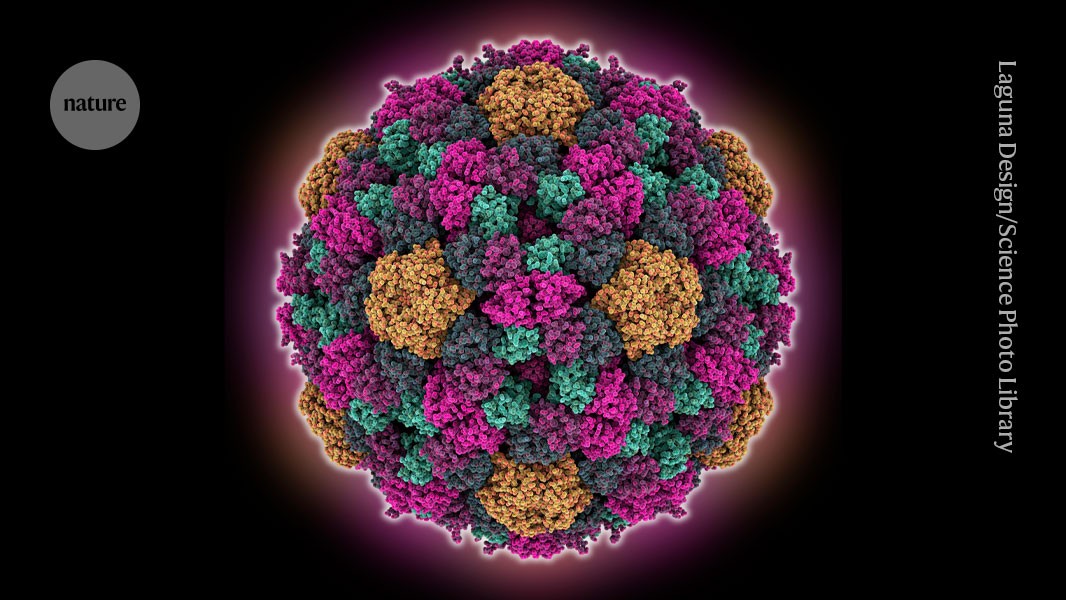
In a rigorous examination of modern computational biology, researchers completed an exhaustive laboratory experiment in which every individual nucleotide letter of a viral genome was systematically mutated to observe the resulting biological effects. The initiative set out to benchmark the capabilities of state-of-the-art artificial intelligence models against empirical real-world data. According to reporting published by Ewen Callaway on Sept. 1, 2026, the investigation revealed that top AI genomic platforms failed to accurately predict how these comprehensive, single-letter DNA modifications affected the virus’s functional biology. The finding highlights profound limitations in current machine learning architectures, showing that despite recent advances in automated sequence analysis, predictive software remains unable to reliably map how systematic genetic mutations translate into biological viability.
Key facts
What happened
To test the boundaries of both genetic engineering and computational prediction, scientists conducted a systematic mutational scan across the entire nucleotide sequence of a virus. In genomic science, standard deep mutational scanning has historically focused on isolated genes or specific protein-coding regions. In this trial, however, researchers scaled the methodology to cover every position across the virus's entire genome. At each genetic location, the existing nucleotide base—adenine, cytosine, guanine, or thymine—was systematically swapped for every alternative option, generating a massive library of mutant variants representing every single-nucleotide substitution possible within the organism's complete genetic blueprint.
Once these altered viral variants were generated in the laboratory, researchers evaluated their functional properties, measuring parameters such as viral replication rates, cellular infectivity, and overall biological fitness. This created an exhaustive, empirical ground-truth dataset detailing exactly which single-letter changes were benign, which altered functional traits, and which proved lethal to the virus.
Concurrently, researchers evaluated leading artificial intelligence models built for genomic prediction. These algorithms, often trained on vast repositories of evolutionary sequences using deep learning and transformer-based architectures, were tasked with predicting the biological impact of each specific mutation without prior access to the new experimental measurements. When the computational predictions were compared against the physical laboratory outcomes, the AI models demonstrated widespread inaccuracy, failing to reliably distinguish between harmful, neutral, or beneficial mutations across the viral genome.
Why it matters
The failure of advanced AI platforms to accurately map whole-genome mutational impacts carries immediate consequences for biotechnology, synthetic biology, and therapeutic development. Over the past several years, biological language models have been increasingly integrated into pipeline workflows aimed at designing novel synthetic proteins, engineering viral vectors for gene therapy, developing mRNA vaccines, and predicting how natural pathogens might mutate to escape immunity.
The empirical evidence that current models fall short when evaluating complete viral genomes indicates that computational predictions cannot yet substitute for labor-intensive laboratory validation. Relying blindly on machine learning tools to forecast viral evolution or design functional synthetic constructs creates significant operational risks, as models may miscalculate which genetic variants remain viable or infectious. For biosecurity specialists and public health officials, the findings signal that AI systems cannot currently be trusted to autonomously assess the threat level of emerging viral variants based solely on sequence data.
Furthermore, the results highlight a fundamental gap in computational biology: sequence pattern recognition is not equivalent to functional biological understanding. While biological language models excel at recognizing evolutionary conservation—noting which sequences have been preserved throughout history—they struggle to calculate the physical dynamics of genetic variation within condensed, multi-functional viral genomes where overlapping reading frames and regulatory elements create intricate layers of biological dependency.
The background
Artificial intelligence models applied to genomics have expanded rapidly over the past decade, heavily influenced by natural language processing technologies. Large genomic language models operate by treating DNA, RNA, or protein sequences as text, learning the statistical probabilities of nucleotide or amino acid sequences across billions of biological data points. Platforms such as DeepMind’s AlphaFold transformed structural biology by predicting three-dimensional protein structures from linear amino acid sequences, inspiring broader efforts to build models capable of predicting full organismal phenotypes directly from raw genomic sequence data.
Historically, experimental validation of genetic mutations relied on deep mutational scanning, a technique introduced in the 2010s to analyze how thousands of variants of a single protein perform under selective pressure. While deep mutational scanning yielded high-resolution maps for individual proteins, applying the technique across an entire genome presented formidable technical hurdles. Viral genomes, despite being significantly smaller than bacterial or eukaryotic genomes, present unique structural complexities. They frequently pack multiple functions into highly compressed sequences, using overlapping genes, secondary RNA structures, and dual-purpose regulatory sequences where a single nucleotide change can simultaneously alter multiple biological pathways.
Despite the proliferation of AI models trained on vast genomic databases, validating their predictive accuracy has been hindered by a lack of complete, unbiased datasets. Most existing databases suffer from ascertainment bias, recording primarily mutations that have survived evolutionary selection or those studied in specific disease contexts. By generating an exhaustive laboratory map of every single-letter change across a full viral genome, researchers created a rare, unbiased control dataset against which computational algorithms could be objectively tested.
Reaction
The findings have provoked widespread discussion among computational biologists, bioengineers, and artificial intelligence researchers. Many experts in the field of machine learning for biology have acknowledged that the study exposes persistent blind spots in how neural networks process complex biological code. While sequence-based models have achieved impressive benchmarks in identifying evolutionary conservation, researchers note that predicting zero-shot functional outcomes from novel or complex mutation combinations remains an unsolved challenge.
In scientific discussions following the report, researchers emphasized that the study should serve as a recalibration for expectations surrounding AI in life sciences. Synthetic biologists have noted that the results demonstrate why physical laboratory testing remains indispensable in genomic engineering workflows. Meanwhile, machine learning developers have pointed to the findings as a mandate to restructure training methodologies, arguing that future models must incorporate physical principles, structural biology constraints, and direct functional data rather than relying exclusively on sequence-based pattern matching.
What we don't know yet
Several critical questions remain open regarding the exact scope of the AI failures and the path forward for computational biology. The initial report did not fully itemize every specific AI model architecture evaluated in the benchmark, leaving questions about whether certain neural network designs—such as long-context transformers versus convolutional or state-space models—performed significantly better or worse than others when evaluating whole-genome variations.
Additionally, it remains unclear how these predictive limitations scale to larger, more complex organisms. Viral genomes are exceptionally dense and tight, which may amplify the cascading effects of single-letter mutations compared to larger bacterial or human genomes containing extensive non-coding sequences. Researchers have yet to establish whether providing models with multi-modal inputs—such as combining sequence data with three-dimensional structural models and RNA secondary structure predictions—can bridge the performance gap observed in this single-letter whole-genome benchmark.
What to watch
In the coming months, several key milestones will clarify how the scientific community responds to these computational limitations. Researchers will be monitoring the public release of the full mutational dataset, which is expected to become a primary benchmark for training and evaluating next-generation genomic AI models worldwide.
Observers should also watch for updates from major AI research institutions and biotechnology firms as they refine their algorithmic architectures. A key indicator of progress will be whether updated models can demonstrate improved performance on secondary validation datasets without overfitting to the new viral benchmark. Furthermore, regulatory bodies and public health agencies, such as the U.S. Food and Drug Administration and international biosecurity panels, are likely to review these findings as they establish standards for auditing AI tools used in synthetic biology, drug discovery, and viral risk assessment.
Reporting for this article is based on news coverage published by Ewen Callaway on Sept. 1, 2026.
How this story was produced
This report was written by The Global Wire newsroom from reporting first published by Callaway; Ewen. We verify the core facts against the original report, write our own account, and add the background and consequences a short wire item leaves out. Drafting is AI-assisted inside an editor-supervised pipeline, and every story is checked for accuracy of attribution, structure and duplication before it appears — full detail in our AI and funding disclosure.
Spotted an error? Tell us at corrections@horizonglobalnews.com and read our corrections policy or editorial standards.


Reader comments
Loading comments…