

China Adapts Type 19 Chassis for Mobile Laser Defense to Counter Drone Threats
Beijing is developing a mobile directed-energy weapon on its Type 19 platform to protect maneuver units against drone swarms, with key applications in potential regional conflicts.
By The Global Wire Newsroom · Reported from Bojan Stojkovski
Link preview · horizonglobalnews.com
China Adapts Type 19 Chassis for Mobile Laser Defense to Counter Drone Threats
Beijing is developing a mobile directed-energy weapon on its Type 19 platform to protect maneuver units against drone swarms, with key applications in potential regional conflicts.
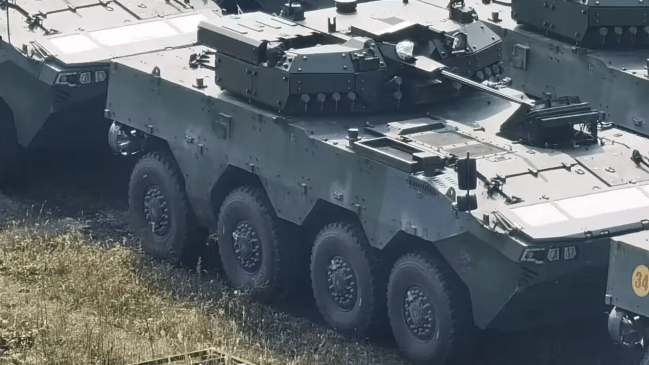
Beijing has adapted its Type 19 vehicle platform into a potential mobile laser defense system intended to neutralize uncrewed aerial vehicles, according to reporting published on September 13, 2026, by technology journalist Bojan Stojkovski. The tactical modification reflects ongoing efforts by the People’s Liberation Army (PLA) to integrate high-energy directed-energy systems into mobile ground fleets. Defense analysts view the vehicle adaptation as a practical countermeasure tailored for high-intensity modern battlefields, including a potential conflict across the Taiwan Strait where low-cost aerial drones and loitering weapons are expected to play a central operational role.
Key facts
What happened
According to reporting published by Bojan Stojkovski on September 13, 2026, China has developed a potential mobile laser defense platform utilizing the chassis of its Type 19 vehicle series. The modification pairs a tactical ground chassis with a directed-energy weapon module designed to detect, track, and destroy incoming uncrewed aerial systems (UAS).
By mounting a directed-energy unit onto a Type 19 chassis, Chinese defense developers have sought to provide frontline ground forces with organic air defense capabilities. Traditional ground-based air defenses often rely on heavy stationary trailers or static emplacements that cannot readily keep pace with fast-moving mechanized infantry or armored columns. The Type 19 adaptation addresses this maneuver constraint by providing a self-propelled platform capable of operating directly alongside combat units.
The primary target set for the laser system consists of small-to-medium uncrewed aerial vehicles, reconnaissance drones, and loitering munitions. Rather than relying on kinetic interceptors such as anti-aircraft artillery shells or surface-to-air missiles, the vehicle-mounted laser neutralizes threats by directing focused electromagnetic energy onto target surfaces. This energy structurally damages flight controls, burns through composite airframes, or disables onboard optical sensors within seconds.
Stojkovski's reporting emphasizes that this mobile laser capability carries strategic implications for potential military scenarios surrounding Taiwan. In prospective amphibious landing or cross-strait military campaigns, defense experts anticipate that defender and attacker forces alike would deploy vast numbers of low-cost surveillance and attack drones. Integrating mobile directed-energy systems onto tactical vehicles provides a specialized defense mechanism intended to preserve force mobility and shield assets against massed drone attacks.
Why it matters
The conversion of a Type 19 platform into a mobile laser defense system represents a direct response to a fundamental shift in land warfare: the severe economic asymmetry between cheap offensive drones and expensive traditional air defense missiles.
Recent conflicts have demonstrated that commercial off-the-shelf drones costing a few hundred dollars, alongside military loitering munitions priced at thousands of dollars, can successfully disable multi-million-dollar main battle tanks, radar installations, and command posts. Conventional short-range air defense (SHORAD) systems rely on interceptor missiles that often cost between $100,000 and $1,000,000 per unit. Relying exclusively on missile interceptors against massed drone swarms creates rapid magazine depletion and severe financial strain.
An operational mobile laser system alters this economic equation. Powered by internal vehicle engines or auxiliary electrical generators, a high-energy laser offers virtually unlimited magazine capacity limited only by fuel supplies and thermal cooling cycles. The cost per engagement drops from hundreds of thousands of dollars to the cost of the fuel consumed to generate the electrical charge.
In the strategic context of the Indo-Pacific region, particularly around the Taiwan Strait, this capability is especially significant. Taiwan’s defense strategy heavily emphasizes asymmetric warfare, relying on large inventories of uncrewed aerial systems, coastal defense missiles, and distributed sensor networks to deter or disrupt potential amphibious operations. If the People's Liberation Army fields operational mobile laser platforms like the modified Type 19 alongside landing forces, it could offset a key element of Taiwan's asymmetric defense doctrine by mitigating the impact of counter-attacking drone swarms.
The background
To understand the emergence of China’s laser-equipped Type 19 platform, it is necessary to examine both China's military modernization programs and the global race among major powers to field operational directed-energy weapons.
Over recent decades, the People’s Liberation Army has engaged in a structural transformation aimed at building a modern, mechanized, and information-centric military force. Central to ground force modernization has been the development of standardized armored vehicle families. Platforms such as the Type 19 form part of a modular vehicle design philosophy that allows a common chassis to be configured for multiple operational roles, including infantry fighting vehicles, command platforms, reconnaissance assets, and specialized air defense units. Standardizing automotive components reduces logistical overhead, simplifies maintenance, and speeds up unit movement.
Parallel to vehicle development, China has pursued extensive research and development in directed-energy warfare. Chinese defense state enterprise entities, including the China North Industries Group Corporation (NORINCO) and the China Aerospace Science and Industry Corporation (CASIC), have routinely exhibited static and trailer-mounted laser weapons at international defense expositions, such as the biennial China International Aviation & Aerospace Exhibition held in Zhuhai. Earlier systems like the Silent Hunter demonstrated China's ability to produce fiber-optic laser systems capable of melting drone airframes at ranges exceeding one kilometer. However, transitioning these technologies from static test sites or heavy trailer mounts to agile armored fighting vehicles has posed engineering challenges related to power generation, beam stabilization on uneven terrain, and compact thermal management.
China is not alone in seeking mobile directed-energy solutions. The United States Army has actively tested its Directed Energy Maneuver-Short Range Air Defense (DE M-SHORAD) program, mounting a 50-kilowatt class laser onto eight-wheeled Stryker armored combat vehicles to protect brigade combat teams. Similarly, Israel has developed the Iron Beam ground-based high-energy laser system to complement its Iron Dome missile batteries, while the United Kingdom Ministry of Defence has conducted field trials for its DragonFire laser system.
The global push for operational laser weapons reflects a consensus among defense planners that conventional kinetic air defenses alone cannot scale to meet the volume of aerial threats characterizing 21st-century battlefields. The strategic focus on the Taiwan Strait has accelerated this drive for PLA planners, who recognize that any large-scale joint island landing operation would take place under dense aerial surveillance and loitering munition threat environments.
Reaction
Following the report by Bojan Stojkovski, defense analysts and military observers noted that adapting the Type 19 platform for directed-energy warfare represents a logical step in China's evolving anti-access and short-range air defense doctrine.
Neither the Ministry of National Defense of the People's Republic of China nor Taiwan's Ministry of National Defense issued official public statements immediately following the news report. Similarly, Western defense departments have not released formal public evaluations specifically addressing this Type 19 modification.
However, international security experts and defense intelligence organizations are expected to closely analyze the development. Western defense planners monitoring the Indo-Pacific—including officials at U.S. Indo-Pacific Command (INDOPACOM) in Hawaii and defense ministries across allied nations like Japan and Australia—routinely evaluate Chinese air defense innovations to adjust tactical assessments. Defense analysts in Taipei are expected to assess the platform's potential impact on Taiwan's uncrewed defense inventory, evaluating whether local drone tactics or operational flight profiles will require modification to counter vehicle-mounted directed-energy weapons.
What we don't know yet
While preliminary reporting outlines the core concept of the laser-equipped Type 19 vehicle, several vital technical and operational details remain unverified:
What to watch
Several key indicators will clarify the operational trajectory and technical readiness of China's mobile laser air defense platform:
This report is based on original reporting published by technology journalist Bojan Stojkovski on September 13, 2026.
How this story was produced
This report was written by The Global Wire newsroom from reporting first published by Bojan Stojkovski. We verify the core facts against the original report, write our own account, and add the background and consequences a short wire item leaves out. Drafting is AI-assisted inside an editor-supervised pipeline, and every story is checked for accuracy of attribution, structure and duplication before it appears — full detail in our AI and funding disclosure.
Spotted an error? Tell us at corrections@horizonglobalnews.com and read our corrections policy or editorial standards.
Reader comments
Loading comments…