

Fauci's Invocation of Fifth Amendment Triggers Congressional Legal Battle
Lawmakers prepare to test the former public health official's constitutional privilege assertion amid potential contempt proceedings.
By The Global Wire Newsroom · Reported from ABC News
Link preview · horizonglobalnews.com
Fauci's Invocation of Fifth Amendment Triggers Congressional Legal Battle
Lawmakers prepare to test the former public health official's constitutional privilege assertion amid potential contempt proceedings.
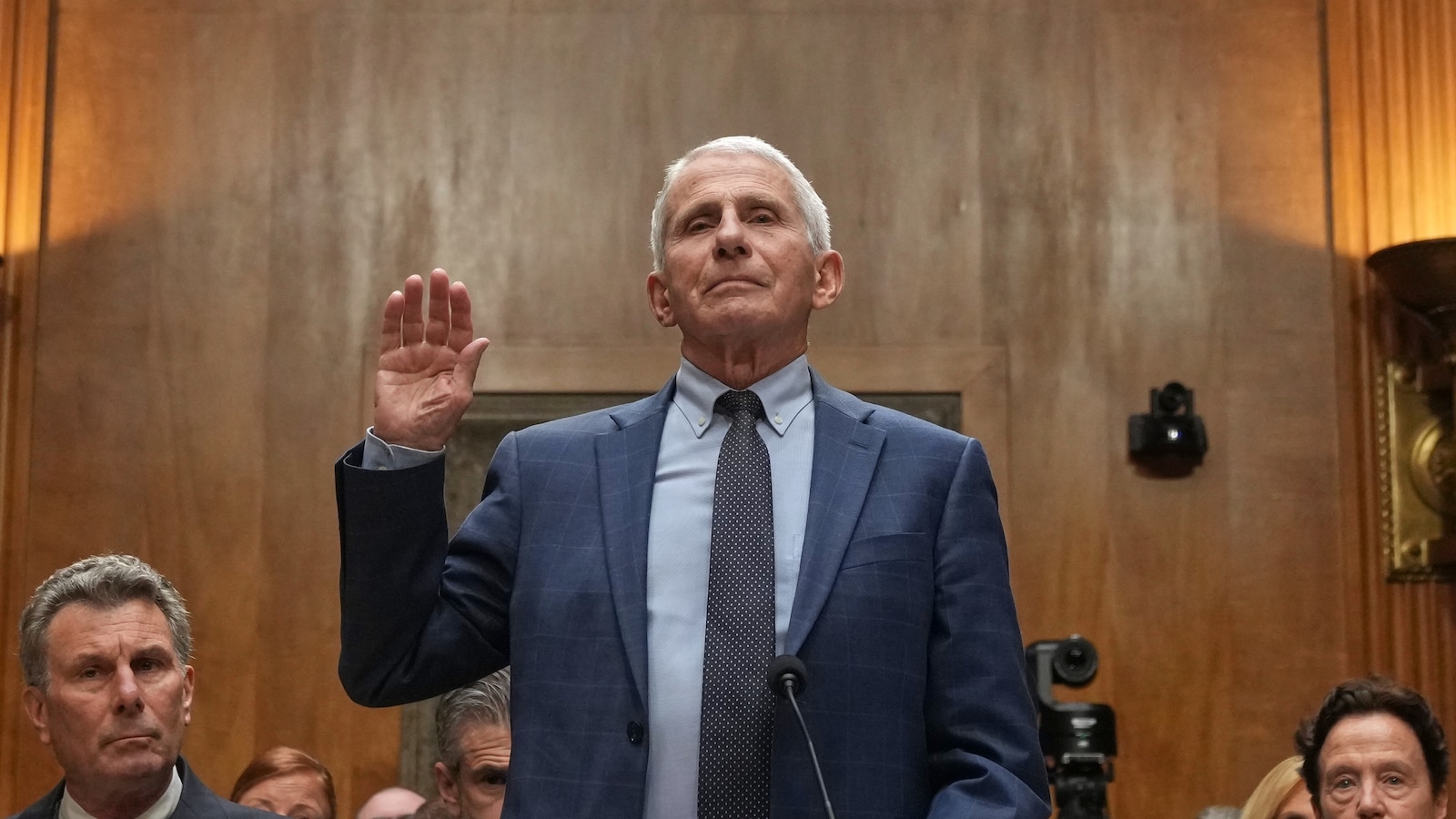
A constitutional debate over the scope of congressional oversight and individual rights has reached a critical juncture following former federal public health official Dr. Anthony Fauci’s decision to invoke the Fifth Amendment before a congressional committee. The move, which shields individuals from compulsory self-incrimination, is set to undergo formal legal scrutiny this week as lawmakers weigh options that include a potential vote to hold him in contempt of Congress, according to reporting by ABC News.
The development marks an escalation in ongoing legislative inquiries into federal policy and public health decision-making. By asserting his rights under the U.S. Constitution, Fauci has set in motion a sequence of statutory and constitutional processes that will test the limits of legislative panel authority against individual constitutional protections.
Constitutional Protections Before Legislative Committees
The Fifth Amendment to the United States Constitution guarantees that no person shall be compelled in any criminal case to be a witness against themselves. While the privilege is most commonly associated with judicial proceedings and criminal courtrooms, federal courts have long recognized that the protection extends to legislative inquiries conducted by Congress.
Under established constitutional law, a witness appearing before a congressional committee may refuse to answer questions if they reasonably believe their truthful answers could be used against them in a subsequent criminal prosecution or lead to evidence that might be used in such a manner. The assertion of the Fifth Amendment in a legislative setting does not constitute an admission of guilt, nor can it legally be treated as such in a judicial proceeding.
However, the assertion of the privilege during congressional oversight hearings frequently generates legal friction. Congressional committees possess broad authority under Article I of the Constitution to conduct investigations and compel testimony in pursuit of legislative objectives. When a witness chooses to remain silent, committees are faced with determining whether the privilege has been validly asserted or whether the refusal to answer constitutes an unlawful impediment to legislative duty.
Framework of Congressional Contempt
When a witness refuses to answer questions posed by a congressional committee, lawmakers have specific procedural mechanisms available to enforce compliance or penalize non-cooperation. The primary statutory mechanism is the contempt of Congress citation, governed by federal law under Title 2 of the United States Code.
As reported by ABC News, lawmakers are evaluating whether to proceed with a contempt vote regarding Fauci’s reliance on the Fifth Amendment. For a contempt citation to move forward, the process typically begins at the committee level. Members of the panel must vote on a resolution recommending that the full House of Representatives or Senate hold the witness in contempt.
If the committee approves the resolution, it proceeds to the full chamber for a floor vote. Should the full body vote to approve the contempt citation, the presiding officer certifies the report to the appropriate United States Attorney. Under federal statute, it is the duty of the U.S. Attorney to bring the matter before a federal grand jury for potential criminal prosecution under 2 U.S.C. § 192, which classifies criminal contempt of Congress as a misdemeanor offense punishable by fines and imprisonment.
Alternatively, Congress may seek civil enforcement by filing a lawsuit in federal district court to obtain a judicial order directing the witness to comply with the committee's questions or subpoenas. In such civil cases, federal judges evaluate whether the constitutional privilege was validly invoked under the specific circumstances presented.
Background in Federal Public Health Service
Fauci served for decades in senior roles within the federal government's public health infrastructure. Most notably, he served as the director of the National Institute of Allergy and Infectious Diseases (NIAID) from 1984 until his retirement at the end of 2022, advising seven U.S. presidents across multiple administrations.
During his tenure, Fauci oversaw federal research responses to numerous global health crises, including the HIV/AIDS epidemic, Ebola, Zika, and avian influenza. In 2020, he became one of the primary public faces of the federal government’s response to the COVID-19 pandemic, serving as a key member of the White House Coronavirus Task Force and later as Chief Medical Advisor to the President.
In the years following the onset of the pandemic, federal public health agencies and their leadership became the subject of intense oversight by congressional committees. Lawmakers focused inquiries on a broad spectrum of issues, including the origins of SARS-CoV-2, federal funding for medical research, public health guidance, and institutional decision-making during the crisis. These inquiries have frequently resulted in requests for extensive document production and lengthy closed-door and open-hearing testimony from current and former officials.
Precedent and Legal Friction
The tension between congressional subpoena power and the Fifth Amendment privilege has recurred throughout American history. High-profile witnesses from both the private sector and executive branch agencies have periodically invoked the Fifth Amendment when called to testify before legislative panels.
Legal scholars note that while Congress holds expansive investigatory powers necessary to inform legislation and perform constitutional oversight, those powers remain subordinate to individual rights guaranteed by the Bill of Rights. When a witness validly invokes the Fifth Amendment, Congress cannot compel testimony unless it grants the witness statutory immunity under federal law, effectively prohibiting prosecutors from using the testimony or information derived from it in a future criminal case.
Deciding whether to grant immunity requires coordination between congressional leaders and the Department of Justice, as immunity grants can complicate potential law enforcement investigations. Without a grant of immunity, a witness's assertion of the Fifth Amendment generally shields them from being forced to speak, provided the assertion rests on a reasonable apprehension of potential criminal liability.
Next Steps in Legislative Proceedings
The upcoming actions by committee members will clarify the path Congress intends to take regarding Fauci’s assertion of his constitutional rights. Lawmakers must decide whether to formally challenge the legal sufficiency of the privilege invocation, draft a contempt resolution, or pursue alternative avenues to obtain information related to their inquiry.
According to reporting by ABC News, the decision regarding the Fifth Amendment invocation and the potential contempt vote will be put to the test this week, setting up a key constitutional test case for legislative oversight powers.
This article relies on original reporting from ABC News.
How this story was produced
This report was written by The Global Wire newsroom from reporting first published by ABC News. We verify the core facts against the original report, write our own account, and add the background and consequences a short wire item leaves out. Drafting is AI-assisted inside an editor-supervised pipeline, and every story is checked for accuracy of attribution, structure and duplication before it appears — full detail in our AI and funding disclosure.
Spotted an error? Tell us at corrections@horizonglobalnews.com and read our corrections policy or editorial standards.


Reader comments
Loading comments…