

Fairphone Expands Modular Audio Push as Regulatory Pressure Mounts on Electronic Waste
A design overhaul of Fairphone's repairable earbud lineup underscores an ongoing push to extend the lifespan of personal audio hardware.
By The Global Wire Newsroom · Reported from Abhimanyu Ghoshal
Link preview · horizonglobalnews.com
Fairphone Expands Modular Audio Push as Regulatory Pressure Mounts on Electronic Waste
A design overhaul of Fairphone's repairable earbud lineup underscores an ongoing push to extend the lifespan of personal audio hardware.
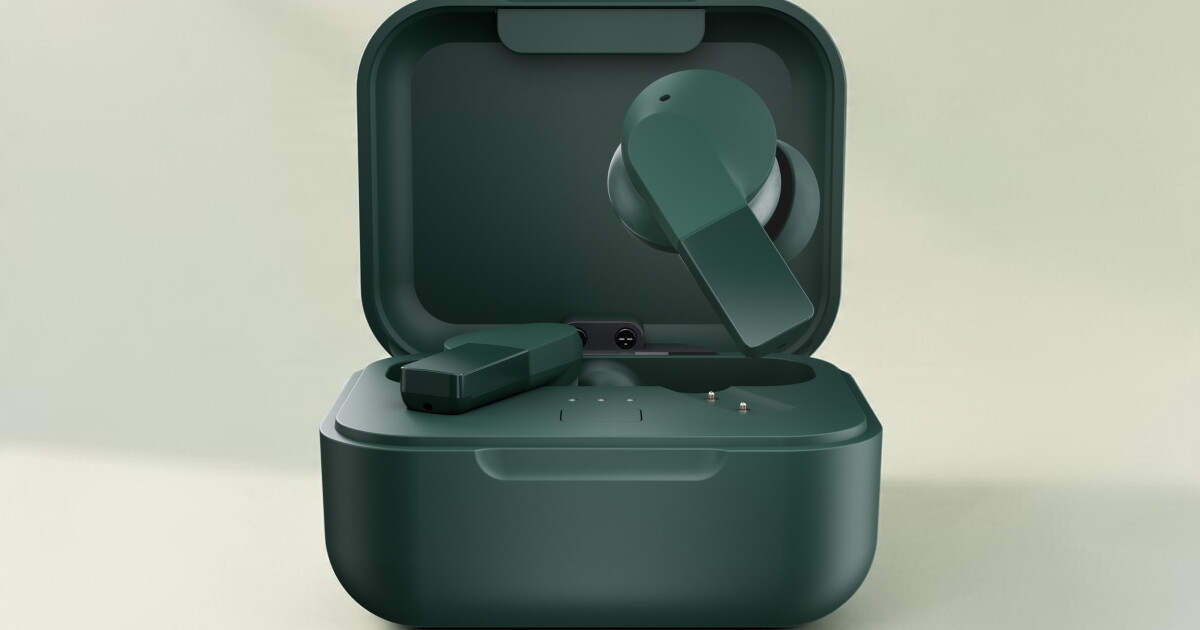
Dutch social enterprise Fairphone has introduced an updated generation of its modular wireless earbuds, marking an effort to combine mainstream consumer audio design with user-serviceable components in a category notorious for short product lifespans. The redesign, highlighted in coverage published by technology writer Abhimanyu Ghoshal, focuses on aesthetic and functional refinements intended to make sustainable personal audio more appealing to everyday buyers. The hardware initiative arrives against a broader international shift in consumer electronics policy, as European regulators advance binding right-to-repair mandates and waste monitors document record volumes of discarded lithium-ion accessories.
Key facts
What happened
According to reporting by Abhimanyu Ghoshal, Fairphone has overhauled its repairable wireless earbud hardware, introducing comprehensive design and hardware improvements across the product concept. The initiative represents an aesthetic and structural upgrade—described in the report as an all-around glow-up—aimed at bridging the gap between environmentally conscious modular construction and the sleek expectations of the contemporary consumer electronics market.
True wireless audio has historically prioritized miniature form factors, water resistance, and acoustic sealing over accessibility. To achieve compact designs, mainstream manufacturers routinely weld, seal, and glue exterior shells, encapsulating small coin-cell lithium-ion batteries and delicate circuit boards. When a battery inevitably degrades or a single speaker driver fails, the complete earbud assembly is typically rendered unusable and discarded.
Fairphone's hardware philosophy approaches the product category from an alternative engineering standpoint, prioritizing mechanical fasteners and modular assemblies that allow individual components to be detached and replaced. Ghoshal's reporting notes that consumers frequently replace electronic devices prematurely simply because a single isolated part has malfunctioned, directly swelling global e-waste streams. The upgraded hardware aims to counter that cycle by presenting an updated form factor that eliminates the physical compromises historically associated with repairable audio equipment, offering an experience designed to compete directly with non-repairable market alternatives.
Why it matters
The true wireless stereo market represents one of the fastest-growing segments of personal technology, with global shipments regularly exceeding 250 million to 300 million units per year. Because these devices rely on sealed micro-batteries that undergo daily charge cycles, their functional life rarely exceeds 24 to 36 months. As battery capacity drops, millions of otherwise operational Bluetooth receivers, microphones, and digital signal processors are consigned to municipal waste systems, creating severe environmental and supply chain burdens.
Miniaturized electronics pose unique ecological challenges at their end of life. The United Nations Institute for Training and Research documented in its Global E-waste Monitor that the world generated 62 million metric tonnes of electronic waste in 2022, with small consumer IT and telecommunications accessories forming a rapidly accelerating portion of uncollected refuse. These small accessories contain precious and critical raw materials—including cobalt, neodymium, copper, and gold—that require energy-intensive mining and refining processes. When glued together, such devices cannot be economically disassembled by municipal recycling facilities, resulting in the thermal destruction or landfilling of critical resources.
For consumers, the economic implications are equally pronounced. The standard commercial model across the audio sector forces customers to repurchase entire listening systems at full retail prices whenever a non-serviceable cell loses its ability to hold a charge. By establishing an architecture where users can purchase isolated replacement cells, acoustic drivers, or charging cases, modular manufacturers introduce a cost-effective ownership model that decouples product longevity from chemical battery degradation. If competitive hardware brands are compelled to match these repair options, the total cost of ownership for consumer audio could fall significantly across the broader market.
The background
Founded in 2013 in Amsterdam, Fairphone originated as an advocacy campaign raising awareness about conflict minerals in consumer electronics before transitioning into a registered social enterprise and hardware manufacturer. Over the subsequent decade, the company released successive iterations of its modular smartphone, demonstrating that multi-part, screw-assembled consumer devices could achieve commercial viability, IP-rated moisture protection, and long-term operating system support.
Fairphone expanded beyond mobile phones into the personal audio sector in 2021 with the debut of its first wireless earbuds, followed later by over-ear modular headphones and subsequent true wireless iterations. The central technical hurdle in small-format audio engineering has always been the physical penalty of modularity: incorporating threaded rings, modular contacts, and user-accessible seals typically increases the physical volume and mass of each earbud compared to glued, ultrasonic-welded competitors manufactured by industry leaders such as Apple, Samsung, and Sony.
In parallel with Fairphone's hardware experiments, regulatory bodies have increasingly scrutinized planned obsolescence and unrepairable industrial designs. The European Parliament and the Council of the European Union adopted Directive 2024/1799 in early 2024, creating common rules promoting the repair of consumer goods. This directive operates alongside Regulation 2023/1542, the EU Battery Regulation, which stipulates that portable batteries incorporated into consumer appliances must be removable and replaceable by the end user by 2027, unless specific design exemptions apply.
While personal audio accessories have often sought exemptions from early drafts of battery legislation on grounds of water ingress prevention and user safety, ongoing engineering developments have demonstrated that modularity and splash protection are not mutually exclusive. Independent repair advocacy networks, such as the Right to Repair Europe coalition and iFixit, have repeatedly awarded modular hardware top repairability scores, holding up user-serviceable designs as practical proof that the audio hardware market can operate without disposable product cycles.
Reaction
Reaction to modular hardware revisions within the technology landscape typically divides between environmental policy advocates and mainstream market analysts. Environmental groups and circular-economy researchers routinely praise Fairphone's incremental hardware revisions, pointing to third-party life-cycle assessments indicating that extending a gadget's operational life by two years can lower its overall carbon footprint by roughly 30 percent.
Hardware reviewers and industry analysts have historically maintained a more reserved stance, highlighting trade-offs in active noise cancellation performance, bulkier chassis dimensions, and premium pricing structures. In coverage addressing the updated design, Abhimanyu Ghoshal focused on the behavioral aspect of gadget ownership, warning against the consumer impulse to welcome hardware failures as an excuse to purchase upgraded models. Ghoshal observed that discarded devices often require only minor component fixes, urging users to resist disposable consumption habits.
Mainstream original equipment manufacturers have not publicly commented on Fairphone's updated hardware, though larger industry players have faced sustained shareholder and regulatory inquiries regarding their own hardware serviceability. Representatives of major consumer technology brands have historically argued before standard-setting bodies that high-density adhesive construction is necessary to maximize battery runtime, preserve acoustic performance, and achieve robust ingress ratings against water and sweat.
What we don't know yet
While reporting indicates a comprehensive redesign of the repairable earbud hardware, several concrete technical and commercial parameters remain unverified in the initial disclosure. The reporting does not provide specific retail pricing figures, exact availability schedules, regional distribution boundaries, or the precise acoustic specifications of the updated components.
Crucially, it remains unclear whether the internal repair mechanisms have altered the specific process for swapping individual components. It is not yet documented whether the new design utilizes user-replaceable coin-cell batteries within each earbud tip via simple threaded compartments, or whether servicing requires proprietary disassembly tools supplied directly by the manufacturer. Furthermore, details concerning backwards compatibility—whether updated earbud units will function inside legacy charging cases, or whether individual drivers can be retrofitted into earlier hardware housings—have not been detailed. These operational specifics will determine whether the updated product functions as a truly circular platform or merely an improved standalone hardware generation.
What to watch
Key developments over the coming months will reveal the broader commercial and technical impact of the redesigned hardware. Observers should track independent repair evaluations from organizations such as iFixit, which routinely disassemble new hardware releases to verify how easily consumers can extract and replace internal batteries without damaging surrounding acoustic chambers.
Attention will also turn to the supply chain availability and pricing of individual spare parts on Fairphone's official web store. The viability of modular electronics depends directly on whether replacement cells, silicone tips, and single-ear replacement units remain in stock at accessible price points over multi-year periods.
Beyond the manufacturer itself, attention will focus on Brussels and national capitals across the European Union as enforcement timelines for the EU Battery Regulation and ecodesign mandates approach between 2026 and 2027. Whether standard consumer electronics giants adjust their industrial designs to allow battery extraction, or whether they petition regulators for permanent carve-outs for miniature wearable devices, will largely depend on whether modular products demonstrate that user-repairable wireless audio can succeed in the open consumer marketplace.
This report draws on reporting originally published by technology journalist Abhimanyu Ghoshal.
How this story was produced
This report was written by The Global Wire newsroom from reporting first published by Abhimanyu Ghoshal. We verify the core facts against the original report, write our own account, and add the background and consequences a short wire item leaves out. Drafting is AI-assisted inside an editor-supervised pipeline, and every story is checked for accuracy of attribution, structure and duplication before it appears — full detail in our AI and funding disclosure.
Spotted an error? Tell us at corrections@horizonglobalnews.com and read our corrections policy or editorial standards.




Reader comments
Loading comments…