

European Nations Split Over Economic Viability of Solar Car Parks
The adoption of solar-powered car parks is expanding across Europe, though varying national policies and setup costs have led to uneven investment across the continent.
By The Global Wire Newsroom · Reported from Liam Gilliver
Link preview · horizonglobalnews.com
European Nations Split Over Economic Viability of Solar Car Parks
The adoption of solar-powered car parks is expanding across Europe, though varying national policies and setup costs have led to uneven investment across the continent.
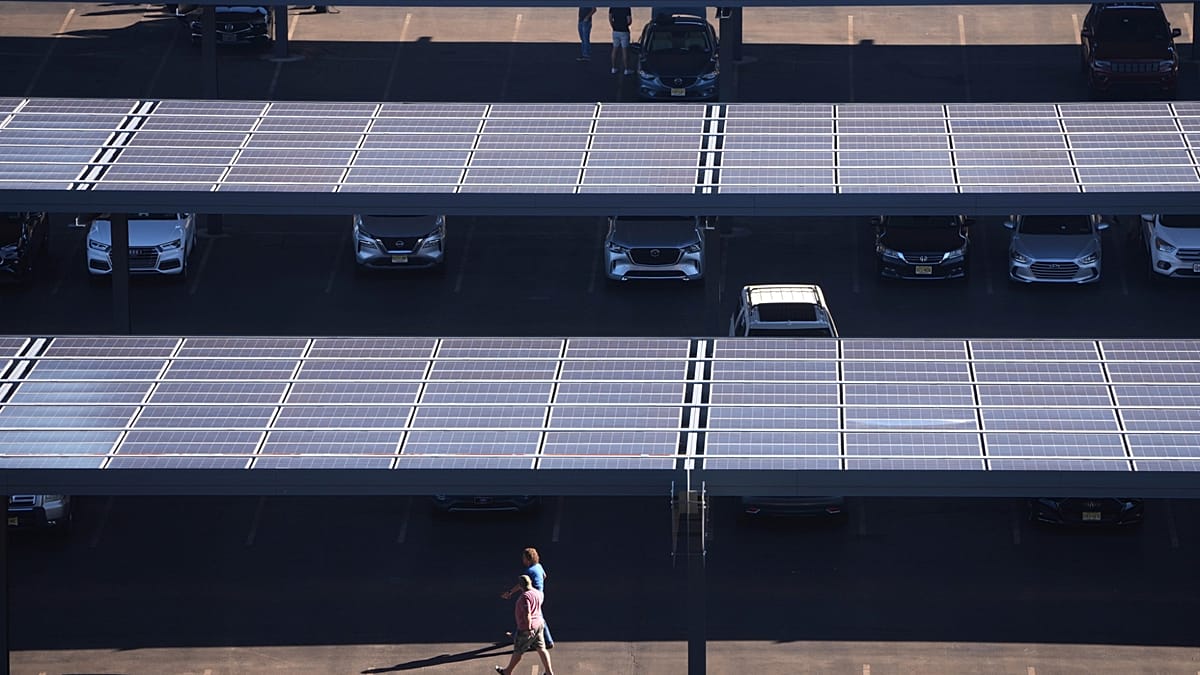
Across Europe, the deployment of solar car parks—sheltered parking spaces topped with photovoltaic panels—is expanding, though national governments and commercial developers remain divided on their overall value proposition. While some markets have embraced these structures as an efficient way to generate clean energy without consuming greenfield land, others maintain a more cautious stance, questioning whether the financial returns justify the substantial upfront capital required, according to reporting by Liam Gilliver.
The divergence highlights a broader debate within the European energy sector regarding how best to allocate capital to achieve ambitious climate and decarbonization goals. As the continent seeks to increase its renewable generation capacity, parking lot solar canopies have emerged as an alternative to traditional utility-scale solar farms and residential rooftop installations. However, varying policy environments, local subsidy frameworks, and differing assessments of investment risk have led to a patchwork of adoption across European states.
The expansion of solar car parks across Europe
Solar car parks, also known as solar carports, combine parking infrastructure with renewable energy generation. By mounting elevated frameworks carrying photovoltaic panels above paved parking spaces, these installations turn asphalt surfaces into decentralized power generation sites. The generated electricity can be consumed on-site by adjacent commercial buildings, fed into the local distribution grid, or used directly to power electric vehicle charging points.
In several European territories, developers and municipal authorities have increasingly turned to these dual-use facilities. Commercial sites such as shopping centers, industrial parks, airports, and public transit hubs present expansive, unshaded surface areas that are well-suited for photovoltaic installations. According to reporting by Liam Gilliver, the proliferation of these sites reflects a growing effort across the continent to find innovative locations for clean energy hardware in regions where available land is tightly constrained.
Divergent national approaches and policy incentives
Despite the rising visibility of solar canopies, European countries are treating the technology with marked differences in regulatory and financial backing. Certain jurisdictions have introduced legislative mandates and tailored subsidy programs to incentivize property owners to install solar canopies over large parking areas. These policies aim to accelerate solar deployment without competing with agriculture or natural habitats for land usage.
Conversely, other nations have refrained from offering targeted support, viewing solar car parks as a less cost-effective pathway toward national renewable targets. In these markets, policymakers and energy planners often prioritize large-scale ground-mounted solar arrays or standard rooftop installations, which typically offer lower construction costs per megawatt of capacity. As reported by Liam Gilliver, this strategic divide has resulted in rapid development in some European nations while neighboring countries see limited movement.
Structural costs and economic feasibility
The primary factor influencing national hesitation is the significantly higher installation cost associated with solar car parks compared to conventional solar configurations. Ground-mounted solar farms require basic racking systems anchored directly into the soil, while rooftop installations utilize existing building structures. In contrast, solar carports require robust, elevated steel or concrete framing capable of withstanding weather elements and vehicle collisions while maintaining safe clearances for traffic.
These elevated structural requirements drive up initial capital expenditure. Additionally, project developers must account for specialized civil engineering, complex electrical cabling over larger open distances, and potential retrofitting of existing paved surfaces. For private property owners and institutional investors, the prolonged payback period created by these elevated upfront costs can make solar car parks less financially attractive unless offset by public subsidies, favorable feed-in tariffs, or high localized retail electricity prices.
Spatial constraints and land-use dynamics
Where solar car parks gain the strongest traction is in regions facing severe spatial constraints and strict land-use regulations. In densely populated urban and suburban areas across Europe, obtaining permits for ground-mounted solar arrays can be difficult due to zoning restrictions, environmental conservation laws, and opposition from local communities concerned about the loss of agricultural land or visual impacts.
Solar canopies circumvent many of these planning hurdles by utilizing already developed, non-permeable land. By repurposing surface parking lots, municipalities and commercial property managers can augment regional power generation without expanding their physical footprint. Furthermore, the structures offer secondary practical benefits to site owners and drivers, including vehicle shading during high summer temperatures and shelter from precipitation, which can increase commercial property appeal.
Integration with electric vehicle infrastructure
The growth of solar car parks is also closely linked to the rapid electrification of Europe’s transportation sector. As electric vehicle adoption increases across the continent, commercial and public parking facilities face growing demand for high-capacity charging infrastructure. Solar canopies provide a localized source of power that can directly feed charging stations, reducing the need to draw electricity from the regional transmission grid during peak hours.
Integrating solar generation directly with electric vehicle chargers can lower operational costs for charge point operators and reduce grid integration hurdles. When paired with stationary battery storage systems, solar car parks can capture excess daytime solar generation and dispense it to vehicles during evening periods. This synergy makes the technology particularly appealing for commercial fleets, logistics hubs, and corporate offices seeking to lower electricity bills while supporting corporate sustainability commitments.
Wider energy targets and grid challenges
The debate surrounding solar car parks comes at a critical juncture for European energy policy. The European Union has established legally binding targets to expand the share of renewable energy in its overall power mix, driving rapid growth in solar and wind generation. At the same time, national electricity grids across the continent are struggling to accommodate the surge in variable, decentralized power output.
Grid congestion has become a significant bottleneck for utility-scale solar projects, with developers facing extended wait times to connect new ground-mounted arrays to high-voltage transmission lines. Solar car parks, because they are often embedded within existing distribution networks and tied to local loads, can alleviate some of these grid constraints by balancing local generation with immediate site consumption.
Future outlook for solar canopy deployment
As European nations continue to refine their long-term energy strategies, the market for solar car parks will likely depend on technological advancements, shifting material costs, and regulatory evolution. Reductions in the cost of structural steel and mounting hardware, combined with improvements in photovoltaic panel efficiency, could improve the underlying economics of carport installations in the coming years.
Whether solar car parks become a standardized feature of European commercial real estate or remain limited to specific regulatory regimes will depend on how national governments balance setup costs against the benefits of land preservation. While some countries continue to regard the higher capital requirements as a barrier, others view the multi-functional infrastructure as an essential component of a resilient, decentralized power network.
This article was developed using reporting originally published by Liam Gilliver.
How this story was produced
This report was written by The Global Wire newsroom from reporting first published by Liam Gilliver. We verify the core facts against the original report, write our own account, and add the background and consequences a short wire item leaves out. Drafting is AI-assisted inside an editor-supervised pipeline, and every story is checked for accuracy of attribution, structure and duplication before it appears — full detail in our AI and funding disclosure.
Spotted an error? Tell us at corrections@horizonglobalnews.com and read our corrections policy or editorial standards.


Reader comments
Loading comments…