

ESA Astronaut Luca Parmitano Prepares for Complex Artemis III Lunar Mission
European Space Agency astronaut Luca Parmitano is preparing for NASA's Artemis III mission, described as one of the agency's most complex lunar endeavors to date.
By The Global Wire Newsroom · Reported from Alice Carnevali
Link preview · horizonglobalnews.com
ESA Astronaut Luca Parmitano Prepares for Complex Artemis III Lunar Mission
European Space Agency astronaut Luca Parmitano is preparing for NASA's Artemis III mission, described as one of the agency's most complex lunar endeavors to date.
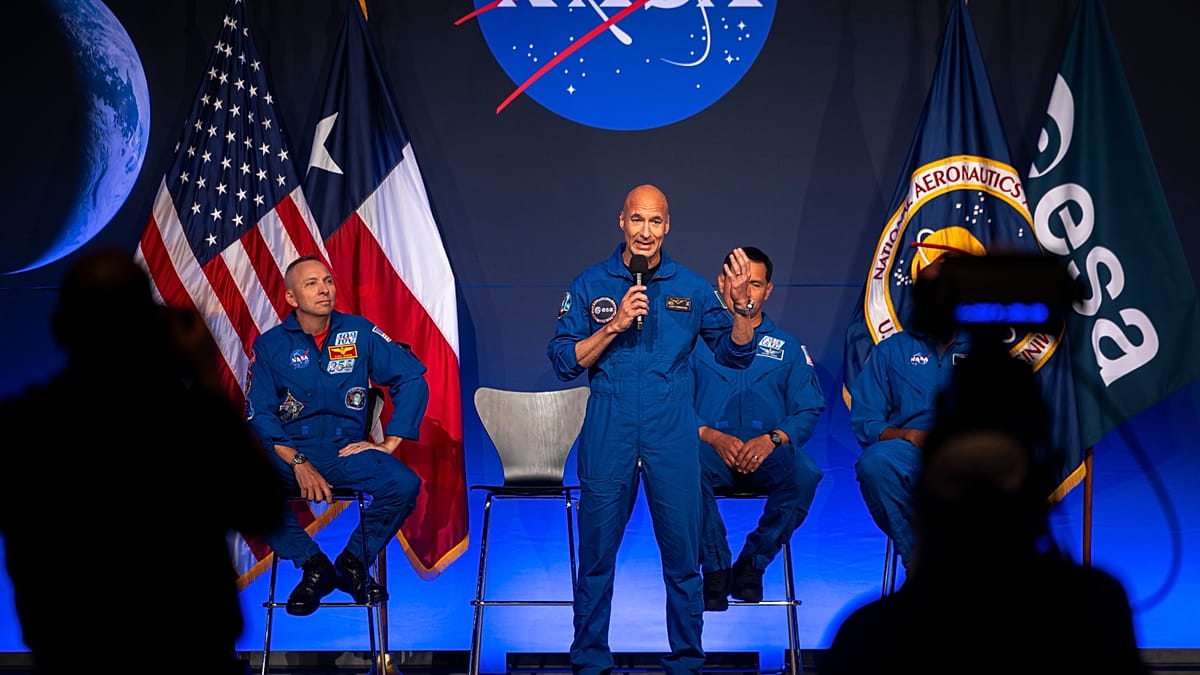
The United States space agency, NASA, has characterized the upcoming Artemis III mission as one of the most intricate and complex endeavors in the history of space exploration. As space agencies around the globe coordinate efforts to return human crews to the surface of the Moon for the first time in over five decades, European Space Agency astronaut Luca Parmitano is actively preparing to address the unique technical and physiological challenges associated with the mission, according to reporting by Alice Carnevali.
Mission complexity and deep-space architecture
The Artemis III mission represents a significant technological leap beyond low-Earth orbit human spaceflight. Unlike missions to the International Space Station, which operate within a few hundred kilometers of Earth, lunar surface missions require the seamless integration of multiple newly developed spaceflight architectures. These include NASA’s heavy-lift Space Launch System rocket, the Orion crew spacecraft, and human landing systems designed to transport astronauts from lunar orbit down to the surface and back.
Managing these interconnected vehicles across a quarter-million miles of space presents severe engineering, communication, and orbital mechanics challenges. According to reporting by Alice Carnevali, NASA’s characterization of Artemis III as one of its most complex undertakings underscores the multi-stage reliance on autonomous docking operations, precise trajectory maneuvers, and life-support redundancies that leave virtually no margin for error.
Parmitano’s preparation and role
Luca Parmitano, a veteran astronaut with the European Space Agency who previously completed two long-duration missions aboard the International Space Station, is undergoing extensive training to prepare for the demands of modern deep-space flight. Reporting by Alice Carnevali outlines how Parmitano is leveraging his past operational experience—including serving as commander of the space station and performing multiple complex spacewalks—to adapt to the shifting parameters of lunar mission planning.
Preparing for Artemis III involves mastering advanced flight control interfaces, understanding novel spacecraft systems, and conditioning for the severe physical stresses of launch, deep-space transit, and partial-gravity operations. Parmitano's preparation focuses heavily on decision-making under high-stress conditions, joint operational protocols with international teams, and the operational workflows required for operating on an alien planetary surface.
Technical and operational challenges
The return to the Moon introduces environmental and operational factors that differ fundamentally from low-Earth orbit operations. Above Earth's protective atmosphere and magnetosphere, astronauts face increased exposure to deep-space solar and cosmic radiation. Additionally, communications delays between Earth and the Moon, while measuring only a few seconds, require crews to operate with a higher degree of tactical autonomy than is typically necessary aboard orbital stations.
Operational planning for lunar surface missions must also account for extreme thermal variations and the abrasive nature of lunar regolith—the fine, sharp dust covering the Moon's surface. Dust mitigation, suit mobility under one-sixth of Earth's gravity, and specialized tool deployment form core components of the training regimens modern astronauts undergo. As noted in the reporting by Alice Carnevali, addressing these compounding technical parameters requires intensive simulation work long before launch schedules are finalized.
International collaboration in lunar exploration
The Artemis program relies on a broad international framework that connects NASA with partner agencies including the European Space Agency, the Canadian Space Agency, and the Japan Aerospace Exploration Agency, along with private sector spaceflight enterprises. This collaborative approach marks a transition from the national competition of the 20th-century space race toward a shared international model for exploration.
Within this framework, European astronauts and engineers contribute critical hardware, logistics support, and crew expertise. The European Service Module, built under ESA oversight, provides power, propulsion, and consumable life-support supplies for NASA's Orion spacecraft. Parmitano's involvement in preparing for Artemis III highlights Europe's central role in deep-space exploration and reflects the integrated operational structure defining modern lunar missions.
Training methodology for surface and orbital tasks
To simulate the environment of deep space and the lunar terrain, training programs incorporate diverse analogue facilities across Earth. Astronauts utilize neutral buoyancy basins—large specialized pools containing full-scale hardware mockups—to practice walking, tool handling, and emergency recovery operations in simulated reduced-gravity environments. Advanced virtual reality platforms are also employed to familiarize crews with lunar landing sites, shadow patterns, and topography.
Field geology training forms another vital element of mission preparation. Astronauts conduct field exercises in geologically relevant environments on Earth, learning to identify scientific targets, collect core samples, and communicate geological findings to scientists on the ground. According to reporting by Alice Carnevali, Parmitano's preparatory work covers these multi-disciplinary fields to ensure that surface crews maximize scientific return while maintaining operational safety.
Strategic goals and future outlook
The overarching objective of the Artemis III mission extends beyond placing human footprints back on lunar regolith. NASA and its international partners envision the mission as a crucial stepping stone toward establishing a sustained human presence on the Moon, which will in turn serve as a proving ground for future human missions to Mars.
By testing long-term life-support systems, surface energy generation, and in-situ resource utilization strategies, space agencies intend to establish repeatable, sustainable spaceflight operations. The rigorous preparation undertaken by astronauts like Parmitano is designed to validate these concepts, establishing baseline operational standards for human exploration deeper into the solar system over the coming decades.
This article incorporates information originally reported by Alice Carnevali.
How this story was produced
This report was written by The Global Wire newsroom from reporting first published by Alice Carnevali. We verify the core facts against the original report, write our own account, and add the background and consequences a short wire item leaves out. Drafting is AI-assisted inside an editor-supervised pipeline, and every story is checked for accuracy of attribution, structure and duplication before it appears — full detail in our AI and funding disclosure.
Spotted an error? Tell us at corrections@horizonglobalnews.com and read our corrections policy or editorial standards.
Reader comments
Loading comments…