

Consumer MLCC Speculation Cools in Shenzhen as AI Server Demand Strains Supply
Electronics traders in China report easing inventory hoarding for consumer MLCCs, but high-end components required for AI data center infrastructure remain under heavy supply pressure.
By The Global Wire Newsroom · Reported from Iris Deng
Link preview · horizonglobalnews.com
Consumer MLCC Speculation Cools in Shenzhen as AI Server Demand Strains Supply
Electronics traders in China report easing inventory hoarding for consumer MLCCs, but high-end components required for AI data center infrastructure remain under heavy supply pressure.
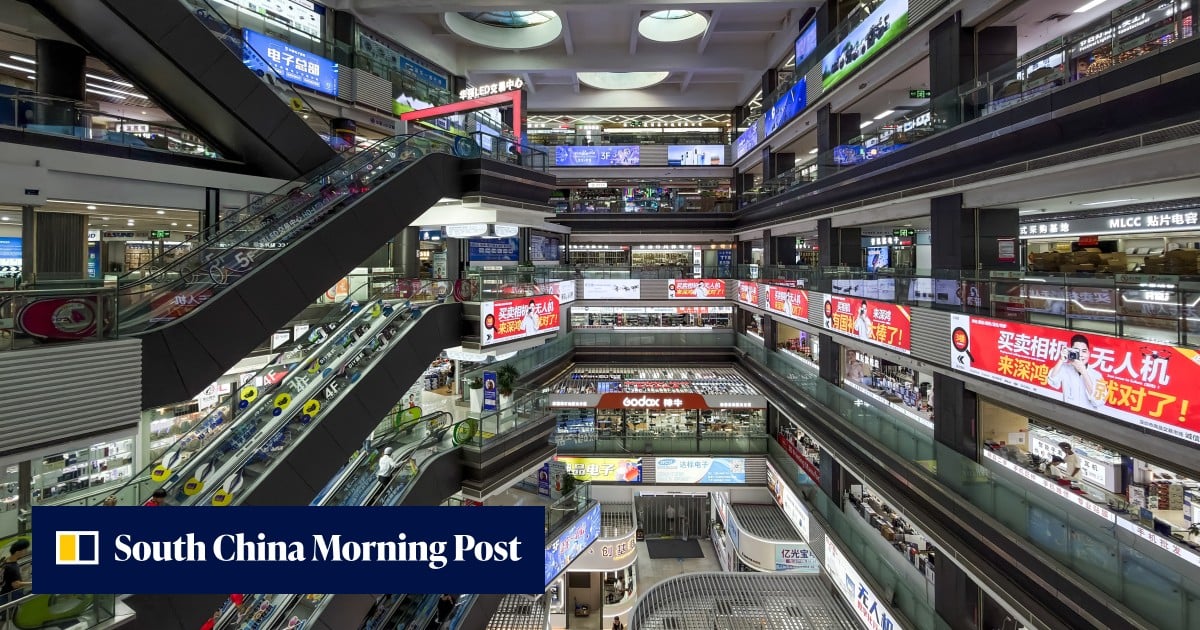
Trading activity across China’s primary electronics distribution channels indicates a marked cooling in speculative purchasing for consumer-grade multilayer ceramic capacitors (MLCCs), even as supply for high-end components used in artificial intelligence servers remains under severe strain. According to reporting by Iris Deng published on September 22, 2026, component distributors in Shenzhen report that the recent wave of spot-market accumulation for standard MLCCs powering smartphones, personal computers, and home appliances has largely run its course. However, the rapid expansion of data center computing infrastructure is driving intense, continuous demand for specialized passive components, creating a sharp divide between the sluggish consumer electronics sector and the booming enterprise computing market.
Key facts
What happened
In recent months, spot distribution channels in Shenzhen—the central clearinghouse for Asia’s commercial electronics trade—saw elevated levels of speculative inventory building. Middlemen and component traders had accumulated buffer stock of consumer-grade MLCCs in anticipation of a robust seasonal recovery in mobile phone and personal computer manufacturing ahead of end-of-year global shopping events. That speculative momentum has now dissipated, according to reporting by Iris Deng, as local distributors report that secondary market demand for standard consumer components has plateaued and spot prices have stabilized.
In contrast, the market for enterprise server MLCCs is experiencing acute supply tension. The hardware architectures powering generative artificial intelligence models require immense electrical power and complex power management modules, driving up the volume and technical specifications of passive components needed per server rack. Shenzhen distributors noted that procurement managers representing cloud service providers and server original equipment manufacturers (OEMs) are actively competing for limited stock of high-capacitance, high-reliability MLCCs. While consumer components are experiencing predictable lead times and normalized stock levels, specialized server-grade parts remain subject to extended delivery windows and allocation constraints across secondary trading channels.
Why it matters
The bifurcation between consumer and server MLCC markets underscores a fundamental shift in global electronics manufacturing priorities. For consumer hardware makers, the abatement of speculative buying signals that supply chain bottlenecks for low-to-mid-range components have largely resolved, reducing the need for emergency inventory buffer stocking. This stability allows smartphone and laptop original equipment manufacturers to better manage working capital and avoid over-ordering during periods of unpredictable end-user demand.
For the enterprise server sector, however, persistent MLCC shortages pose an operational bottleneck for the global AI infrastructure buildout. Advanced AI servers utilize specialized power delivery networks requiring thousands of high-temperature, high-voltage ceramic capacitors per node. When passive components of this nature face supply friction, entire server assembly lines can be delayed, directly impacting the deployment timelines of large language model data centers. Furthermore, the persistent demand premium for server-grade MLCCs is encouraging major passive component manufacturers to reallocate capital expenditure and factory capacity toward high-margin, industrial-grade production lines. This structural pivot may permanently raise baseline production costs for standard consumer components if global factory capacity shifts away from lower-margin commodity lines.
The background
Multilayer ceramic capacitors are the workhorses of modern electronics. These microscopic, surface-mounted components store and release electrical energy in precise increments, filtering voltage fluctuations and protecting delicate integrated circuits from electromagnetic noise. A single modern 5G smartphone contains upwards of 1,000 to 1,200 MLCCs, while an electric vehicle can contain more than 10,000 units. High-performance computing clusters and AI server motherboards require thousands of specialized MLCCs capable of managing intense electric current under extreme thermal environments.
The global MLCC industry is highly concentrated, with a handful of East Asian manufacturers dominating production. Japan’s Murata Manufacturing holds the largest global market share, followed by South Korea’s Samsung Electro-Mechanics, Taiwan’s Yageo Corporation, and Japanese peers Taiyo Yuden and TDK Corporation. Domestic Chinese suppliers, including Fenghua Advanced Technology and Chaozhou Three-Circle, have expanded their market share in standard commodity components but still lag behind Japanese and South Korean leaders in high-end, ultra-high-capacitance server applications.
Historically, the MLCC sector has been prone to dramatic boom-and-bust cycles driven by inventory accumulation and macroeconomic shifts. Between 2017 and 2018, a severe shortage of high-capacitance MLCCs caused spot prices in Shenzhen’s Huaqiangbei market to spike by several hundred percent, forcing global auto manufacturers and tech firms to scramble for inventory. A subsequent supply glut during the post-pandemic consumer tech slowdown in 2022 and 2023 led manufacturers to curb capital spending and adjust utilization rates. The current cycle, recorded in September 2026, marks the first time that consumer and enterprise demand drivers have diverged so sharply within the same component category.
Reaction
Although official corporate statements from top-tier component manufacturers were not included in the initial reporting, market analysts and supply chain planners closely track Shenzhen spot market trends as an early indicator of quarterly earnings and production shifts. Enterprise server manufacturers and contract assembly giants are expected to address MLCC availability and component lead times during upcoming investor briefings and supply chain conferences in East Asia.
Distributors in Huaqiangbei are reportedly advising clients to lock in long-term procurement contracts for server-grade passive components rather than relying on spot transactions, where prices remain volatile. Conversely, buyers of standard consumer MLCCs are taking advantage of steady availability by maintaining lean inventory policies and negotiating favorable volume pricing from suppliers seeking to maintain factory utilization rates.
What we don't know yet
The available reporting leaves several critical questions unresolved regarding the scale and duration of the current supply division. Specific lead times—measured in weeks from order placement to factory delivery—for server-grade MLCCs compared to consumer variants were not detailed in the report. Additionally, the exact price differentials and spot-market premiums being paid for high-capacitance components in Shenzhen remain unquantified.
It also remains unclear how rapidly top-tier manufacturers like Murata, Samsung Electro-Mechanics, and Yageo can retool existing production lines to shift capacity from consumer-grade to server-grade MLCCs. Transitioning a production line to high-reliability components requires rigorous qualification cycles and specialized ceramic material formulations, making short-term capacity conversion challenging. Furthermore, the extent to which Chinese domestic component makers can fill the gap in high-performance server applications remains an open technical question.
What to watch
Industry observers should monitor several key milestones over the coming quarters to evaluate how this supply imbalance evolves:
This report is based on original reporting published by Iris Deng on September 22, 2026.
How this story was produced
This report was written by The Global Wire newsroom from reporting first published by Iris Deng. We verify the core facts against the original report, write our own account, and add the background and consequences a short wire item leaves out. Drafting is AI-assisted inside an editor-supervised pipeline, and every story is checked for accuracy of attribution, structure and duplication before it appears — full detail in our AI and funding disclosure.
Spotted an error? Tell us at corrections@horizonglobalnews.com and read our corrections policy or editorial standards.





Reader comments
Loading comments…