

China Unveils REX G1 Wheeled Humanoid Robot Featuring Rapid Battery Exchange
The REX G1 mobile platform incorporates 22 degrees of freedom, full environmental vision, and a five-second power swapping system designed for continuous operations.
By The Global Wire Newsroom · Reported from Atharva Gosavi
Link preview · horizonglobalnews.com
China Unveils REX G1 Wheeled Humanoid Robot Featuring Rapid Battery Exchange
The REX G1 mobile platform incorporates 22 degrees of freedom, full environmental vision, and a five-second power swapping system designed for continuous operations.
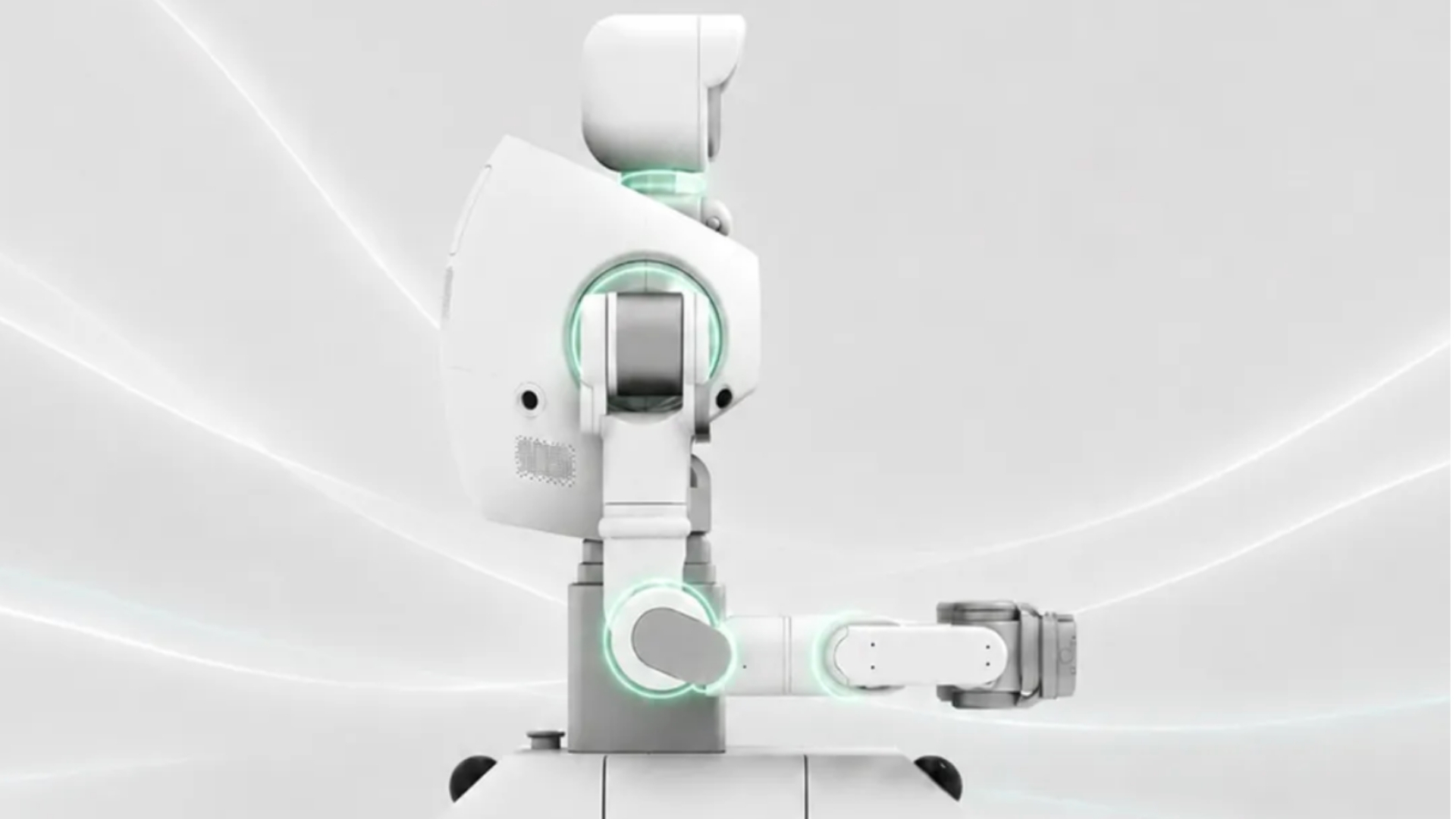
Advanced robotics development in China has reached a new benchmark with the introduction of the REX G1, a wheeled humanoid robot engineered for high dexterity, continuous operational capability, and complete spatial awareness. According to reporting by Atharva Gosavi, the newly detailed platform integrates 22 degrees of freedom across its mechanical framework, coupled with a 360-degree vision system and a modular power design that allows battery units to be exchanged in five seconds.
Core Capabilities and Design Specifications
The technical footprint of the REX G1 represents a convergence of high-articulation robotics and rapid-maintenance power systems. The machine’s 22 degrees of freedom refer to the independent mechanical axes that control its various joints and actuators. In robotic engineering, each degree of freedom represents an independent directional parameter, enabling the machine to perform complex movements, maneuver through constrained working spaces, and manipulate objects with tailored precision.
To complement its mechanical mobility, the platform is outfitted with a visual system providing a full 360-degree field of view. Visual sensing of this scope allows the robot to build complete spatial maps of its immediate environment, identify potential obstacles from any direction, and maintain situational awareness without requiring physical rotation of its primary chassis. The integration of 360-degree sensing serves as a foundation for real-time navigation, safety monitoring, and precise task execution in dynamic environments where human workers or secondary automated machinery are present.
Wheeled Architecture and Mobility Dynamics
While much of the recent public focus in humanoid robotics has centered on bipedal walking mechanisms, the REX G1 utilizes a wheeled mobility base paired with an articulated upper torso. Wheeled humanoid configurations present distinct operational trade-offs compared to leg-based designs. While legs offer superior versatility on uneven terrain or staircases, wheeled bases afford significantly higher energy efficiency, higher maximum travel speeds, and greater intrinsic stability on smooth, manufactured surfaces.
By mounting a humanoid upper body on a rolling foundation, the design seeks to balance the object-manipulation benefits of human-like arms and torsos with the simplified kinematics and reliability of wheeled transport. In structured settings such as logistics hubs, manufacturing plant floors, and controlled commercial environments, flat flooring allows wheeled platforms to operate with reduced energy consumption per distance traveled, extending overall battery duration and reducing mechanical stress on locomotive components.
Power Management and Rapid Energy Exchange
Among the technical highlights detailed in the report, the robot's energy architecture stands out for its emphasis on minimizing operational downtime. The REX G1 incorporates a battery system capable of being swapped in five seconds.
In commercial and industrial applications, battery endurance and recharge cycles represent one of the primary hurdles to the widespread adoption of autonomous mobile hardware. Standard direct-plug charging regimens often force autonomous units out of service for hours at a time, requiring operators to deploy larger total fleets to maintain unbroken workflow coverage. Alternatively, quick-swap battery mechanisms allow a machine to return to active operation almost instantly upon power depletion.
A five-second exchange window indicates a modular battery bay design engineered for rapid mechanical release and re-engagement. Whether executed through an automated swapping station or a brief human interaction, a zero-delay energy turnaround strategy allows operators to maximize unit utilization rates and lower the total cost of ownership across fleet deployments.
The Broader Landscape of Chinese Industrial Robotics
The development of platforms like the REX G1 occurs against a backdrop of intensive investment and policy support for the robotics industry across China. State planners and private technology enterprises have increasingly prioritized the domestic design, component manufacturing, and deployment of advanced autonomous systems.
China has emerged as the world’s largest market for industrial automation, driven by a combination of shifting labor demographics, rising manufacturing wages, and strategic initiatives aimed at upgrading industrial efficiency. While heavy stationary robotic arms have long dominated traditional automotive and electronics assembly lines, the focus has expanded toward mobile, adaptable units capable of sharing workspaces with human personnel and undertaking varied tasks without extensive physical retooling of the facility.
The push into humanoid and hybrid-humanoid forms—spanning both bipedal and wheeled configurations—reflects an industry-wide effort to create general-purpose machinery. Rather than building custom automation infrastructure for every distinct production phase, adaptable humanoid frameworks can theoretically interact with tools, interfaces, and inventory layouts originally designed for human workers.
Technical Challenges in Next-Generation Robotics
Despite rapid hardware iterations, the deployment of highly articulated mobile platforms entails significant engineering challenges. Managing 22 degrees of freedom requires sophisticated motion-planning software to coordinate simultaneous actuator movements without causing physical binding, excessive wear, or unstable weight distribution.
Sensory integration presents another technical hurdle. Processing 360-degree visual data in real time demands substantial onboard computational capacity or high-bandwidth, low-latency wireless connections to offboard computing resources. Robots operating in complex environments must filter out visual noise, accurately measure depth, and update their pathfinding algorithms in milliseconds to avoid collisions.
Furthermore, the long-term durability of rapid-swap power connections remains a key factor in industrial environments. Fast-exchange battery interfaces must maintain reliable electrical contact and structural integrity through thousands of insertion cycles, while remaining resistant to dust, vibration, and thermal stress common in factory settings.
Market Outlook and Deployment Trajectory
As hardware specifications advance, the global robotics industry is closely monitoring how quickly hybrid platforms can transition from controlled technological demonstrations to full-scale commercial deployment. The combination of flexible upper-body articulation, full-spectrum vision, and instant battery replacement addresses three critical operational metrics: dexterity, environmental awareness, and continuous uptime.
The path toward widespread adoption will depend heavily on software maturity, control system safety certifications, and the cost structure of mass manufacturing. Industry analysts note that as software algorithms for spatial mapping and force-feedback control continue to improve, hardware versatility will become a central differentiator for enterprise buyers seeking flexible automation solutions.
Reporting for this article was based on original coverage provided by Atharva Gosavi.
How this story was produced
This report was written by The Global Wire newsroom from reporting first published by Atharva Gosavi. We verify the core facts against the original report, write our own account, and add the background and consequences a short wire item leaves out. Drafting is AI-assisted inside an editor-supervised pipeline, and every story is checked for accuracy of attribution, structure and duplication before it appears — full detail in our AI and funding disclosure.
Spotted an error? Tell us at corrections@horizonglobalnews.com and read our corrections policy or editorial standards.





Reader comments
Loading comments…