

China Advances Microreactor Tech with Megawatt Helium Turbine Test
Engineers at CNNC Huaxing have generated electricity using a closed-loop helium turbine test facility, clearing key technical hurdles for nuclear microreactors.
By The Global Wire Newsroom · Reported from Aman Tripathi
Link preview · horizonglobalnews.com
China Advances Microreactor Tech with Megawatt Helium Turbine Test
Engineers at CNNC Huaxing have generated electricity using a closed-loop helium turbine test facility, clearing key technical hurdles for nuclear microreactors.
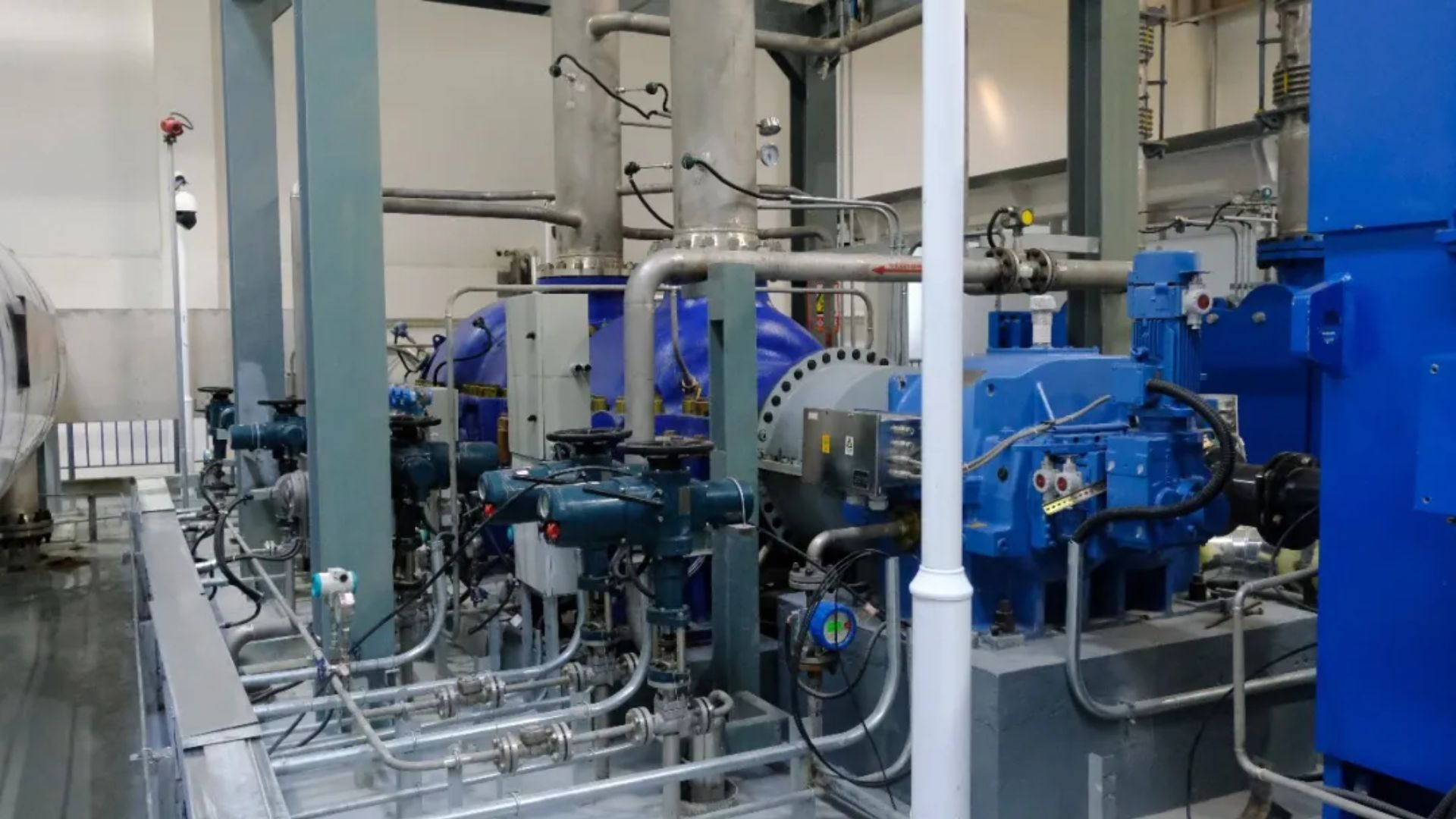
In a significant milestone for advanced nuclear energy research, Chinese engineering firm CNNC Huaxing has successfully generated electricity utilizing a megawatt-class closed-loop helium turbine test facility. The operation marks a key technical step forward in the development of power conversion equipment tailored for nuclear microreactors, according to reporting by Aman Tripathi.
The successful test run comes after project engineers addressed complex technical challenges inherent to high-temperature, high-pressure gas-turbine systems. By establishing stable power generation within a sealed helium loop, the project demonstrates the feasibility of employing gas turbines to convert thermal energy directly into electrical power at the megawatt scale.
Successful Generation at Test Facility
The operational milestone was achieved at a specialized test facility designed to evaluate gas turbine performance under simulated reactor conditions. According to reporting by Aman Tripathi, engineering teams at CNNC Huaxing overcame a series of steep technical hurdles to achieve electricity generation within the closed-loop helium setup.
Unlike conventional nuclear power stations that rely on steam turbines to turn electrical generators, the system tested by CNNC Huaxing uses pressurized helium gas as its working fluid. Achieving stable electricity generation at a megawatt-class output demonstrates that the turbomachinery and closed-loop circulation equipment can operate effectively under high thermodynamic loads.
Engineering Hurdles in Helium Turbomachinery
The implementation of helium-based power cycles has long presented significant technical barriers for nuclear and mechanical engineers. Helium possesses high thermal conductivity and chemical inertness, making it an ideal coolant and working medium for high-temperature nuclear applications. However, its physical characteristics also introduce unique mechanical and operational design demands.
Because helium atoms are extremely small and low in density, preventing gas leakage across rotating shafts and static joints requires highly specialized dynamic seals and precision-engineered containment systems. Additionally, helium turbomachinery must operate at substantially higher rotational speeds compared to traditional steam or ambient-air gas turbines to achieve equivalent pressure ratios and aerodynamic work. Engineers working on closed-loop helium cycles must also overcome challenges related to high-temperature material fatigue, bearing lubrication in oxygen-free environments, and effective heat extraction within compact heat exchangers.
Principles of Microreactor Technology
Microreactors represent a distinct class of advanced nuclear power systems, typically defined as units that generate between one and twenty megawatts of electricity. Designed to be factory-fabricated, transportable by truck or shipping container, and deployed rapidly on-site, microreactors require highly compact and efficient power conversion systems to maintain their small footprint.
In a closed-loop helium turbine system—often operating on a direct or indirect Brayton cycle—the high-temperature gas expands directly through a turbine connected to an electrical generator. The gas is then cooled, recompressed, and recirculated back through the heat source. Eliminating the intermediate steam generators, water treatment systems, and bulky condenser infrastructure required by conventional steam plants allows the entire power conversion unit to remain lightweight and highly integrated.
Applications for Modular Power Units
The development of megawatt-class helium turbines aligns with broader strategic efforts to create mobile and decentralized power solutions. Microreactors paired with closed-loop gas turbines are engineered to provide dependable, continuous baseload electricity in locations where grid connectivity is limited or nonexistent.
Potential operational environments for these systems include isolated industrial sites, remote mining operations, island communities, forward operating bases, and areas recovering from severe natural disasters. Because closed-loop helium cycles do not rely on large continuous supplies of cooling water, they are particularly well-suited for deployment in arid regions or extreme northern climates where traditional water-cooled reactors are impractical. Furthermore, high-temperature microreactors can supply process heat for industrial applications, high-temperature electrolysis for hydrogen production, and desalination projects alongside electricity generation.
Broader Context of Advanced Nuclear Energy
The successful turbine test comes amidst an accelerating global effort to design, test, and commercialize next-generation nuclear technologies, often referred to as Generation IV reactors and Small Modular Reactors (SMRs). Global energy planners increasingly view compact nuclear systems as crucial tools for reducing carbon emissions while supporting grid stability alongside intermittent renewable energy sources such as solar and wind power.
Various national energy programs and private technology firms are actively pursuing high-temperature gas-cooled reactors, liquid-metal-cooled fast reactors, and molten-salt systems. Within this competitive technical landscape, China has positioned itself as a prominent testing ground for advanced nuclear designs, having previously constructed and connected industrial-scale high-temperature gas-cooled demonstration plants to its national electricity grid. Demonstrating operational closed-loop helium turbine machinery at the megawatt scale reinforces the ongoing push toward fully commercialized gas-cooled microreactors.
What Comes Next
While the successful generation of electricity at the CNNC Huaxing facility proves the functionality of the megawatt-class helium turbine test loop, full commercial integration onto nuclear platforms requires further development stages. Engineering teams typically subject test facilities to extended endurance trials to evaluate component wear, thermal stress resistance, and long-term seal integrity under continuous operation.
Subsequent developmental phases generally involve integrating test turbines with thermal heat sources that mimic actual nuclear core dynamics, validating automated control systems, and securing regulatory approvals for operational safety. As testing progresses, data gathered from the closed-loop facility will likely inform the final design specifications for operational microreactors intended for commercial deployment.
This report is based on original news coverage published by Aman Tripathi.
How this story was produced
This report was written by The Global Wire newsroom from reporting first published by Aman Tripathi. We verify the core facts against the original report, write our own account, and add the background and consequences a short wire item leaves out. Drafting is AI-assisted inside an editor-supervised pipeline, and every story is checked for accuracy of attribution, structure and duplication before it appears — full detail in our AI and funding disclosure.
Spotted an error? Tell us at corrections@horizonglobalnews.com and read our corrections policy or editorial standards.
Reader comments
Loading comments…