

CACI Opens 61,000-Square-Foot Electronic Warfare Center to Quadruple Production Capacity
Defense contractor CACI expands its manufacturing footprint with a new 61,000-square-foot hub, boosting U.S. electronic warfare capacity by 300 percent amid rising tactical spectrum demands.
By The Global Wire Newsroom · Reported from Neetika Walter
Link preview · horizonglobalnews.com
CACI Opens 61,000-Square-Foot Electronic Warfare Center to Quadruple Production Capacity
Defense contractor CACI expands its manufacturing footprint with a new 61,000-square-foot hub, boosting U.S. electronic warfare capacity by 300 percent amid rising tactical spectrum demands.
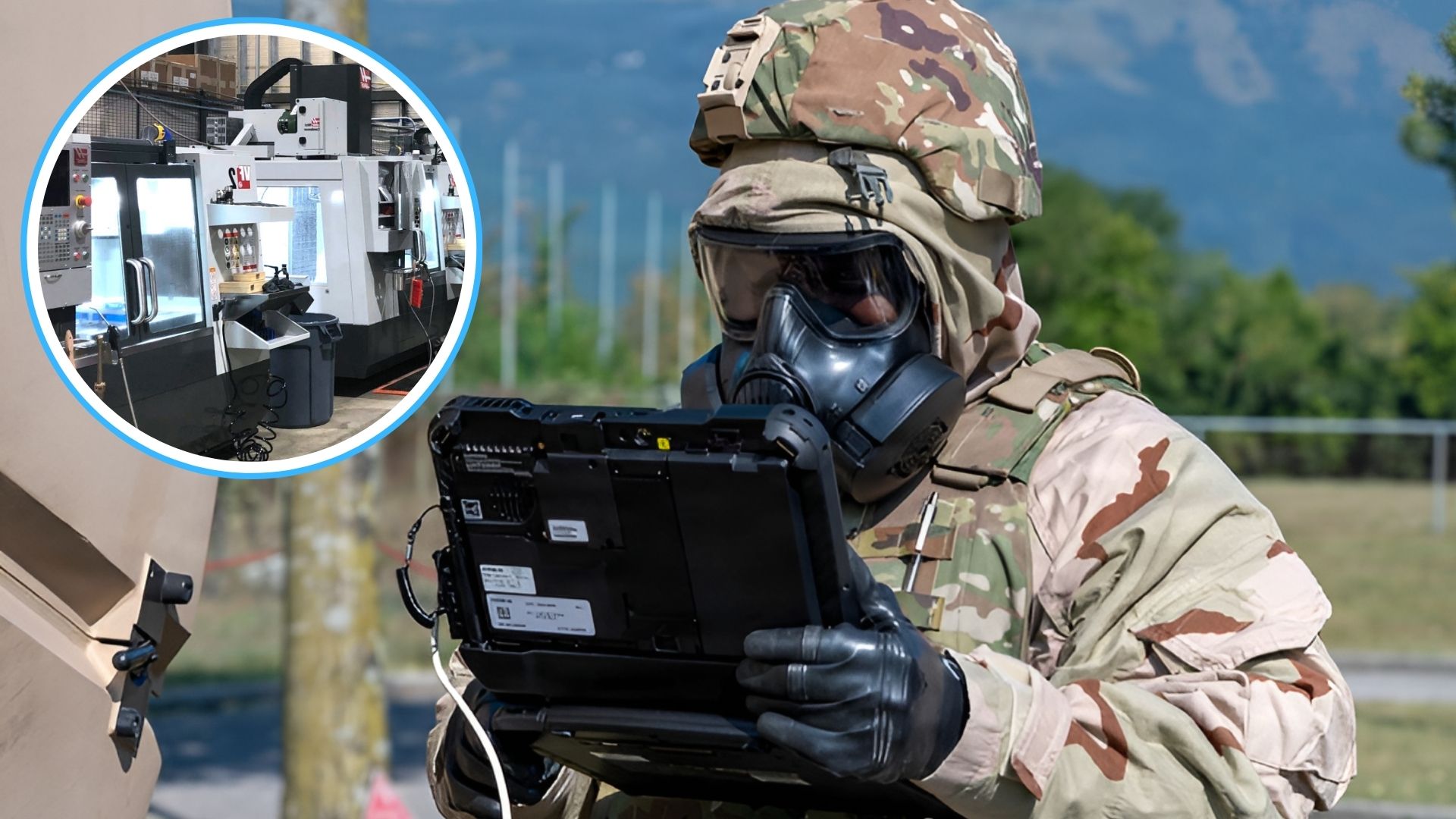
CACI International has opened a 61,000-square-foot manufacturing and development facility designed to scale up the production of advanced electronic warfare systems for the United States Armed Forces. The expansion, reported on August 20, 2026, increases the defense contractor’s specialized operational capacity by 300 percent, quadrupling its manufacturing throughput as military demand accelerates for tactical electromagnetic spectrum equipment. The dedicated center aims to streamline the transition of next-generation electromagnetic attack, protection, and signal intelligence platforms from initial prototype phases into high-rate factory production, delivering hardware directly to frontline airborne, ground, and maritime defense units.
Key facts
What happened
The opening of CACI's 61,000-square-foot center represents a strategic initiative aimed at resolving critical manufacturing bottlenecks in specialized defense electronics. Electronic warfare systems rely on sophisticated, high-frequency components, including radio-frequency receivers, digital signal processors, software-defined architectures, and customized microelectronics. Historically, assembling these systems involved low-rate initial production techniques, creating inventory lags when active military units faced rapid operational shifts in high-threat environments.
By consolidating design, assembly, software integration, and environmental testing within an expanded operational footprint, the operational center allows CACI to multiply its manufacturing output fourfold—a net 300 percent increase over its previous manufacturing capacity. The facility is equipped to manufacture modular hardware configurations that can be mounted on fixed-wing military aircraft, rotary-wing fleets, naval surface vessels, mobile armored combat vehicles, and stationary ground posts.
The manufacturing philosophy of the new site emphasizes agile, software-defined architecture over static hardware. Systems assembled within the center are built around open-architecture software-defined radios capable of receiving rapid firmware modifications. This structural design enables equipment produced at the site to adapt to newly identified adversary radar frequencies, wireless datalinks, and drone navigation signals shortly after leaving the production floor. The footprint allows CACI to fulfill active defense procurement contracts while maintaining parallel development and testing operations on site.
Why it matters
The expansion of domestic electronic warfare manufacturing capacity carries significant consequences for U.S. national defense strategy, force readiness, and military technological superiority. In modern multi-domain combat operations, controlling the electromagnetic spectrum is a foundational prerequisite for operational success. Modern battlefields rely entirely on the spectrum for precision guidance systems, command and control communications networks, radar surveillance, satellite navigation, and unmanned aerial vehicle operation. An armed force that lacks robust spectrum defense or signal disruption assets faces severe tactical vulnerabilities.
For defense planners, CACI’s 300 percent capacity increase provides the industrial throughput required to shift electronic warfare from a specialized asset to a broad, distributed capability. In prior operational environments, tactical jammers and signals intelligence hardware were deployed selectively, often assigned only to specialized electronic attack aircraft or dedicated intelligence units. However, current global threat environments require counter-drone mechanisms, signal denial devices, and electronic surveillance equipment across every echelon of tactical maneuver forces, from individual foot squads to vehicle convoys.
From an industrial and economic standpoint, the launch highlights a structural transition toward modular, software-centric defense manufacturing. Modern defense electronics must adapt faster than traditional hardware acquisition cycles allow. By establishing a 61,000-square-foot facility optimized for software-defined platforms, CACI can provide equipment that receives continuous software updates to address emerging threats, reducing total lifecycle costs while accelerating the fielding of battlefield countermeasures.
The background
Electronic warfare has evolved from a defensive auxiliary function during the Cold War into a central pillar of global military competition. The United States Department of Defense emphasized this strategic pivot with the release of its Electromagnetic Spectrum Superiority Strategy in 2020, which instructed all service branches to integrate spectrum capabilities across land, air, sea, space, and cyber domains. This initiative followed two decades of counter-insurgency operations in Iraq and Afghanistan, where U.S. electronic warfare efforts were largely constrained to counter-improvised explosive device (C-IED) jammers and tactical communications interceptors.
The global security landscape changed dramatically as peer and near-peer competitors expanded their electromagnetic warfare capabilities. Operational observations from the armed conflict in Ukraine, beginning in 2014 and escalating after 2022, demonstrated the absolute necessity of heavy electronic warfare capabilities. Russian ground forces deployed powerful electronic attack platforms capable of jamming satellite navigation signals across hundreds of square kilometers, blinding precision-guided artillery, disabling communication systems, and suppressing thousands of unmanned aerial reconnaissance drones monthly.
Similarly, geopolitical friction in the Indo-Pacific region highlighted the vital role of naval and airborne electronic warfare in protecting surface fleets and airborne assets against long-range anti-ship cruise missiles and advanced radar tracking networks. In response to these operational realities, the U.S. military accelerated procurement programs to modernize its electronic attack, signal surveillance, and counter-unmanned systems arsenals.
Contractors such as CACI International—which historically developed its footprint in intelligence analysis, IT services, and cybersecurity support—pivoted heavily into specialized hardware production and electromagnetic technologies. Through targeted corporate acquisitions and internal investments in research and engineering, CACI transformed itself into a key hardware supplier competing alongside traditional defense aerospace conglomerates for major defense contracts.
Reaction
Although immediate official statements from military leadership were not published in initial reports, the setup of CACI's enlarged production hub reflects long-standing demands from military leaders and congressional defense committees. U.S. defense officials have repeatedly warned in congressional testimony that domestic manufacturing capacity for specialized defense microelectronics and radio-frequency hardware must expand to keep pace with potential high-intensity conflict scenarios.
Military commanders across the U.S. Army, Navy, Air Force, and Marine Corps have continuously requested scalable counter-drone hardware and flexible signals intelligence gear to protect deployed troops. Tactical commanders in active operational theaters have emphasized that traditional defense acquisition timelines—which often take years to field hardware modifications—are inadequate to counter rapidly evolving adversary electronic jamming and commercially available drone threats.
Market analysts and defense sector observers view CACI’s facility expansion as a strategic effort to solidify its market share in the rapidly expanding electronic warfare and counter-unmanned systems sectors. Financial analysts note that defense contractors expanding their physical manufacturing footprint for software-defined hardware are well-positioned to capture recurring software modification and hardware maintenance contracts from the Department of Defense.
What we don't know yet
Several specific operational details regarding the new manufacturing facility remain unconfirmed in current reports. The precise geographic location of the 61,000-square-foot center has not been publicly specified, leaving regional economic impacts, state defense cluster details, and local workforce requirements clear only in broad terms. Furthermore, CACI has not disclosed the total financial capital expenditure involved in constructing and tooling the facility, nor has it published detailed financial revenue expectations tied to the expanded manufacturing throughput.
Additionally, specific military program designations, product line names, and security classification levels of the hardware produced inside the facility remain undisclosed due to operational security and corporate confidentiality. It is currently unstated how many technical, engineering, and assembly jobs the new center will create, or what exact proportion of the expanded 300 percent capacity will be committed to counter-unmanned aerial systems compared to heavy airborne radar jammers or ground-based signals intelligence arrays.
What to watch
In the coming months, defense procurement disclosures will serve as key indicators of the facility's commercial impact. Observers will track U.S. Department of Defense contract awards to monitor whether CACI secures new high-rate production contracts for tactical electronic warfare hardware. Additionally, upcoming congressional deliberations on the annual National Defense Authorization Act (NDAA) and defense appropriations bills will reveal overarching funding levels allocated to electromagnetic spectrum operations and counter-drone procurement across military branches.
Investors and market analysts will monitor CACI's upcoming quarterly earnings releases and executive conference calls for specific operational metrics, including plant utilization rates, hiring progress at the 61,000-square-foot facility, and order backlog growth in its defense hardware divisions. On the operational front, upcoming major military exercises—such as the U.S. Army's Project Convergence or joint NATO maneuver exercises—will provide visibility into how quickly systems manufactured at the center are integrated into frontline tactical formations.
This report is based on original news reporting by Neetika Walter, published on August 20, 2026.
How this story was produced
This report was written by The Global Wire newsroom from reporting first published by Neetika Walter. We verify the core facts against the original report, write our own account, and add the background and consequences a short wire item leaves out. Drafting is AI-assisted inside an editor-supervised pipeline, and every story is checked for accuracy of attribution, structure and duplication before it appears — full detail in our AI and funding disclosure.
Spotted an error? Tell us at corrections@horizonglobalnews.com and read our corrections policy or editorial standards.

Reader comments
Loading comments…