

Brussels Asserts €90 Billion Ukraine Loan Framework Remains Adequate Despite Escalation Concerns
The European Commission says its €90 billion financial support package for Ukraine is sufficient for now, even as military escalation and rising material costs prompt wider doubts.
By The Global Wire Newsroom · Reported from Jorge Liboreiro
Link preview · horizonglobalnews.com
Brussels Asserts €90 Billion Ukraine Loan Framework Remains Adequate Despite Escalation Concerns
The European Commission says its €90 billion financial support package for Ukraine is sufficient for now, even as military escalation and rising material costs prompt wider doubts.
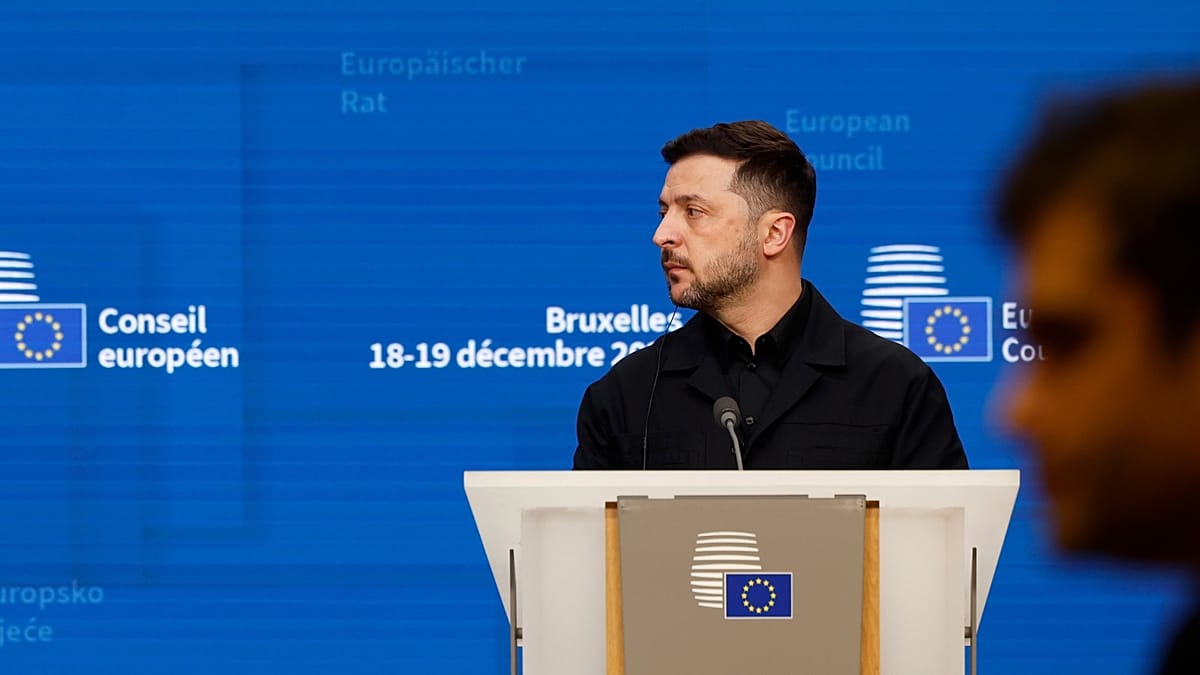
BRUSSELS — The European Commission has declared that its €90 billion financial support mechanism for Ukraine remains adequate for immediate requirements, seeking to quell mounting concerns among European diplomats and market analysts over the longevity of the assistance package. Speaking in Brussels, EU officials acknowledged that ongoing military escalation by Russian forces and surging procurement costs for raw materials have intensified financial strains on Kyiv. Despite growing skepticism about how long the current funding framework can withstand these compounding pressures, executive officials maintained that the allocated resources are sufficient for the present juncture.
Key facts
What happened
The European Commission issued an assessment affirming that the €90 billion loan allocation designed to bolster Ukraine's war-torn economy remains viable for current operational demands, according to reporting by Jorge Liboreiro. The reassurance comes amid heightened anxiety within European Union capitals over the accelerating fiscal strain caused by Russia's ongoing military campaign.
As battlefield intensity has expanded, the material expenses associated with hardware, ammunition, and defense infrastructure have escalated significantly. Russian strikes against civilian energy installations and logistics hubs have forced Kyiv to reallocate substantial financial capital toward emergency infrastructure repairs and high-cost equipment procurement. These compounding outlays have led independent market observers and several EU member state representatives to question whether the €90 billion package will retain its purchasing power over the anticipated timeframe.
Addressing these concerns, representatives in Brussels emphasized that while the economic landscape remains volatile, existing disbursements and programmed tranches are currently covering Ukraine's baseline budgetary shortfall. However, officials qualified their assessment by explicitly stating that the coverage is secure "for the moment," leaving open the possibility of future adjustments should battlefield dynamics or material inflation worsen.
Why it matters
The durability of the €90 billion loan structure is directly linked to the financial stability of the Ukrainian state and the broader stability of European capital markets. Kyiv relies heavily on predictable infusions of foreign aid to fund basic public services, maintain civil service payrolls, pay military pensions, and repair critical infrastructure damaged by missile and drone strikes. A rapid depletion of the loan pool would force Ukrainian authorities to make drastic cuts to non-military public spending or print currency, both of which would risk severe domestic economic destabilization and hyperinflation.
For the European Union and its 27 member states, the financial framework represents both a major geopolitical commitment and a delicate fiscal compromise. If the €90 billion allocation proves insufficient ahead of schedule, European leaders will be forced to re-open politically contentious debates regarding joint debt issuance, direct bilateral cash transfers, or structural adjustments to the EU core budget. Given existing fiscal constraints and differing political priorities among member governments, negotiating supplementary financial packages could prove protracted and contentious.
Furthermore, the rising cost of raw materials—including specialized steel, explosives, microelectronics, and heavy machinery—means that fixed-rate financial commitments deliver diminished real-world purchasing power over time. As defense production supply chains experience severe global demand pressure, the effective value of each euro allocated to Kyiv contracts, effectively shrinking the duration of financial relief the package provides.
The background
Since Russia initiated its full-scale invasion of Ukraine in February 2022, international financial institutions and Western allies have struggled to establish sustainable, long-term financing mechanisms for Kyiv. Early financial assistance was characterized by ad-hoc emergency grants and short-term Macro-Financial Assistance (MFA) loans, which frequently suffered from diplomatic delays in Brussels and Washington.
To provide greater fiscal predictability, the European Union approved a €50 billion dedicated funding line known as the Ukraine Facility in early 2024, designed to cover the country's liquidity needs from 2024 through 2027. However, as the conflict expanded and economic damages mounted, international partners recognized that baseline state operations required additional structural capital beyond the initial €50 billion allocation.
To address this expanding shortfall without imposing direct tax burdens on Western citizens, G7 nations and the EU moved toward utilizing extraordinary revenues generated by immobilised Russian sovereign assets. Following the imposition of sanctions in 2022, approximately €210 billion of Russian Central Bank assets were frozen within the European Union, the vast majority held at Euroclear, a Belgium-based central securities depository. While full confiscation of the underlying principal generated legal and systemic currency risks for the euro, Western powers agreed to leverage the windfall interest profits generated by these immobilised assets to back large-scale loan packages for Ukraine, including the €90 billion structure currently under scrutiny.
Despite these innovative financial structures, Ukraine's economic baseline remains exceptionally fragile. Financial institutions, including the International Monetary Fund, have consistently projected that Ukraine requires between $3 billion and $4 billion in monthly external financial injections to maintain macroeconomic balance while directing all domestic tax revenue toward military spending.
Reaction
While the European Commission maintains its official position of fiscal confidence, reaction across European political centers highlights growing concern, according to reporting by Jorge Liboreiro. Members of the European Parliament and financial committee delegates have increasingly called for realistic stress-testing of the €90 billion facility against current inflation metrics and military consumption rates.
Diplomats from frontline Baltic states and Central European nations have privately advocated for contingency planning, arguing that waiting for the funding to run low before formulating a response risks exposing Kyiv to a dangerous fiscal cliff. Conversely, fiscal conservative member states remain cautious about committing additional taxpayers' funds or expanding EU debt obligations, urging strict adherence to current budgetary boundaries.
Ukrainian officials in Kyiv have repeatedly emphasized to Western counterparts that financial aid schedules must remain synchronized with real-world material costs. While acknowledging the importance of the €90 billion mechanism, Ukrainian finance ministry representatives continue to warn international partners that severe inflation in military hardware supply chains requires flexible financial adjustments to prevent shortfalls on the front line.
What we don't know yet
Several critical variables remain unresolved regarding the overall longevity and performance of the €90 billion support package. Most prominently, the precise monthly expenditure rate under current operational conditions has not been publicly detailed by EU financial authorities. Without concrete data on how rapidly funds are being drawn down to cover inflated material costs, independent verification of the Commission's optimistic assessment remains difficult.
Additionally, it is unclear how the mechanism would absorb further catastrophic infrastructure destruction caused by expanded Russian strikes during winter months. A sudden surge in emergency energy sector repairs could rapidly exhaust liquidity intended for broader civil administration.
Finally, the long-term yield of the underlying immobilized Russian assets remains subject to fluctuations in international interest rates. If global central banks accelerate rate reductions, the interest windfalls generated by assets held at Euroclear could decline, creating a secondary revenue shortfall for the loan repayment framework that EU planners have yet to fully publicly clarify.
What to watch
In the coming months, several key financial and political milestones will indicate whether the €90 billion facility can remain adequate. Analysts will closely monitor upcoming meetings of the Economic and Financial Affairs Council (ECOFIN) and scheduled EU summits in Brussels, where finance ministers are expected to review baseline execution reports for the Ukraine support line.
Attention will also focus on the International Monetary Fund's upcoming evaluation of Ukraine's Extended Fund Facility program, which will provide updated estimates on Kyiv's medium-term gross financing needs. Any upward revision of Ukraine's projected deficit by the IMF would likely force the European Commission to reassess its current stance.
Furthermore, quarterly balance sheets published by Euroclear will offer vital indicators regarding the volume of windfall profits being generated by immobilized Russian assets. These figures will confirm whether the net interest yield remains sufficient to cover loan servicing schedules or if structural adjustments will be required before the current fiscal cycle concludes.
This report relies on original reporting conducted by Jorge Liboreiro.
How this story was produced
This report was written by The Global Wire newsroom from reporting first published by Jorge Liboreiro. We verify the core facts against the original report, write our own account, and add the background and consequences a short wire item leaves out. Drafting is AI-assisted inside an editor-supervised pipeline, and every story is checked for accuracy of attribution, structure and duplication before it appears — full detail in our AI and funding disclosure.
Spotted an error? Tell us at corrections@horizonglobalnews.com and read our corrections policy or editorial standards.
Reader comments
Loading comments…