

At Least 72 Dead After Mass Migrant Crossing Attempt into Spanish Enclave of Ceuta
Officials report severe casualties after tens of thousands attempted to reach Spanish territory by swimming around coastal border barriers in North Africa.
By The Global Wire Newsroom · Reported from Malay Mail
Link preview · horizonglobalnews.com
At Least 72 Dead After Mass Migrant Crossing Attempt into Spanish Enclave of Ceuta
Officials report severe casualties after tens of thousands attempted to reach Spanish territory by swimming around coastal border barriers in North Africa.
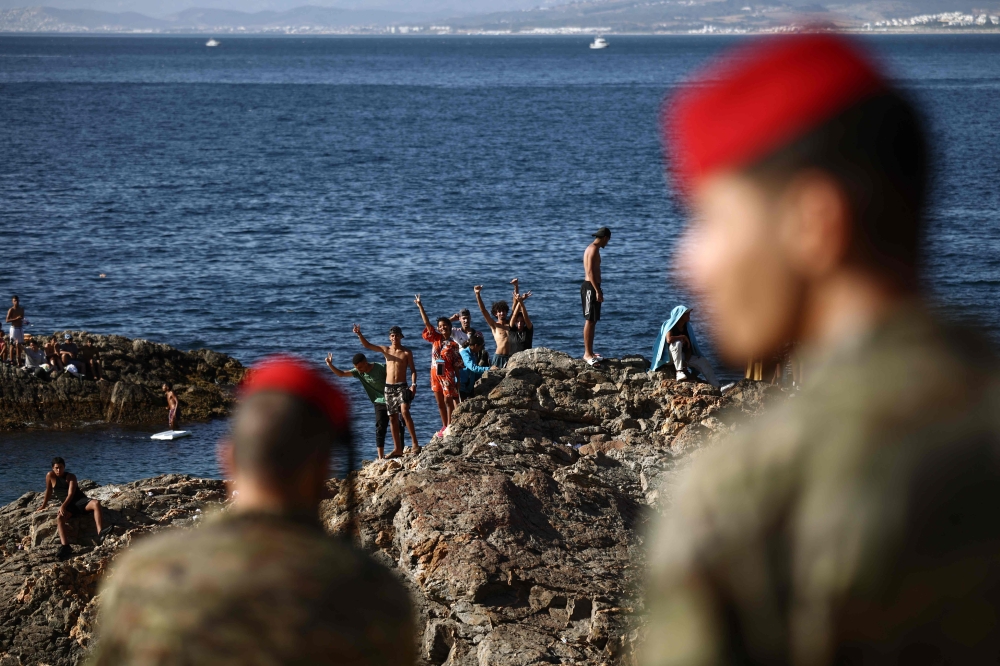
CEUTA — At least 72 people have died off the coast of Ceuta following a massive attempt by tens of thousands of migrants to enter the Spanish enclave from neighboring Morocco, according to reporting by Malay Mail. The casualties occurred during a sudden wave of border crossings in recent days, as people predominantly attempted to navigate dangerous ocean currents by swimming around maritime breakwaters and fencing that mark the territorial boundary between Spanish and Moroccan waters.
Casualties Mount Amid Dangerous Maritime Crossing
The scale of the crossing attempt represents one of the most severe border incidents in the region in recent years. Authorities in Ceuta confirmed that the death toll reached at least 72 as rescue teams and border patrols continued to search waters surrounding the enclave, Malay Mail reported.
The primary route used by the migrants involved swimming around the physical barriers extending into the Mediterranean Sea at the edges of Ceuta's perimeter. These sea walls and breakwaters are designed to prevent unauthorized entry, but migrants frequently risk treacherous offshore conditions to bypass terrestrial security posts. Ocean currents around the Strait of Gibraltar and the northern tip of the African continent are notoriously strong, creating lethal conditions for those entering the water without safety equipment or maritime transport. Emergency services and border security personnel faced immense operational challenges while attempting to rescue individuals in distress along the rocky coastline.
Pressure on Enclave Infrastructure
The sudden arrival of tens of thousands of individuals has placed unprecedented pressure on the civic and emergency infrastructure of Ceuta. As a small autonomous Spanish city situated on the North African coast, the enclave possesses limited permanent facilities for housing, medical evaluation, and processing large numbers of unexpected arrivals.
Local humanitarian agencies, security forces, and municipal medical staff have been deployed to attend to survivors, many of whom suffered from severe hypothermia, exhaustion, and physical injuries sustained against coastal rocks. Reception centers and temporary holding facilities quickly exceeded capacity, forcing local authorities to establish makeshift triage areas to provide medical attention, food, and dry clothing. Processing tens of thousands of border entrants presents significant administrative hurdles, requiring coordination between local municipal leadership, the Spanish central government in Madrid, and international relief organizations.
Ceuta and Melilla as EU Border Outposts
Ceuta, alongside its sister enclave Melilla located further east along the North African coastline, constitutes the European Union’s only direct land borders on the African continent. This unique geopolitical position turns the two Spanish enclaves into major focal points for individuals seeking entry into European territory from Sub-Saharan Africa and North Africa.
The perimeter surrounding Ceuta is heavily fortified with high double-fences, motion sensors, infrared cameras, and constant security patrols operated by Spain's Guardia Civil in coordination with Moroccan border security forces. Despite these extensive physical and technological barriers, the enclaves remain primary targets for migratory attempts. When land perimeter controls tighten, migrants frequently shift strategies to maritime routes, relying on small inflatable boats, kayaks, or attempting open-water swims around the end of border fences into Spanish waters.
Drivers of Migration Across the Mediterranean
The massive movement of people toward northern borders reflects broader economic, political, and environmental pressures across regions of origin. Economic volatility, high inflation, persistent unemployment, political instability, and prolonged conflict in parts of West Africa, the Sahel, and North Africa continue to force individuals to seek security and economic opportunities in Europe.
In recent years, environmental degradation and climate disruptions have further aggravated agricultural conditions in rural African communities, exacerbating economic hardship and driving domestic displacement that often leads to international migration attempts. The Western Mediterranean route, which includes transit through Morocco toward Spain, is one of several primary corridors utilized by human smugglers and independent migrants navigating the dangerous journey toward the European continent.
Diplomatic Coordination and Border Governance
Border management around Ceuta depends heavily on bilateral diplomatic relations between Madrid and Rabat. Spain and Morocco maintain intelligence-sharing agreements, joint maritime patrols, and formal protocols regarding the return of individuals who cross the border illegally.
Mass border influxes often require immediate high-level diplomatic intervention between Spanish and Moroccan authorities to manage operational response, secure coastal zones, and oversee repatriation procedures where applicable under international law. Human rights organizations have regularly monitored border enforcement policies along the Ceuta and Melilla boundaries, emphasizing the obligation of sovereign states to uphold international protections for asylum seekers and maintain adequate search-and-rescue operations during maritime emergencies.
Search Operations and Ongoing Response
Following the high casualty count, maritime search-and-rescue operations remain active along the Ceuta coastline to identify missing individuals and recover victims. Local authorities continue to manage processing protocols for survivors while working to address the immediate physical needs of those who completed the sea crossing.
The incident highlights ongoing challenges facing border management systems along Europe's southern perimeter, where geography and severe socio-economic push factors frequently converge with tragic consequences. Further administrative and security assessments are expected as authorities determine the long-term impact on the enclave's reception facilities and border operational readiness.
This report relies on original reporting from Malay Mail regarding the migrant influx and casualties in Ceuta.
How this story was produced
This report was written by The Global Wire newsroom from reporting first published by Malay Mail. We verify the core facts against the original report, write our own account, and add the background and consequences a short wire item leaves out. Drafting is AI-assisted inside an editor-supervised pipeline, and every story is checked for accuracy of attribution, structure and duplication before it appears — full detail in our AI and funding disclosure.
Spotted an error? Tell us at corrections@horizonglobalnews.com and read our corrections policy or editorial standards.





Reader comments
Loading comments…