

Ammonia-to-Power Multi-Fuel System Advances Following Integrated Engine Tests
An ammonia-to-power multi-fuel technology has reached a key milestone in integrated engine testing, bringing zero-carbon capabilities closer to commercial natural gas power generation.
By The Global Wire Newsroom · Reported from Aamir Khollam
Link preview · horizonglobalnews.com
Ammonia-to-Power Multi-Fuel System Advances Following Integrated Engine Tests
An ammonia-to-power multi-fuel technology has reached a key milestone in integrated engine testing, bringing zero-carbon capabilities closer to commercial natural gas power generation.
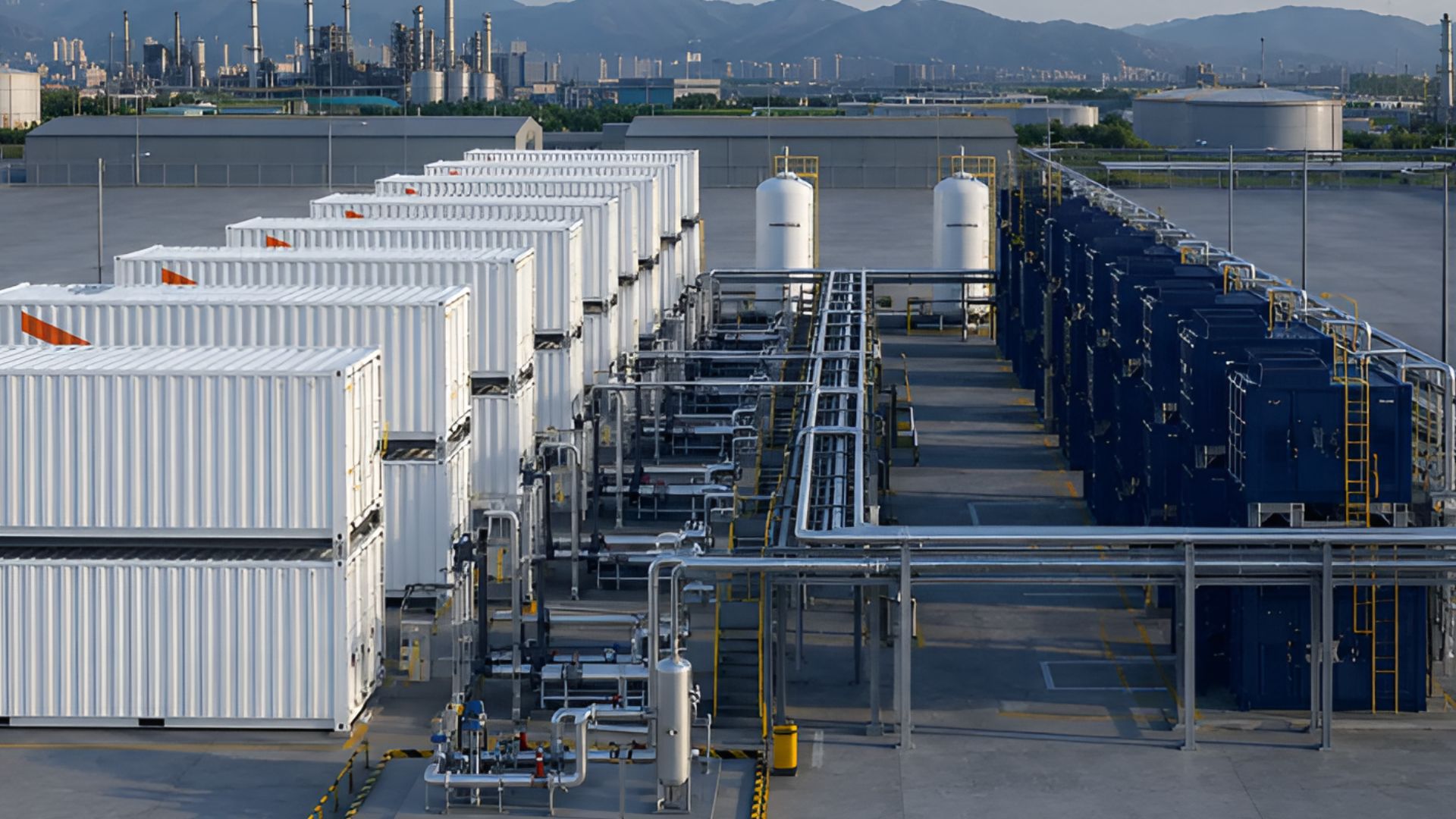
An ammonia-to-power multi-fuel system has reached a major development benchmark after successfully completing integrated engine testing, moving the zero-carbon energy technology significantly closer to commercial deployment, according to reporting by Aamir Khollam.
The successful test phase represents a key transition point in bringing alternative fuel equipment out of trial environments and into practical industrial power applications. By providing a multi-fuel architecture capable of utilizing ammonia alongside or in place of traditional natural gas, the system offers power producers and industrial operators a transitional route toward reducing greenhouse gas emissions without completely replacing existing internal combustion infrastructure.
Testing milestone achieved
Integrated engine testing is a rigorous evaluation phase in the development of power generation equipment. Unlike isolated component assessments or computer simulations, integrated testing requires all core system elements—including fuel handling, control software, combustion chambers, and exhaust management—to work synchronously under conditions that reflect operational stress.
According to reporting by Aamir Khollam, completing integrated engine tests confirms that the ammonia-to-power system can maintain functional stability within an engine environment. Achieving operational harmony across multi-fuel injection and combustion systems addresses significant technical risks, yielding essential engineering data on thermal performance, fuel conversion efficiency, and structural reliability under dynamic load conditions.
The completion of this testing regime enables developers to advance from initial proof-of-concept validation toward targeted field trials, regulatory compliance certifications, and eventual commercial manufacturing.
Multi-fuel integration and engine design
Multi-fuel engine systems are engineered to provide fuel flexibility, allowing power generators to adapt to changing fuel costs, availability, and environmental requirements. Integrating ammonia into engines traditionally optimized for natural gas requires balancing two fuels with distinctly different physical and chemical properties.
Natural gas, primarily composed of methane, features high energy density, fast flame propagation, and predictable ignition characteristics. Ammonia, by contrast, exhibits a lower flame speed, a narrower flammability limit, and a higher auto-ignition temperature. To overcome these combustion hurdles, multi-fuel engines typically utilize targeted injection strategies, adjusted compression ratios, or pilot ignition fuels to ensure steady flame propagation and high thermal efficiency.
By engineering control systems capable of managing variable fuel ratios, multi-fuel platforms allow operators to seamlessly transition between natural gas and ammonia or run on blended proportions. This flexibility mitigates the operational risks associated with relying on a single fuel source during periods of supply volatility or shifting regulatory requirements.
Ammonia as an energy vector
Ammonia has emerged as a primary candidate in global decarbonization strategies due to its molecular structure. Containing zero carbon atoms, ammonia produces no carbon dioxide emissions at the point of combustion or conversion, making it a viable alternative for heavy industrial applications that are difficult to power with electricity alone.
Beyond its zero-carbon profile, ammonia offers significant physical and logistical advantages over elementary hydrogen gas. While pure hydrogen requires extreme compression or cryogenic cooling to minus 253 degrees Celsius for dense storage, ammonia liquefies under standard atmospheric cooling to minus 33 degrees Celsius or under mild pressure at ambient temperatures. Consequently, ammonia possesses a significantly higher volumetric energy density than gaseous hydrogen, simplifying bulk energy storage and transport.
Additionally, ammonia benefits from an established worldwide distribution network. Millions of metric tons of agricultural ammonia are produced, stored, shipped, and handled globally every year. Utilizing existing global transport networks, port facilities, and safety standards significantly lowers the capital investment required to build out alternative fuel distribution networks compared to dedicated hydrogen infrastructure.
Emissions management and technical constraints
Despite its carbon-free composition, utilizing ammonia as a primary energy source introduces specific environmental and technical management demands. The primary combustion byproduct of concern in ammonia-fueled engines is nitrogen oxide emissions, formed when nitrogen from the fuel and intake air reacts at high combustion temperatures.
Preventing elevated nitrogen oxide emissions requires accurate combustion tuning, staged injection, and advanced exhaust gas recirculation methods. Industrial multi-fuel systems also rely on post-combustion abatement, such as selective catalytic reduction systems, where secondary ammonia or urea is injected into the exhaust stream to convert nitrogen oxides back into harmless nitrogen gas and water vapor.
Engine designers must also manage potential ammonia slip, which refers to unburned ammonia escaping through the exhaust stream. Effective fuel control algorithms and catalytic cleanup systems are essential to maintaining slip levels well within strict workplace safety and atmospheric pollution guidelines.
Impact on industrial decarbonization
The advancement of ammonia-capable multi-fuel power systems addresses a critical challenge in global decarbonization efforts: decarbonizing heavy-duty machinery, maritime vessels, and continuous utility power systems. While renewable sources like solar and wind continue to expand across electricity grids, heavy industry and maritime freight require dispatchable energy solutions that remain reliable regardless of weather patterns.
In the maritime shipping industry, natural gas and heavy fuel oil remain dominant, but regulatory bodies have introduced increasingly stringent greenhouse gas reduction mandates. Engine architectures capable of burning ammonia provide vessel owners with a potential zero-carbon alternative for long-haul routes. Similarly, in stationary grid power, natural gas power plants equipped with multi-fuel retrofit technology could serve as low-carbon backup generation to balance intermittent renewable energy production.
Multi-fuel flexibility allows power producers to begin integrating low-carbon ammonia incrementally as commercial supply chains expand, reducing the financial risk associated with immediate fuel transitions.
Commercialization outlook and deployment
Following successful integrated testing, the transition of ammonia-to-power multi-fuel systems into full commercial deployment will depend on several economic and regulatory factors. Developers must now focus on scaling manufacturing processes, conducting long-duration endurance demonstrations, and obtaining formal safety approvals from industrial classification societies.
The speed of commercial adoption will also be tied to the growth of the green ammonia market, where hydrogen produced via renewable-powered electrolysis is combined with atmospheric nitrogen. As production scales up and low-carbon fuel costs decline relative to fossil energy subjected to carbon pricing, multi-fuel natural gas engines adapted for ammonia are expected to become increasingly economically attractive.
This report is based on original news coverage provided by Aamir Khollam.
How this story was produced
This report was written by The Global Wire newsroom from reporting first published by Aamir Khollam. We verify the core facts against the original report, write our own account, and add the background and consequences a short wire item leaves out. Drafting is AI-assisted inside an editor-supervised pipeline, and every story is checked for accuracy of attribution, structure and duplication before it appears — full detail in our AI and funding disclosure.
Spotted an error? Tell us at corrections@horizonglobalnews.com and read our corrections policy or editorial standards.
Reader comments
Loading comments…