

80,000-Year-Old Artifacts in Uzbekistan Point to Earlier Rise of Projectile Weapons
Microscopic analysis of stone points found in Central Asia suggests hominins developed bow-like projectile technology tens of thousands of years earlier than long believed.
By The Global Wire Newsroom · Reported from sciencedaily.com
Link preview · horizonglobalnews.com
80,000-Year-Old Artifacts in Uzbekistan Point to Earlier Rise of Projectile Weapons
Microscopic analysis of stone points found in Central Asia suggests hominins developed bow-like projectile technology tens of thousands of years earlier than long believed.
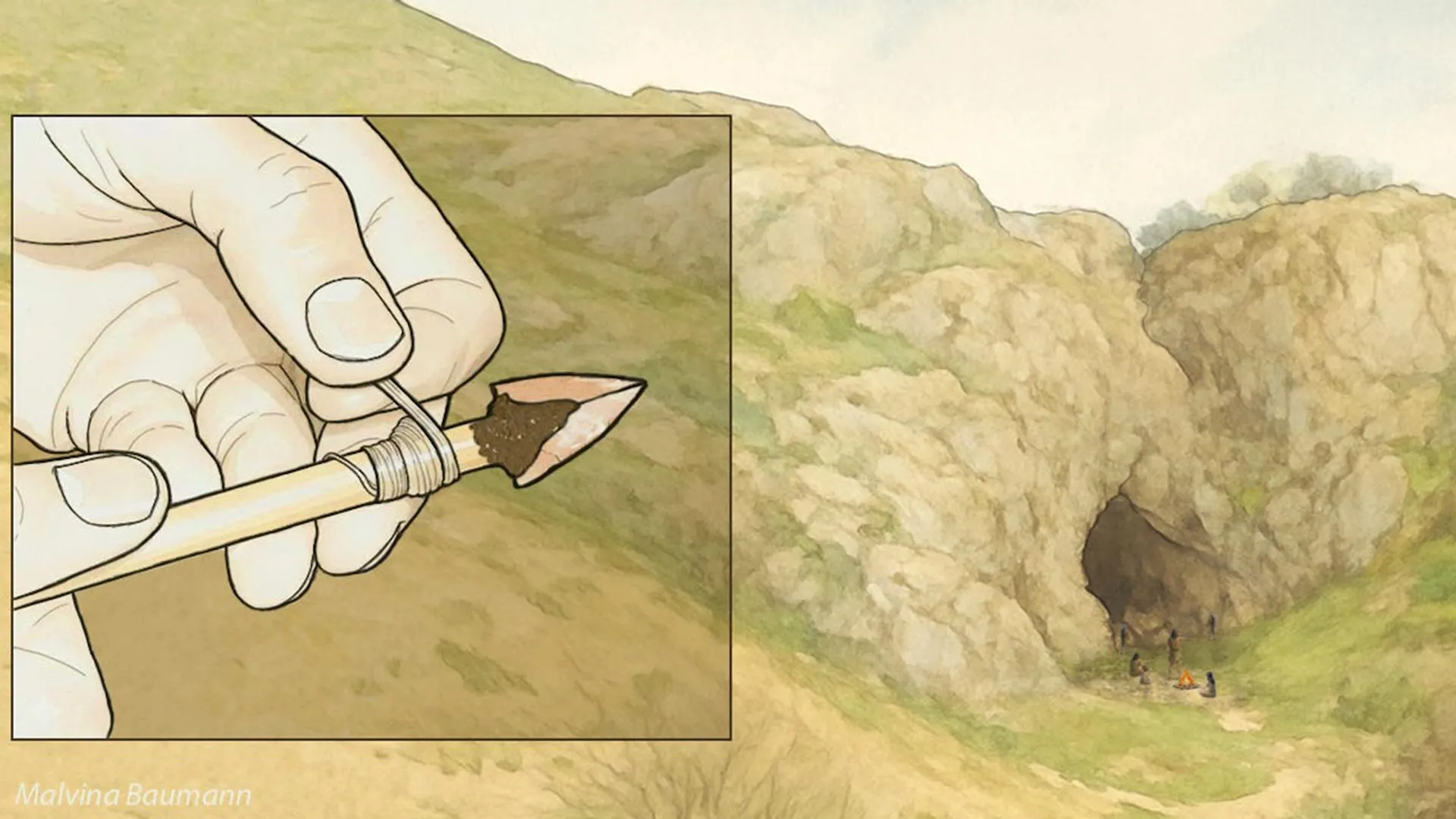
Archaeologists examining ancient stone assemblages in Uzbekistan have identified 80,000-year-old miniature stone points that display physical attributes, dimensions, and damage patterns consistent with use as high-velocity projectiles. According to reporting by ScienceDaily, the artifacts closely resemble weapon tips recovered from a significantly younger Homo sapiens site in France, suggesting that complex projectile technology was developed far earlier or was far more geographically widespread during the Middle Palaeolithic than standard evolutionary models have indicated.
Key facts
What happened
During re-evaluations of stone tool collections recovered from prehistoric cave and open-air sites in Uzbekistan, an international team of researchers conducted systematic microscopic and ballistic analyses on tiny lithic artifacts. Measuring only a few centimeters in length, these miniature flint and chert points had previously been classified alongside standard Middle Palaeolithic scrapers or small stone flakes.
Detailed high-resolution microscopy revealed diagnostic impact fractures along the tips and margins of the Uzbek artifacts. These microscopic scars, including step-terminating fractures and longitudinal burinations, occur predominantly when a stone tip strikes animal bone or dense tissue at high velocity. In addition to impact marks, the researchers documented deliberate edge retouching designed to create aerodynamic symmetry, as well as wear patterns near the base of the points that indicate they were affixed to wooden shafts using binding material or adhesive resins.
According to ScienceDaily, the structural properties of these 80,000-year-old points were compared against experimental ballistic datasets and archaeological samples worldwide. The physical specifications—specifically mass, width, and tip cross-sectional area—matched lithic points recovered from Grotte Mandrin, a rock shelter in the Rhône River valley of southern France. At Grotte Mandrin, stone points dated to roughly 54,000 years ago were identified as the earliest documented evidence of archery in Europe, attributed to an early wave of Homo sapiens entering Neanderthal territory. Finding near-identical functional points in Central Asia dated to 80,000 years ago indicates that the technological template for lightweight, mechanically launched projectiles was already fully formed tens of thousands of years prior.
Why it matters
The development of mechanical projectile weapons, such as bows and arrow systems or spearthrowers (atlatls), represents a major watershed in human cognitive and cultural evolution. Unlike heavy, hand-cast spears or thrusting pikes, high-velocity lightweight projectiles allow hunters to strike quarry from a safe distance. This technological advantage reduced human mortality during encounters with dangerous megafauna and increased hunting success rates against fast-moving grassland animals.
Constructing a functional bow-and-arrow or spearthrower system requires sophisticated multi-component engineering. A maker must select appropriate stone for the tip, shape it into an aerodynamic form, harvest and carve straight wooden shafts, formulate natural adhesives from tree resin or bitumen, prepare animal sinew or plant fibers for cordage, and craft a launching mechanism. The presence of such tools 80,000 years ago demonstrates that hominins during the Late Pleistocene possessed complex abstract planning, material synthesis skills, and multi-stage operational chains long before the cultural explosion of the Upper Palaeolithic in Europe.
Furthermore, the Central Asian location forces a geographic re-evaluation of early innovation. For decades, the dominant consensus placed the emergence of modern human technological complexity almost exclusively in Southern and East Africa during the Middle Stone Age, or much later in Western Europe. Confirming advanced projectile technology in Uzbekistan 80,000 years ago shows that Central Asia was not a technological backwater, but rather a dynamic hub of technological experimentation and diffusion during a period of critical human expansion.
The background
For more than a century, palaeoanthropologists tracked human technological evolution through stone tool industries. The earliest hunting weapons were simple wooden thrusting spears, such as the 300,000-year-old spears recovered from Schöningen, Germany. During the Middle Palaeolithic (roughly 300,000 to 40,000 years ago), hominins across Eurasia produced broad stone points associated with the Mousterian and Levallois knapping techniques, which were typically bound to thick wooden shafts and used for close-range thrusting or short-distance hand-throwing.
The timeline for lightweight, mechanically launched projectiles has shifted continually as analytical techniques have improved. Excavations in South Africa, most notably at Sibudu Cave and Klasies River Main Site, yielded small quartz and silcrete points dating between 60,000 and 70,000 years ago that carried micro-residues of compound adhesives and impact fractures, forming the primary evidence for early bow use. In Europe, the discovery at Grotte Mandrin in France, published in 2023, pushed European projectile technology back to 54,000 years ago, attributing the tools to early Homo sapiens who briefly occupied the shelter before Neanderthals reoccupied the site.
Central Asia holds a unique place in Pleistocene prehistory. Situated at the geographic crossroads between Africa, the Middle East, Europe, and the Altai Mountains, Uzbekistan contains numerous Middle Palaeolithic localities, including Teshik-Tash Cave—where Neanderthal remains were discovered in 1938—and Obi-Rakhmat Grotto. Environmental reconstructions show that during Marine Isotope Stage 5 (spanning approximately 130,000 to 71,000 years ago), the region alternated between arid steppe and rich riverine habitats capable of supporting diverse game herds. The region was also an environmental corridor where three distinct hominin populations—Homo sapiens, Neanderthals, and Denisovans—are known from genetic and fossil evidence to have ranged and potentially interacted.
Reaction
The identification of 80,000-year-old projectile tips in Central Asia is expected to spark rigorous debate within the international palaeoanthropological community. Lithic specialists frequently debate the criteria used to classify ancient stone flakes as true projectile tips versus hand-thrown spear heads or cutting knives. Critics of early projectile claims often argue that impact-like fractures can occasionally occur through natural sediment compaction, trampling by heavy ungulates, or accidental dropped tool contact during excavation.
In response to such skepticism, researchers specializing in micro-wear analysis emphasize that the combination of tip cross-sectional area, symmetric outline, basal hafting polish, and high-energy impact scars provides a distinct signature that natural processes cannot replicate. Archaeologists focused on the Eurasian Palaeolithic are likely to call for broader comparative studies of existing stone tool collections stored in museums across Tashkent, Samarkand, and Almaty to determine whether similar miniature points were overlooked during mid-twentieth-century excavations.
What we don't know yet
Despite the detailed ballistic assessment of the stone points, several critical questions remain unresolved:
What to watch
To confirm and build upon these findings, researchers and regional antiquities authorities will focus on several immediate technical milestones:
This account is based on original reporting published by ScienceDaily.
How this story was produced
This report was written by The Global Wire newsroom from reporting first published by sciencedaily.com. We verify the core facts against the original report, write our own account, and add the background and consequences a short wire item leaves out. Drafting is AI-assisted inside an editor-supervised pipeline, and every story is checked for accuracy of attribution, structure and duplication before it appears — full detail in our AI and funding disclosure.
Spotted an error? Tell us at corrections@horizonglobalnews.com and read our corrections policy or editorial standards.

Reader comments
Loading comments…